
House
Maldon Salt Company
Maldon, Essex, England · since 1882 · founded by Bridges family (current owners since 1922, the Osborne family)
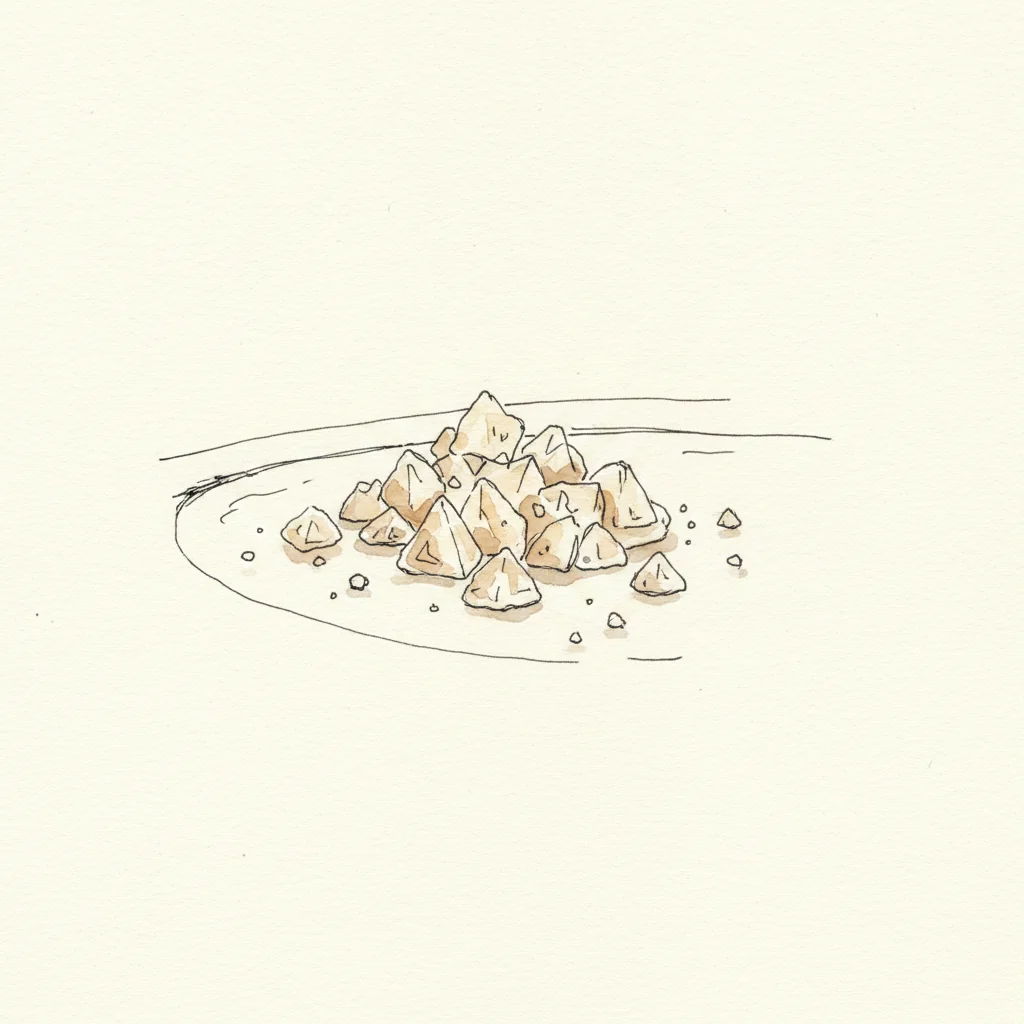
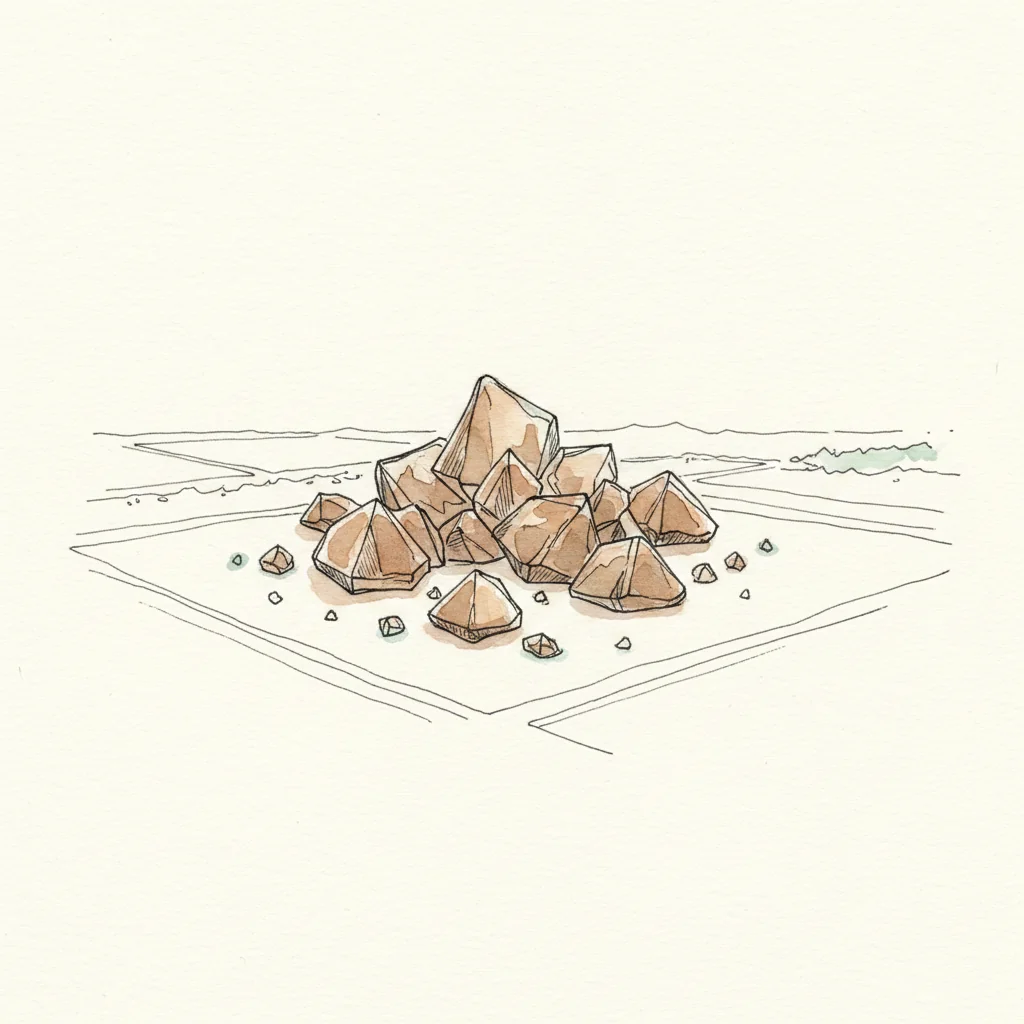
The family salt house on the Blackwater estuary in Essex, harvesting the soft pyramid flakes that became the default finishing salt of professional kitchens on both sides of the Atlantic. Founded 1882, run by the Osborne family for four generations, and granted a royal warrant. The hollow pyramid crystal is the whole product: it shatters on the tongue instead of just dissolving.
History
Salt has been worked at Maldon since at least the Domesday survey, but the modern company dates to 1882, when it was incorporated to produce flake salt by the open-pan method on the Blackwater estuary in Essex. The Osborne family took control in 1922 and has run it ever since, now into a fourth generation. The process never industrialized in the way the brand's reach might suggest: estuary water is filtered, the brine concentrated, then boiled in shallow steel pans where the crystals grow upward into hollow inverted pyramids before being raked off by hand. That raking is still done by people, not machines, which is the reason the flakes stay intact rather than crushing to powder. The pyramid shape is the entire commercial proposition. Because the crystal is hollow and thin-walled, it crushes to a clean crunch under the teeth and dissolves fast on contact with moisture, which is why it reads as a finishing salt rather than a cooking salt. Through the late twentieth century Maldon became the salt that food writers named by brand, and it crossed into the United States as the affordable upgrade for anyone who had read that flaky salt mattered. The company holds a royal warrant and protected its name through trademark rather than a PDO, so 'Maldon' is a brand, not a geographic appellation in the way Halen Mon's Anglesey claim is. It now ships worldwide and sits on supermarket shelves in both the UK and the US, which is unusual for a product still made by hand on one estuary. The smoked version, cold-smoked over oak, is a separate line and behaves differently in the kitchen. The catch with that one is the same as with every smoked salt: the smoke is a finishing flavor that heat burns off, so it belongs on the plate, not in the pan. The core white flake is the workhorse, and it is genuinely the cheapest meaningful upgrade most home cooks can make. The risk to the brand is its own ubiquity: a product on every supermarket shelf is hard to keep feeling special, and the price has crept up as demand outran a hand-raked supply. But on the metric that matters, crystal integrity, Maldon remains the reference, and the comparison most other flake salts invite is 'how close to Maldon does this get.'
How they work
Open-pan flake method, unchanged in principle for over a century. Estuary water from the Blackwater is filtered and settled, then the brine is concentrated and brought to the boil in shallow stainless pans. As the water evaporates, salt crystallizes at the surface into hollow inverted pyramids that grow downward; these are raked off by hand before they sink and crush. Hand-raking is the load-bearing step: it is what keeps the flakes whole and is the reason the product cannot be fully mechanized without losing the crunch that defines it. The flakes are dried and graded, with broken fines screened out. The smoked line is cold-smoked over oak after harvest, never heat-treated, so the smoke sits on the surface of the crystal. No anti-caking agents, no additives, no iodine. The salt is a brand protected by trademark, not a geographic appellation, so the guarantee is the company's process and reputation rather than a third-party certification. Output is constrained by the hand-raking bottleneck, which is why a product this widely distributed still sells at a premium to bulk sea salt.
Specialties
- flake sea salt
- pyramid crystals
- cold-smoked sea salt
Products from this house on La Pincée
Where to buy
Maldon is the rare hand-harvested salt you can buy almost anywhere. In the UK it is on the shelf at every major supermarket, plus Sous Chef and most kitchen shops, usually around 2 to 3 pounds for a 250g box. In the US it is widely stocked at Whole Foods and on Amazon, typically around 7 dollars for the same box, which is the price most American food writers quote. That box lasts a home cook a year of Sunday roasts or weekend steaks, which makes the per-use cost trivial. The smoked version is a separate, pricier line, around 9 to 12 dollars or 5 to 7 pounds for a smaller pack; buy it only if you will use it as a finishing salt, because cooking with it wastes the smoke. Practical advice: buy the plain white flake for everyday finishing and do not overthink the source, since the product is consistent across retailers. Avoid the temptation to buy in giant catering tubs unless you genuinely cook at volume, because the flakes compress and break under their own weight in storage, and the crunch is the thing you are paying for. Keep it dry and away from the stove steam, which will clump it. There is no meaningful freshness window the way there is with a volatile spice, so a box on the counter is fine. If you are in the US and want a domestic flake alternative that supports a smaller operation, Jacobsen's Oregon flake is the obvious swap, though it costs more.
Good to know
Three honest points. First, Maldon is a brand, not a protected origin, so do not confuse it with an appellation product like Halen Mon's PDO Anglesey salt; what you are buying is a process and a track record, both genuinely good, but not a legal geographic guarantee. Second, the price has risen with the brand's fame, and on a cost-per-gram basis a generic flaky sea salt costs less; the honest answer is that for plain seasoning under heat any coarse salt works and the Maldon is wasted, so save the flakes for the finish where the crunch survives. Third, the smoked line is widely misused: heat kills the smoke in about a minute, so it is a finishing salt full stop, and if you cook with it you have paid for nothing. None of that changes the core verdict, which is that the white flake is the single cheapest upgrade most kitchens can make and the crystal integrity is still the benchmark others are measured against.