
Comparison
Chimayó Chile vs Hatch Green Chile Powder
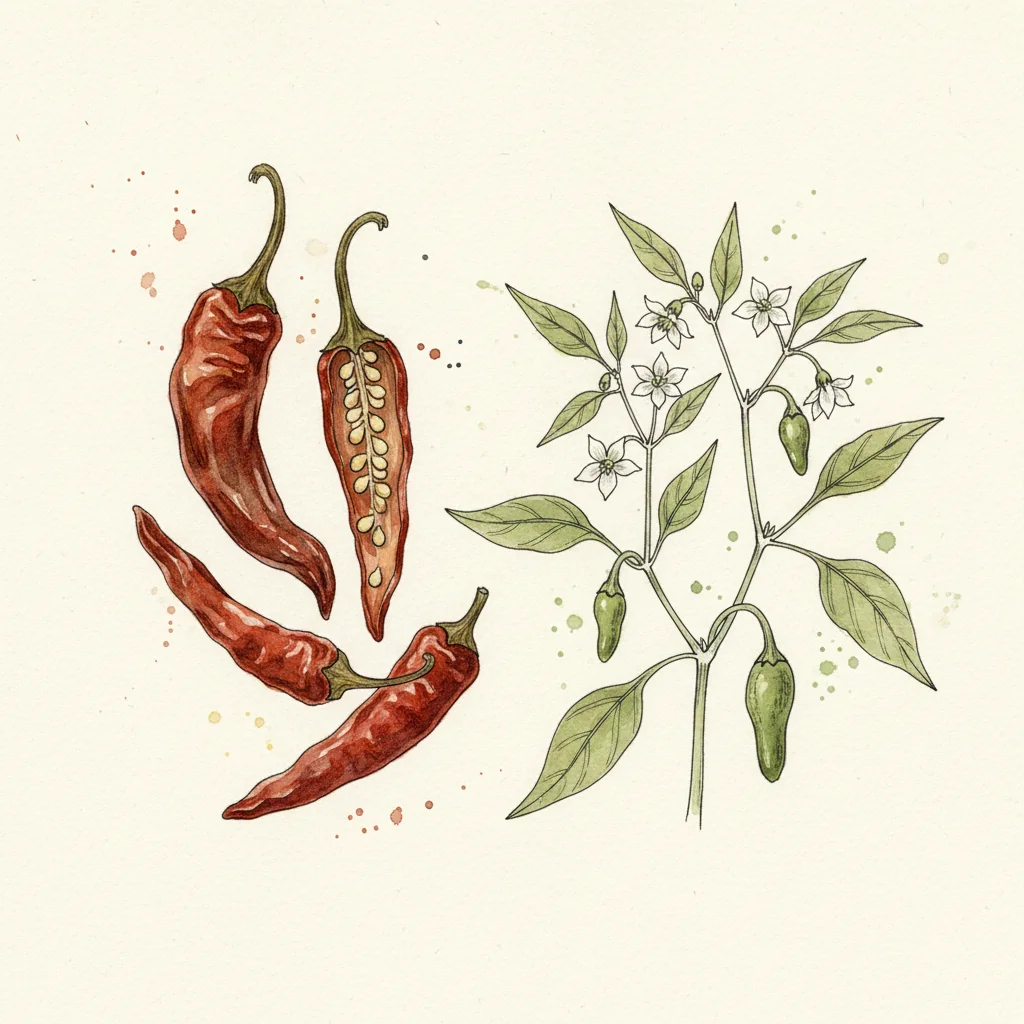
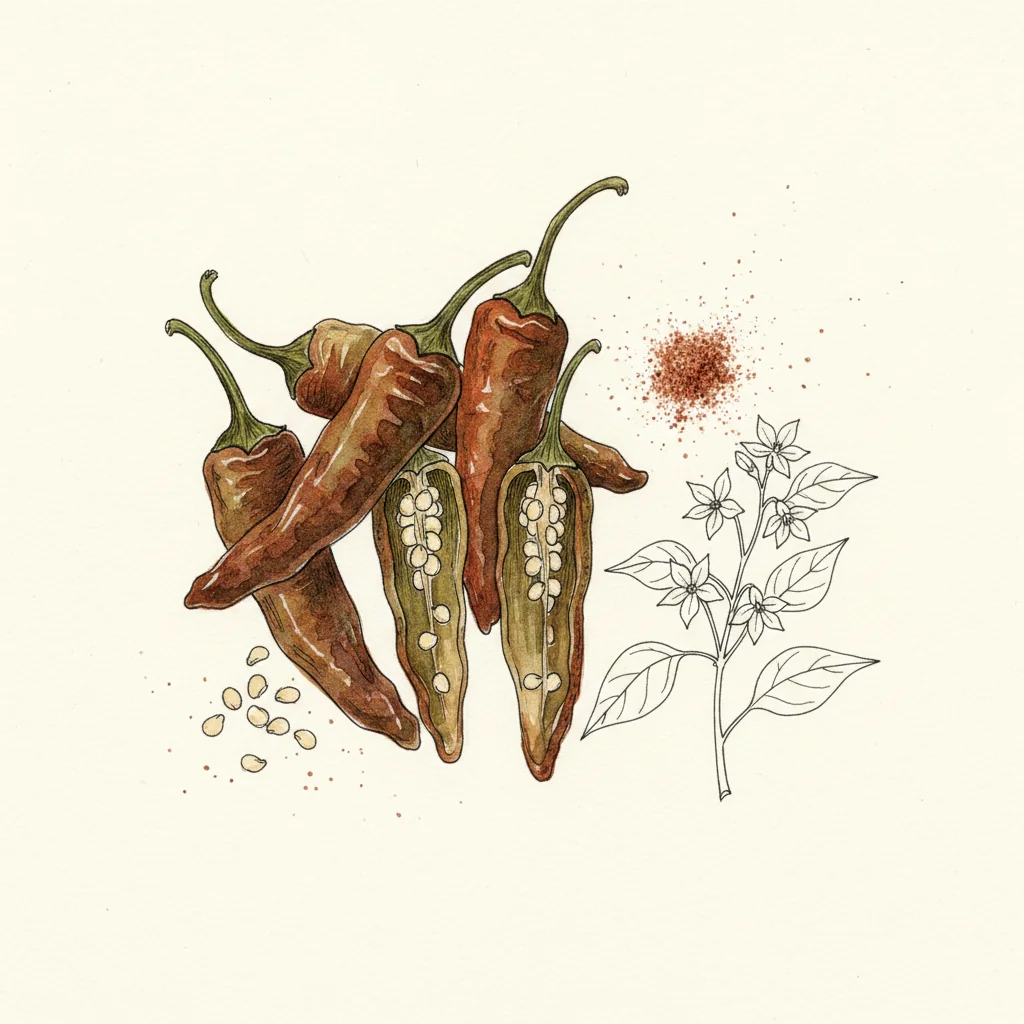
Same state, opposite chiles. Chimayó is a ripe red landrace, sun-dried to a cherry-and-earth depth with a soft building heat. Hatch is picked green, roasted, and dried for a bright, grassy, charred-skin lift with a sharper 5-out-of-10 bite. Use Chimayó for red chile sauce and carne adovada; use Hatch for green chile stew, eggs and carnitas.
Spice · Chile
Chimayó Chile
Chimayó, Española Valley, Río Arriba County, New Mexico, USA
sun-dried cherry · earthy red soil · toasted raisin
Spice · Chile
Hatch Green Chile Powder
Hatch Valley, a 30-mile stretch of the Rio Grande between Hatch and Rincon, southern New Mexico, United States (Hatch Valley (geographic name, not a federal PDO; protected by the New Mexico Chile Advertising Act, 2012))
roasted green chile · fresh-cut grass · charred pepper skin
Our verdict
At a glance
| Criterion | Chimayó Chile | Hatch Green Chile Powder |
|---|---|---|
| Chimayó valley, Río Arriba County, northern New Mexico | Hatch Valley, a 30-mile Rio Grande stretch in southern New Mexico | |
| Sun-dried cherry, red earth, toasted raisin | Roasted green chile, fresh-cut grass, charred pepper skin | |
| 4/10 — low warmth that builds slowly | 5/10 — clean grassy heat that climbs mid-tongue | |
| Red chile sauce, carne adovada, posole, tamale masa | Green chile stew, carnitas, breakfast burritos, mac and cheese, cornbread | |
| ~$19 for a real 8 oz bag | ~$10 for a 2 oz jar of pure powder | |
| Premium single-origin red, buy from the valley | Fair price for pure roasted green chile with nothing added |
When to choose Chimayó Chile
Chimayó is the red side of New Mexico cooking. Pick it when the dish is built on dried red chile — enchilada sauce, carne adovada, posole, tamale masa, pinto beans. It's a single-origin landrace from one northern valley, cherry-bright with a red-earth depth and a gentle 4-out-of-10 warmth that builds instead of stinging. Treat it as a base spice, not a finisher: bloom it in warm fat or simmer it into the sauce from the start, 3 to 4 tablespoons of pure powder per quart. The catch is sourcing — under 500 acres grow the real landrace, so most "Chimayó" on Amazon is a generic New-Mexico blend. Buy from a valley source and expect $18 to $20 for a true 8-to-12 oz bag. What you're paying for is the deep, sweet, earthy red that anchors a proper red chile sauce — a flavor a green chile, however good, simply can't give you. If the plate is red, this is the one.
When to choose Hatch Green Chile Powder
Hatch is the green side, and it's a different flavor universe: bright, grassy, charred-skin lift rather than sweet red earth. Pick it for green chile stew and posole, carnitas, scrambled eggs and breakfast burritos, mac and cheese, cornbread. The chile is roasted and dried green rather than ripened red, so it keeps a fresh, vegetal heat — a clean 5-out-of-10 that lands mid-tongue and climbs. It's grown in the Hatch Valley, the 30-mile Rio Grande bottom that gives the chile its name and its name is protected by New Mexico law, not a federal PDO. Bloom it early in fat, half a teaspoon to a teaspoon for four, and double it if you want the heat to read in a stew. Color is your freshness gauge: a living powder is a bright, slightly olive green, while dull khaki-brown means it's oxidized and lost both lift and heat. One warning — don't dry-toast it hard in a screaming pan, which scorches the green note to bitterness. At about $10 a jar of pure powder with no salt or fillers, it's an honest buy.
Where to buy?
Chimayó Chile
Links checked on
| Merchant | Price | Action |
|---|---|---|
| Amazon US | — | Amazon US |
| Made in New Mexico | — | Made in New Mexico |
| Chimayo Chile Shop | — | Chimayo Chile Shop |
Prices may vary depending on current promotions on the merchant site.
Hatch Green Chile Powder
Links checked on
| Merchant | Price | Action |
|---|---|---|
| Burlap & Barrel (Hatch Green Chili) | — | Burlap & Barrel (Hatch Green Chili) |
| Amazon US (Hatch Green Chile Powder, Mild) | — | Amazon US (Hatch Green Chile Powder, Mild) |
| Hatch Chile Store | — | Hatch Chile Store |
Prices may vary depending on current promotions on the merchant site.
Frequently asked questions
- Are Chimayó and Hatch the same chile?
- No. Chimayó is a specific landrace grown in one northern valley and dried red; Hatch is a green-picked, roasted chile from a different valley in the south. Red versus green changes everything — sweet-earthy depth against bright-grassy heat. They're both New Mexico, but they aren't substitutes.
- Which is hotter?
- Hatch, at about 5 out of 10 against Chimayó's 4. Hatch reads sharper and more vegetal because it's picked green; Chimayó's heat is softer and rounder, building behind a sweet dried-cherry note. Neither is a punishing chile.
- Can I use one for the other?
- Only loosely. Hatch in a red chile sauce makes it taste green and grassy; Chimayó in a green chile stew makes it taste sweet and earthy. If you must swap, expect the dish to shift character — match the color of the chile to the dish you're making.
- Why does the green powder look different over time?
- Oxidation. Fresh Hatch powder is a bright, slightly olive green; once it dulls to khaki-brown it has lost most of its lift and heat. The green note fades faster than a red chile's, so buy Hatch small and use it within a year.
The best pairings
With Chimayó Chile
With Hatch Green Chile Powder
Comparison prepared according to our methodology. Sponsored purchase links — see our affiliations.