
Comparison
Chimayó chile vs smoked paprika: which to choose?
Both are mild ground red chiles, but the flavor split is clean. Chimayó is fruity and earthy — sun-dried cherry, red soil — the base of New Mexican red chile sauce. Smoked paprika de la Vera is all oak smoke, DOP-certified over wood. Chimayó runs ~$19, paprika ~$9. Want smoke, buy paprika; want New Mexican red chile flavor, buy Chimayó.
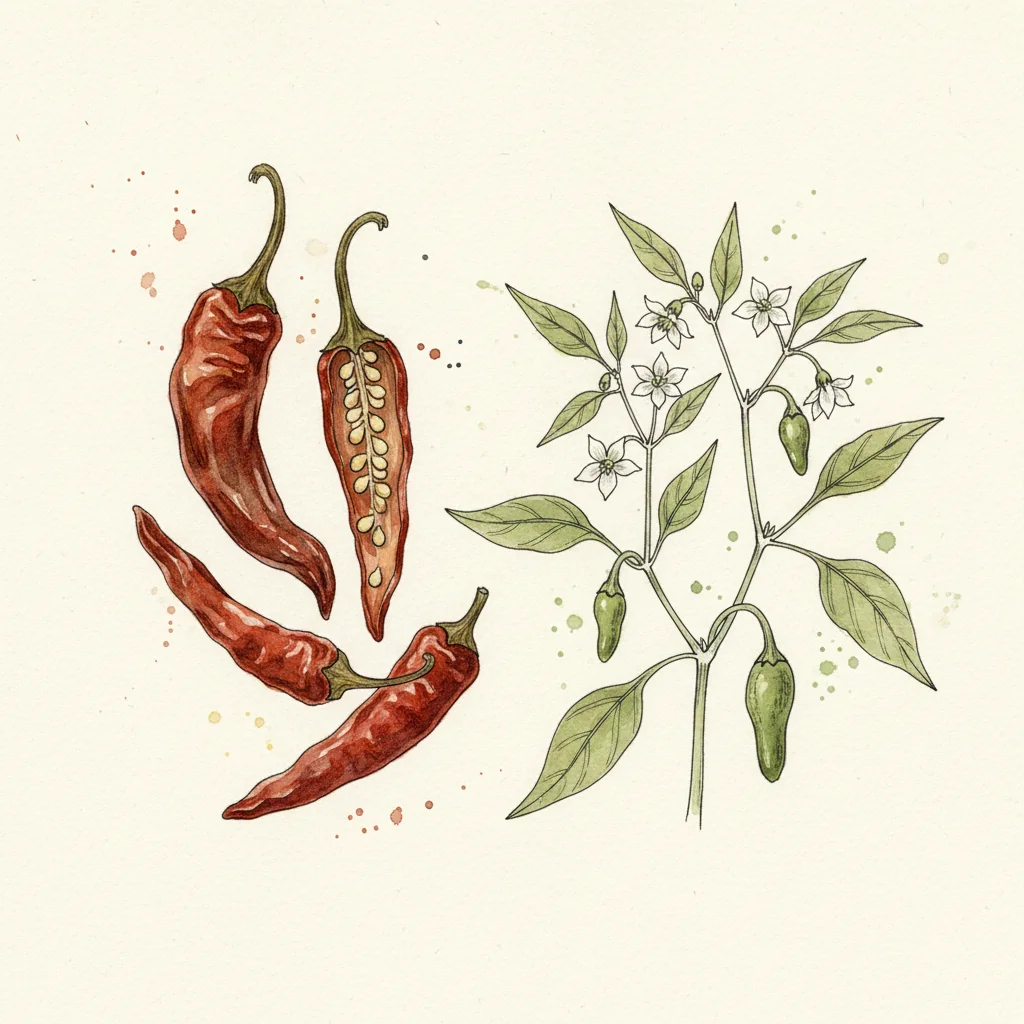
Spice · Chile
Chimayó Chile
Chimayó, Española Valley, Río Arriba County, New Mexico, USA
sun-dried cherry · earthy red soil · toasted raisin
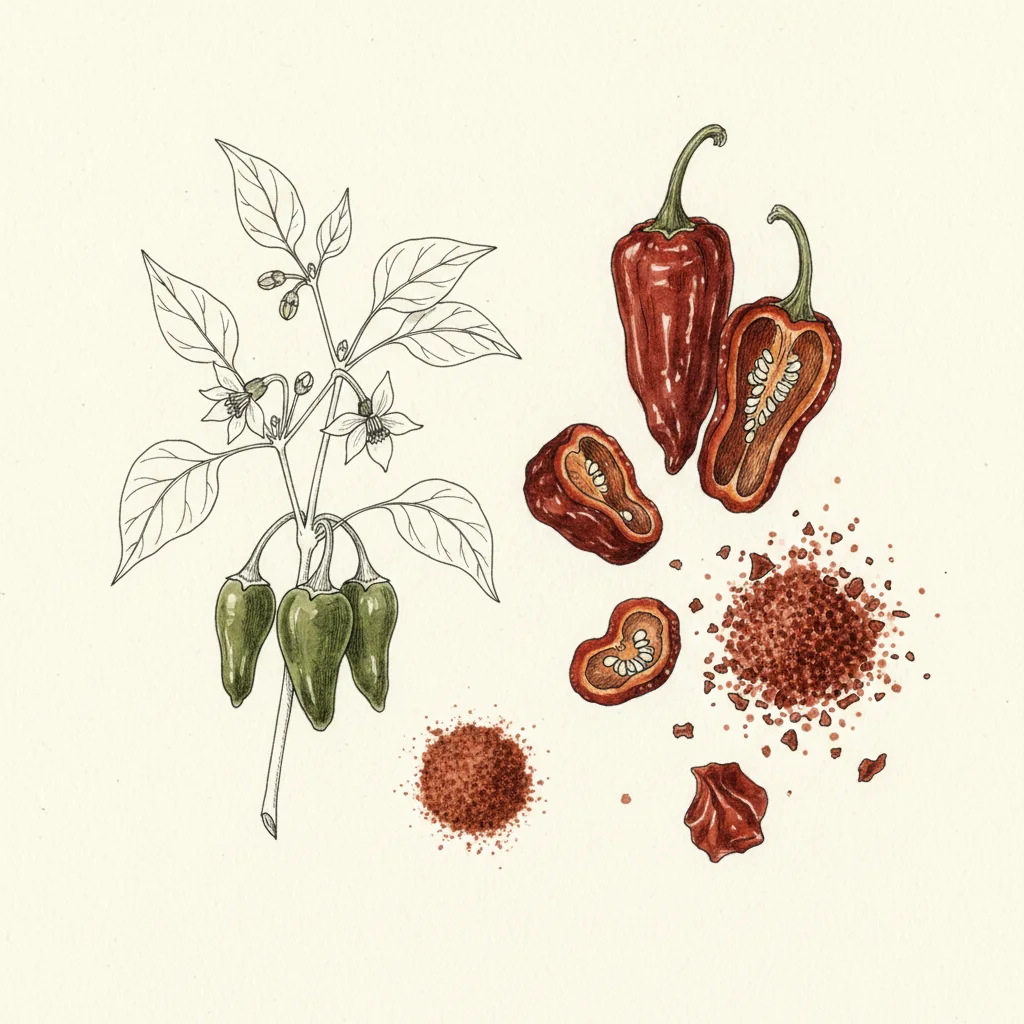
Spice · Paprika
Smoked Paprika de la Vera DOP
La Vera comarca, northern Extremadura (Cáceres province), Spain (DOP)
deep oak smoke · roasted red pepper · grilled meat
Our verdict
Chimayó for earthy New Mexican red chile dishes; smoked paprika for deep oak smoke flavor.
At a glance
| Criterion | Chimayó Chile | Smoked Paprika de la Vera DOP |
|---|---|---|
| Origin | USA — Chimayó, New Mexico | Spain — La Vera, Extremadura |
| Certification | None (heirloom landrace) | DOP |
| Defining trait | Fruity, earthy heirloom red chile | Deep oak-smoked |
| Intensity | 4/10 — mild, fruity warmth | 5/10 — mild, smoke-forward |
| Main notes | Sun-dried cherry, red soil, toasted raisin | Deep oak smoke, roasted red pepper, grilled meat |
| How to use | Bloom in fat / simmer from the start — a base spice | Bloom gently in warm oil off direct heat |
| Best for | Red chile sauce, carne adovada, posole, tamales | Chorizo, pulpo gallego, patatas bravas, BBQ rubs |
| Median price | ~$19 / 8 oz bag | ~$9 / 1.8 oz tin |
| Value | Pricey but irreplaceable for New Mexican food | Cheap, certified smoke — worth it |
When to choose Chimayó Chile
Reach for Chimayó chile when you're making New Mexican food and want that specific earthy, fruity red — there's no real substitute for it. Grown as an heirloom landrace in the Española Valley village of Chimayó, this ground chile is mild (about 4/10) with a flavor that's all fruit and soil: sun-dried cherry, toasted raisin, and the unmistakable taste of red New Mexican earth. It's a base spice, not a finisher. Bloom it in warm fat or simmer it into a sauce from the start of cooking, where it builds the backbone of a dish rather than sitting on top. Its home turf is the New Mexican canon: red chile sauce for enchiladas, carne adovada, posole and pork stews, tamale masa, pinto beans, and huevos rancheros. The flavor is about depth and warmth, not heat — you can use it generously without setting anyone's mouth on fire. Keep the ground chile airtight and out of the light; it holds color and aroma about 12 months before the fruit fades and the powder dulls toward brown. The honest catch is price: at roughly $19 for an 8 oz bag it's expensive for a mild chile powder, a premium you pay for the small-grower heirloom provenance. That's worth it if you specifically want authentic New Mexican red chile flavor, which nothing else delivers. It's not worth it if you just need generic mild red heat or, especially, if you want smoke — Chimayó has none. Skip it where you need raw sharp heat (use a fresh chile), on delicate fish it would overwhelm, and in bright vinaigrettes that want clean acidity. Against smoked paprika, the line is simple: Chimayó is fruity earth with no smoke, built into the dish from the base.
When to choose Smoked Paprika de la Vera DOP
Reach for smoked paprika de la Vera when you want deep, woody smoke in a dish — it's the most efficient way to put real smoke flavor into food without a smoker. Made in the La Vera comarca of Extremadura and DOP-protected, the peppers are dried slowly over oak fires, which is where the flavor comes from: deep oak smoke, roasted red pepper, and a grilled-meat savor, all over a mild 5/10 heat. The DOP isn't decoration — it guarantees the wood-smoking method and the region, which is what separates true Pimentón de la Vera from ordinary paprika dusted with liquid smoke. Use it early in cooking, bloomed gently in warm oil off direct heat so the color releases and the smoke unfurls without scorching. It's the soul of homemade chorizo, of Galician-style octopus (pulpo a la gallega), of patatas bravas, smoky deviled eggs, romesco, and bean stews, and it makes a superb BBQ rub for chicken and ribs. The catch is heat management: those natural sugars scorch in a screaming-hot dry pan and turn bitter in seconds, so it always wants gentle warmth and a little fat, never a blistering surface. Don't pile it onto already-smoked foods like smoked salmon or scamorza, where it doubles up, and keep it out of delicate sweet preparations. Store it in its tin away from light; the brick-red color and the smoke hold about 18 months before oxidizing toward brown. On value it's a clear win — about $9 for a tin of certified, single-source smoke — and it does something Chimayó simply can't. Against the New Mexican chile, the choice is about which flavor you're after: smoke and wood, or fruit and earth. They're both mild reds, but they are not interchangeable.
Where to buy?
Chimayó Chile
Links checked on
| Merchant | Price | Action |
|---|---|---|
| Amazon US | — | Amazon US |
| Made in New Mexico | — | Made in New Mexico |
| Chimayo Chile Shop | — | Chimayo Chile Shop |
Prices may vary depending on current promotions on the merchant site.
Smoked Paprika de la Vera DOP
Links checked on
| Merchant | Price | Action |
|---|---|---|
| Amazon US | — | Amazon US |
| Burlap & Barrel | — | Burlap & Barrel |
| Sous Chef UK | — | Sous Chef UK |
Prices may vary depending on current promotions on the merchant site.
Frequently asked questions
- Can I use smoked paprika instead of Chimayó chile?
- Not without changing the dish. Smoked paprika brings oak smoke that New Mexican food doesn't traditionally have, while Chimayó brings fruity, earthy red-chile flavor with no smoke at all. Swap them and your enchilada sauce tastes Spanish, not New Mexican. They're both mild ground reds, but the core flavors don't overlap.
- Why is Chimayó chile so expensive?
- It's an heirloom landrace grown in small quantities in one New Mexican valley, so you're paying for limited, traceable provenance rather than commodity chile. At about $19 for 8 oz it's a premium, justified only if you specifically want authentic New Mexican red-chile flavor, which generic chile powder can't replicate.
- Why does my smoked paprika turn bitter?
- You're scorching it. The natural sugars in la Vera paprika burn fast in a dry, blistering-hot pan and go acrid in seconds. Bloom it gently in warm oil off direct heat instead, early in the cook, so the color and smoke release without burning.
- Do I add these at the start or the end?
- Both are base spices, added early. Chimayó is bloomed in fat or simmered into a sauce from the start. Smoked paprika is bloomed gently in warm oil at the beginning of cooking. Neither is a raw finishing dust — they need a little heat and fat to release their flavor.
The best pairings
With Chimayó Chile
With Smoked Paprika de la Vera DOP
Comparison prepared according to our methodology. Sponsored purchase links — see our affiliations.