
Comparison
Chipotle morita vs Chimayó chile: what's the difference?
The morita brings wood smoke and dried cherry; the Chimayó brings sweet sun-dried cherry and red-soil earth with no smoke. Morita is a cheap, smoky whole pod for adobo and BBQ. Chimayó is a pricey, delicate ground chile for New Mexican red sauce. Smoke versus pure fruit — and the morita costs a quarter as much.
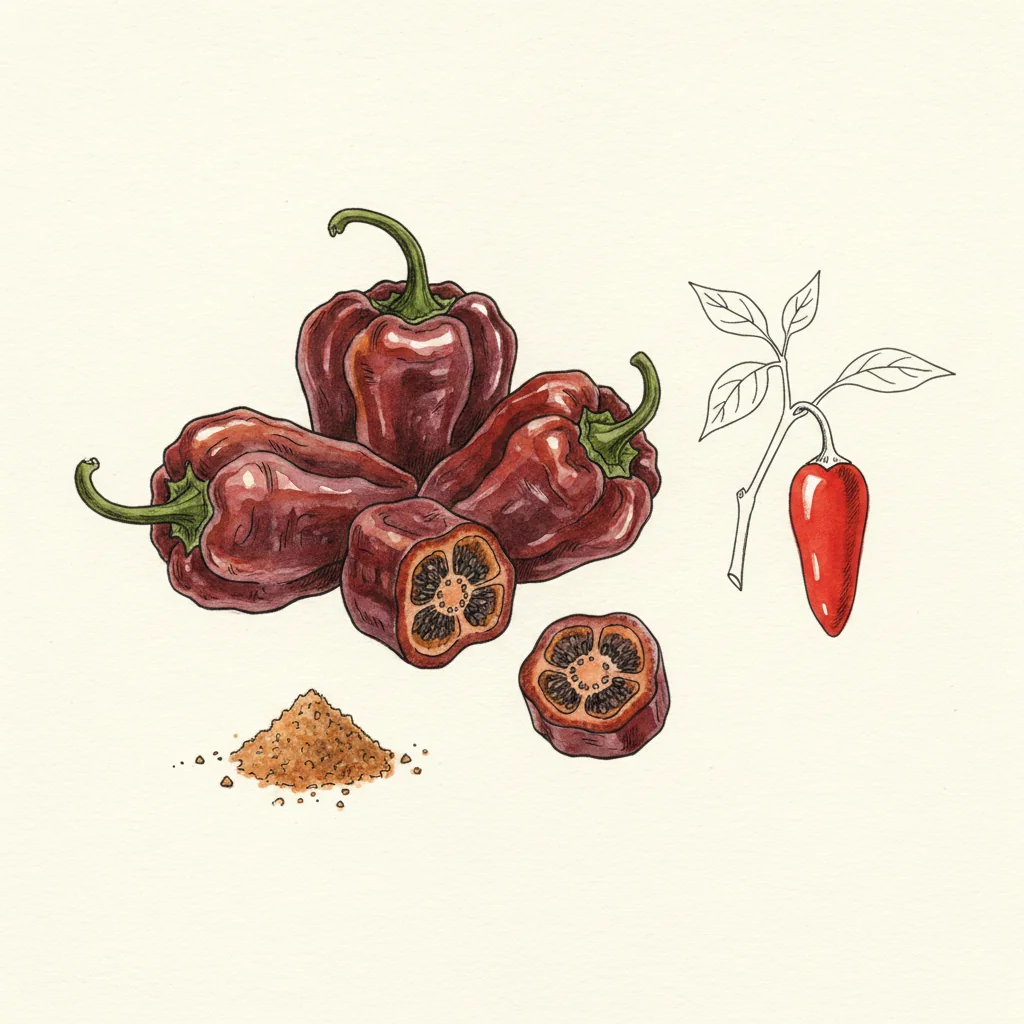
Spice · Dried smoked chile
Chipotle Morita
Chihuahua and Veracruz, Mexico
wood smoke · dried cherry · tobacco leaf
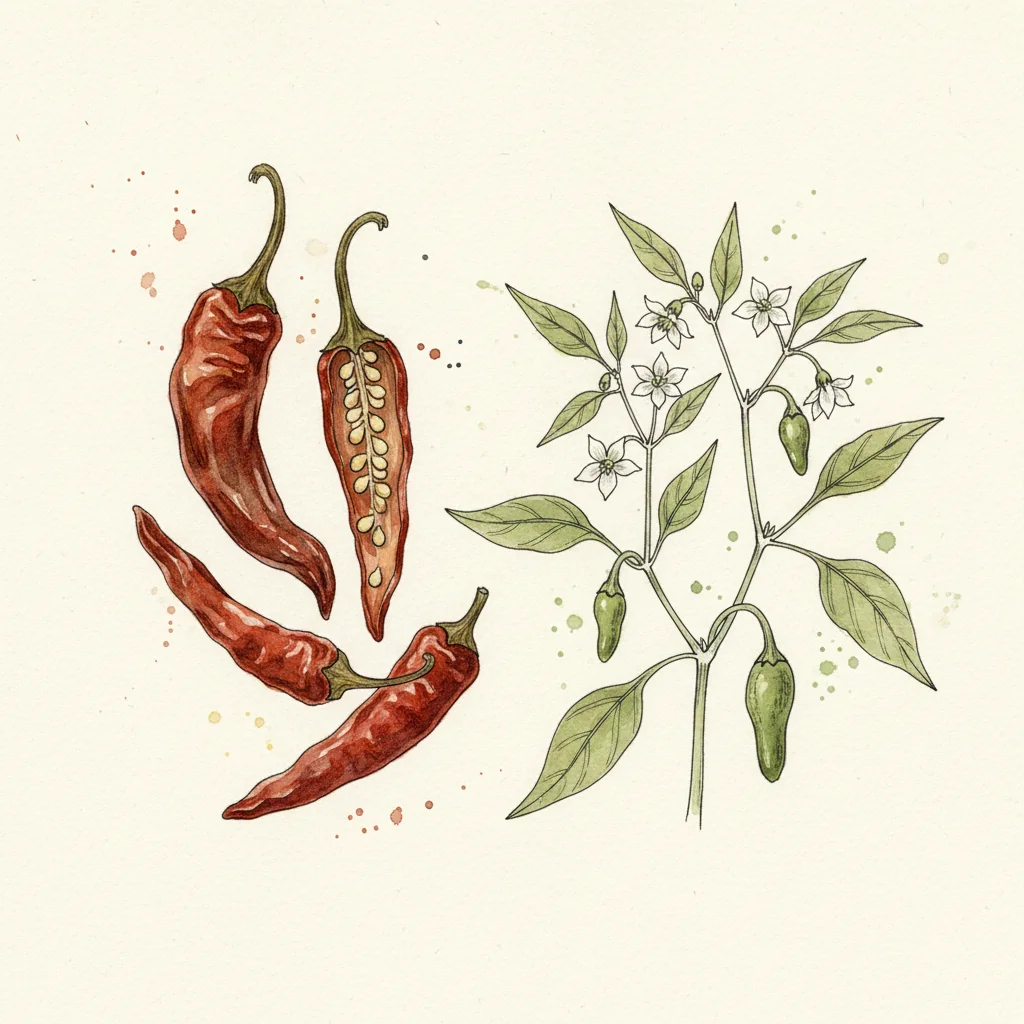
Spice · Chile
Chimayó Chile
Chimayó, Española Valley, Río Arriba County, New Mexico, USA
sun-dried cherry · earthy red soil · toasted raisin
Our verdict
Morita for smoky depth and value; Chimayó for delicate New Mexican red sauce.
At a glance
| Criterion | Chipotle Morita | Chimayó Chile |
|---|---|---|
| Profile | Wood smoke, dried cherry, tobacco leaf, cocoa, raisin | Sun-dried cherry, earthy red soil, toasted raisin, dried apricot |
| Heat | 6/10 — slow, smoky heat behind the sweetness, holds | 4/10 — a low, even warmth that builds slowly and never bites |
| Price | ~$5.50 for a 4 oz bag of whole pods | ~$19 for an 8 oz bag of ground chile |
| Best use | Adobo, BBQ sauce, black bean soup, salsa roja, pulled pork | Red enchilada sauce, carne adovada, posole, tamale masa |
When to choose Chipotle Morita
Reach for the chipotle morita when you want wood smoke and dried fruit in a sauce, cheaply. A morita is a red jalapeño smoke-dried over wood, from Chihuahua and Veracruz, and at 6/10 it brings wood smoke, dried cherry and tobacco with cocoa and raisin underneath — a slow, smoky heat that arrives behind the sweetness and holds. Four jobs it owns. First, adobo and chili braises, where the morita is the smoky backbone. Second, barbecue and BBQ sauce, where its smoke does the work a smoker would. Third, black bean soup and salsa roja, where a little goes a long way. Fourth, pulled pork, where it reads as if the meat were smoked. The technique: toast it in a dry pan for 30 seconds to wake the oils, then soak in hot water 15 minutes and blend into a sauce — or simmer it whole into a braise and pull it out at the end. Good moritas stay pliable and leathery, not brittle; a snap-dry pod has lost its life. They hold their smoke and fruit for a year or more in a resealable bag, kept dry and out of light, and a quick toast before use brings them back. The headline argument over Chimayó is value: at about $5.50 for a 4 oz bag, the morita gives you smoke and depth for a quarter of the price. If smoke belongs in the dish, this is the pick.
When to choose Chimayó Chile
Reach for the Chimayó chile when you want a pure, sweet, smoke-free New Mexican red sauce and you're willing to pay for the real thing. This is single-origin native chile, ground, from Chimayó in the Española Valley of northern New Mexico, and at 4/10 it's a low, even warmth — sun-dried cherry, earthy red soil and toasted raisin, more fruit than fire, with no smoke at all. Four jobs it owns. First, red chile sauce for enchiladas, the dish Chimayó is grown for. Second, carne adovada, pork marinated and braised in red chile. Third, posole and pork stews. Fourth, tamale masa and pinto beans, where it's the foundational red. The technique: bloom it in warm fat or simmer it into a sauce at the start of cooking — it's a base spice, not a finisher, and like all ground chile it goes harsh if dusted on raw at the end. The catch is the price and the fakes. Real Chimayó is a tiny, heirloom-landrace crop, which is why an 8 oz bag runs about $19 — far more than ordinary New Mexico chile powder — and why a lot of 'Chimayó' on shelves isn't. Buy single-origin, from a named grower, or you're paying a premium for generic powder. Keep the ground chile airtight, away from light and heat; it holds color and aroma for about 12 months, then dulls toward brown. Where the morita brings smoke, Chimayó brings delicate, smoke-free fruit — they're not substitutes.
Where to buy?
Chipotle Morita
Links checked on
| Merchant | Price | Action |
|---|---|---|
| Amazon US | — | Amazon US |
| Sous Chef UK | — | Sous Chef UK |
Prices may vary depending on current promotions on the merchant site.
Chimayó Chile
Links checked on
| Merchant | Price | Action |
|---|---|---|
| Amazon US | — | Amazon US |
| Made in New Mexico | — | Made in New Mexico |
| Chimayo Chile Shop | — | Chimayo Chile Shop |
Prices may vary depending on current promotions on the merchant site.
Frequently asked questions
- What's the main difference between morita and Chimayó?
- Smoke. The morita is smoke-dried, bringing wood smoke and dried cherry; the Chimayó has no smoke at all, just sweet sun-dried cherry and red-soil earth. Different flavors, different jobs.
- Why is Chimayó so much more expensive?
- It's a tiny heirloom landrace crop from one New Mexican valley. An 8 oz bag runs about $19 against the morita's ~$5.50 for 4 oz — and a lot of so-called Chimayó on shelves is actually generic powder.
- Which is hotter?
- The morita, modestly: 6/10 against Chimayó's 4/10. Neither is fierce — the morita's heat trails the smoke and holds, Chimayó's is a low even warmth that never bites.
- Can I use them the same way?
- Both are base spices, not finishers, but the formats differ: the morita is a whole pod you toast and rehydrate; Chimayó is a ground powder you bloom in fat. And only the morita brings smoke.
The best pairings
With Chipotle Morita
With Chimayó Chile
Comparison prepared according to our methodology. Sponsored purchase links — see our affiliations.