
Comparison
Habanero vs Hatch green chile: which is hotter?
The Yucatán habanero wins on heat by a mile: a 9/10 tropical-fruit scorcher against the Hatch's mellow 5/10 roasted-green warmth. If you want raw firepower and apricot perfume, buy the PDO habanero. If you want to flavor a whole pot of stew or eggs without setting it on fire, buy Hatch.
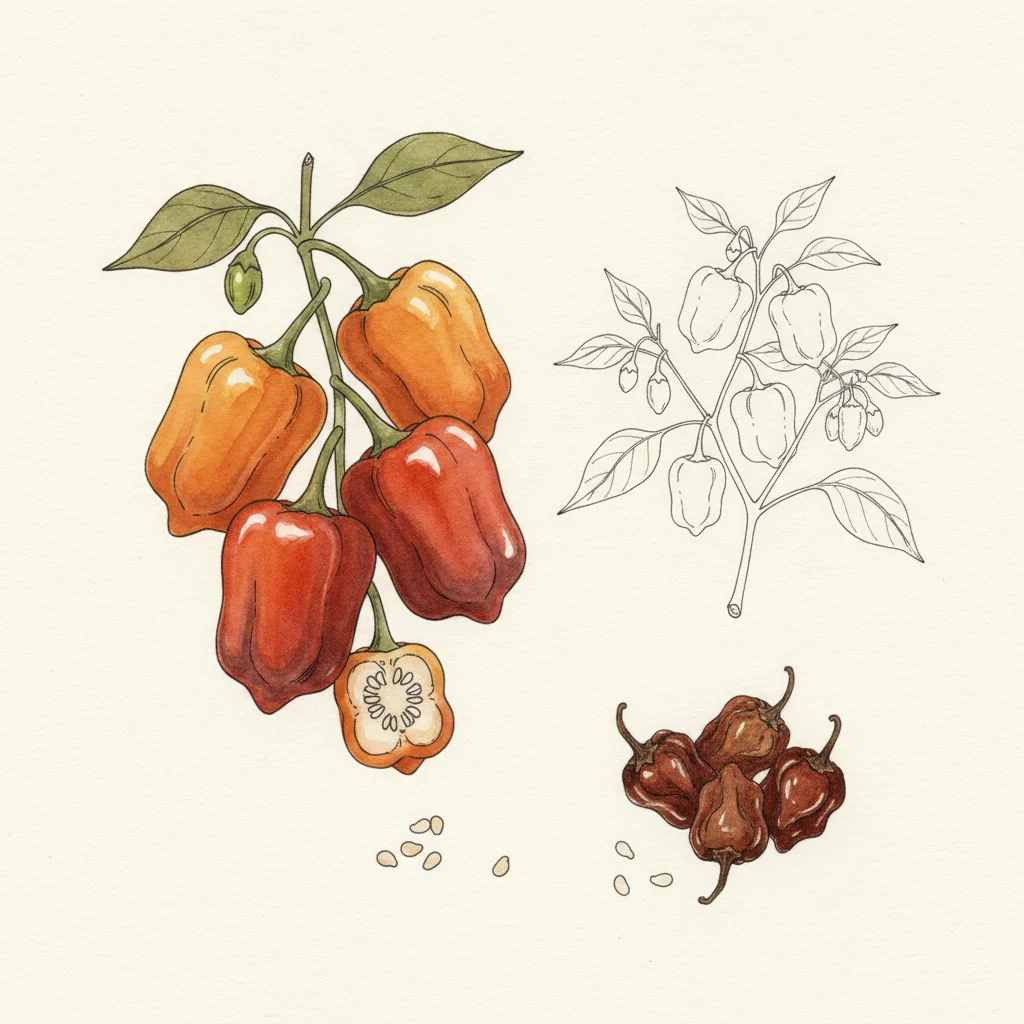
Spice · Chile
Yucatán Habanero
Yucatán Peninsula (Yucatán, Campeche, Quintana Roo), Mexico (PDO (Habanero de la Península de Yucatán, 2010))
intense fruity-floral · ripe apricot · green mango
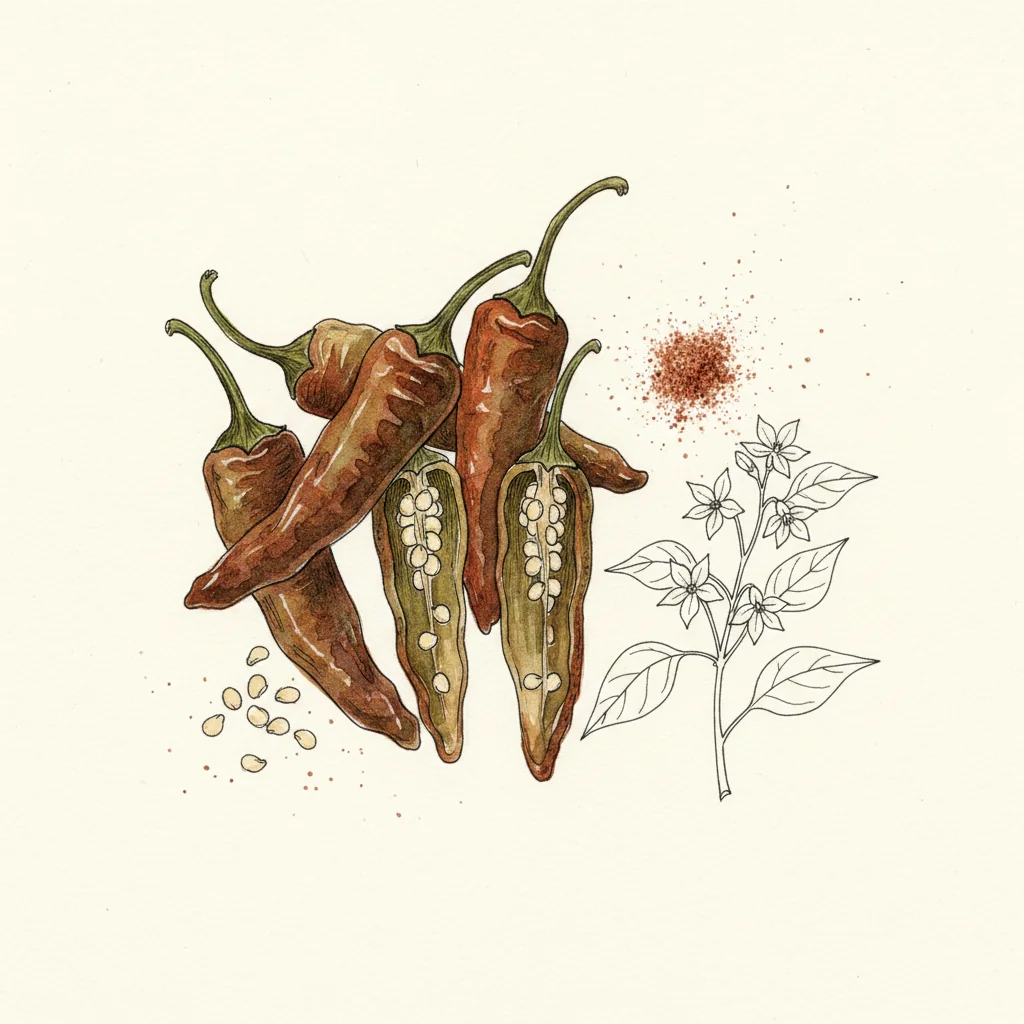
Spice · Chile
Hatch Green Chile Powder
Hatch Valley, a 30-mile stretch of the Rio Grande between Hatch and Rincon, southern New Mexico, United States (Hatch Valley (geographic name, not a federal PDO; protected by the New Mexico Chile Advertising Act, 2012))
roasted green chile · fresh-cut grass · charred pepper skin
Our verdict
Habanero for raw heat and fruit, Hatch to flavor a whole dish gently.
At a glance
| Criterion | Yucatán Habanero | Hatch Green Chile Powder |
|---|---|---|
| Profile | Intense fruity-floral: ripe apricot, green mango, orange blossom | Roasted green chile, fresh-cut grass, charred pepper skin |
| Heat | 9/10 — a slow-building, all-mouth burn behind the fruit | 5/10 — a clean grassy warmth that lands mid-tongue and fades |
| Price | ~$9 for 2 oz dried whole pods | ~$10 for a 2 oz jar of roasted powder |
| Best use | Minced raw into salsa and ceviche, or roasted for hot sauce | Bloomed early into green chile stew, carnitas, eggs, mac and cheese |
When to choose Yucatán Habanero
Reach for the *Yucatán* habanero when heat and tropical fruit are the point, not a background note. This is a Capsicum chinense at 9/10 — it doesn't simmer in the back of a stew, it announces itself with ripe apricot and green mango before the burn arrives. Four jobs it owns. First, salsa habanera: a single pod, seeds and all, minced fine into lime, white onion and a little orange juice. The fruit reads before the heat, which is exactly the trick a milder chile can't pull. Second, fish or shrimp ceviche, where you want a sharp, perfumed scorch against cold acid. Third, a homemade hot sauce — roast the pods first to round the burn into something you can pour, not just survive. Fourth, a marinade for grilled chicken, where the floral notes carry through the char. The catch is dose. At 9/10 this is not a flavor-the-pot chile; it is a few-drops chile. Use a quarter of a pod where a recipe says one if you're heat-shy, and wear gloves — the oils stay on your fingers for hours. It does not belong in anything delicate: a teaspoon will bury a subtle broth or a cream sauce. Buy it as dried whole pods (about $9 for 2 oz) and rehydrate, or fresh from a Latin grocer when you can find it. Look for the PDO mark — Habanero de la Península de Yucatán has carried protected status since 2010, and the real thing is more aromatic than the generic supermarket habanero. Store dried pods in an airtight opaque jar for up to 18 months, or freeze whole for six months with the heat intact.
When to choose Hatch Green Chile Powder
Reach for Hatch green chile powder when you want the flavor of roasted chile through a whole dish without the heat fighting you. At 5/10 it is the opposite tool: grassy, roasty, a little charred, with a clean warmth you can build a pot around rather than tiptoe past. Four jobs it owns. First, green chile stew and posole — bloom a tablespoon in fat at the start and it becomes the backbone, not an accent. Second, pulled pork and carnitas, where the roasted-pepper note reads like the chile was cooked in. Third, scrambled eggs and breakfast burritos, where you want green-chile character at breakfast volume. Fourth, mac and cheese or cornbread, the two American comfort dishes Hatch quietly transforms. The thing to know: this is grown in a 30-mile stretch of the Rio Grande around Hatch, New Mexico, and it's protected by name under the state's Chile Advertising Act, not a federal PDO — so cheap 'Hatch-style' powders exist. Color is your freshness test. A living Hatch powder is bright, slightly olive green; dull khaki-brown means it has oxidized and lost both lift and heat. Buy a 2 oz jar (about $10), keep it airtight and dark, and use it within a year — the green note fades faster than a red chile's. Add it early; the raw vegetal edge softens with a little cooking. It can finish a dish, but it's happiest bloomed into the base. If you need actual firepower, this is the wrong chile — pair it with the habanero or a hotter red when you want both flavor and a real burn.
Where to buy?
Yucatán Habanero
Links checked on
| Merchant | Price | Action |
|---|---|---|
| Amazon US | — | Amazon US |
| Sonoran Spice | — | Sonoran Spice |
Prices may vary depending on current promotions on the merchant site.
Hatch Green Chile Powder
Links checked on
| Merchant | Price | Action |
|---|---|---|
| Burlap & Barrel (Hatch Green Chili) | — | Burlap & Barrel (Hatch Green Chili) |
| Amazon US (Hatch Green Chile Powder, Mild) | — | Amazon US (Hatch Green Chile Powder, Mild) |
| Hatch Chile Store | — | Hatch Chile Store |
Prices may vary depending on current promotions on the merchant site.
Frequently asked questions
- Which is hotter, habanero or Hatch?
- The habanero, by a wide margin: 9/10 against the Hatch's 5/10. The habanero is a slow, all-mouth scorch; Hatch is a clean grassy warmth you can flavor a whole pot with.
- Can I swap Hatch for habanero in a recipe?
- Not for heat — you'd need a lot of Hatch and you'd never reach habanero territory, just more roasted-green flavor. Swap the other way only in tiny amounts, and expect tropical fruit instead of grassy roast.
- Is the PDO habanero worth it over a supermarket one?
- For raw, perfumed heat in salsa or ceviche, yes — the Yucatán PDO pod is more aromatic. For a cooked sauce where the fruit gets buried, a generic habanero is fine.
- Why is my Hatch powder brown?
- It has oxidized. Fresh Hatch is bright olive-green; a khaki-brown jar has lost most of its lift and heat. Buy small and use within a year.
The best pairings
With Yucatán Habanero
With Hatch Green Chile Powder
Comparison prepared according to our methodology. Sponsored purchase links — see our affiliations.