
Yucatán Habanero, Capsicum chinense — dried or fresh
In brief — The signature chile of the Yucatán Peninsula, PDO-protected in Mexico since 2010. It is known for a Scoville rating of 100,000 to 350,000 units, but the real reason to buy it is aromatic: a nose of ripe apricot, mango and orange blossom that arrives before the burn. Wear gloves, always. A fraction of one chile seasons a dish for four. Its aromatic profile develops notes of intense fruity-floral, ripe apricot, green mango, extended by orange blossom and candied citrus, for an intensity of 9/10. In the kitchen, it's best added finely minced into cold sauces (salsa, ceviche), or roasted then blended to round off the heat and it pairs with salsa habanera, cochinita pibil, fish ceviche. Recommended dosage: a quarter of one fresh chile for four people; gloves are non-negotiable when you handle it — the capsaicin is fierce. Expect from $6.00 to $14.00 per 2 oz dried whole pods (median $9.00).
Origin : Yucatán Peninsula (Yucatán, Campeche, Quintana Roo), Mexico (PDO (Habanero de la Península de Yucatán, 2010))
Capsicum chinense
« Serious heat (200,000-350,000 SHU) you dose to the gram. The tropical fruit hits before the burn, a signature nothing else copies. Yucatán traceability is decent; dodge the Chinese-grown pods flooding online grocers. »
The signature chile of the Yucatán Peninsula, PDO-protected in Mexico since 2010. It is known for a Scoville rating of 100,000 to 350,000 units, but the real reason to buy it is aromatic: a nose of ripe apricot, mango and orange blossom that arrives before the burn. Wear gloves, always. A fraction of one chile seasons a dish for four.
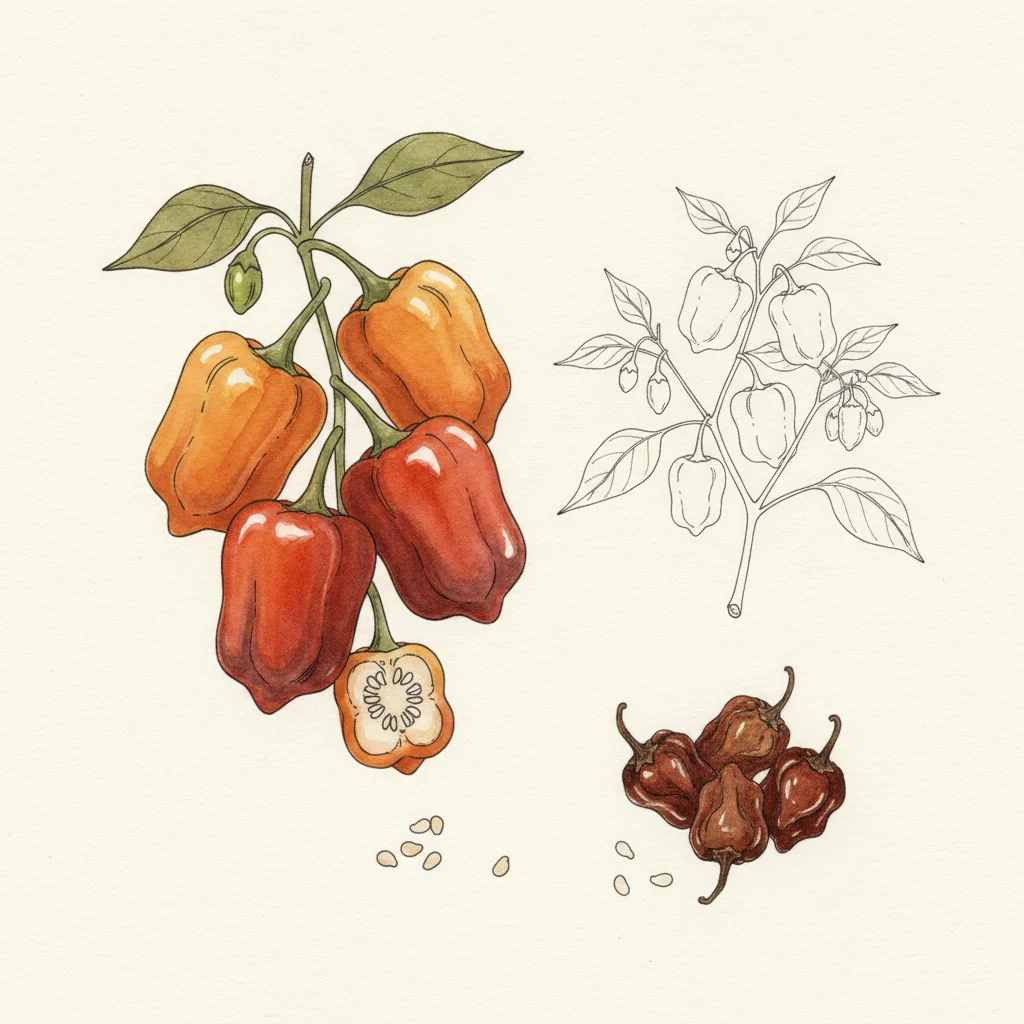
Spice · Chile
Yucatán Habanero
Yucatán Peninsula (Yucatán, Campeche, Quintana Roo), Mexico (PDO (Habanero de la Península de Yucatán, 2010))
intense fruity-floral · ripe apricot · green mango
Aromatic profile
| Family | Capsicum chinense |
|---|---|
| Intensity | ●●●●● (9/10) |
| Main notes | intense fruity-floral · ripe apricot · green mango |
| Secondary notes | orange blossom · candied citrus · passion fruit |
| Mouthfeel | an immediate burst of tropical fruit, then a slow-building burn that spreads across the whole mouth |
| Finish length | very long; the heat lingers 5 to 10 minutes depending on the dish |
Culinary use
- When to add : finely minced into cold sauces (salsa, ceviche), or roasted then blended to round off the heat
- Dosage : a quarter of one fresh chile for four people; gloves are non-negotiable when you handle it — the capsaicin is fierce
- Ideal pairings : salsa habanera, cochinita pibil, fish ceviche, spicy guacamole, homemade hot sauce, marinade for grilled chicken
- Avoid with : anything delicate (subtle raw fish, fresh goat cheese), sweet preparations, except dark chocolate, guests who are sensitive to chile heat
The grain in detail
The Yucatán habanero is a Capsicum chinense, a different species from the Capsicum annuum that most supermarket chiles belong to. The Yucatán Peninsula is its historic home: local strains (rojo, naranja, chocolate) grow on draining limestone soils under a dry tropical climate. The Mexican PDO "Habanero de la Península de Yucatán," granted in 2010, protects the origin across the three peninsular states (Yucatán, Campeche, Quintana Roo) — and it was the first PDO ever awarded to a chile in Mexico. The chemistry of Capsicum chinense is nothing like annuum: the capsaicin runs 20 to 50 times higher (100,000 to 350,000 on the Scoville scale for a standard habanero, against 2,500 to 8,000 for a jalapeño), and, more to the point, the volatile aromatic compounds are far more abundant. That is the tropical "nose" you get the moment you cut one open: apricot, green mango, orange blossom, passion fruit. The aroma, not the raw heat, is what earns this chile a place in the kitchen. Traditional Maya cooking folds it into salsa habanera (habanero, red onion, sour-orange juice, salt), partners it with cochinita pibil (pork marinated in achiote and slow-cooked in banana leaf), and seasons coastal ceviches with it. Handling demands real care: food-safe gloves every time, wash the board immediately, never near the eyes. One trick: pulling the seeds and the white inner ribs cuts the heat by roughly 60 percent while keeping the aroma. A dried, smoked version exists (chile habanero seco), but it sheds some of the floral lift. Growers in the Consejo Regulador del Chile Habanero, clustered around Mérida, guarantee the origin.
History & origin
Capsicum chinense traces back to the Amazon basin some 6,500 years ago and has been cultivated by Maya peoples in the Yucatán Peninsula for at least 3,000 years. Its global spread began in the 16th century along Spanish colonial routes. The modern commercial supply chain took shape in the 1980s around Mérida. Mexico granted the PDO in 2010, its first for a chile. Today the Yucatán produces roughly 1,500 tonnes a year, a growing share of it exported fresh or dried.
Provenance & authenticity
What sets the real thing apart — appellation, species and verification cues.
- Species
- Capsicum chinense
Indicative price
Reference format : 2 oz dried whole pods — from $6.00 to $14.00 (median : $9.00).
Storage
Fresh: 1 week in the fridge in a kraft-paper bag. Dried: airtight opaque jar, up to 18 months. Freezes whole: holds 6 months and keeps its heat.
Where to buy?
Where to buy it
Links checked on
| Merchant | Price | Action |
|---|---|---|
| Amazon US | — | Amazon US |
| Sonoran Spice | — | Sonoran Spice |
Prices may vary depending on current promotions on the merchant site.
Alternatives if unavailable
Tags
- PDO
- Mexico
- Yucatán
- Capsicum chinense
- Maya
- very hot
- Scoville
Frequently asked questions
- How do you store Yucatán Habanero?
- Fresh: 1 week in the fridge in a kraft-paper bag. Dried: airtight opaque jar, up to 18 months. Freezes whole: holds 6 months and keeps its heat.
- What dosage for Yucatán Habanero?
- a quarter of one fresh chile for four people; gloves are non-negotiable when you handle it — the capsaicin is fierce
- When should you add Yucatán Habanero in cooking?
- It's best used finely minced into cold sauces (salsa, ceviche), or roasted then blended to round off the heat.
- What should you avoid pairing Yucatán Habanero with?
- Avoid with: anything delicate (subtle raw fish, fresh goat cheese), sweet preparations, except dark chocolate, guests who are sensitive to chile heat.
Go further
Terroir
Mérida, péninsule du Yucatán
See this product on the world map of origins — Mexico.
The dishes where this yucatán habanero shines
Also a recommended alternative for
As a complementary pairing with
See every dish where this product is mentioned →
Other spices to discover
Featured in these gift sets
Page prepared according to our methodology. Purchase links marked sponsored and liable to earn a commission — details on our Affiliations page.