
Comparison
Madagascar vs PNG vanilla — what's the difference?
Different species doing different things. Madagascar (Vanilla planifolia, ~$3) is the heat-stable, custard-and-caramel benchmark that owns baking. PNG (Vanilla tahitensis, ~$3) is a woody, milk-chocolate, blond-tobacco bean — Tahitian character at half Tahiti's price. For custards and ice cream, Madagascar. For caramels and rum infusions on a budget, PNG.
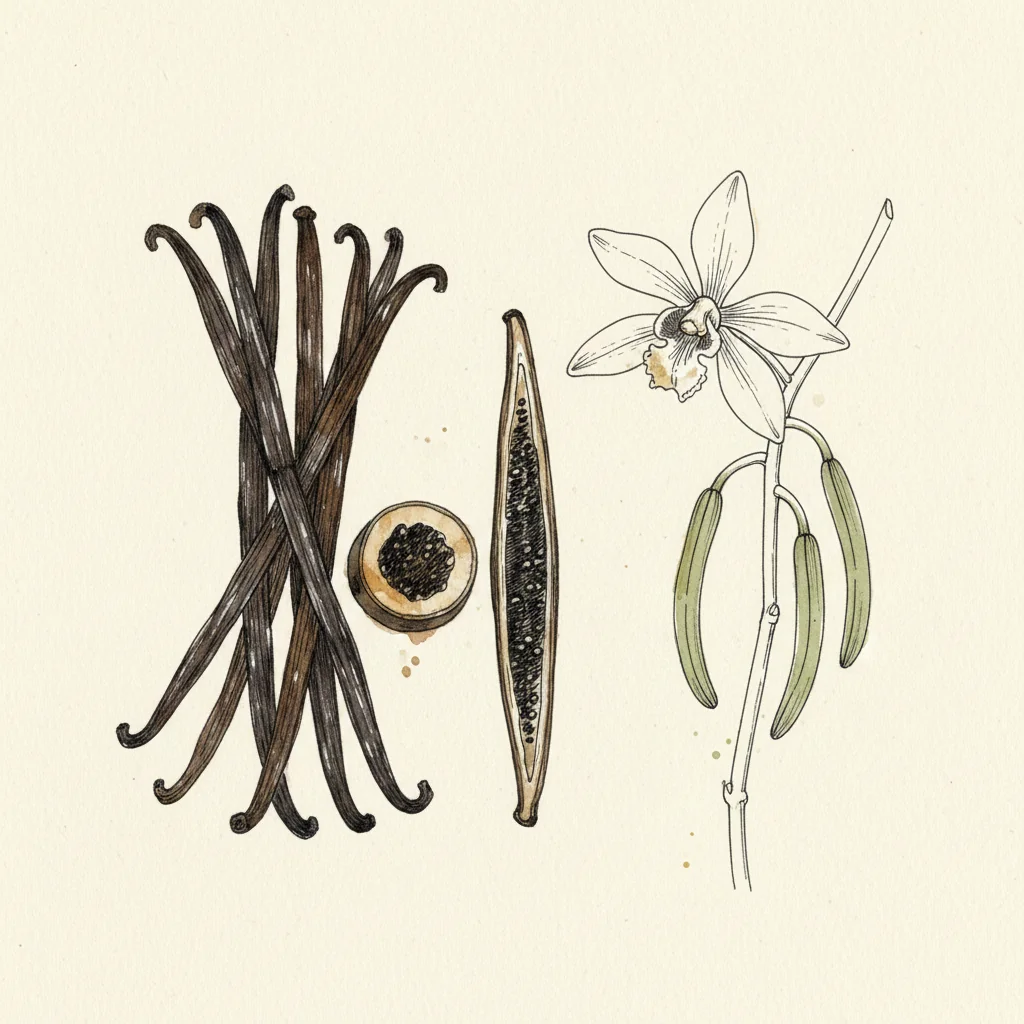
Spice · Vanilla
Madagascar Bourbon Vanilla
Northeast coast, SAVA region (Sambava, Antalaha, Vohemar, Andapa), Madagascar
cocoa · dried fruit · caramel
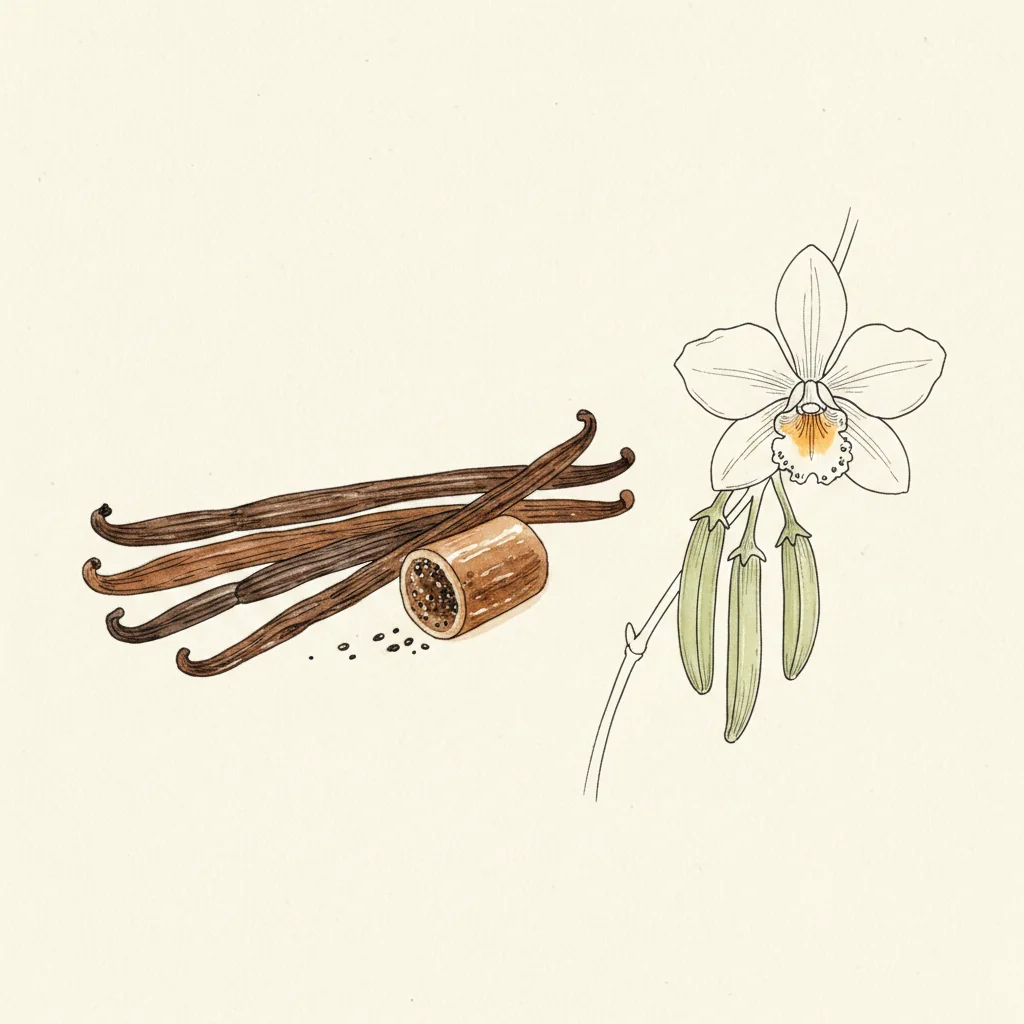
Spice · Vanilla
Papua New Guinea Vanilla
Sepik, Madang and Morobe provinces, Papua New Guinea
milk chocolate · blond tobacco · dried fig
Our verdict
Madagascar for heat-stable custards; PNG for woody tahitensis character at a value price.
At a glance
| Criterion | Madagascar Bourbon Vanilla | Papua New Guinea Vanilla |
|---|---|---|
| Origin | Madagascar, SAVA region | Sepik, Madang & Morobe highlands, PNG |
| Botanical | Vanilla planifolia (Bourbon) | Vanilla tahitensis |
| Intensity | 7/10 — round, fatty, enveloping | 7/10 — broad, lightly resinous |
| Main notes | Cocoa, dried fruit, caramel | Milk chocolate, blond tobacco, dried fig |
| Heat stability | High — best for baking & custards | Good — steep warm, holds woody depth |
| Best use | Crème anglaise, ice cream, ganache | Milk-chocolate ganache, caramels, rum infusions |
| Median price | ~$2.85 / bean | ~$3 / bean (~$22–35 / 10 pods) |
| Value verdict | Imbattable baking workhorse | The smart-money tahitensis bean |
When to choose Madagascar Bourbon Vanilla
Madagascar Bourbon is the choice when you want the classic, heat-stable vanilla that owns the oven. It's Vanilla planifolia from the SAVA region, hand-pollinated and sweated until the pod is supple, black and oily, and it's the cocoa-and-caramel vanilla that defines what most people mean by 'vanilla.' Most importantly, it's the most heat-stable bean you can buy, which is exactly why it owns custards and ice cream bases. Four jobs where it beats PNG. First, crème anglaise and custard — steep the split pod in hot (off-the-boil) cream and its round, fatty body holds clean through the cook. Second, vanilla ice cream, where you want pure custard depth without PNG's woody, tobacco-leaning edge. The benchmark. Third, rice pudding and panna cotta. Fourth, anywhere you want that universally recognizable 'vanilla' flavor rather than something more idiosyncratic. The rule: if the recipe needs clean, classic, heat-stable custard vanilla, it's Madagascar; if you want milk-chocolate and woody depth, reach for PNG. Steep one pod per 500 ml to 1 L of liquid, off the boil so you don't scorch the seeds, and store it in an airtight glass tube, dark and at room temperature — never the fridge, where it can crystallize and risk mold. A good pod holds 18 to 24 months. On price the two are close per bean — both around $3 — so this is a flavor decision, not a budget one: Madagascar gives you the safe, classic profile, PNG gives you a more characterful tahitensis one. For pure baking and custards, Madagascar remains the workhorse, and its cocoa-caramel signature is the taste most desserts are written around.
When to choose Papua New Guinea Vanilla
PNG vanilla is the choice when you want tahitensis character without paying Tahitian prices. Think of it as Tahitian vanilla with a heavier coat on: it's the same species, Vanilla tahitensis, but grown higher in the Sepik, Madang and Morobe highlands and cured shorter, so it trades Tahiti's bright floral lift for milk chocolate, blond tobacco and dried fig. The real reason to buy it: it pours that woody tahitensis profile for roughly half the price of Tahitian — ten Grade A pods run about $22 to $35 in the US, or a tenner-plus in the UK from Sous Chef. That's the smart-money vanilla. Four jobs where it beats Madagascar. First, milk-chocolate ganache and caramels, where its own milk-chocolate-and-tobacco notes deepen the candy in a way Madagascar's cleaner caramel can't. Second, rum-raisin and spiced rum infusions, where the woody, resinous edge is exactly right. Third, yellow-fruit compotes — peach, apricot, mango — where it adds toasted depth. Fourth, a vanilla ice cream with backbone, when you want more character than the classic custard bean gives. The rule: if you want woody, milk-chocolate depth or you're buying in quantity on a budget, it's PNG; if you want clean classic custard vanilla, Madagascar. It takes heat better than Tahitian — split it and steep warm into milk, cream or melted butter, then infuse off the heat — at one pod per 500 to 750 ml. Store the pods in an airtight glass tube away from light; if one stiffens, seal it a few days with a pinch of damp pod pulp to soften it. Its limit is that it's more idiosyncratic than Madagascar — that tobacco-and-fig edge isn't what every recipe wants. But as a value-priced, characterful tahitensis bean, PNG is the smart buy.
Where to buy?
Madagascar Bourbon Vanilla
Links checked on
| Merchant | Price | Action |
|---|---|---|
| Amazon US | — | Amazon US |
| Slofoodgroup | — | Slofoodgroup |
| Steenbergs UK | — | Steenbergs UK |
Prices may vary depending on current promotions on the merchant site.
Papua New Guinea Vanilla
Links checked on
| Merchant | Price | Action |
|---|---|---|
| Amazon US | — | Amazon US |
| Native Vanilla | — | Native Vanilla |
| Sous Chef UK | — | Sous Chef UK |
Prices may vary depending on current promotions on the merchant site.
Frequently asked questions
- What's the difference between Madagascar and PNG vanilla?
- Species and flavor. Madagascar is Vanilla planifolia — cocoa-caramel, heat-stable, the baking benchmark. PNG is Vanilla tahitensis — milk chocolate, blond tobacco, dried fig — woody tahitensis character at a value price.
- Is PNG vanilla as good as Tahitian?
- It's the same species with a different profile: less floral, more woody and chocolatey, because it's grown higher and cured shorter. It delivers tahitensis character for about half Tahitian's price, which is its whole appeal.
- Which is better for baking?
- Madagascar for clean, classic custards and ice cream. PNG also takes heat well and shines in milk-chocolate ganache, caramels and rum infusions where its woody depth is an asset rather than a distraction.
- Which is cheaper?
- Per bean they're close — both around $3 — but PNG is the value play when buying in quantity, with ten Grade A pods around $22 to $35. The choice is mostly about flavor, not price.
The best pairings
With Madagascar Bourbon Vanilla
With Papua New Guinea Vanilla
Comparison prepared according to our methodology. Sponsored purchase links — see our affiliations.