
Papua New Guinea Vanilla, cured pods of the tahitensis type from the Sepik, Madang and Morobe highlands
In brief — Think of it as Tahitian vanilla with a heavier coat on. Same species, Vanilla tahitensis, but grown higher and cured shorter, so it trades some of Tahiti's bright floral lift for milk chocolate, blond tobacco and dried fig. Here's the real reason to buy it: it pours that tahitensis character for roughly half the price. Ten Grade A pods run about $22 to $35 in the US, or a tenner-plus in the UK from Sous Chef. The smart-money vanilla. In the kitchen, it's best added split and steeped warm into milk, cream or melted butter, then left to infuse off the heat and it pairs with milk-chocolate ganache and caramels, rum-raisin and spiced rum infusions, yellow-fruit compotes (peach, apricot, mango). Recommended dosage: one pod per 500 to 750 ml of liquid; scrape the seeds and steep the whole split pod. Expect from $2.00 to $4.00 per per pod (median $3.00).
Origin : Sepik, Madang and Morobe provinces, Papua New Guinea
Vanilla tahitensis
« Tahitensis character at a fairer price: milk chocolate, tobacco, dried fig, a woody savory edge. A genuine bargain for steeping into caramels and rum. Quality varies by coop, so buy on the pod, not the label. »
Think of it as Tahitian vanilla with a heavier coat on. Same species, Vanilla tahitensis, but grown higher and cured shorter, so it trades some of Tahiti's bright floral lift for milk chocolate, blond tobacco and dried fig. Here's the real reason to buy it: it pours that tahitensis character for roughly half the price. Ten Grade A pods run about $22 to $35 in the US, or a tenner-plus in the UK from Sous Chef. The smart-money vanilla.
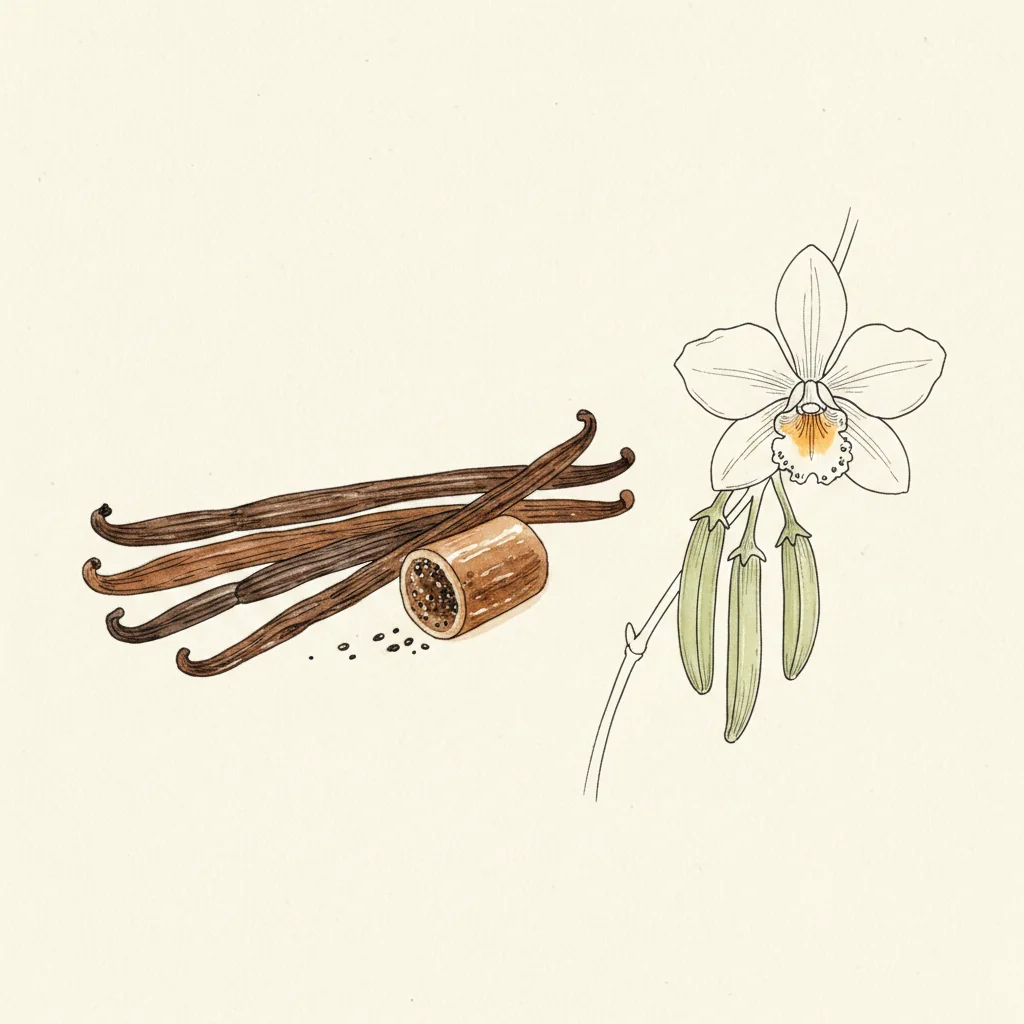
Spice · Vanilla
Papua New Guinea Vanilla
Sepik, Madang and Morobe provinces, Papua New Guinea
milk chocolate · blond tobacco · dried fig
Aromatic profile
| Family | Vanilla tahitensis |
|---|---|
| Intensity | ●●●●○ (7/10) |
| Main notes | milk chocolate · blond tobacco · dried fig |
| Secondary notes | sandalwood · quiet anise · dark honey |
| Mouthfeel | broad and lightly resinous, a rounded sweetness that coats without cloying |
| Finish length | long, finishing on wood and toasted caramel rather than the clean floral fade of Tahitian |
Culinary use
- When to add : split and steeped warm into milk, cream or melted butter, then left to infuse off the heat
- Dosage : one pod per 500 to 750 ml of liquid; scrape the seeds and steep the whole split pod
- Ideal pairings : milk-chocolate ganache and caramels, rum-raisin and spiced rum infusions, yellow-fruit compotes (peach, apricot, mango), vanilla ice cream with backbone, cream sauces for chicken and pork
- Avoid with : sharply acidic preparations that flatten its woody depth, heavy brines and cures that bury the aroma, doubling up with a second strong vanilla
The grain in detail
Papua New Guinea grows mostly Vanilla tahitensis, the same species as Tahitian vanilla, but the result tastes different enough that you should treat it as its own grain. Vanilla reached PNG in the mid-20th century from neighboring Indonesia and only scaled up in the 1990s, when collapsing coffee prices pushed the government to back other cash crops. The plants climb living tutors in humid equatorial forest on volcanic soils at 200 to 500 meters, mainly across the Sepik, Madang and Morobe provinces. Each flower is hand-pollinated the morning it opens, nine months before the green pods come off the vine. The local cure leans on scalding and sweating like Madagascar, but with a shorter sun-dry, and that's the lever: less drying time keeps more volatile compounds in the pod. You still get the anisaldehyde signature of tahitensis, just at a slightly lower level than Tahiti, offset by phenols and caramel notes that read as wood, tobacco and dried fig. The pod itself is plump, dark brown, supple. Composition aside, the case for PNG vanilla is economic as much as sensory: it's the world's number-two producer by volume at roughly 700 tonnes a year, and when the 2015-2019 Madagascar price spike sent bourbon vanilla through the roof, PNG became the credible alternative chefs actually reached for. Quality is uneven coop to coop, so buy on the pod, not the flag: you want pods over 14 cm, glossy, bendy, with no white crystal bloom on the skin (that's drying-out, not a good sign here). In the kitchen it shines exactly where its profile is densest. Steep it into milk-chocolate ganache and caramels, into rum infusions, into yellow-fruit compotes, and into cream sauces for white meats. It's a less common pick than bourbon or Tahitian on US and UK shelves, but it's no longer hard to find: several US sellers carry Grade A 10-packs and Sous Chef stocks PNG pods in Britain. One frank note for US buyers used to 'vanilla equals Madagascar bourbon' baking: PNG is a steeping vanilla with a savory edge, not a one-for-one bourbon swap in a plain custard where you want pure sweet vanillin.
History & origin
Vanilla arrived in Papua New Guinea in the mid-20th century, carried by missionaries and the Australian colonial administration, but it stayed marginal for decades. Real cultivation dates to the 1990s, when the crash in world coffee prices pushed the government to promote other cash crops. The sector then boomed after 2015, when Madagascar's speculative price crisis sent global vanilla soaring and turned PNG into a credible, cheaper alternative almost overnight.
Provenance & authenticity
What sets the real thing apart — appellation, species and verification cues.
- Species
- Vanilla tahitensis
- Grade / standard
- Vanilla tahitensis type, smoky-woody
How to verify the real one
- V. tahitensis genetics, PNG-grown
- smoky/woody profile vs Tahiti floral
Indicative price
Reference format : per pod — from $2.00 to $4.00 (median : $3.00).
Storage
Keep the pods in an airtight glass tube, away from light. Check suppleness now and then: if a pod stiffens, seal it for a few days with a pinch of damp pod pulp to soften it back. Whole pods hold their aroma for a couple of years.
Where to buy?
Where to buy it
Links checked on
| Merchant | Price | Action |
|---|---|---|
| Amazon US | — | Amazon US |
| Native Vanilla | — | Native Vanilla |
| Sous Chef UK | — | Sous Chef UK |
Prices may vary depending on current promotions on the merchant site.
Alternatives if unavailable
Tags
- vanilla
- Papua New Guinea
- tahitensis
- woody
- milk chocolate
- bourbon alternative
- value
Frequently asked questions
- How do you store Papua New Guinea Vanilla?
- Keep the pods in an airtight glass tube, away from light. Check suppleness now and then: if a pod stiffens, seal it for a few days with a pinch of damp pod pulp to soften it back. Whole pods hold their aroma for a couple of years.
- What dosage for Papua New Guinea Vanilla?
- one pod per 500 to 750 ml of liquid; scrape the seeds and steep the whole split pod
- When should you add Papua New Guinea Vanilla in cooking?
- It's best used split and steeped warm into milk, cream or melted butter, then left to infuse off the heat.
- What should you avoid pairing Papua New Guinea Vanilla with?
- Avoid with: sharply acidic preparations that flatten its woody depth, heavy brines and cures that bury the aroma, doubling up with a second strong vanilla.
Go further
The dishes where this papua new guinea vanilla shines
Also a recommended alternative for
See every dish where this product is mentioned →
Other spices to discover
Featured in these gift sets
Page prepared according to our methodology. Purchase links marked sponsored and liable to earn a commission — details on our Affiliations page.