
Comparison
Madagascar vs Tahitian vanilla — which to choose?
These aren't two grades of the same thing — they're different species. Madagascar (Vanilla planifolia, ~$3 a bean) is the heat-stable, custard-and-caramel vanilla that defines 'vanilla' and owns baking. Tahitian (Vanilla tahitensis, ~$6.50) is floral and anise, for cold fruit desserts and cured fish. For cookies, Madagascar. For panna cotta with strawberries, Tahitian.
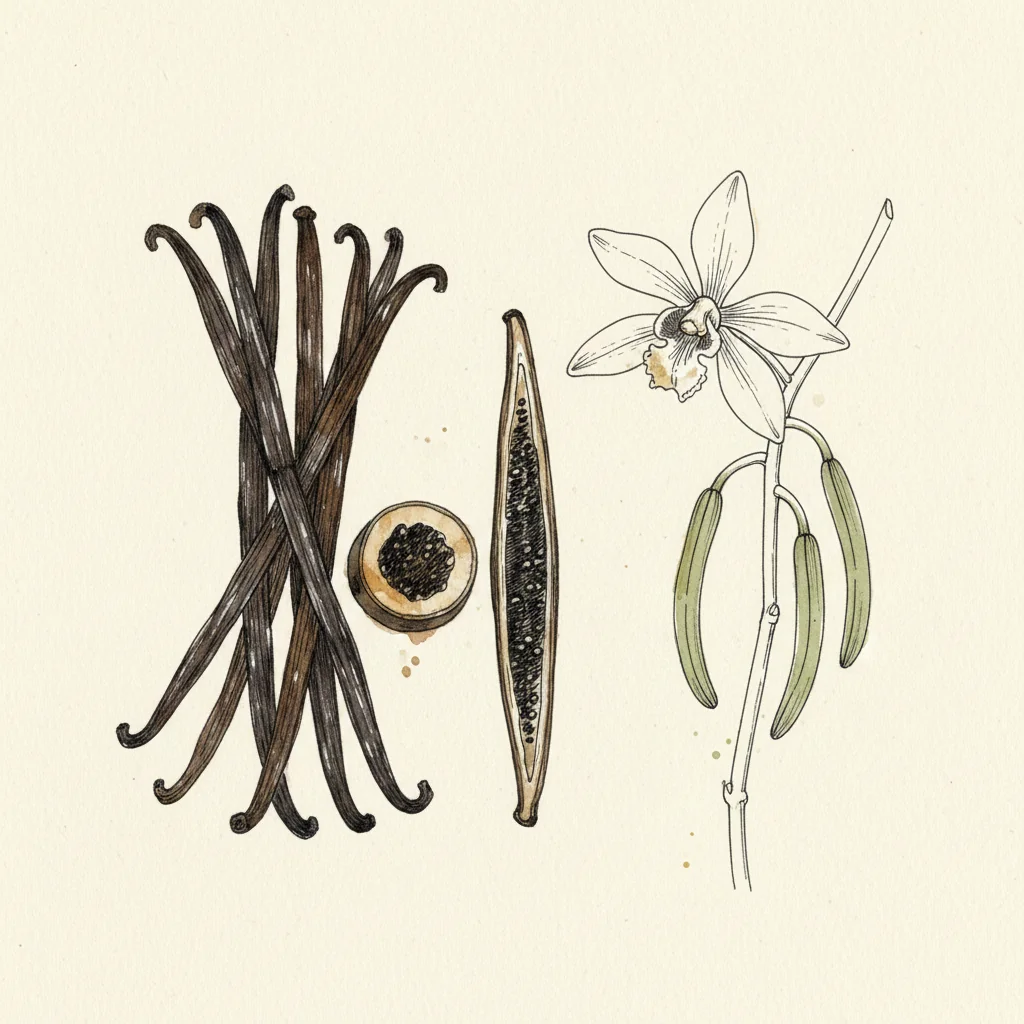
Spice · Vanilla
Madagascar Bourbon Vanilla
Northeast coast, SAVA region (Sambava, Antalaha, Vohemar, Andapa), Madagascar
cocoa · dried fruit · caramel
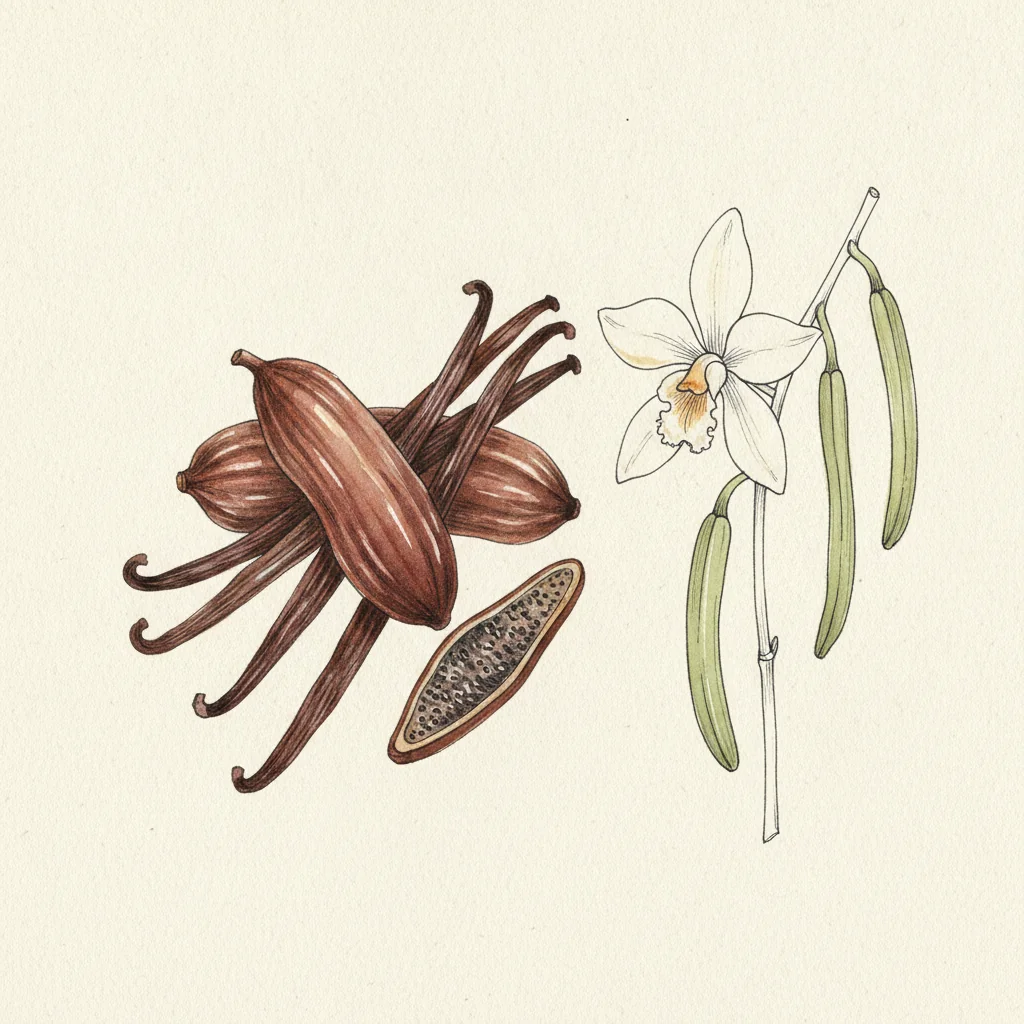
Spice · Vanilla
Tahitian Vanilla
Taha'a and Raiatea, Society Islands, French Polynesia
almond blossom · anise · fresh prune
Our verdict
Madagascar for heat-stable baking and custards; Tahitian for floral cold desserts and cured fish.
At a glance
| Criterion | Madagascar Bourbon Vanilla | Tahitian Vanilla |
|---|---|---|
| Origin | Madagascar, SAVA region | Taha'a & Raiatea, French Polynesia |
| Botanical | Vanilla planifolia (Bourbon) | Vanilla tahitensis |
| Intensity | 7/10 — round, fatty, enveloping | 6/10 — supple, perfumed, floral |
| Main notes | Cocoa, dried fruit, caramel | Almond blossom, anise, fresh prune |
| Heat stability | High — best for baking & custards | Lower — florals cook off above 175°F / 176°F (80°C) |
| Best use | Crème anglaise, ice cream, ganache, rice pudding | Poached fruit, panna cotta, cured fish, cocktails |
| Median price | ~$2.85 / bean | ~$6.50 / bean |
| Value verdict | Imbattable workhorse for baking | Splurge for cold, floral dishes |
When to choose Madagascar Bourbon Vanilla
Madagascar Bourbon is the vanilla to reach for whenever heat is involved, which is most of baking. It's Vanilla planifolia from the SAVA region on Madagascar's northeast coast, where smallholders hand-pollinate each flower, then blanch and sweat the green pods to build the vanillin — the pod comes out supple, black and oily. It's the cocoa-and-caramel vanilla that defines what most people mean by 'vanilla,' and crucially it's the most heat-stable bean you can buy. That's why it owns the custard and the ice cream base. Four jobs where it beats Tahitian. First, crème anglaise and custard — steep the split pod in hot (off-the-boil) cream, scrape the seeds back in, and its round, fatty body holds through the cook where Tahitian's florals would fade. Second, vanilla ice cream, the benchmark use, where you want that creamy custard depth. Second to none here. Third, dark chocolate ganache, where cocoa-and-caramel marries the chocolate instead of fighting it with anise. Fourth, rice pudding and panna cotta that get heated. The rule: if the recipe sees real heat, it's Madagascar; if it stays cold and you want perfume, it's Tahitian. Dose one pod per 500 ml to 1 L of liquid, to taste, and steep off the boil so you don't scorch the seeds. Store it in an airtight glass tube, dark and at room temperature — never the fridge, where it can crystallize and risk mold; a good pod holds 18 to 24 months. At about $3 a Grade A bean it's also far cheaper than Tahitian, which makes it the everyday workhorse. Its one weakness is that its cocoa-caramel profile is comparatively conventional — it won't perfume a cold fruit salad the way Tahitian does. But for anything baked, custardy or chocolate, Madagascar is the default, and it's hard to overpay for it.
When to choose Tahitian Vanilla
Tahitian vanilla is the one to choose for cold, delicate, fruit-forward dishes — and it isn't just a richer Bourbon, it's a different botanical species, Vanilla tahitensis, and it tastes like it. Grown on Taha'a, the 'vanilla island,' the plump Grade A pods carry more anisaldehyde and less vanillin, so they perfume rather than sweeten: almond blossom, anise, fresh prune, where Madagascar gives you custard. About $6 to $9 a bean — a genuine splurge over Madagascar — so save it for the dishes that show it off. Four jobs where it beats Madagascar. First, poached fruit and exotic fruit salads, where its floral lift turns simple fruit into something perfumed and Madagascar's cocoa-caramel would feel heavy. Second, strawberry, mango and citrus desserts, and cold panna cotta, where the anise-and-blossom trail sings against the fruit. Third, cured salmon and raw scallops — yes, savory — where a few scraped seeds perfume the fish in a way no Bourbon bean can. Fourth, cocktails and rum infusions. The rule: if the dish stays cold or barely warm and you want perfume, it's Tahitian; if it's baked or custardy, Madagascar. The mechanism that decides it: cook Tahitian above 175°F / 176°F (80°C) and you drive off the very floral compounds you paid the premium for, so scrape and add it at the finish, or steep only briefly off the heat. Dose one bean per 2 cups (500 ml) of liquid; the scraped seeds lead and the pod gives the rest. Store it in an airtight glass tube, away from light, never the fridge — its high moisture keeps it supple for about 18 months. Its limit is exactly its strength: it's wasted in a cookie or a hot custard, where its perfume fades and you'd have been better off with cheaper Madagascar. But for cold fruit desserts and cured fish, Tahitian is worth the splurge.
Where to buy?
Madagascar Bourbon Vanilla
Links checked on
| Merchant | Price | Action |
|---|---|---|
| Amazon US | — | Amazon US |
| Slofoodgroup | — | Slofoodgroup |
| Steenbergs UK | — | Steenbergs UK |
Prices may vary depending on current promotions on the merchant site.
Tahitian Vanilla
Links checked on
| Merchant | Price | Action |
|---|---|---|
| Amazon US | — | Amazon US |
| Native Vanilla | — | Native Vanilla |
| Sous Chef UK | — | Sous Chef UK |
Prices may vary depending on current promotions on the merchant site.
Frequently asked questions
- Is Tahitian vanilla better than Madagascar?
- Not better — different. Tahitian (Vanilla tahitensis) is floral and anise, best in cold fruit desserts and cured fish. Madagascar (Vanilla planifolia) is custard-and-caramel and heat-stable, best for baking. They're different species for different jobs.
- Which vanilla is best for baking?
- Madagascar, clearly. It's the most heat-stable bean and holds its cocoa-caramel character through custards, ice cream bases and ganache. Tahitian's florals cook off above 175°F / 176°F (80°C).
- Why is Tahitian so much more expensive?
- Smaller production from French Polynesia and a prized floral-anise profile. Tahitian runs about $6 to $9 a bean versus roughly $3 for Madagascar. Save it for cold dishes where its perfume shows.
- Can I use Tahitian vanilla in cooked recipes?
- You can, but it's a waste — heat above 175°F / 176°F (80°C) drives off the floral compounds you paid for. Use it raw or steeped briefly off the heat; for hot recipes, Madagascar is the smarter buy.
The best pairings
With Madagascar Bourbon Vanilla
With Tahitian Vanilla
Comparison prepared according to our methodology. Sponsored purchase links — see our affiliations.