
Comparison
Madagascar vanilla vs tonka beans: which to use in desserts?
Reach for Madagascar vanilla as your default custard spine: cocoa-caramel, heat-stable, legal everywhere, about $3 a bean. Tonka is the finishing flourish, grated raw for a hay-and-almond lift one vanilla pod can't match, but it's a fragrance item in the US. So: vanilla cooks, tonka finishes. Never both in one dish.
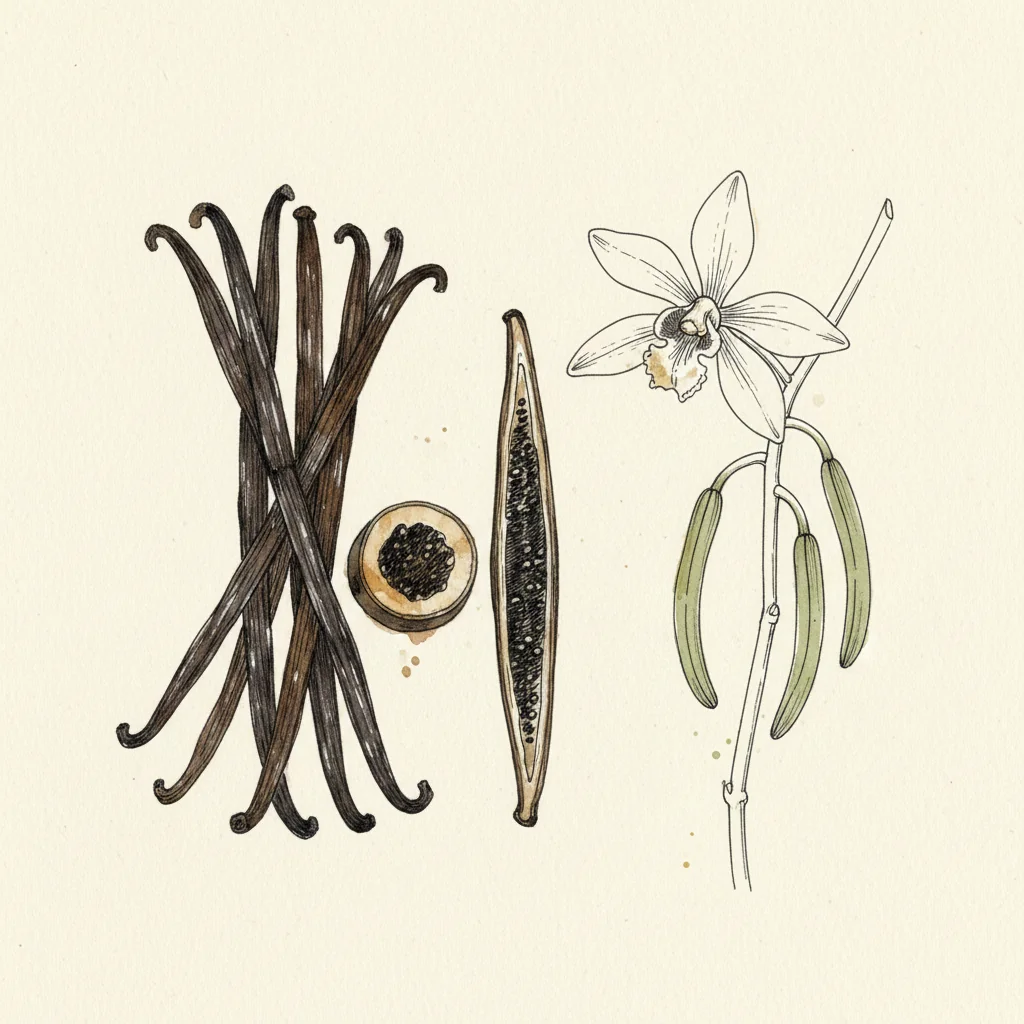
Spice · Vanilla
Madagascar Bourbon Vanilla
Northeast coast, SAVA region (Sambava, Antalaha, Vohemar, Andapa), Madagascar
cocoa · dried fruit · caramel
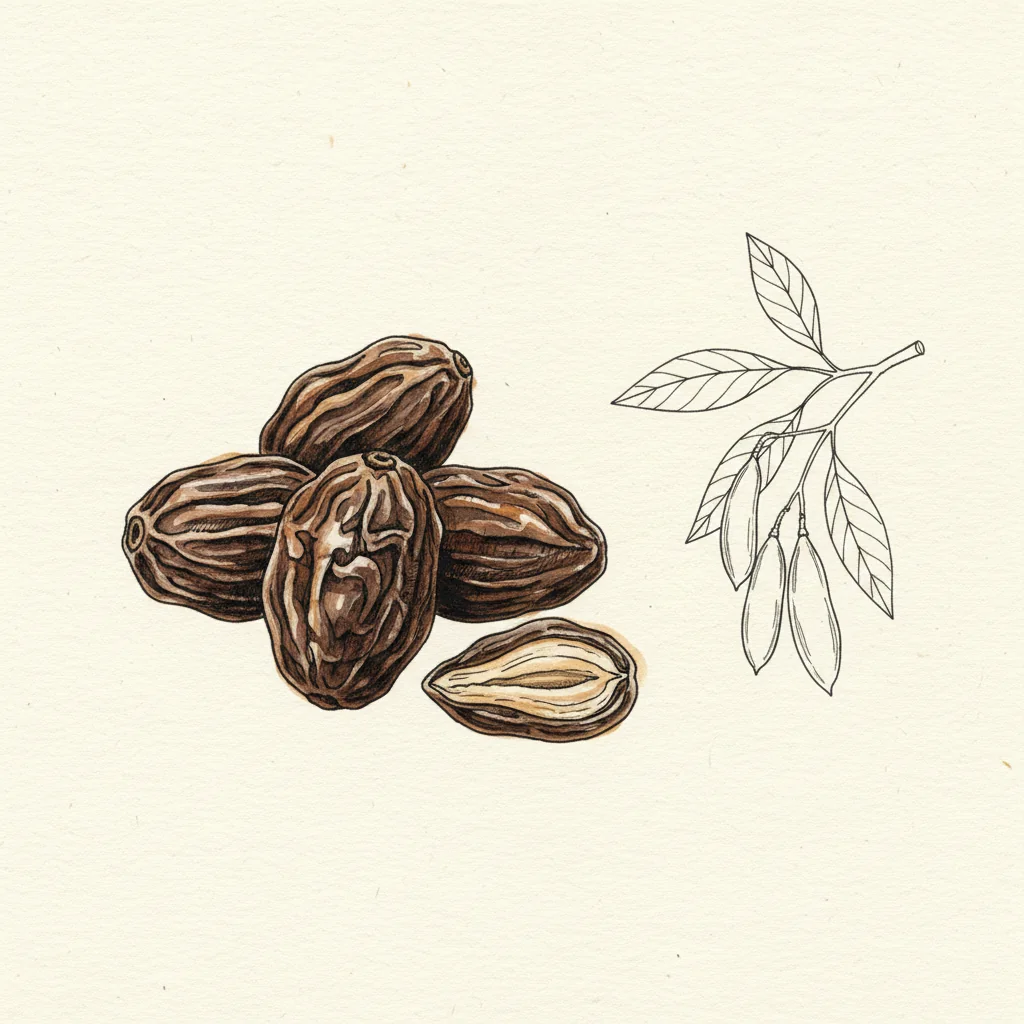
Spice · Spice kernel
Tonka Beans
Brazilian Amazon (Pará, Amazonas), Brazil
vanilla · bitter almond · cut hay
Our verdict
Vanilla for the cooked base, tonka grated raw at the finish, never the two together.
At a glance
| Criterion | Madagascar Bourbon Vanilla | Tonka Beans |
|---|---|---|
| Origin | Madagascar, SAVA region (Vanilla planifolia) | Brazilian Amazon, Para and Amazonas (Dipteryx odorata) |
| Flavor profile | Cocoa, dried fruit, caramel; round and creamy | Vanilla, cut hay, bitter almond; dense and hypnotic |
| Intensity | 7/10 enveloping | 9/10 from a single shaving |
| Legal status (US) | Legal grocery item everywhere | FDA-banned in food; ships as a fragrance curiosity |
| Best use | Creme anglaise, ice cream base, ganache, panna cotta | Grated to order over creme brulee, white chocolate, root purees |
| Median price | ~$2.85 a Grade A bean | ~$55 / 100g (a few beans last years) |
| Value | The dependable workhorse, cheapest per dessert | A splurge, but one bean does the work of many |
When to choose Madagascar Bourbon Vanilla
Madagascar Bourbon vanilla is the one you build the dessert on. It's the most heat-stable vanilla you can buy, which is exactly why it owns the custard and the ice cream base: split the pod, steep it in cream or milk off the boil, scrape the seeds back in, and the cocoa-caramel flavor holds through cooking instead of cooking off. That's the whole reason it's the default in creme anglaise, dark chocolate ganache, rice pudding and panna cotta. Use it whenever the vanilla has to survive heat or carry a whole batch. Four scenarios where vanilla wins outright. First, an ice cream base you'll churn: you want the seeds suspended in fat and a flavor that won't fade in the freezer. Second, a classic creme brulee where vanilla is the headline, not a guest note. Third, any cream sauce for poultry or shellfish where the round, fatty profile reads as luxury without shouting. Fourth, a cost-sensitive bake for a crowd, because at roughly $2.50 to $3.50 a Grade A bean it's the cheapest premium aromatic in the kitchen. The practical rule: if it gets cooked or steeped, it's vanilla. One pod per 500 ml to a liter of liquid, to taste. Don't refrigerate the pod, where it crystallizes and risks mold; keep it in an airtight glass tube, dark and at room temperature, and a good one holds 18 to 24 months. And don't pair it with raw, sharply acidic dishes that flatten it, or with aggressive raw aromatics like garlic. The one thing to never do: don't double up on vanilla and tonka in the same dessert. The two cancel into a muddy nothing, each erasing the other's best note. Pick a lane. If you want the familiar, comforting custard everyone reads as 'vanilla,' this is it, and nothing does that job cheaper or more reliably.
When to choose Tonka Beans
Tonka is the finishing flourish, not the base. It's the cured seed of a giant Amazon canopy tree, grated to order over the microplane for vanilla, cut hay and bitter almond all at once, and one bean does the work of a whole vanilla pod and then some. The catch US readers have to know first: the FDA bans tonka in food, so it ships as a fragrance or 'food-grade' curiosity, not a legal grocery item. Where it's allowed, reach for it as the last move, never cooked in quantity. Four scenarios where tonka earns its place. First, a finished creme brulee or custard where an eighth of a bean grated on top adds a hay-and-vanilla trail that outlasts vanilla itself. Second, a white chocolate ganache, where its warmth cuts the sweetness instead of doubling it. Third, savory: a celery root or parsnip puree, or seared foie gras and sweetbreads, where the rounded warm sweetness reads as sophistication, not dessert. Fourth, prune and black-cherry compotes, which echo its own dark-fruit secondary notes. The rule: grate fresh, finish, walk away. An eighth to a quarter of a bean for four servings, never more, because coumarin adds up and the flavor is dense enough that more turns soapy and overpowering. Store the whole beans in an airtight glass jar out of the light; they last 5 to 10 years and the aroma actually concentrates over time, so a small handful is a multi-year investment. Avoid two traps: don't pair it with a double hit of vanilla (they cancel into mud), and don't use it daily or in quantity. This isn't a workhorse, it's a signature. If you want a dessert that makes someone stop and ask what that is, and you're somewhere it's legal to serve, tonka is the answer. Otherwise, build on vanilla and save the curiosity for a fragrance shelf.
Where to buy?
Madagascar Bourbon Vanilla
Links checked on
| Merchant | Price | Action |
|---|---|---|
| Amazon US | — | Amazon US |
| Slofoodgroup | — | Slofoodgroup |
| Steenbergs UK | — | Steenbergs UK |
Prices may vary depending on current promotions on the merchant site.
Tonka Beans
Links checked on
| Merchant | Price | Action |
|---|---|---|
| Amazon US | — | Amazon US |
| Sous Chef UK | — | Sous Chef UK |
| Steenbergs UK | — | Steenbergs UK |
Prices may vary depending on current promotions on the merchant site.
Frequently asked questions
- Can I swap tonka for vanilla one-for-one?
- No. Tonka is far more concentrated and carries a bitter-almond, cut-hay note vanilla doesn't have. An eighth of a tonka bean replaces a whole vanilla pod, and it should be grated raw at the finish, not steeped and cooked like vanilla. They're different jobs, not interchangeable amounts.
- Is tonka legal to use in the US?
- Not in food. The FDA bans tonka because of its coumarin content, so it ships as a fragrance or 'food-grade' curiosity rather than a grocery item. It's legal and common in many other countries. Where it's allowed, keep doses tiny: an eighth to a quarter of a bean for four servings.
- Can I use both in the same dessert?
- Skip it. Vanilla and tonka cancel each other into a muddy, indistinct sweetness, each erasing the other's best note. Pick one. Use vanilla for the cooked base and, if you want the hay-and-almond lift, leave the vanilla out and finish with tonka alone.
- Which is the better value?
- Vanilla, for everyday desserts: about $2.85 a bean and it's the cheapest premium aromatic going. Tonka costs more upfront (~$55/100g) but a few beans last years because you use a shaving at a time, so per dessert it's not as wild as it looks. Different jobs, both reasonable.
The best pairings
With Madagascar Bourbon Vanilla
With Tonka Beans
Comparison prepared according to our methodology. Sponsored purchase links — see our affiliations.