
Tonka Beans, whole dried and cured seed of Dipteryx odorata (Brazilian Amazon, Pará and Amazonas)
In brief — One bean does the work of a whole vanilla pod, and then some. Tonka is the cured seed of a giant Amazon canopy tree, grated to order for vanilla, cut hay and bitter almond all at once. Here's the catch US readers have to know first: the FDA bans it in food, so it ships as a fragrance or 'food-grade' curiosity, not a legal grocery item. Where it is allowed, a few beans run about $12 to $15 and last for years. Its aromatic profile develops notes of vanilla, bitter almond, cut hay, extended by caramel and sweet tobacco, for an intensity of 9/10. In the kitchen, it's best added grated to order over the microplane as a finish, never cooked in quantity and it pairs with crème brûlée and custards, white chocolate ganache, panna cotta and rice pudding. Recommended dosage: an eighth to a quarter of a bean grated for 4 servings, never more. Expect from $45.00 to $70.00 per per 100g (median $55.00).
Origin : Brazilian Amazon (Pará, Amazonas), Brazil
Dipteryx odorata
« Astonishing range from one shaving: vanilla, hay, bitter almond, caramel. A quarter-bean is plenty. The real frustration is US legality, not the flavor; it's gray-market here, properly sold in the UK. »
One bean does the work of a whole vanilla pod, and then some. Tonka is the cured seed of a giant Amazon canopy tree, grated to order for vanilla, cut hay and bitter almond all at once. Here's the catch US readers have to know first: the FDA bans it in food, so it ships as a fragrance or 'food-grade' curiosity, not a legal grocery item. Where it is allowed, a few beans run about $12 to $15 and last for years.
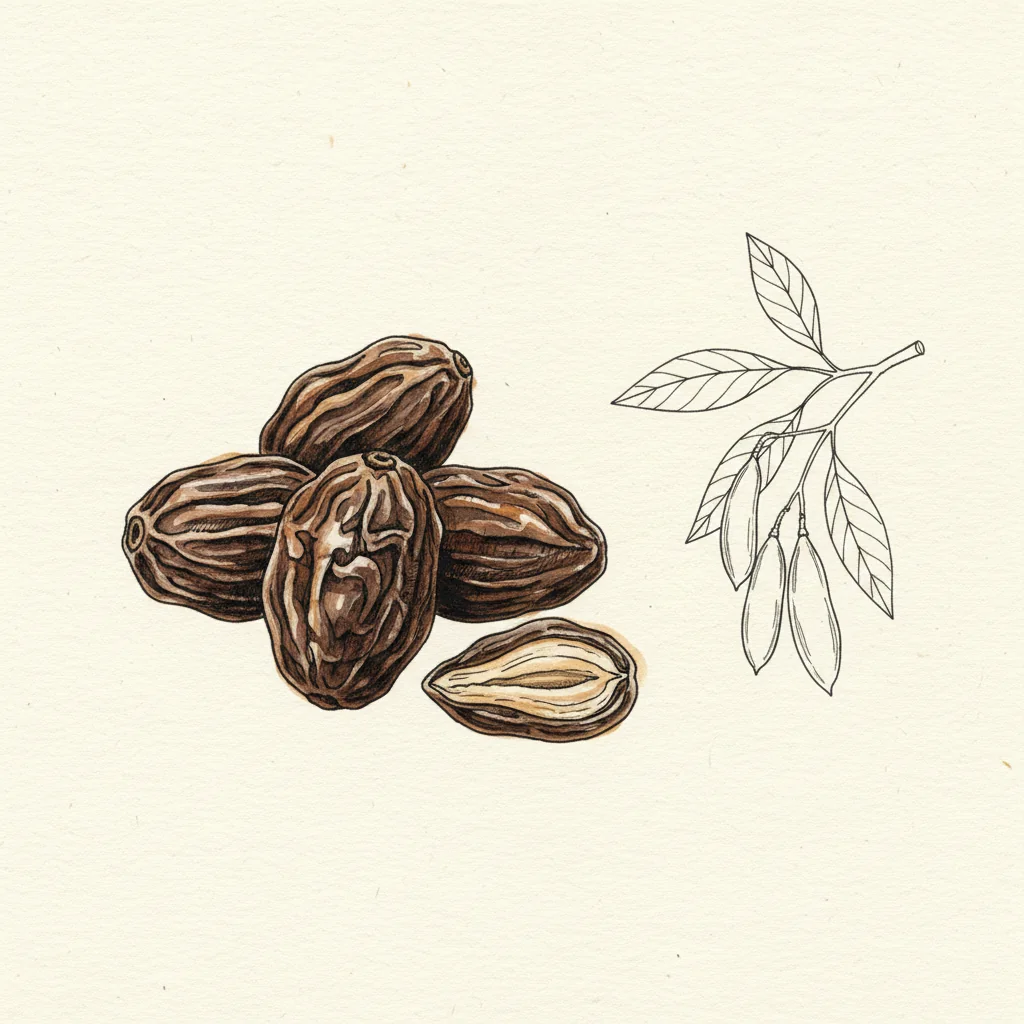
Spice · Spice kernel
Tonka Beans
Brazilian Amazon (Pará, Amazonas), Brazil
vanilla · bitter almond · cut hay
Aromatic profile
| Family | Dipteryx odorata |
|---|---|
| Intensity | ●●●●● (9/10) |
| Main notes | vanilla · bitter almond · cut hay |
| Secondary notes | caramel · sweet tobacco · black cherry |
| Mouthfeel | dense and powerful, a warm rounded sweetness that fills the mouth from a tiny shaving |
| Finish length | very long, an almost hypnotic hay-and-vanilla trail that outlasts vanilla itself |
Culinary use
- When to add : grated to order over the microplane as a finish, never cooked in quantity
- Dosage : an eighth to a quarter of a bean grated for 4 servings, never more
- Ideal pairings : crème brûlée and custards, white chocolate ganache, panna cotta and rice pudding, prune and black-cherry compotes, celery root and parsnip purée, sweetbreads and seared foie gras
- Avoid with : a double hit of vanilla (the two cancel into mud), heavily camphorous spices, anything where you'd use it daily in quantity (coumarin adds up)
The grain in detail
Tonka is the seed of Dipteryx odorata, a canopy tree of the Brazilian Amazon that climbs to 30 meters and drops oval fruit holding a single wrinkled brown seed. The seeds are gathered off the forest floor, shelled, dried, and often macerated in local rum to stabilize the aroma. That cure pushes a fine white bloom of coumarin crystals to the surface, which is a sign of the real thing, not a flaw. The smell is enormous for so little matter: coumarin drives the signature hay-vanilla-bitter-almond note, while aldehydes fill in caramel and sweet tobacco. Gram for gram it's one of the most intense spices there is, which is exactly why it's a finishing aromatic you grate, never a bulk ingredient you cook. Now the part no neutral site will lead with: in the United States, tonka is not approved for food. The FDA has prohibited coumarin as a food additive since 1954, and the agency still lists tonka and its extracts as adulterants. The beans you'll find on Amazon US are sold as fragrance, craft, or vaguely 'food-grade' items precisely to sidestep that line. In the EU and UK it's a different story: regulation 1334/2008 sets maximum coumarin levels in named foods, and chefs use it within those limits, which is why proper culinary tonka is easy to buy from Steenbergs or Sous Chef in Britain. Either way the kitchen rule is the same: a shaving, not a spoonful. Grate an eighth to a quarter of a bean over the microplane onto milk-based desserts (crème brûlée, panna cotta, rice pudding), into white chocolate where it beats vanilla for depth, over dark-fruit compotes, and on the savory side onto root purées, sweetbreads and seared foie gras. Keep the beans whole and grate at the last second; pre-ground tonka goes flat fast.
History & origin
Amazonian peoples used tonka for centuries before it reached Europe in the 18th century, first as a tobacco scent and odor neutralizer. Perfumery adopted it in the 19th century, most famously in Guerlain's Jicky (1889), and high-end pastry followed in the 20th. Its return to fine French baking owes a lot to chefs like Pierre Hermé and Philippe Conticini in the 1990s and 2000s. In the US it has never shaken its regulatory shadow: banned as a food additive in 1954, it survives in American kitchens only on the gray market.
Provenance & authenticity
What sets the real thing apart — appellation, species and verification cues.
- Species
- Dipteryx odorata
How to verify the real one
- Dipteryx odorata seed
- Brazilian Amazon origin
- wrinkled black fermented seed
- note: coumarin-restricted in some markets (e.g. banned as food additive in US)
Indicative price
Reference format : per 100g — from $45.00 to $70.00 (median : $55.00).
Storage
Keep the whole beans in an airtight glass jar, out of the light. They last 5 to 10 years and the aroma actually concentrates over time. Grate fresh each use.
Where to buy?
Where to buy it
Links checked on
| Merchant | Price | Action |
|---|---|---|
| Amazon US | — | Amazon US |
| Sous Chef UK | — | Sous Chef UK |
| Steenbergs UK | — | Steenbergs UK |
Prices may vary depending on current promotions on the merchant site.
Tags
- Brazil
- Amazon
- Dipteryx odorata
- coumarin
- finishing spice
- pastry
- FDA-restricted
Frequently asked questions
- How do you store Tonka Beans?
- Keep the whole beans in an airtight glass jar, out of the light. They last 5 to 10 years and the aroma actually concentrates over time. Grate fresh each use.
- What dosage for Tonka Beans?
- an eighth to a quarter of a bean grated for 4 servings, never more
- When should you add Tonka Beans in cooking?
- It's best used grated to order over the microplane as a finish, never cooked in quantity.
- What should you avoid pairing Tonka Beans with?
- Avoid with: a double hit of vanilla (the two cancel into mud), heavily camphorous spices, anything where you'd use it daily in quantity (coumarin adds up).
Go further
The dishes where this tonka beans shines
Also a recommended alternative for
As a complementary pairing with
See every dish where this product is mentioned →
Other spices to discover
Page prepared according to our methodology. Purchase links marked sponsored and liable to earn a commission — details on our Affiliations page.