
Comparison
Tellicherry vs Aranya pepper: which black pepper?
Tellicherry is a grade (TGSEB, big ripe berries) — your everyday cocoa-and-leather pepper for steak, curry and braises. Aranya is a single Diaspora Co estate, vine-ripened red, tasting of fig and red wine — a finishing-only splurge. Buy Tellicherry to cook with; buy Aranya for the plate.
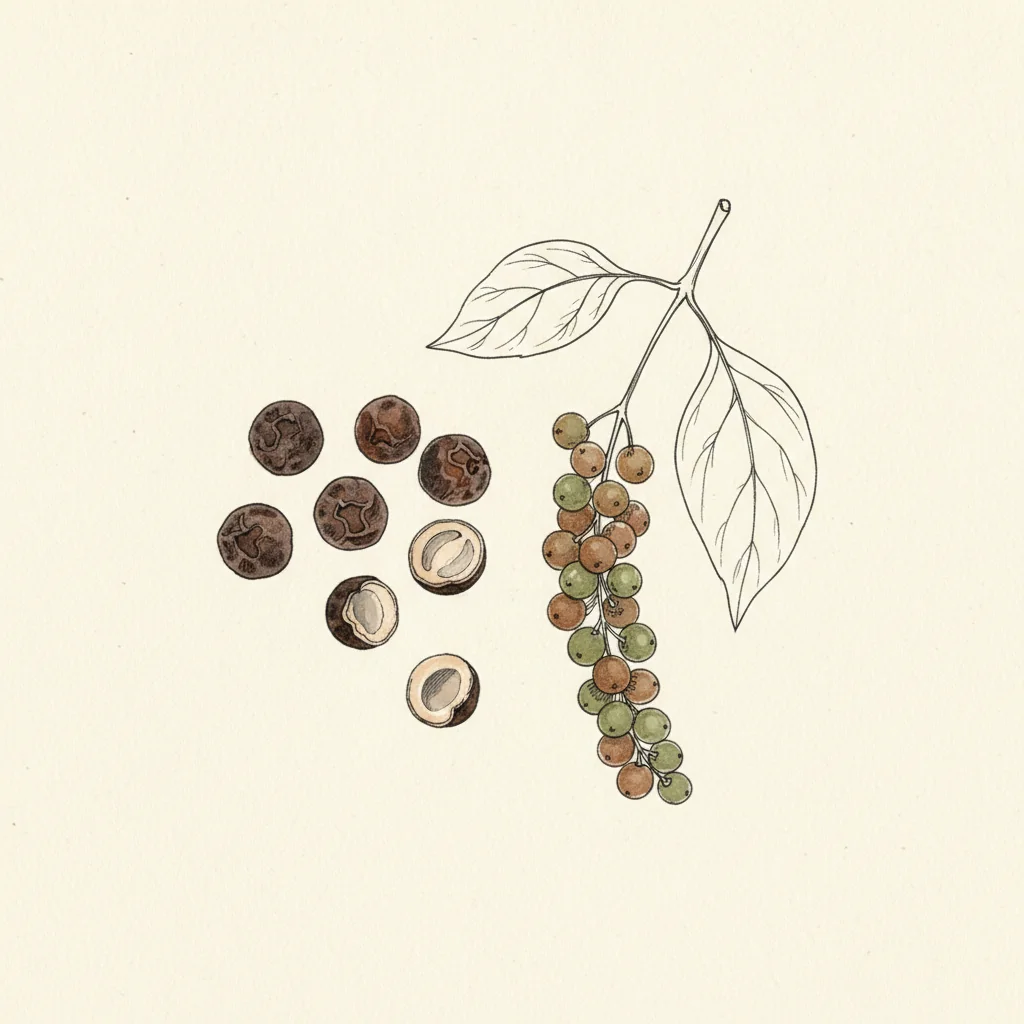
Pepper · Black pepper
Tellicherry Black Pepper
Malabar Coast, Kannur district (Kerala), India
dark cocoa · worn leather · candied citrus
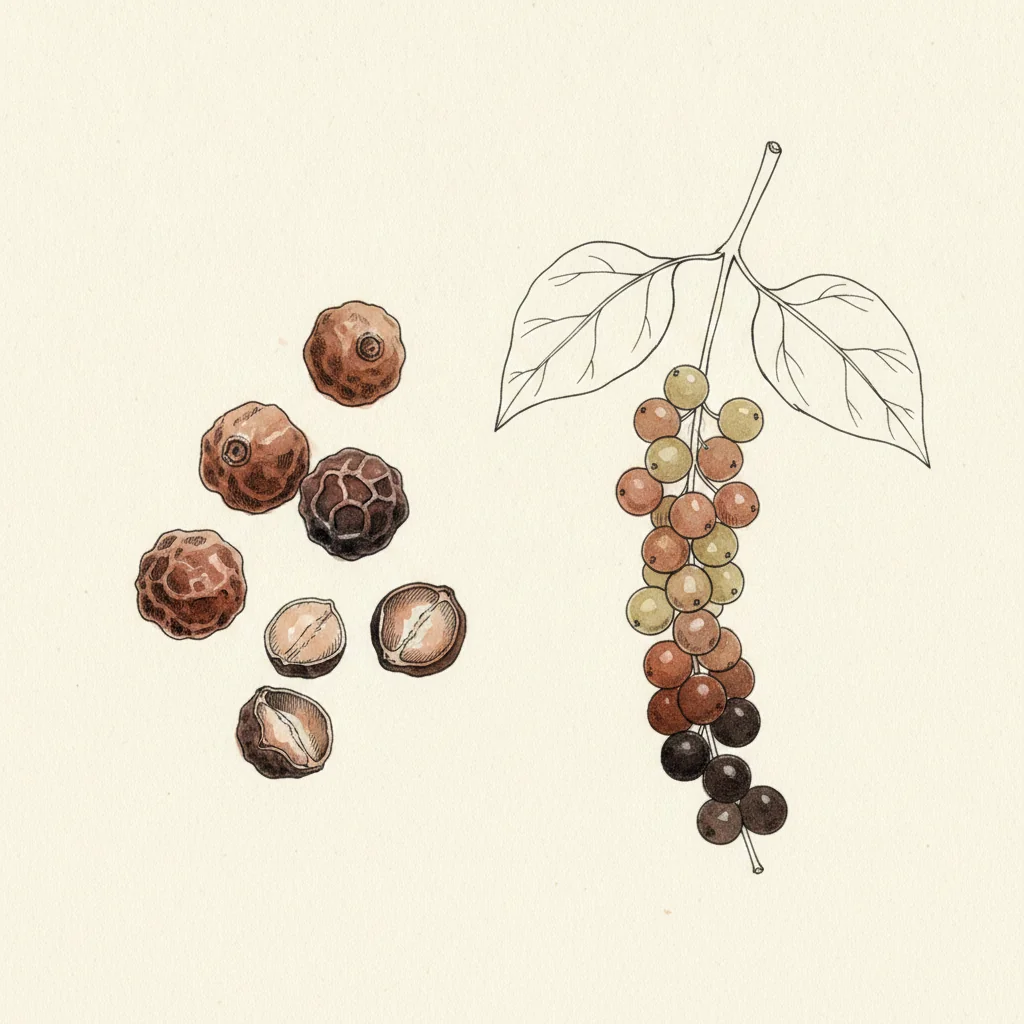
Pepper · Black pepper
Aranya Black Pepper
Parameswaran family estate, Western Ghats (South India), India
ripe fig · red wine · bright citrus
Our verdict
Tellicherry for everyday cooking; Aranya as a fruity finishing pepper for the plate.
At a glance
| Criterion | Tellicherry Black Pepper | Aranya Black Pepper |
|---|---|---|
| Botanical name | Piper nigrum | Piper nigrum |
| Origin | Malabar Coast, Kerala, India | Parameswaran estate, Western Ghats, India |
| Grade / mark | TGSEB size grade (over 4.25 mm) | Single-estate heirloom, vine-ripened red |
| Intensity | 8/10 — broad, slow-building | 8/10 — fruity, blooming heat |
| Main notes | Dark cocoa, worn leather, candied citrus | Ripe fig, red wine, bright citrus |
| Best use | Steak, curry, braises, everyday | Finishing steak, fruit, dark chocolate |
| Median price | ~$10 / 8 oz | ~$14 / jar |
When to choose Tellicherry Black Pepper
Reach for Tellicherry when you actually need to cook. It's a size grade, not a single farm — TGSEB means only berries over 4.25 mm, the ripest off the Malabar Coast — and it gives dark cocoa, worn leather and candied citrus over a broad, slow heat. That makes it the everyday workhorse: it seasons a seared ribeye, carries a garam masala, and survives a long braise where lighter peppers go flat. Crack it coarse and late on steak so the oils don't scorch; tie it in a cloth for a stock; rub it into BBQ brisket. It also handles baked eggs, carbonara, aged cheddar and dark chocolate without fuss. The point of Tellicherry is reliability and range at a fair price — about $10 for a half pound, two or three coarse turns per plate. Where it can't follow Aranya is the fruit register: Tellicherry's profile is cocoa-and-wood, not fig-and-wine, so on fresh strawberries, soft goat cheese or a plate where you want the pepper to read sweet and blooming, it falls flat. It's also the pepper to cook with, where spending Aranya money on something destined for a three-hour stew would be a waste — the estate character cooks out. Own Tellicherry first. It's the one jar that does almost everything, and the one you grind without thinking.
When to choose Aranya Black Pepper
Reach for Aranya when the pepper is the point. It isn't a grade — it's a single estate, Diaspora Co's berries left to ripen red on the vine on the Parameswaran family farm in the Western Ghats, then sun-dried within days. The result reads more like fruit than spice: ripe fig, red wine and bright citrus, with a heat that blooms instead of stabbing. That fruit character is wasted in the pot, so this is a finishing pepper, full stop — cracked off the heat, two or three coarse turns right before serving. It's where Aranya beats Tellicherry outright: a few turns over a seared steak or lamb chop at the plate, fresh strawberries and stone fruit, soft goat cheese and burrata, cacio e pepe, roasted carrots and sweet potato, or 70% dark chocolate with a glass of red. In every one of those, the wine-and-fig note does something Tellicherry's cocoa depth can't. The catch is the same as every estate pepper: long braises cook the fruit out, very acidic dressings flatten the wine note, and pre-grinding it hours ahead throws the whole reason you bought it in the bin. A jar runs around $14 — more than Tellicherry per gram, and worth it only if you'll use it where it shines. Don't cook with it. Finish with it.
Where to buy?
Tellicherry Black Pepper
Links checked on
| Merchant | Price | Action |
|---|---|---|
| Amazon US | — | Amazon US |
| Spicewalla | — | Spicewalla |
| Steenbergs UK | — | Steenbergs UK |
Prices may vary depending on current promotions on the merchant site.
Aranya Black Pepper
Links checked on
| Merchant | Price | Action |
|---|---|---|
| Amazon US | — | Amazon US |
| Diaspora Co | — | Diaspora Co |
| Market Hall Foods | — | Market Hall Foods |
Prices may vary depending on current promotions on the merchant site.
Frequently asked questions
- What's the difference between Tellicherry and Aranya?
- Tellicherry is a size grade (TGSEB, big ripe berries) prized for cocoa-and-leather depth and everyday range. Aranya is a single Diaspora Co estate, vine-ripened red, tasting of fig and red wine — a fruity finishing pepper, not a cooking one.
- Which is better for steak?
- Both work, differently. Tellicherry gives cocoa depth and survives the sear; Aranya, cracked at the plate after cooking, adds a fruity red-wine lift. Use Tellicherry through cooking, Aranya as a finishing flourish.
- Can you cook with Aranya pepper?
- You can, but you shouldn't. Long braises and high heat cook out the fig-and-wine estate character that justifies the price. It's a finishing pepper — crack it raw, off the heat, right before serving.
- Is Aranya worth the extra cost?
- Only if you finish with it. At around $14 it's a splurge over Tellicherry's $10, and the money is wasted if it goes in the pot. Used raw on fruit, cheese or dark chocolate, it earns its place.
The best pairings
With Tellicherry Black Pepper
With Aranya Black Pepper
Comparison prepared according to our methodology. Sponsored purchase links — see our affiliations.