
Tellicherry Black Pepper TGSEB (Malabar Coast, Kerala, India)
In brief — Tellicherry isn't a place on a map anymore, it's a grade. TGSEB means only peppercorns over 4.25 mm make the cut, the biggest, ripest berries off India's Malabar Coast. They carry cocoa, leather and candied citrus, with a heat that spreads slow and wide. This is the black pepper every Western spice blend was built on, and a jar runs about $10 for half a pound. Its aromatic profile develops notes of dark cocoa, worn leather, candied citrus, extended by warm wood and raisin, for an intensity of 8/10. In the kitchen, it's best added as a finishing touch or late in cooking and it pairs with seared ribeye and strip steak, BBQ brisket and pulled pork rubs, Indian curries and garam masala. Recommended dosage: two or three turns of a coarse-set mill, cracked just before the plate. Expect from $7.00 to $14.00 per 8 oz jar (median $9.50).
Origin : Malabar Coast, Kannur district (Kerala), India
Piper nigrum
« The reference black pepper for everyday cooking. The TGSEB calibre is consistent, the cocoa-leather profile honest, the price-per-ounce unbeatable. Versatile rather than thrilling, and the perfect pepper for the table mill. »
Tellicherry isn't a place on a map anymore, it's a grade. TGSEB means only peppercorns over 4.25 mm make the cut, the biggest, ripest berries off India's Malabar Coast. They carry cocoa, leather and candied citrus, with a heat that spreads slow and wide. This is the black pepper every Western spice blend was built on, and a jar runs about $10 for half a pound.
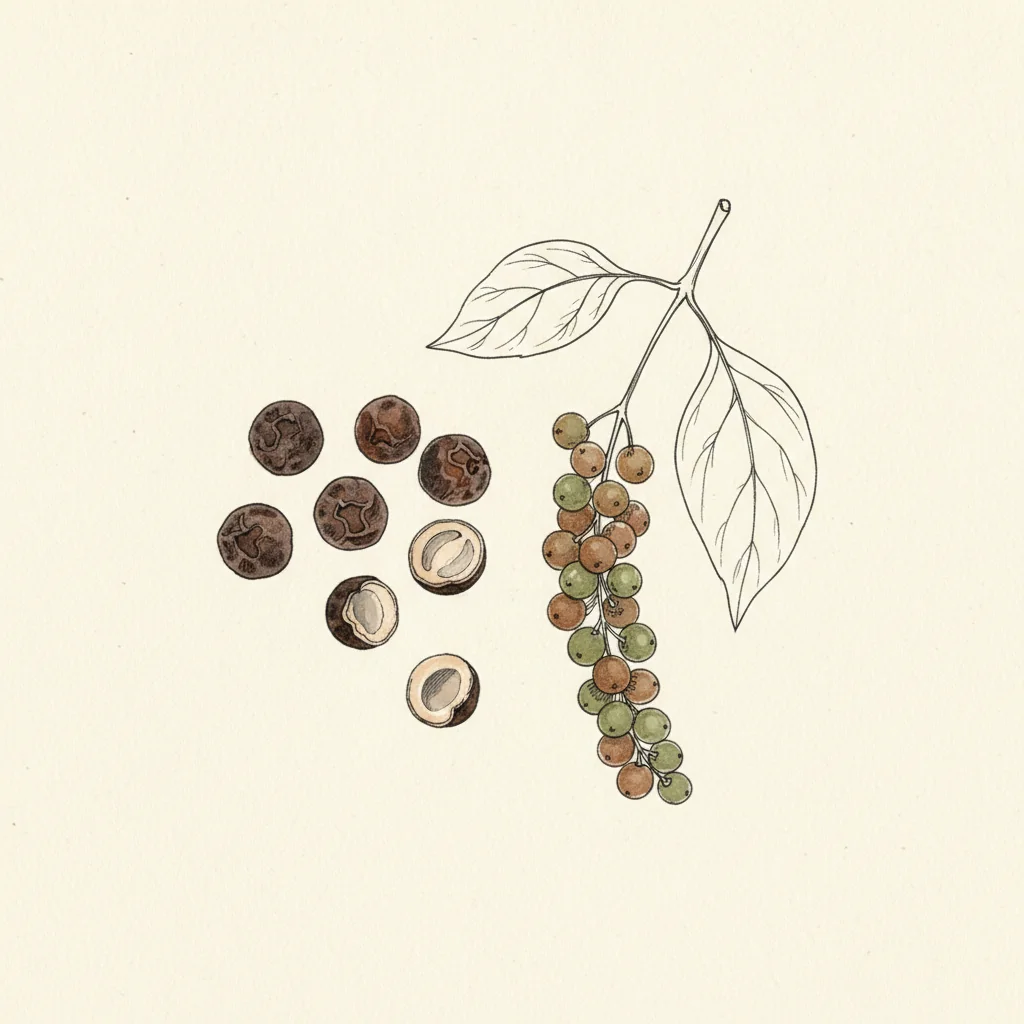
Pepper · Black pepper
Tellicherry Black Pepper
Malabar Coast, Kannur district (Kerala), India
dark cocoa · worn leather · candied citrus
Aromatic profile
| Family | Piper nigrum |
|---|---|
| Intensity | ●●●●○ (8/10) |
| Main notes | dark cocoa · worn leather · candied citrus |
| Secondary notes | warm wood · raisin |
| Mouthfeel | a broad, slow-building heat that fills the mouth without ever scorching |
| Finish length | long, with a chocolate-and-wood finish that lingers |
Culinary use
- When to add : finishing or late in cooking
- Dosage : two or three turns of a coarse-set mill, cracked just before the plate
- Ideal pairings : seared ribeye and strip steak, BBQ brisket and pulled pork rubs, Indian curries and garam masala, baked eggs and carbonara, aged cheddar, 70% dark chocolate
- Avoid with : delicate raw fish (the heat buries it), already very sweet sauces, long acidic marinades
The grain in detail
Tellicherry is a size, not an origin. The label is TGSEB, Tellicherry Garbled Special Extra Bold, the top sort of black pepper grown along India's Malabar Coast: only berries over 4.25 mm, picked at full ripeness and cleaned hard, earn the name. Most of it comes from the Kannur district of Kerala, once called Tellicherry by the British, where vines have climbed the same hills for three thousand years. Monsoon rain, moderate altitude and rich soils swell the berries and load them with the essential oils that carry the flavor. Crack a few and the nose hits warm and immediate: dark cocoa, worn leather, candied citrus, with a raisin note sitting behind. This is a generous, dependable pepper, no surprises and no faults, which is exactly why it became the default. The heat is honest and broad, building slowly across the whole mouth instead of stabbing one spot. It works as hard on a seared ribeye as it does in a curry, where it carries the garam masala, and it holds its own on baked eggs, aged cheddar, even dark chocolate. Here is the catch worth knowing: "Tellicherry" is widely slapped on pepper that never met the 4.25 mm screen. A real one shows uniform, dense berries, wrinkled but bright, throwing scent the instant they hit the mill. In the US it's cheap enough to be your everyday grinder pepper and still a clear step up from the dusty supermarket tin. Grind it coarse, grind it fresh, and never pre-ground; the oils that make it sing are gone within minutes of cracking.
History & origin
The Malabar Coast supplied Rome's pepper from antiquity and was the world's only real source until the fifteenth century. The Portuguese, then the Dutch, then the English fought over it, and the English renamed their trading post Tellicherry, which is how a calibre came to wear a town's name. Kerala still ships over 50,000 tonnes a year, but the TGSEB top grade is barely 5% of that volume. Cooperatives under the Spices Board of India, plus smaller estate brands out of Wayanad, handle the traceable lots.
Provenance & authenticity
What sets the real thing apart — appellation, species and verification cues.
- Protected appellation
- GI (India)
- Register : Spices Board of India / GI Registry India
- Authority : Spices Board of India
- Species
- Piper nigrum
- Grade / standard
- TGSEB (Tellicherry Garbled Special Extra Bold) - berries >4.75 mm, ~10% of harvest
How to verify the real one
- grade stamp TGSEB on packaging
- large berries >4.75 mm (4.75-5 mm sieve-garbled)
- Malabar Coast / Kannur, Kerala origin
- vine-ripened
Indicative price
Reference format : 8 oz jar — from $7.00 to $14.00 (median : $9.50).
Storage
Airtight opaque jar, keeps about 24 months whole. Grind only at the moment of use.
Where to buy?
Where to buy it
Links checked on
| Merchant | Price | Action |
|---|---|---|
| Amazon US | — | Amazon US |
| Spicewalla | — | Spicewalla |
| Steenbergs UK | — | Steenbergs UK |
Prices may vary depending on current promotions on the merchant site.
Alternatives if unavailable
Tags
- India
- Kerala
- Piper nigrum
- Malabar
- TGSEB grade
- garam masala
Frequently asked questions
- How do you store Tellicherry Black Pepper?
- Airtight opaque jar, keeps about 24 months whole. Grind only at the moment of use.
- What dosage for Tellicherry Black Pepper?
- two or three turns of a coarse-set mill, cracked just before the plate
- When should you add Tellicherry Black Pepper in cooking?
- It's best used finishing or late in cooking.
- What should you avoid pairing Tellicherry Black Pepper with?
- Avoid with: delicate raw fish (the heat buries it), already very sweet sauces, long acidic marinades.
Go further
The dishes where this tellicherry black pepper shines
Also a recommended alternative for
As a complementary pairing with
See every dish where this product is mentioned →
Other peppers to discover
Page prepared according to our methodology. Purchase links marked sponsored and liable to earn a commission — details on our Affiliations page.