
Comparison
Tellicherry vs Zanzibar black pepper: which is better?
Neither is 'better' — they do opposite jobs. Tellicherry brings cocoa, leather and a broad slow heat that stands up to steak, curry and braises. Zanzibar from Pemba Island brings lemon, cacao and a forward bite for fish, chicken and lemony pan sauces. Buy Tellicherry first; add Zanzibar for brightness.
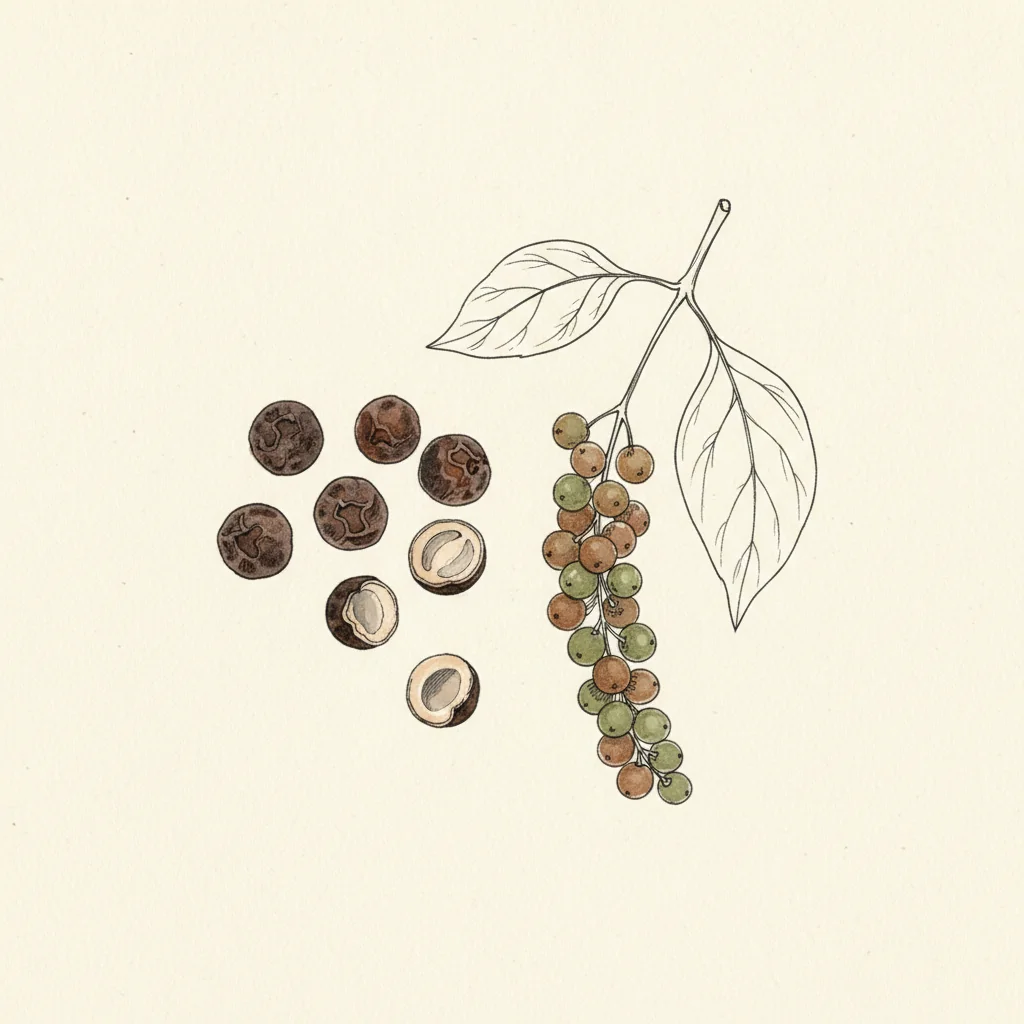
Pepper · Black pepper
Tellicherry Black Pepper
Malabar Coast, Kannur district (Kerala), India
dark cocoa · worn leather · candied citrus
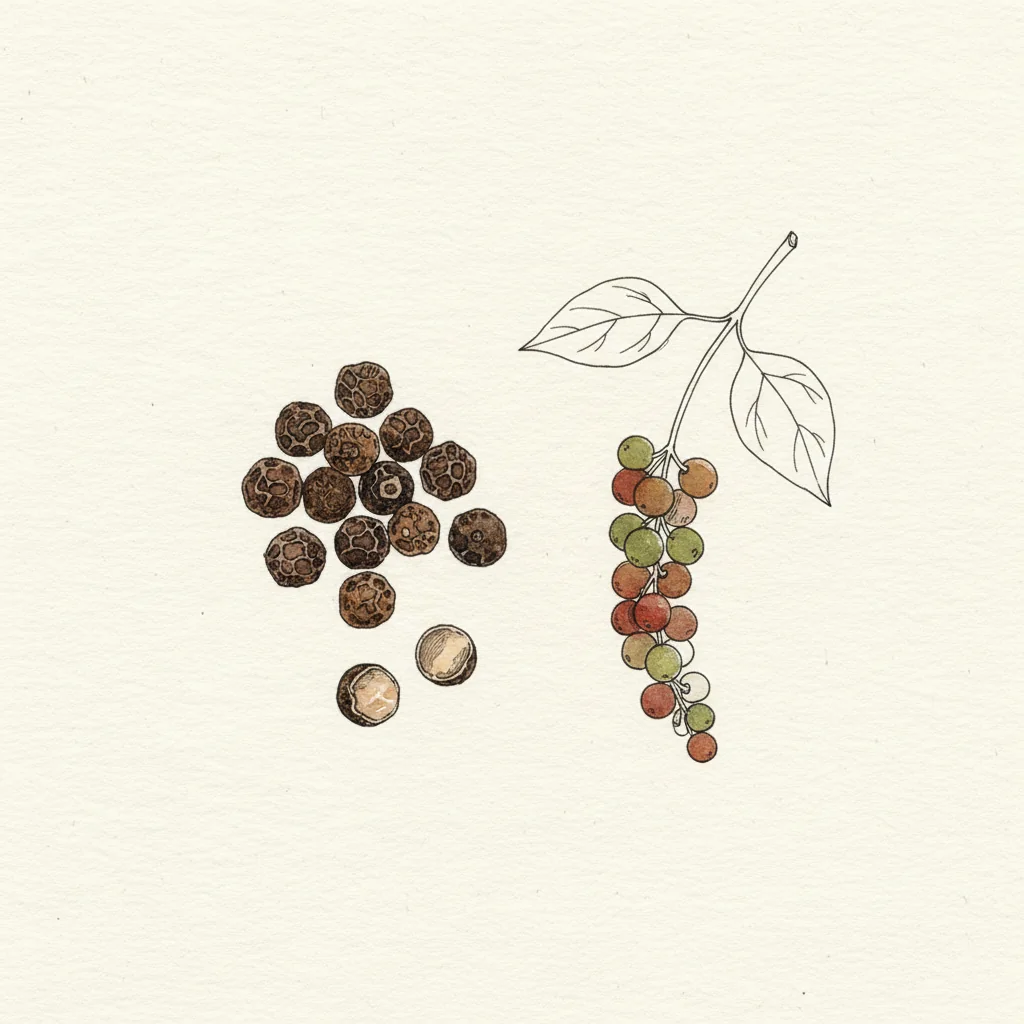
Pepper · Black pepper
Zanzibar Black Pepper
Pemba Island, Zanzibar archipelago, Tanzania
lemon zest · cacao · tropical heat
Our verdict
Tellicherry for depth and heat; Zanzibar when you want the mill to lift, not weigh down.
At a glance
| Criterion | Tellicherry Black Pepper | Zanzibar Black Pepper |
|---|---|---|
| Botanical name | Piper nigrum | Piper nigrum |
| Origin | Malabar Coast, Kerala, India | Pemba Island, Zanzibar, Tanzania |
| Grade / mark | TGSEB, berries over 4.25 mm | Small vine-ripened berries (Burlap & Barrel) |
| Intensity | 8/10 — broad, slow-building | 7/10 — bright, forward, front-of-tongue |
| Main notes | Dark cocoa, worn leather, candied citrus | Lemon zest, cacao, tropical heat |
| Best use | Steak, garam masala, braises | Grilled fish, roast chicken, cacio e pepe |
| Median price | ~$10 / 8 oz | ~$10 / 2 oz |
When to choose Tellicherry Black Pepper
Reach for Tellicherry when the dish needs weight. Its TGSEB grade keeps only berries over 4.25 mm, the ripest off the Malabar Coast, and they carry dark cocoa, worn leather and candied citrus over a heat that builds slow and broad. That depth is exactly what beef fat needs — on a seared ribeye or strip steak, crack it coarse and late so the crust holds the flavor instead of scorching it. It's the backbone of Indian cooking too: garam masala, curries, the chocolate-and-wood finish that carries cumin and coriander. And it's one of the rare peppers dense enough to survive a long braise — drop it late in a bourguignon or tie it in a cloth for a stock and it diffuses without going flat. Use it on BBQ rubs, baked eggs, carbonara, aged cheddar, dark chocolate. Where it loses to Zanzibar is anything that wants brightness: on lemony fish or a delicate pan sauce, Tellicherry's depth reads as heavy and dusty. It also has no place on fresh strawberries the way a citrus-led pepper does. Two or three coarse turns just before the plate; a half-pound jar runs about $10. If you can only own one black pepper, it's this — but the day you want the mill to lighten a plate instead of darken it, you'll reach for Zanzibar.
When to choose Zanzibar Black Pepper
Reach for Zanzibar when you want lemon, not wood. Grown on Pemba Island off Tanzania, these small vine-ripened berries crack open with bright citrus, cacao and a forward tropical heat that lands on the front of the tongue — the pepper to grab when you want the mill to lift a dish, not weigh it down. That makes it the better choice on grilled and seared white fish, roast chicken and lemony pan sauces, ripe tomatoes and burrata, and buttered pasta — it's a genuinely good cacio e pepe pepper, brighter than the usual black. It even works where most pepper doesn't: a turn over fresh strawberries and dark chocolate, or scrambled eggs. The catch is the same one that makes it special: that citrus is volatile. In a long braise the lemon cooks out and you've lost what you paid for, so this is a finishing pepper, cracked just before the plate, never pre-ground. Skip it in heavy garam masala blends that bury the lemon, and on anything already sharp with vinegar. Where it falls short of Tellicherry is depth — it won't carry a fatty ribeye or a three-hour stew the way the Indian pepper does. Burlap & Barrel's grinder jar runs about $9.99 for 2 oz, so it's pricier per gram than Tellicherry; treat it as the bright specialist in your rack, not the everyday workhorse.
Where to buy?
Tellicherry Black Pepper
Links checked on
| Merchant | Price | Action |
|---|---|---|
| Amazon US | — | Amazon US |
| Spicewalla | — | Spicewalla |
| Steenbergs UK | — | Steenbergs UK |
Prices may vary depending on current promotions on the merchant site.
Zanzibar Black Pepper
Links checked on
| Merchant | Price | Action |
|---|---|---|
| Burlap & Barrel | — | Burlap & Barrel |
| Amazon US | — | Amazon US |
| Steenbergs UK | — | Steenbergs UK |
Prices may vary depending on current promotions on the merchant site.
Frequently asked questions
- Is Zanzibar pepper just black pepper?
- It's true black pepper (Piper nigrum), but vine-ripened on Pemba Island, which gives it an unusually bright lemon-and-cacao profile instead of the usual wood-and-heat. It tastes noticeably more citrusy than standard supermarket black pepper or Tellicherry.
- Which lasts longer in cooking?
- Tellicherry. Its depth survives long braises and curries, where Zanzibar's volatile citrus cooks off and disappears. Use Zanzibar as a finishing pepper only, cracked just before serving.
- Can Zanzibar replace Tellicherry on steak?
- It can, but it changes the dish — you'll get bright citrus heat instead of cocoa depth. On a fatty ribeye, Tellicherry's weight reads better; on a lighter cut or a lemony chicken, Zanzibar wins.
- Which is the better value?
- Tellicherry, per gram — about $10 for 8 oz versus roughly $10 for 2 oz of Zanzibar. Buy Tellicherry as your everyday pepper and keep a small jar of Zanzibar for fish and bright dishes.
The best pairings
With Tellicherry Black Pepper
With Zanzibar Black Pepper
Comparison prepared according to our methodology. Sponsored purchase links — see our affiliations.