
Comparison
Zanzibar vs Kampot black pepper: which to buy?
Both are bright, citrus-led finishing peppers, but they tilt differently. Zanzibar (Pemba Island) leads with lemon, cacao and a forward tropical heat — a mill that lifts fish and pasta. Kampot is the PGI reference, eucalyptus and green citrus with an airy menthol finish and a touch more punch. Want lemon-cacao lift, go Zanzibar. Want certified eucalyptus-menthol, go Kampot.
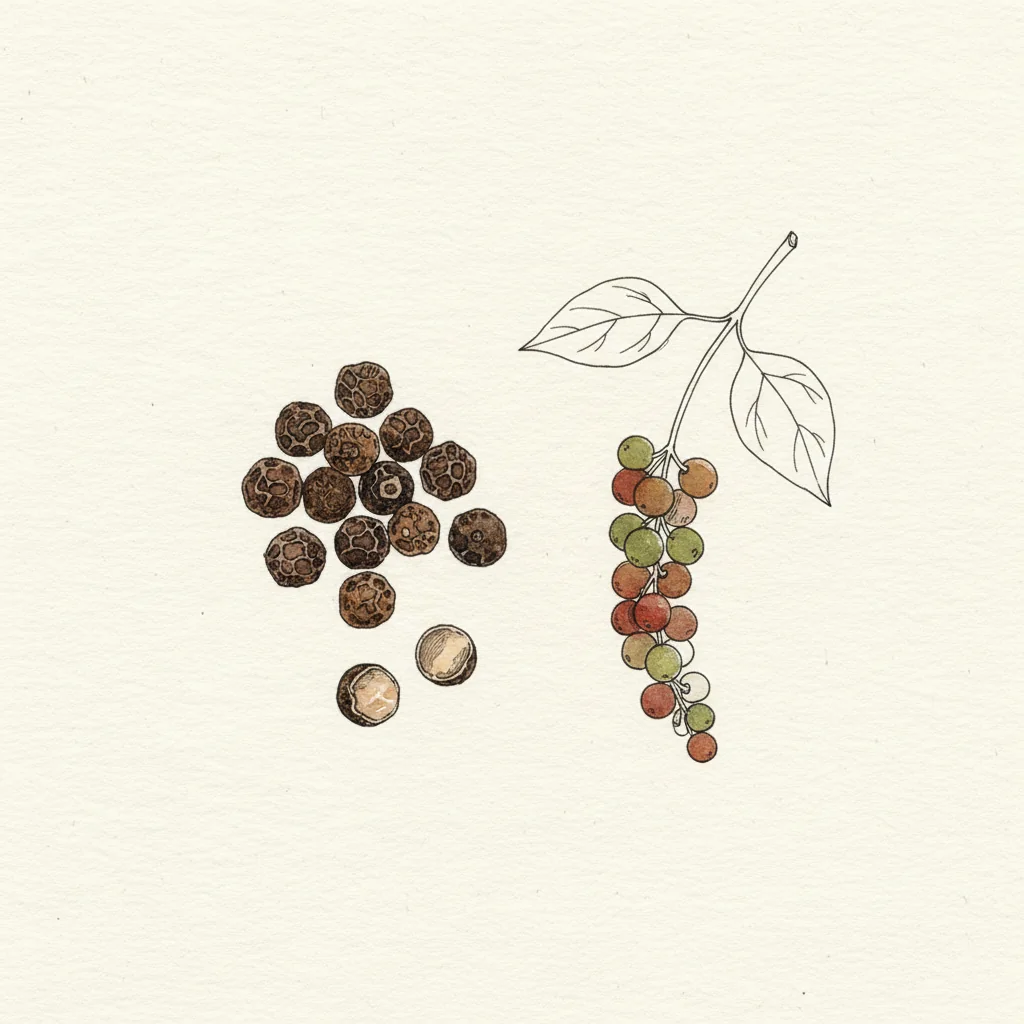
Pepper · Black pepper
Zanzibar Black Pepper
Pemba Island, Zanzibar archipelago, Tanzania
lemon zest · cacao · tropical heat
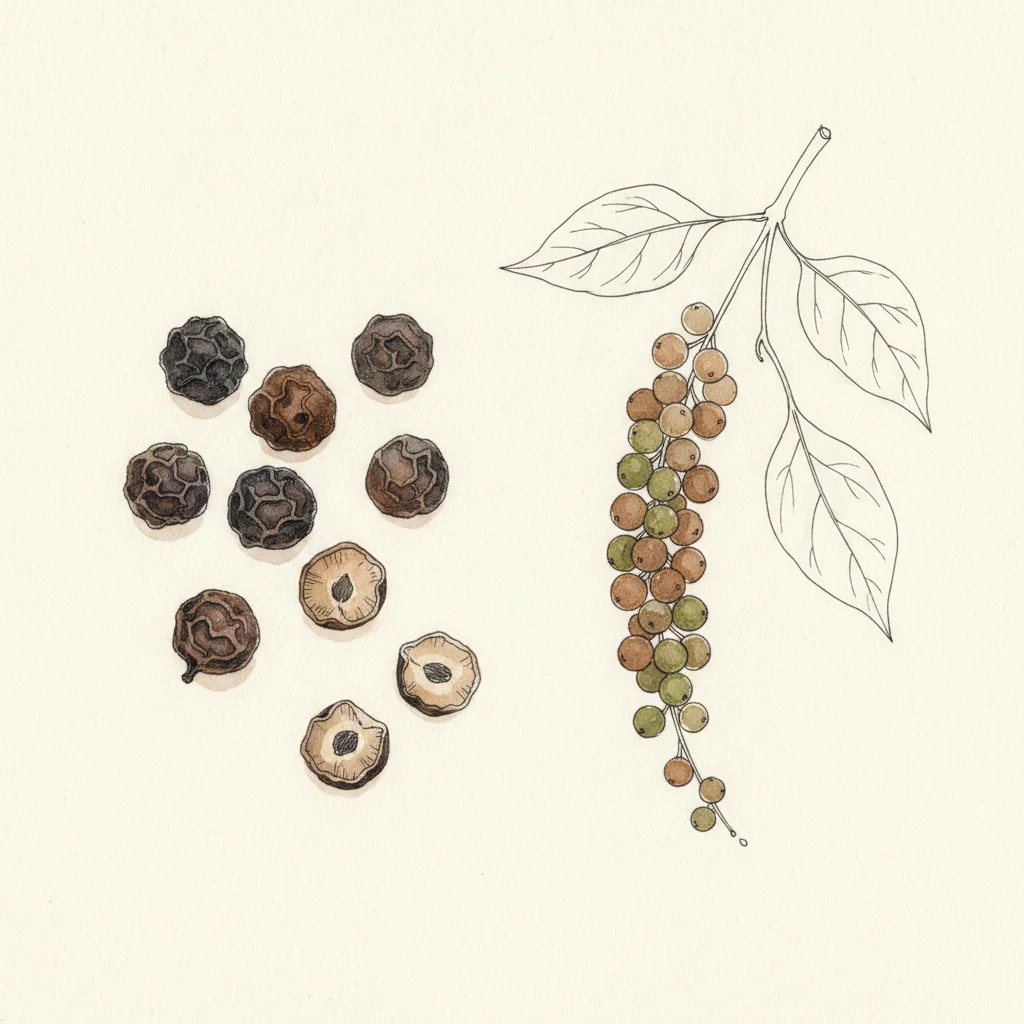
Pepper · Black pepper
Kampot Black Pepper
Kampot and Kep provinces, Cambodia (PGI)
eucalyptus · dried white flowers · green citrus
Our verdict
Zanzibar for lemon-cacao lift, Kampot for certified eucalyptus-menthol.
At a glance
| Criterion | Zanzibar Black Pepper | Kampot Black Pepper |
|---|---|---|
| Origin | Tanzania, Pemba Island (Zanzibar) | Cambodia, Kampot & Kep — PGI |
| Appellation | Single-origin, no PGI | PGI-protected |
| Flavor | Lemon zest, cacao, tropical heat | Eucalyptus, dried white flowers, green citrus |
| Sensation | Bright, forward heat on the front of the tongue | Clean fresh heat, airy menthol finish |
| Intensity | 7/10 — citrus-led, fades clean | 8/10 — clean, fresh, wakes the saliva |
| When to add | Finishing, cracked just before the plate | Finishing, ground at the end or raw |
| Best use | White fish, lemony pan sauces, burrata, cacio e pepe | Seared steak, sautéed crab, green mango salad, aged cheese |
| Price | ~$9.99 / 2 oz grinder | ~$12.50 / 50g tube |
When to choose Zanzibar Black Pepper
Reach for Zanzibar when you want a black pepper that gives you lemon instead of dusty heat. Most black pepper gives you heat and wood; Zanzibar gives you lemon. Grown on Pemba Island off Tanzania, these small, vine-ripened berries crack open with bright citrus, cacao and a forward tropical heat that lands on the front of the tongue, citrus-led rather than slow and broad, with a lemony lift that fades clean instead of dragging out a long woody tail, around 7 out of 10. It's the mill to reach for when you want pepper to lift a dish, not weigh it down: grilled and seared white fish, roast chicken and lemony pan sauces, ripe tomatoes and burrata, buttered pasta and cacio e pepe, fresh strawberries and dark chocolate, even scrambled eggs. Crack it just before the plate, two or three turns of a coarse mill over the finished dish, never pre-ground. Keep it out of long braises, where the citrus cooks out and you lose what you paid for, away from heavy garam masala blends that bury the lemon, and off anything already sharp with vinegar or acid. Store it airtight and opaque away from heat and light, where it keeps about 24 months whole, the citrus top notes brightest in the first year, and grind only at the moment of use. Burlap & Barrel's grinder jar runs about $9.99 for 2 oz, which makes it both the cheaper option here and a remarkably bright one. Against Kampot, Zanzibar is the lemon-and-cacao pepper with a softer, cleaner heat and no certification behind it — but it doesn't need one, because the flavor speaks. If your cooking leans bright and acidic — fish, lemon sauces, tomato, fresh cheese — this is the mill to fill, and it costs less.
When to choose Kampot Black Pepper
Reach for Kampot when you want the reference Asian black pepper: eucalyptus and green citrus with a clean, airy bite and a PGI to vouch for it. Kampot is the black peppercorn that smells of eucalyptus and green citrus instead of dusty heat, grown in Kampot and Kep provinces in Cambodia, picked just before it turns red and sun-dried for a few days. The result is eucalyptus, dried white flowers and green citrus over cedar and light menthol, a clean fresh heat that wakes up the saliva without the rough burn of a supermarket peppercorn, with a long airy menthol finish, around 8 out of 10 — a touch more punch than Zanzibar, in a fresher, more aromatic register. It's a finishing pepper: two or three turns of the mill, ground at the end of cooking or raw over the plate, on seared steak, sautéed crab, roasted fish, scrambled eggs, green mango salad and aged cheese. Keep it off dishes already heavy on eucalyptus or menthol, out of very long simmers where the fresh top notes cook off, and away from acidic marinades. Store it whole in an opaque jar away from humidity, grind it at the last moment, best within 24 months. A 50g tube runs about $12.50 — pricier than Zanzibar, and the PGI is part of what you're paying for: Kampot is the reference for Asian pepper, a protected origin with a guaranteed style, which is real value if you want certainty and a benchmark grain. Against Zanzibar, Kampot is the more aromatic, slightly hotter, certified choice, leaning eucalyptus-menthol where Zanzibar leans lemon-cacao. If you want the recognized standard, the eucalyptus-green-citrus profile, and a grain with provenance you can point to, Kampot is the buy — just expect to pay a little more for the PGI and the freshness.
Where to buy?
Zanzibar Black Pepper
Links checked on
| Merchant | Price | Action |
|---|---|---|
| Burlap & Barrel | — | Burlap & Barrel |
| Amazon US | — | Amazon US |
| Steenbergs UK | — | Steenbergs UK |
Prices may vary depending on current promotions on the merchant site.
Kampot Black Pepper
Links checked on
| Merchant | Price | Action |
|---|---|---|
| Amazon US | — | Amazon US |
| Sous Chef UK | — | Sous Chef UK |
| Kampot Pepper USA | — | Kampot Pepper USA |
Prices may vary depending on current promotions on the merchant site.
Frequently asked questions
- Is Kampot worth the extra cost over Zanzibar?
- It depends on what you're paying for. Kampot's PGI guarantees the eucalyptus-green-citrus style and a protected origin; Zanzibar delivers a bright lemon-cacao pepper for less, with no certification. If you want a benchmark grain with provenance, Kampot earns it. For everyday brightness, Zanzibar is the smarter spend.
- What's the flavor difference?
- Zanzibar leads with lemon, cacao and a forward tropical heat that fades clean. Kampot leads with eucalyptus, dried flowers and green citrus over an airy menthol finish, with a touch more punch. Both are bright, citrus-led finishing peppers — they just tilt toward lemon versus eucalyptus.
- Can I cook with either in a braise?
- Don't. Both are finishing peppers whose bright top notes cook off in a long simmer — you'd lose exactly what you paid for. Crack them over the finished plate or grind them in at the very end, never pre-ground and never simmered for hours.
- Which is hotter?
- Kampot, slightly — around 8 out of 10 versus Zanzibar's 7, with a clean fresh bite that wakes the saliva. But the difference is more about register than raw burn: Zanzibar is citrus-soft, Kampot is fresh and airy. Neither is a harsh supermarket heat.
The best pairings
With Zanzibar Black Pepper
With Kampot Black Pepper
Comparison prepared according to our methodology. Sponsored purchase links — see our affiliations.