
Collective
New Mexico chile growers (Hatch & Chimayó)
Hatch Valley and Chimayó, New Mexico, United States · founded by New Mexico chile-farming families and the NMSU Chile Pepper Institute tradition
The chile-farming families of New Mexico, whose Hatch Valley and Chimayó harvests define the American Southwest's chile culture. Hatch is the broad, roasted-and-frozen green chile of late summer; Chimayó is the rare, heirloom landrace grown in one northern village. Not a single company but a regional tradition protected by state advertising law and centered on the Rio Grande valley.
History
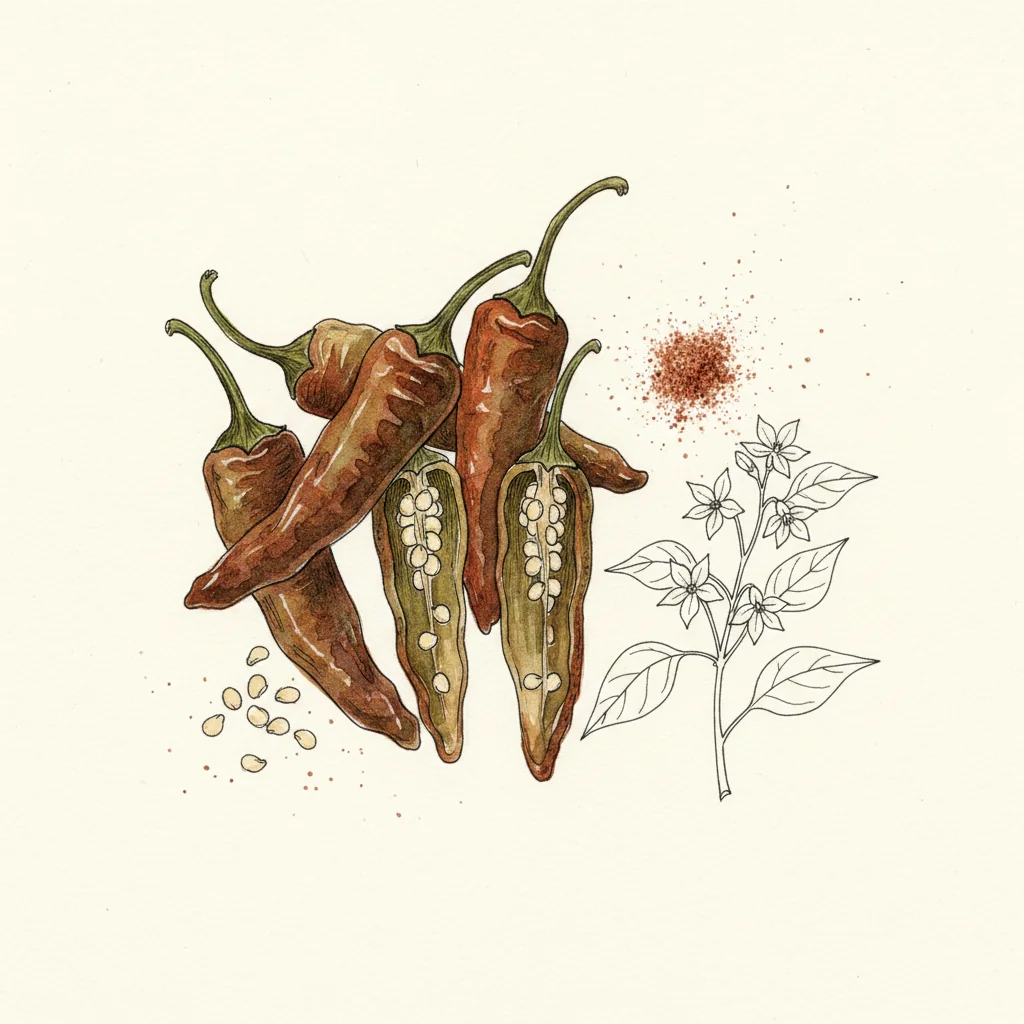
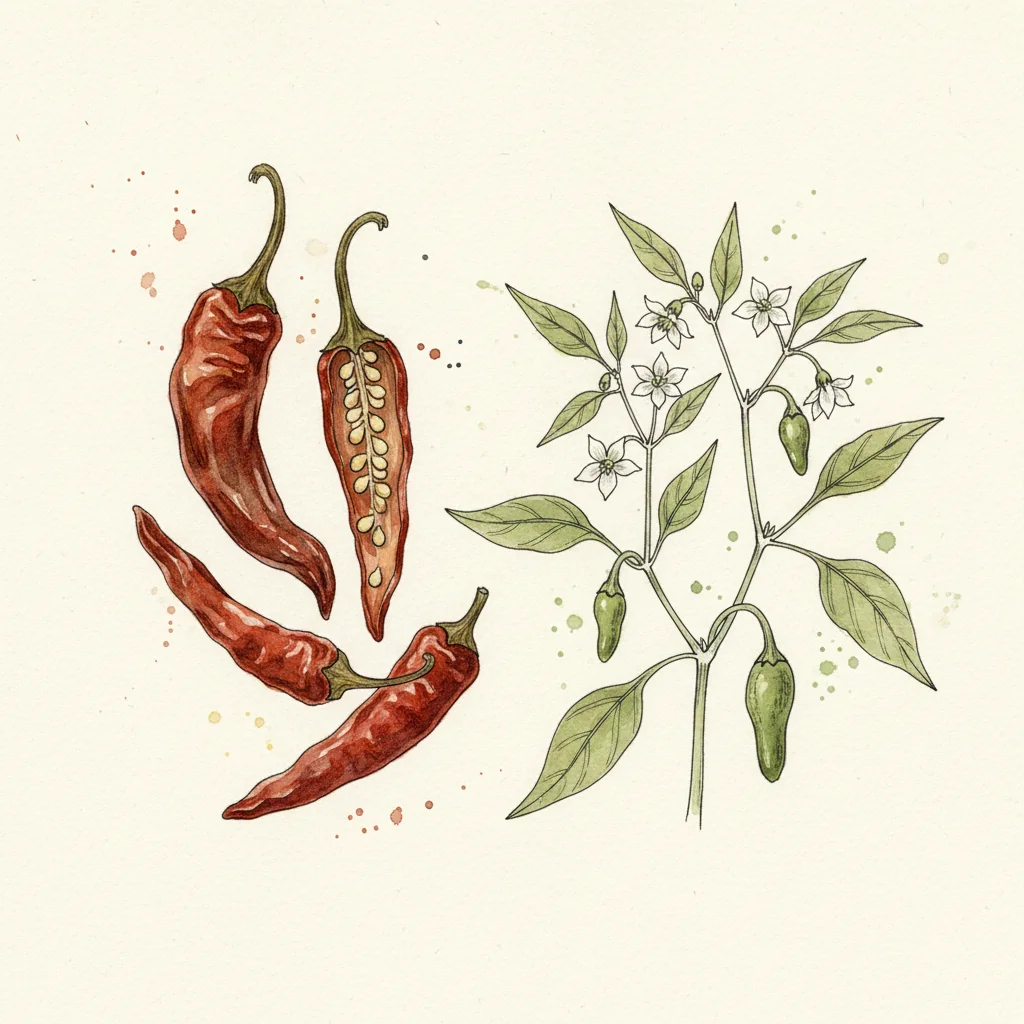
New Mexico has the deepest chile culture in the United States, the product of centuries of cultivation in the Rio Grande valley by Pueblo, Hispano, and later Anglo farmers, and the state institutionalized it: New Mexico State University's Chile Pepper Institute breeds and studies the crop, the legislature passed a Chile Advertising Act in 2012 to stop out-of-state peppers being sold as New Mexico chile, and chile (spelled with an e, New Mexico-style) is woven into the state's identity down to the official state question, red or green. Two names matter most to a cook. Hatch refers to the Hatch Valley, a thirty-mile stretch of the Rio Grande in southern New Mexico, whose late-summer green chile harvest is a regional event: the chiles are roasted in rotating drum roasters at roadside and grocery lots, the smell filling the air, then peeled and frozen to last the year, and Hatch green chile is the foundation of New Mexican cooking, from green chile stew to cheeseburgers. Hatch is a geographic name protected by the state advertising law rather than a federal PDO, and it covers several cultivars grown in the valley rather than one variety; the protection is against mislabeling out-of-state chile as Hatch. The dried red powder version, the same chiles left to ripen red and dried and ground, is the other half of New Mexico's red-or-green duality. Chimayó is the rarer, more specific name: a heirloom landrace chile grown in and around the village of Chimayó in the Española Valley of northern New Mexico, at higher altitude in the Río Arriba foothills, cultivated by the same families for generations and adapted to that specific place. Genuine Chimayó chile is grown in small quantities, prized for a complex, earthy, moderately hot character, and is scarce and often imitated, with generic New Mexico chile sold under the name. The honest framing for the cook is that these are different products for different uses: Hatch green chile (roasted and frozen) is the bulk foundation ingredient of Southwestern cooking, while Hatch and Chimayó red powders are finishing and seasoning spices, and genuine Chimayó in particular is a scarce, premium heirloom worth seeking from a transparent New Mexico source rather than a generic jar. The whole tradition rewards buying from identifiable New Mexico growers and cooperatives, because the value, and the protection against the widespread practice of selling lookalike chile under these names, lies in the specific place and the specific families, exactly the named-product, real-source clarity this catalog provides.
How they work
New Mexico chile is grown in the Rio Grande valley, with two key traditions. Hatch chile is grown across the Hatch Valley, a thirty-mile stretch in the south, where multiple cultivars are cultivated; the late-summer harvest is roasted fresh in rotating drum roasters at roadside and grocery lots, then peeled and frozen to preserve the green chile through the year, or left to ripen red, dried, and ground into powder. The Hatch name is a geographic designation protected by New Mexico's Chile Advertising Act of 2012, which forbids selling out-of-state chile as Hatch, rather than a federal PDO; it covers the valley's several cultivars, not a single variety. Chimayó chile is a heirloom landrace, a population of plants adapted over generations to the specific higher-altitude conditions around the village of Chimayó in the northern Española Valley, grown in small quantities by the same families and saved as seed, which is what makes it both distinctive and scarce. Genuine Chimayó is grown, dried, and ground in limited amounts. For both, the guarantee is the place and, for Chimayó, the family seed-line and the small scale, not a single corporate process.
Specialties
- Hatch green and red chile
- Chimayó heirloom landrace chile
- New Mexico chile powders
Products from this house on La Pincée
-
Spice · Chile
Hatch Green Chile Powder
Hatch Valley, a 30-mile stretch of the Rio Grande between Hatch and Rincon, southern New Mexico, United States (Hatch Valley (geographic name, not a federal PDO; protected by the New Mexico Chile Advertising Act, 2012))
-
Spice · Chile
Chimayó Chile
Chimayó, Española Valley, Río Arriba County, New Mexico, USA
Where to buy
These are best bought from identifiable New Mexico sources. For Hatch green chile outside the harvest season, frozen roasted Hatch chile ships from New Mexico grocers and specialty suppliers, and during the late-summer season fresh roasted Hatch appears at grocery lots across the Southwest and increasingly nationwide; for the red, Hatch chile powder from a New Mexico supplier runs roughly 6 to 14 dollars a bag. Genuine Chimayó is scarcer and pricier, often 10 to 20 dollars or more for a small amount of true Chimayó powder, reflecting the small heirloom harvest. Practical advice for US cooks: use Hatch green chile as the bulk foundation it is, for stews, sauces, and burgers, buying it roasted and frozen if you cannot get it fresh; use Hatch and Chimayó red powders as finishing and seasoning spices. For Chimayó specifically, buy from a transparent New Mexico grower or cooperative that names the village source, because generic New Mexico chile is widely sold under the Chimayó name and the real heirloom is the point. Look for the Hatch geographic claim backed by a New Mexico supplier rather than an out-of-state jar, since the state advertising law protects the name but only a credible source honors it. For UK cooks, these are a US import with no real local equivalent; smoked paprika or another chile fills the everyday role, and genuine New Mexico chile is a specialty mail-order curiosity if you want the authentic Southwestern character. Store powders away from heat and light and use within the year for full color and potency; keep frozen green chile frozen until use, since that is how the harvest is preserved.
Good to know
Three honest points. First, Hatch and Chimayó are different products: Hatch (especially the roasted, frozen green) is the bulk foundation ingredient of New Mexican cooking, while Chimayó is a scarce heirloom landrace prized as a finishing and seasoning chile; do not pay Chimayó prices for generic chile or treat them interchangeably. Second, both names are widely misused: Hatch is protected only by a state advertising law and Chimayó not by any formal designation, so out-of-state and generic chile is sold under both names, and buying from an identifiable New Mexico source is the protection. Third, this is a US-regional recommendation with no real UK equivalent, so for British cooks it is a specialty import or a curiosity. The verdict: the New Mexico chile tradition is the deepest in the US, Hatch green chile is the foundation worth buying roasted and frozen, and genuine Chimayó from a named northern grower is the scarce heirloom worth seeking when you want the real thing.