
Collective
Malabar Coast pepper growers (Tellicherry)
Kannur district, Malabar Coast, Kerala, India · founded by Smallholder pepper farmers of the Malabar Coast
The smallholder pepper farmers of the Malabar Coast in northern Kerala, whose vines yield Tellicherry, the large, fully matured black peppercorn graded for size and counted as the benchmark culinary black pepper. Not a single company but a regional tradition centered on Kannur district, where pepper has grown and been traded for over two thousand years.
History
The Malabar Coast of Kerala in southwestern India is the original home of black pepper, Piper nigrum, traded out of its ports for over two thousand years and the spice that drew Roman, Arab, and later European traders to the region; the European age of exploration was substantially a search for a sea route to this coast's pepper. Tellicherry is not a place-of-origin appellation in the PGI sense but a grade: the name (an anglicization of Thalassery, a town in Kannur district) came to denote the largest, fully matured black peppercorns, those left on the vine to ripen further and then graded by size, with Tellicherry Garbled Special Extra Bold (TGSEB) the top grade of the largest berries. The larger berry has had more time to develop volatile oils and the characteristic warm, fruity, faintly citrus complexity that makes Tellicherry the benchmark culinary black pepper, the one chefs and food writers reach for when they want black pepper to be a flavor rather than just heat. The pepper grows on smallholder farms across the Malabar hills, often as a climbing vine trained up trees in mixed-crop gardens alongside coffee, cardamom, and areca, a traditional agroforestry pattern. The trade has been organized through Indian spice markets and exporters for centuries, and modern single-estate operations (such as the Parameswaran family's Aranya pepper in the Western Ghats) have begun to apply single-origin and estate-grading logic to what was historically a commodity-graded product. The honest framing for the cook is that Tellicherry is a grade, not a guarantee of a single farm, so the quality depends on the actual berry size, the harvest freshness, and the integrity of the grading; a genuine TGSEB from a recent harvest is a different and far better thing than tired, small, or mislabeled pepper sold as Tellicherry. Because it is a grade rather than a protected origin, the name is widely used and not always honestly, which is the cook's main hazard. Bought well, freshly, in whole corns from a source that grades honestly, Tellicherry is the everyday-into-special black pepper that rewards a grinder more than almost any other single upgrade, since the gap between fresh whole Tellicherry and pre-ground supermarket black pepper is enormous and immediate. The Malabar tradition also underlies the move toward single-origin estate pepper, where named farms like Aranya offer a traceable version of what Tellicherry grading historically delivered anonymously, and the two coexist: Tellicherry as the trusted grade, single-estate Malabar pepper as the traceable premium.
How they work
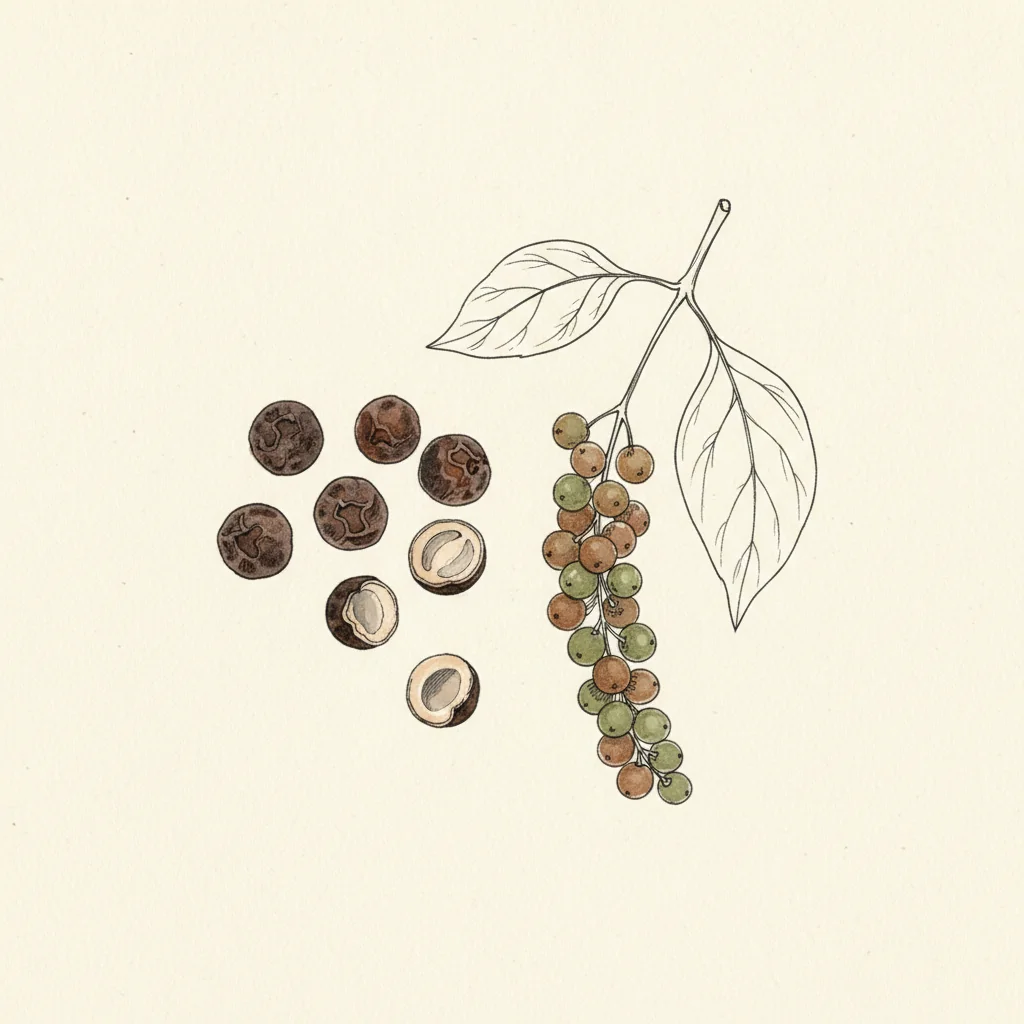
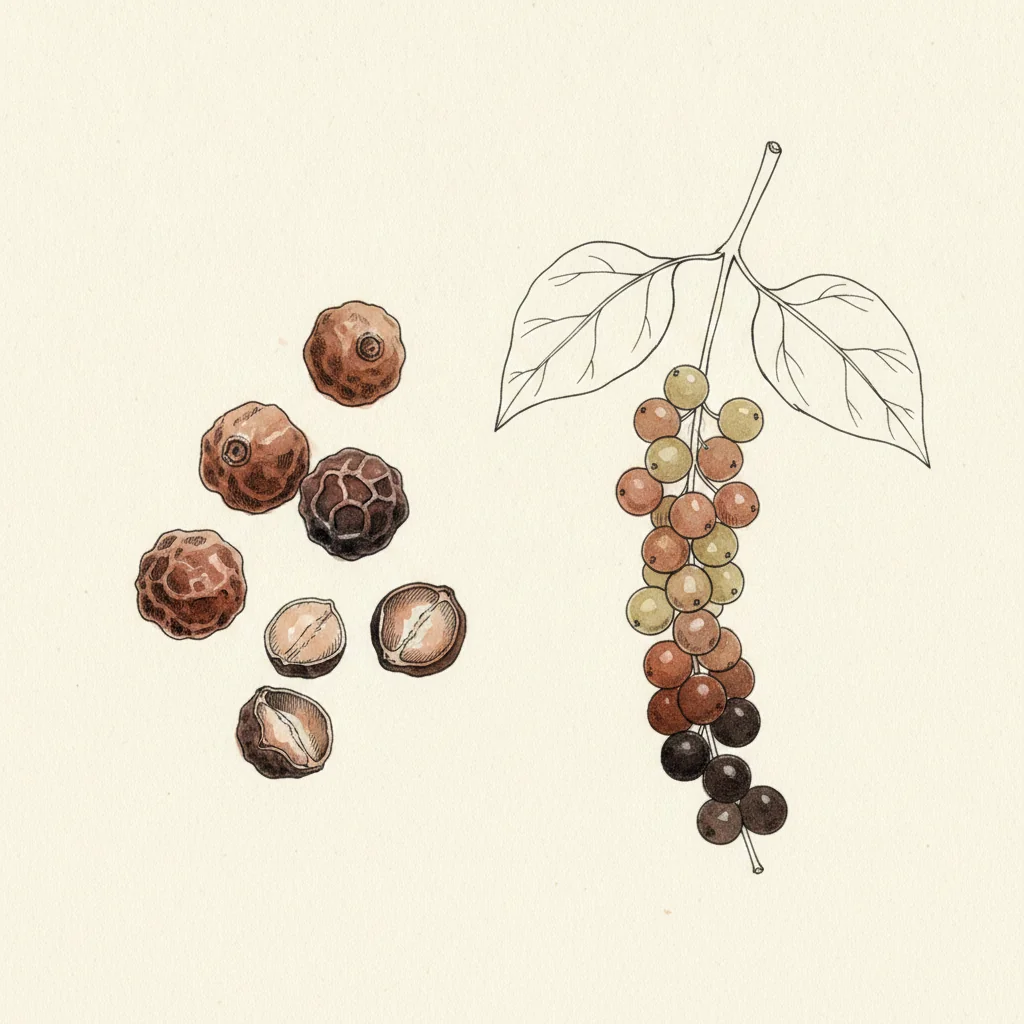
Pepper grows on smallholder farms across the Malabar hills of northern Kerala, where the vine is trained up living trees in mixed agroforestry gardens alongside coffee, cardamom, and areca. For Tellicherry grade, berries are left on the vine to mature more fully than ordinary black pepper before being hand-harvested, sun-dried, and then graded by size; the largest mature berries are selected, with Tellicherry Garbled Special Extra Bold the top grade of the biggest corns. The larger, riper berry carries more volatile oil, which is the source of the warm, fruity, citrus-edged complexity that defines the grade. The key point is that Tellicherry is a size-and-maturity grade applied after harvest, not a protected single-origin appellation, so quality depends on honest grading, berry size, and harvest freshness rather than on a geographic certificate. Single-estate Malabar producers, such as the Parameswaran family's Aranya, apply a traceable single-origin and estate-grading discipline to the same tradition, naming the farm and harvest the way a single-origin coffee would, which is the traceable premium version of what Tellicherry grading delivered anonymously through the commodity trade.
Specialties
- Tellicherry-grade black pepper
- Malabar single-estate pepper
- agroforestry pepper vines
Products from this house on La Pincée
Where to buy
Tellicherry is widely available but quality varies enormously, so the source matters more than the name. Buy whole corns, never pre-ground, from a fast-moving specialty source: in the US, Burlap & Barrel, Diaspora, and good spice grocers carry honest Tellicherry or single-estate Malabar pepper; in the UK, Steenbergs, Sous Chef, and Spice Mountain do the same. Expect roughly 5 to 12 dollars or pounds for a useful jar of genuine large-grade Tellicherry, more for a named single-estate pepper like Aranya. Practical advice: insist on whole peppercorns and a recent harvest, because the entire advantage of Tellicherry is the volatile oil in a fresh, large, ripe berry, and pre-ground pepper loses that within weeks. Look for visibly large, uniform corns; genuine Tellicherry berries are noticeably bigger than ordinary black pepper. Because Tellicherry is a grade and not a protected origin, the name is used loosely and sometimes dishonestly, so a transparent single-origin or estate source (Aranya from the Parameswaran family, or a named importer's graded lot) is the surest route to the real thing. For everyday cooking this is the single black pepper upgrade that rewards a grinder most, since fresh whole Tellicherry against pre-ground supermarket pepper is a night-and-day difference. Store the whole corns in an opaque sealed jar away from heat and grind to order; whole pepper keeps its character for a year or more, while ground pepper fades fast. Avoid loose bulk-bin pepper of unknown age, where you cannot judge harvest freshness or grading integrity.
Good to know
Three honest points. First, Tellicherry is a size-and-maturity grade, not a protected single-origin appellation, so the name alone guarantees nothing; quality depends on the actual berry size, harvest freshness, and honest grading, which is why a transparent source matters more than the label. Second, because it is a grade rather than an origin, the name is widely and sometimes dishonestly used, so buy whole corns from a fast-moving specialty seller or a named single-estate producer like Aranya rather than loose bulk pepper of unknown age. Third, the upgrade is real and immediate: fresh whole Tellicherry ground to order is dramatically better than pre-ground supermarket black pepper, making it the single most rewarding black-pepper purchase for the price. The verdict: Tellicherry is the benchmark culinary black pepper when bought whole, fresh, and honestly graded, and the Malabar single-estate movement (Aranya and peers) now offers a traceable premium version of the same tradition.