
Comparison
Baharat vs Berbere
Both are warm cooking blends bloomed in fat, but heat splits them. Baharat is mild and savory — pepper, allspice, cumin, clove — the all-purpose Arab backbone for kofta and stews. Berbere is fierce, an 8-out-of-10 brick-red Ethiopian blend built on fermented chiles and fenugreek. Use baharat when you want warmth without fire; use berbere when chile heat with depth is the point.
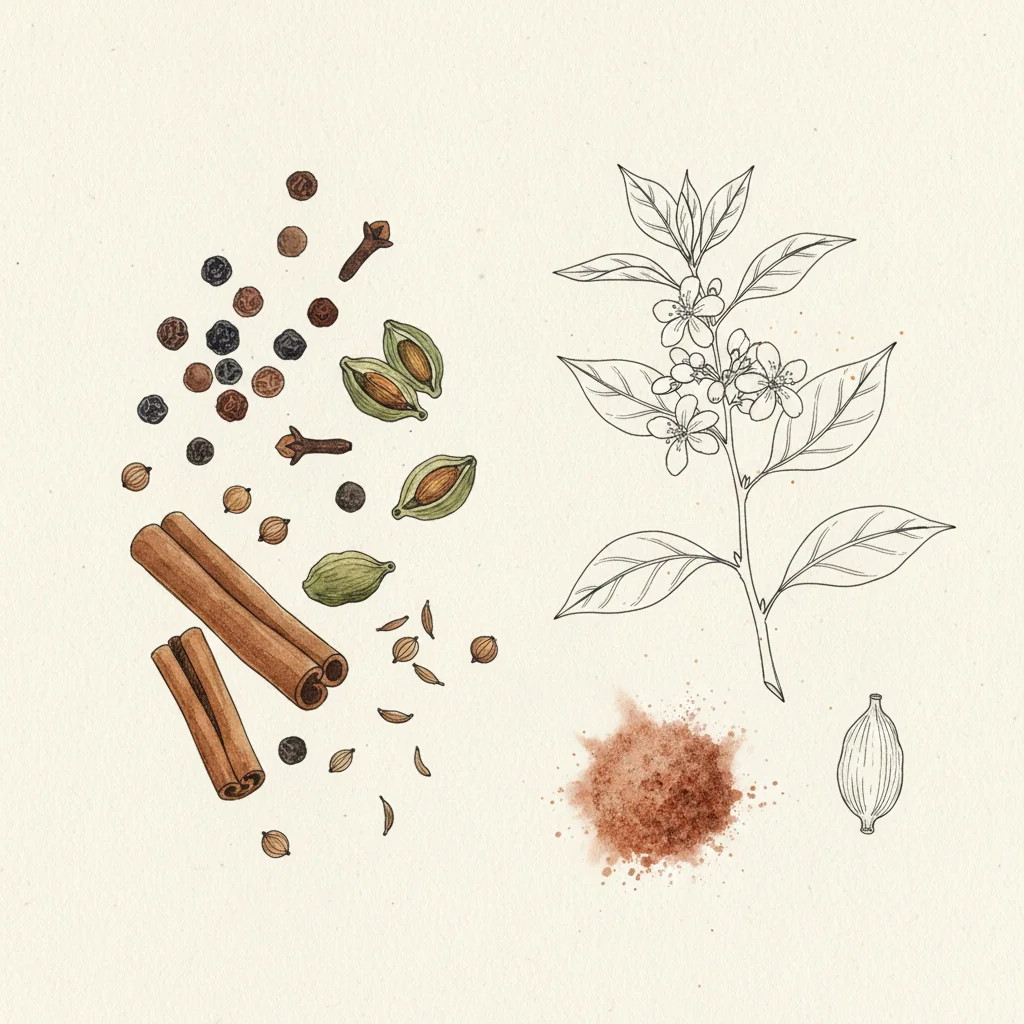
Spice · Blend
Baharat
Made across the Arab world, with distinct house recipes in Lebanon, Syria, Turkey and the Gulf states, Levant & Gulf
warm allspice and clove · black pepper bite · toasted cumin and coriander
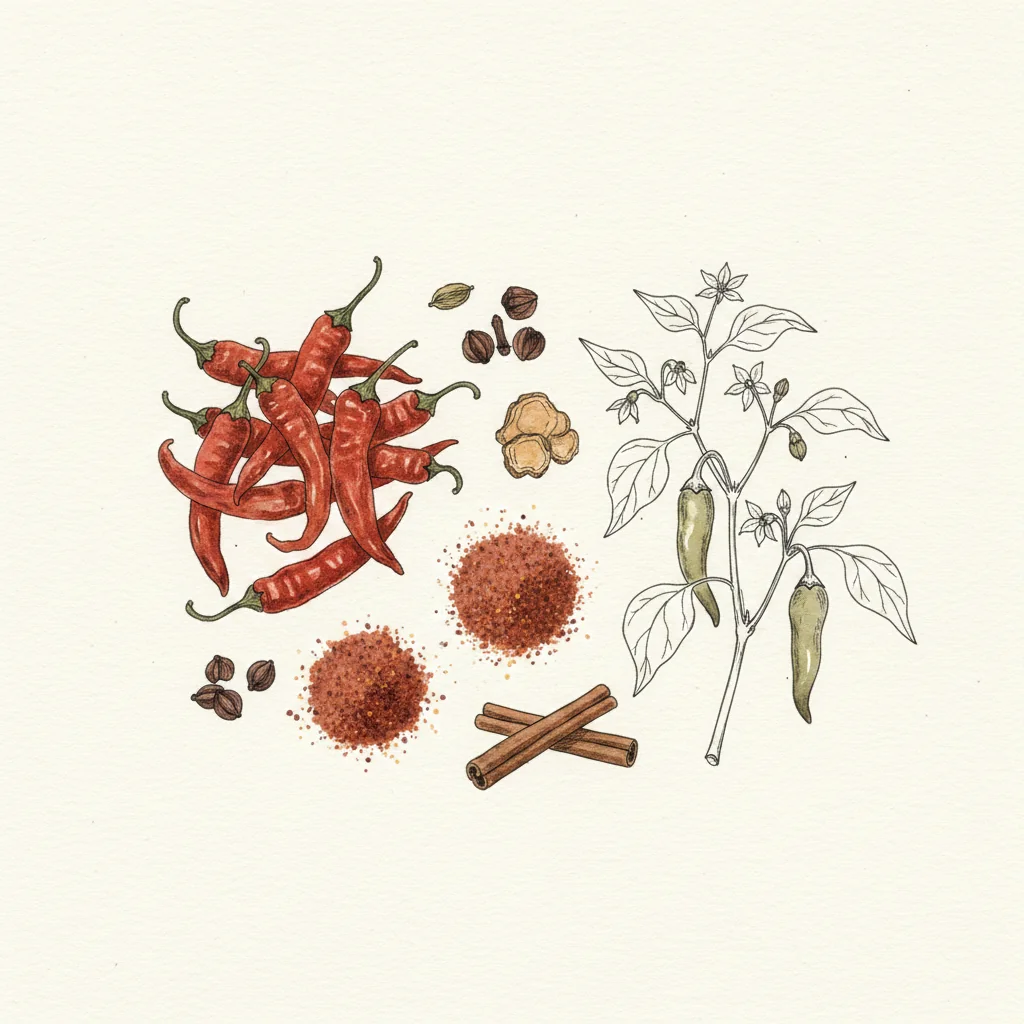
Spice · Blend
Berbere
Ethiopian highlands, household and regional recipes from Addis Ababa to Tigray, Ethiopia / Eritrea
dried chile · warm sweet spice · fenugreek
Our verdict
At a glance
| Criterion | Baharat | Berbere |
|---|---|---|
| Levant and Gulf — house recipes across the Arab world | Ethiopia and Eritrea — highland household recipes | |
| Warm allspice and clove, black pepper, toasted cumin and coriander | Dried chile, warm sweet spice, fenugreek, ginger and garlic | |
| 6/10 — warming, no real burn | 8/10 — building chile heat wrapped in sweet spice | |
| Kofta, shawarma rubs, kibbeh, pilaf, roast chicken, lentil soup | Doro wat, misir wot, tibs, roasted squash, chicken rubs | |
| Bloomed in fat or rubbed on meat at the start | Bloomed early in oil or niter kibbeh at the base of a stew | |
| ~$7 for a 50–75 g jar | ~$10 for a 4 oz bag |
When to choose Baharat
Baharat is the choice when you want warmth without fire. Arabic for 'spices,' it's the all-purpose backbone of Levant and Gulf cooking — the equivalent of garam masala — built on black pepper, allspice, cumin, coriander, cassia, clove, cardamom and paprika. It's rounded and warming, peppery up front with a sweet baking-spice tail, and crucially it carries no real chile burn. That makes it the everyday seasoning for lamb and beef kofta, shawarma and kebab, kibbeh, rice and freekeh pilaf, roast chicken, lentil soup. Bloom it in fat at the start or rub it on meat before cooking — never dust it raw, where it goes dusty and flat. About a tablespoon per pound of ground meat, or a teaspoon for a pot serving four. Reach for it when the dish wants depth and aromatic warmth but you don't want to commit the whole plate to chile heat — for guests who don't eat spicy, or for a pilaf where berbere's 8-out-of-10 burn would dominate everything. At about $7 a jar, it's the gentle, versatile warm blend that seasons broadly without setting the table on fire.
When to choose Berbere
Berbere is the choice when chile heat with depth is the whole idea. It's the backbone of Ethiopian and Eritrean cooking: a brick-red blend built on fermented, sun-dried chiles and over a dozen warm spices — fenugreek, korarima, ginger, ajwain. The heat is real, an 8 out of 10, but it's heat with structure, a building chile burn wrapped in sweet warm spice with a faint bitter fenugreek edge underneath, never just fire. It owns doro wat (Ethiopian chicken stew), misir wot (red lentil stew), beef and lamb tibs, roasted sweet potatoes and squash, and rubs for grilled chicken or short ribs. Bloom it early in oil or niter kibbeh at the base of a stew, never sprinkle it raw at the end — and start low, 1 to 2 tablespoons per pot for four, because it builds. The red fades to brown within about a year, so buy small and replace it once the color dulls. Where baharat seasons gently, berbere commits the dish to deep, layered heat. At about $10 a 4 oz bag, it's the blend you reach for when you actually want the burn.
Where to buy?
Baharat
Links checked on
| Merchant | Price | Action |
|---|---|---|
| The Spice Way (Amazon US) | — | The Spice Way (Amazon US) |
| Burlap & Barrel | — | Burlap & Barrel |
| Steenbergs UK | — | Steenbergs UK |
Prices may vary depending on current promotions on the merchant site.
Berbere
Links checked on
| Merchant | Price | Action |
|---|---|---|
| Burlap & Barrel | — | Burlap & Barrel |
| Amazon US | — | Amazon US |
| Sous Chef UK | — | Sous Chef UK |
Prices may vary depending on current promotions on the merchant site.
Frequently asked questions
- Which is hotter?
- Berbere, by a long way. It runs about 8 out of 10, built on fermented dried chiles, while baharat carries no real burn at all — it's a warm, peppery blend, not a chile one. If you want fire, berbere; if you want warmth without heat, baharat.
- Can I substitute one for the other?
- Not cleanly. Baharat in an Ethiopian stew leaves it warm but tame, missing the chile depth that defines berbere. Berbere in a kofta rub adds heat the dish never asked for. They're both bloomed-in-fat blends, but they aim at different cuisines and heat levels.
- Are they cooked the same way?
- Yes — both go in early, bloomed in fat or oil at the base of the dish, never sprinkled raw at the end. Berbere especially needs the fat to mellow its chile and release the fenugreek. The technique matches; the heat and the destination don't.
- Which is more beginner-friendly?
- Baharat. Its gentle, warm profile is forgiving and seasons a broad range of dishes without overwhelming anyone. Berbere demands a careful hand — start low and let it build, because 8-out-of-10 heat can run away from you fast in a pot.
The best pairings
With Baharat
With Berbere
Comparison prepared according to our methodology. Sponsored purchase links — see our affiliations.