
Comparison
Baharat vs Ras el Hanout
Both are warm cooking blends bloomed in fat, but they aren't interchangeable. Baharat is the savory everyday backbone of Levant and Gulf cooking — pepper, allspice, cumin, clove. Ras el hanout is Morocco's floral merchant's signature, 15 to 30 spices swung toward dried rose. Use baharat for kofta, shawarma and weeknight stews; use ras el hanout for tagine, couscous and anything that wants perfume.
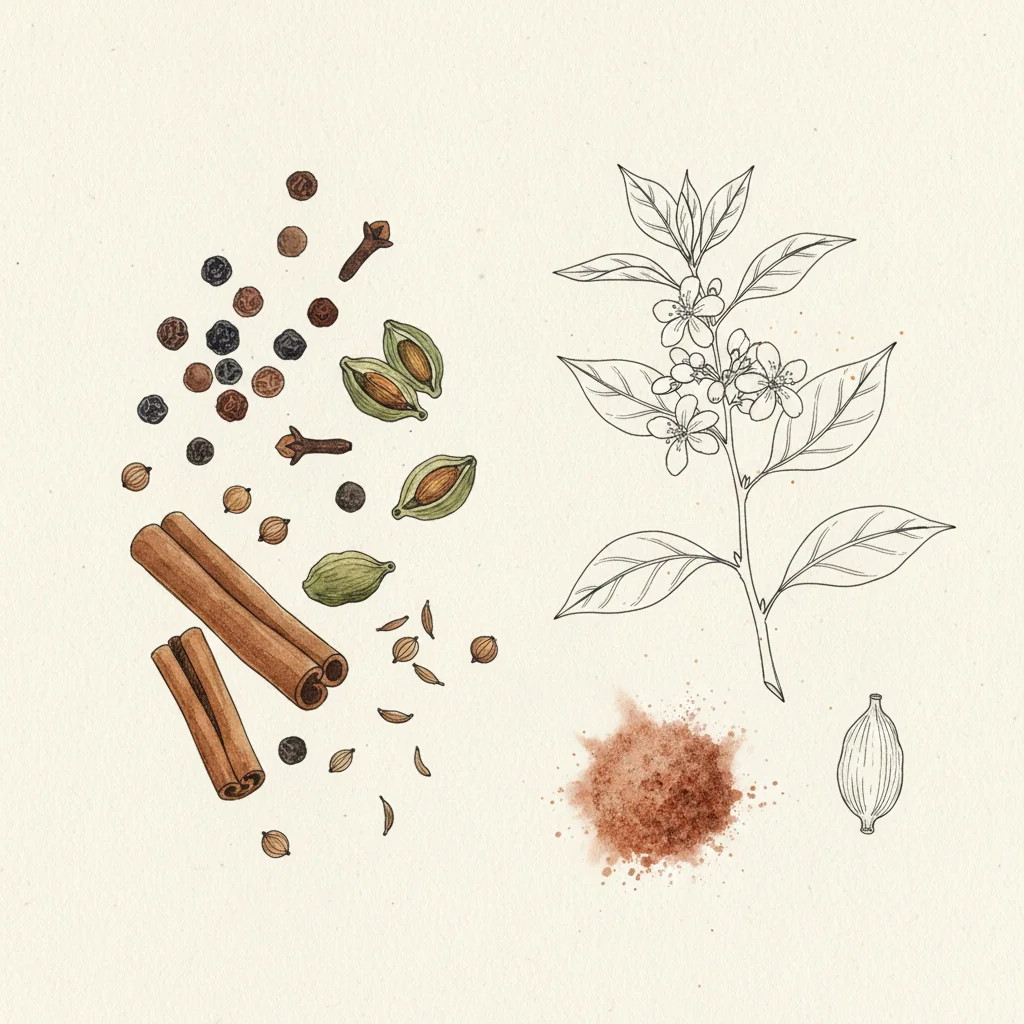
Spice · Blend
Baharat
Made across the Arab world, with distinct house recipes in Lebanon, Syria, Turkey and the Gulf states, Levant & Gulf
warm allspice and clove · black pepper bite · toasted cumin and coriander
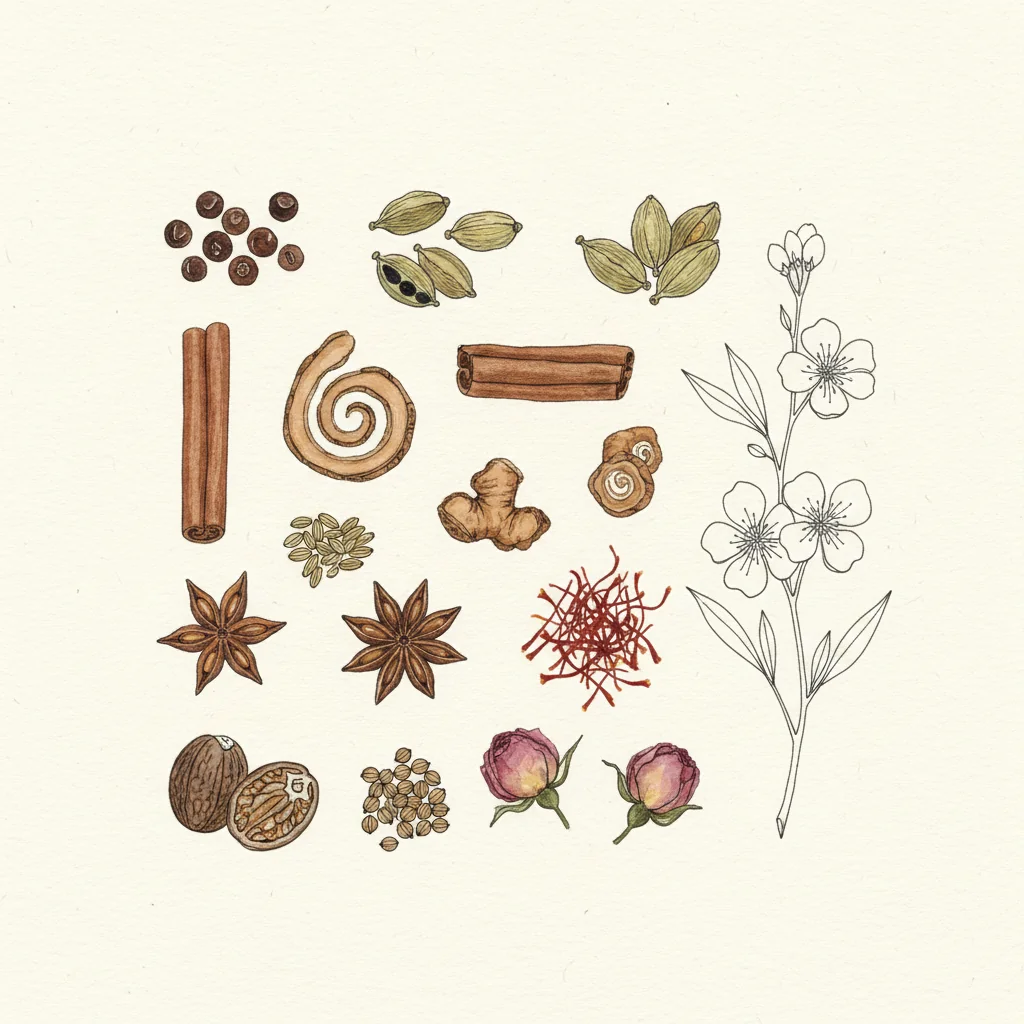
Spice · Blend
Ras el Hanout
Made across the country, with signature recipes in Fès, Marrakech and Tétouan, Morocco
warm baking spice · dried rose · spiced wood
Our verdict
At a glance
| Criterion | Baharat | Ras el Hanout |
|---|---|---|
| Levant and Gulf — house recipes across the Arab world | Morocco — Fès, Marrakech, Tétouan signatures | |
| Warm allspice and clove, black pepper, toasted cumin and coriander | Warm baking spice, dried rose, spiced wood, candied citrus | |
| 6/10 — peppery front, sweet baking-spice tail | 6/10 — complex, no single dominant note, builds slowly | |
| 8–12 core spices, savory and direct | 15 to 30 spices, floral and layered | |
| Kofta, shawarma rubs, kibbeh, pilaf, lentil soup | Lamb tagine, royal couscous, kefta, honey-roasted vegetables | |
| ~$7 for a 50–75 g jar | ~$11 for a 50–60 g jar |
When to choose Baharat
Baharat is the everyday warm blend, the one you reach for when you want savory depth without perfume. Arabic for 'spices,' it does in the Levant and the Gulf what garam masala does in India — the all-purpose backbone of savory cooking. The core runs black pepper, allspice, cumin, coriander, cassia, clove, cardamom and paprika: rounded and warming, peppery up front with a sweet baking-spice tail and no single dominant note. Rub it onto lamb and beef kofta, shawarma and kebab, work it into kibbeh, season rice and freekeh pilaf, roast chicken, deepen lentil soup. Bloom it in fat at the start or rub it on meat before cooking — never dust it raw, where it tastes dusty. About a tablespoon per pound of ground meat, or a teaspoon for a pot serving four. It's simpler and more direct than ras el hanout, which is the point: when you want clean, warm, peppery seasoning for weeknight cooking, the extra florals of a Moroccan blend would only get in the way. At about $7 a jar, it's the cheaper, more versatile everyday workhorse.
When to choose Ras el Hanout
Ras el hanout earns its place when you want complexity and perfume, not just warmth. The name means 'head of the shop' — the best blend a Moroccan spice merchant can build from his own stock, 15 to 30 spices with no fixed recipe, swung toward dried rose in Fès, warmer ginger and cubeb in Marrakech, more cardamom in Tétouan. It's floral and layered where baharat is savory and direct: warm baking spice, dried rose, spiced wood, candied citrus, a light musk, all building slowly across the palate. That register is built for lamb tagine with prunes and almonds, royal couscous, kefta meatballs, honey-roasted carrots and squash. Bloom it early in the fat, never raw — about a tablespoon per tagine for four, or 30 g per kilo of meat for couscous. The catch is sourcing: because there's no standard recipe, a supermarket sachet can be a flat, cumin-heavy shadow of the real thing. Buy it from a real attar or a serious house, around $11 a jar. When a dish wants to smell like a Moroccan souk, baharat can't get you there.
Where to buy?
Baharat
Links checked on
| Merchant | Price | Action |
|---|---|---|
| The Spice Way (Amazon US) | — | The Spice Way (Amazon US) |
| Burlap & Barrel | — | Burlap & Barrel |
| Steenbergs UK | — | Steenbergs UK |
Prices may vary depending on current promotions on the merchant site.
Ras el Hanout
Links checked on
| Merchant | Price | Action |
|---|---|---|
| Amazon US | — | Amazon US |
| Sous Chef UK | — | Sous Chef UK |
Prices may vary depending on current promotions on the merchant site.
Frequently asked questions
- Can baharat replace ras el hanout?
- In a pinch, for warmth — both are bloomed-in-fat cooking blends. But baharat lacks the dried rose and floral layering that define ras el hanout, so a tagine made with baharat tastes savory and flatter, less perfumed. Use it as a stand-in only when you can't get the real thing.
- Which is more complex?
- Ras el hanout, by design. It runs 15 to 30 spices and leans floral, with dried rose, candied citrus and spiced wood layered together. Baharat is a tighter 8-to-12-spice blend, savory and peppery rather than perfumed. Both warm a dish; ras el hanout perfumes it too.
- Are they used the same way?
- Yes, mostly — both are bloomed in fat at the start of cooking or rubbed on meat, never dusted raw on a finished plate. The difference is the dish: baharat for kofta, shawarma and everyday stews, ras el hanout for tagine, couscous and honey-roasted vegetables.
- Which should I buy first?
- Baharat, if you want one warm blend that handles weeknight savory cooking cheaply at about $7. Add ras el hanout, around $11, when you start cooking Moroccan and want its floral complexity. They cover different cuisines, so most kitchens eventually want both.
The best pairings
With Baharat
With Ras el Hanout
Comparison prepared according to our methodology. Sponsored purchase links — see our affiliations.