
Comparison
Diamond Crystal kosher vs Himalayan pink salt for cooking?
For cooking, Diamond Crystal wins easily. Its light, hollow Alberger flakes are hard to over-salt with — the test-kitchen default for seasoning and brining. Himalayan pink is a commodity rock salt whose color is just fossilized iron oxide and whose mineral myth is marketing. Season with Diamond Crystal; buy pink for the salt block.
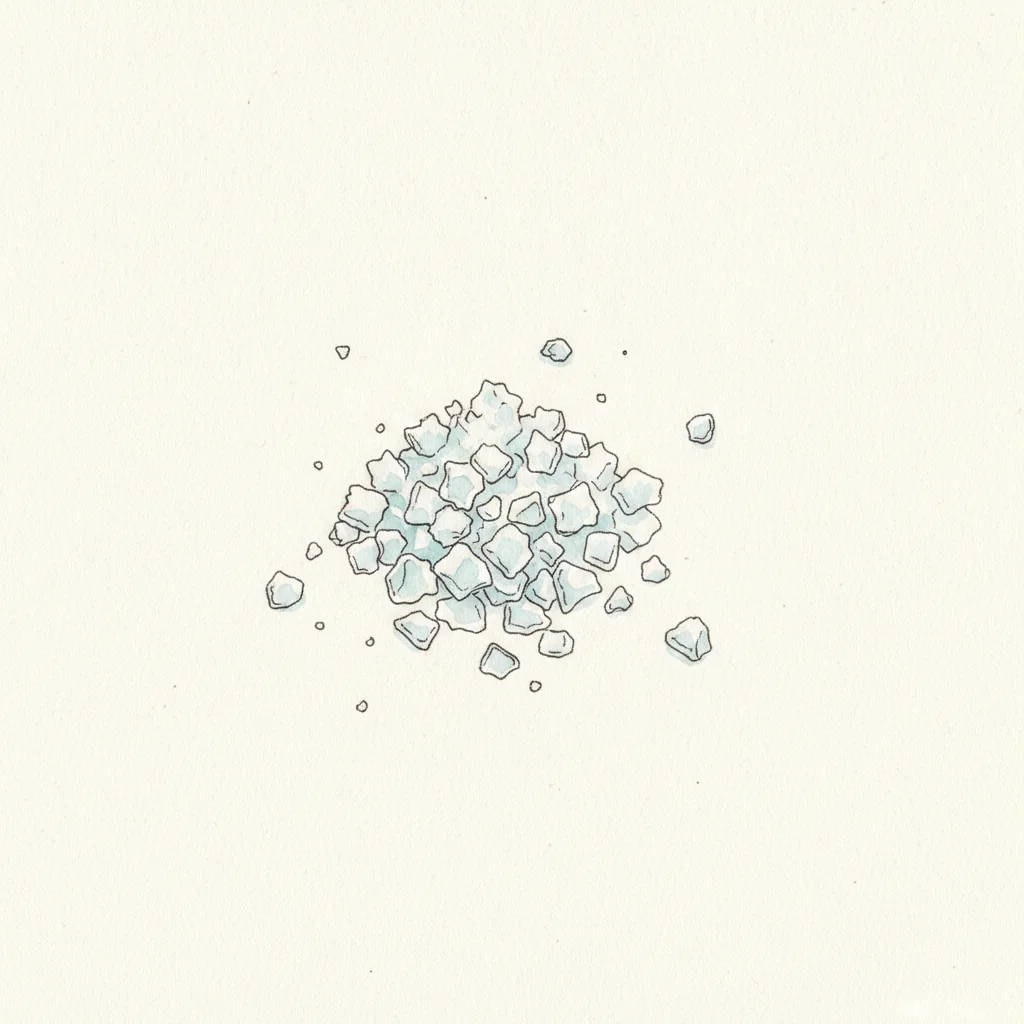
Salt · Kosher salt
Diamond Crystal Kosher Salt
Domestic salt, Alberger process, United States
clean neutral salinity · no bitterness · no additives
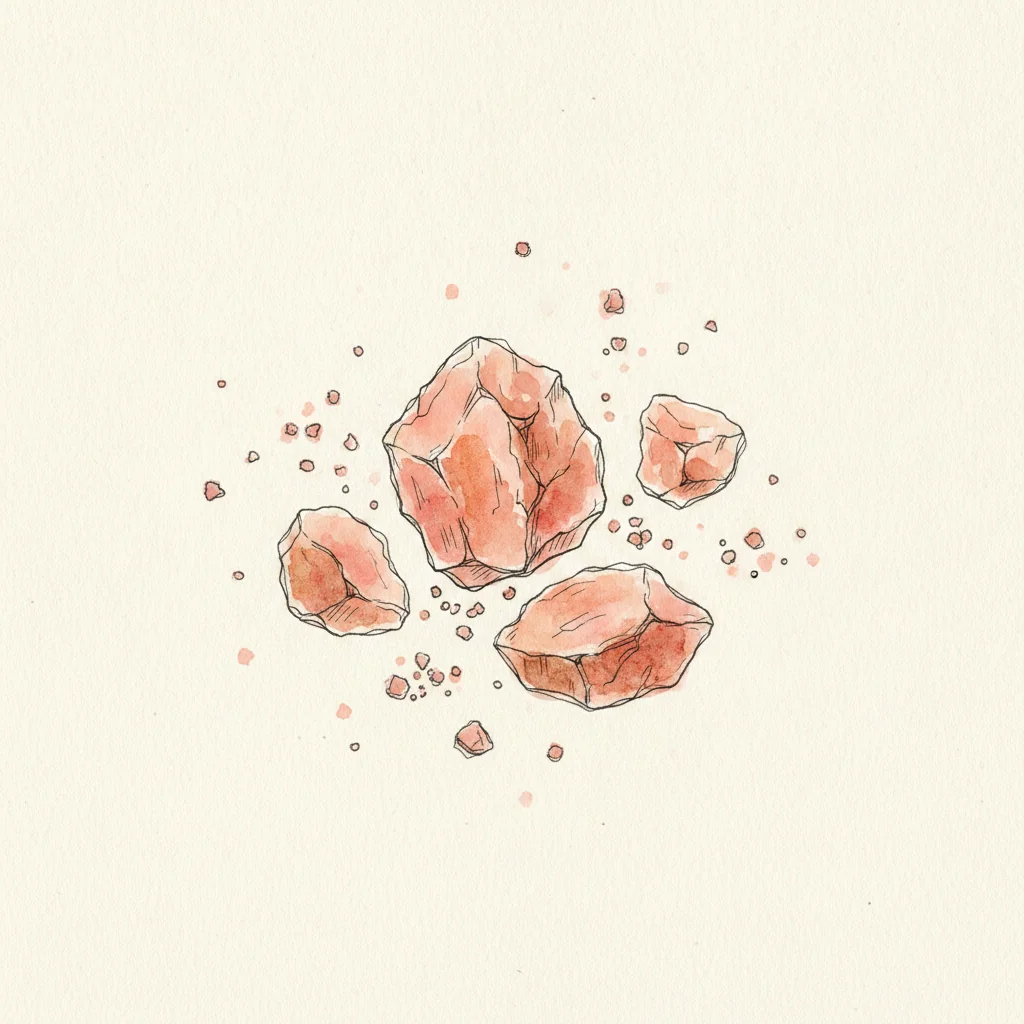
Salt · Rock salt
Himalayan Pink Salt
Khewra Salt Mine, Salt Range, Punjab province, Pakistan
round salinity · warm mineral · faint trace-element edge
Our verdict
Diamond Crystal for everyday seasoning; pink only for the block.
At a glance
| Criterion | Diamond Crystal Kosher Salt | Himalayan Pink Salt |
|---|---|---|
| Origin | United States, domestic salt, Alberger process | Pakistan, Khewra mine, Punjab |
| Form | Light, hollow Alberger flakes, additive-free | Fine grain or rock; color from fossilized iron oxide |
| Profile | Clean, easy to control, hard to over-salt | Rounder salinity, warmer minerality |
| Role | Cooking workhorse — seasoning and brining | Commodity rock salt; salt-block cooking |
| Best use | Seasoning, brining, the everyday default | Salt-block searing, warm crunch finishing |
| Median price | About $11 / 3 lb box | About $5 to $6 / pound (fine grain) |
| Value | Cheap per use, controllable — the kitchen default | Cheap rock salt; the wellness halo is marketing |
When to choose Diamond Crystal Kosher Salt
Choose Diamond Crystal kosher salt for almost all of your everyday cooking. It's the cook's workhorse, not a finishing salt, and its light, hollow Alberger flakes are the reason it's the test-kitchen default: they crush easily between your fingers and dissolve fast, and because the flakes are so airy you're far less likely to over-salt by accident than with a dense table or rock salt. That controllability is the entire appeal — when a recipe calls for kosher salt by volume, it usually means this, because the flake size and density are predictable. Use it everywhere the salt disappears into the dish: seasoning meat before a sear, building a braise, salting pasta water, brining a turkey, seasoning as you go. It's additive-free and runs about $11 for a 3 lb box, so it's cheap per use and you reach for it constantly. The grain is the advantage: pinch it, feel it, and you've got a reliable read on how much you're adding. The catch is expecting it to do a finishing job — these flakes are made to dissolve, not to crunch, so on a finished steak they melt away where a flaky finishing salt like Maldon shatters. For that final-plate crunch, this is the wrong salt; season with Diamond Crystal, then finish with Maldon.
When to choose Himalayan Pink Salt
Reach for Himalayan pink salt for a couple of narrow jobs, and skip the mythology. It comes from the Khewra mine in Pakistan — not India and not the Himalayas proper — and the pink color is just fossilized iron oxide, a trace amount that does nothing nutritional despite the wellness marketing. The salinity is rounder than a sea salt and the minerality reads a touch warmer, which is pleasant but not transformative. Where it actually earns its place is the salt block: a slab of this rock holds and radiates heat, so you can sear thin proteins or chill it for serving, and that's a genuine use a flaky salt can't do. As fine grain it runs about $5 to $6 a pound, cheap enough as a commodity rock salt, and it can give a warm crunch as a finish if you like the look. But that's the honest pitch — buy it for the warm crunch and the salt block, not the mineral myth, because the supposed dozens of trace minerals are present in amounts too tiny to matter. The catch is paying a premium or believing the health claims: at heart this is rock salt with a marketing halo. For controllable everyday seasoning, this is the wrong salt — its dense grain makes it easier to over-salt than Diamond Crystal's airy flakes, so keep the kosher salt for the cooking and the pink for the block.
Where to buy?
Diamond Crystal Kosher Salt
Links checked on
| Merchant | Price | Action |
|---|---|---|
| Amazon US | — | Amazon US |
Prices may vary depending on current promotions on the merchant site.
Himalayan Pink Salt
Links checked on
| Merchant | Price | Action |
|---|---|---|
| Amazon US | — | Amazon US |
| Spicewalla | — | Spicewalla |
| Sous Chef UK | — | Sous Chef UK |
Prices may vary depending on current promotions on the merchant site.
Frequently asked questions
- Why is Diamond Crystal the test-kitchen default?
- Its light, hollow Alberger flakes crush easily and dissolve predictably, so it's hard to over-salt with and recipes can specify it by volume with consistent results. That controllability — not flavor — is why pros standardize on it for seasoning and brining.
- Are the minerals in Himalayan pink salt actually good for you?
- No. The pink color is fossilized iron oxide, and the trace minerals are present in amounts far too small to affect health. The wellness halo is marketing. Buy pink salt for the warm crunch or for salt-block cooking, not for any nutritional benefit.
- Can I season everyday food with Himalayan pink salt?
- You can, but Diamond Crystal is easier to control. Pink salt's denser grain makes it simpler to over-salt, and you lose the predictability that makes the Alberger flake the standard. Save the pink for salt-block searing and the kosher salt for the pot.
- Is pink salt a finishing salt?
- Only loosely. Its rock crystals can give a warm crunch, but a true finishing flake like Maldon shatters cleaner on the tongue. For a deliberate finishing crunch, reach for a flaky salt; pink salt's real edge is the heat-holding block, not the plate.
The best pairings
With Diamond Crystal Kosher Salt
With Himalayan Pink Salt
Comparison prepared according to our methodology. Sponsored purchase links — see our affiliations.