
Comparison
Green cardamom vs star anise: which to use?
Both are aromatic powerhouses, but they live in different registers. Green cardamom is bright, citrusy, eucalyptus-fresh — chai, biryani, Scandinavian baking — about $9.50. Star anise is cool licorice depth for pho, braises and five-spice, about $10. Want a fresh, perfumed lift, cardamom; want deep savory anise in a long simmer, star anise.
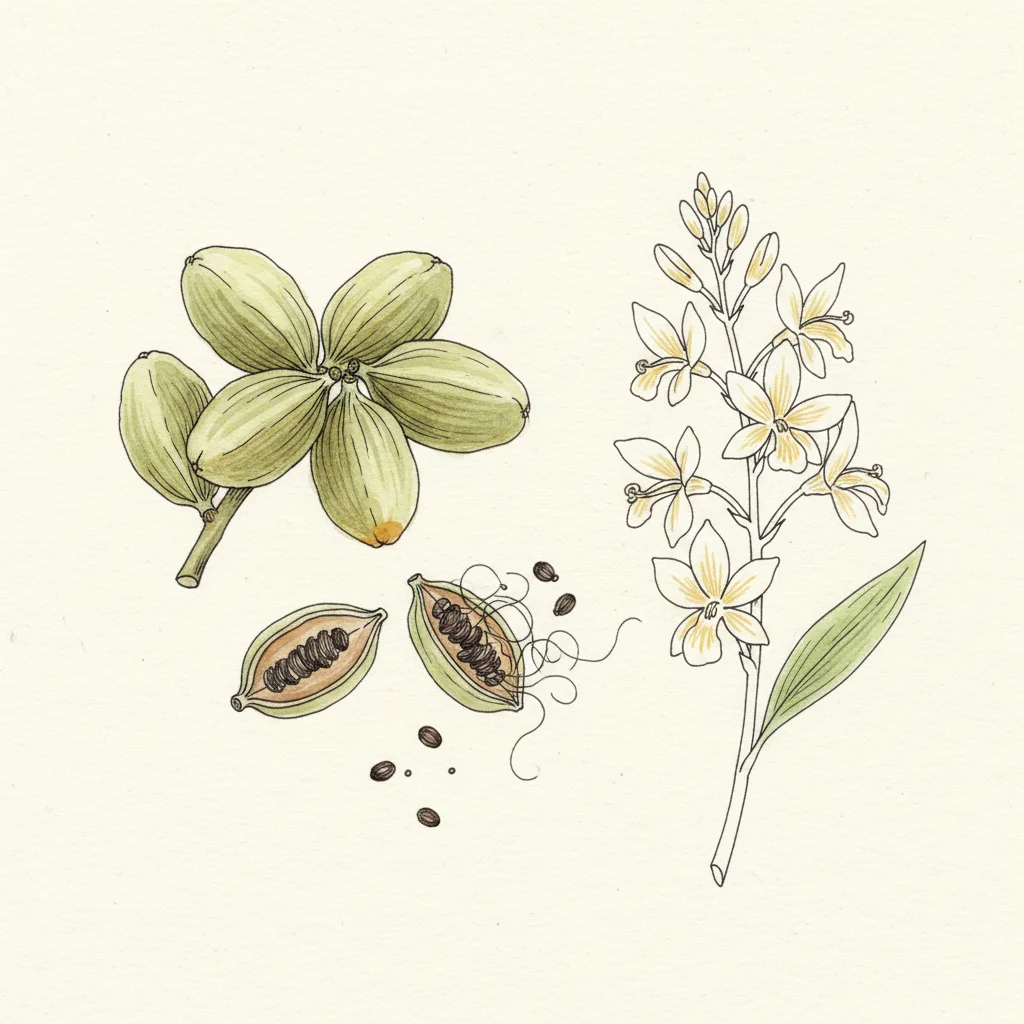
Spice · Spice seed
Green Cardamom
Western Ghats (Kerala, Karnataka, Tamil Nadu), India
eucalyptus · lemon zest · fresh resin
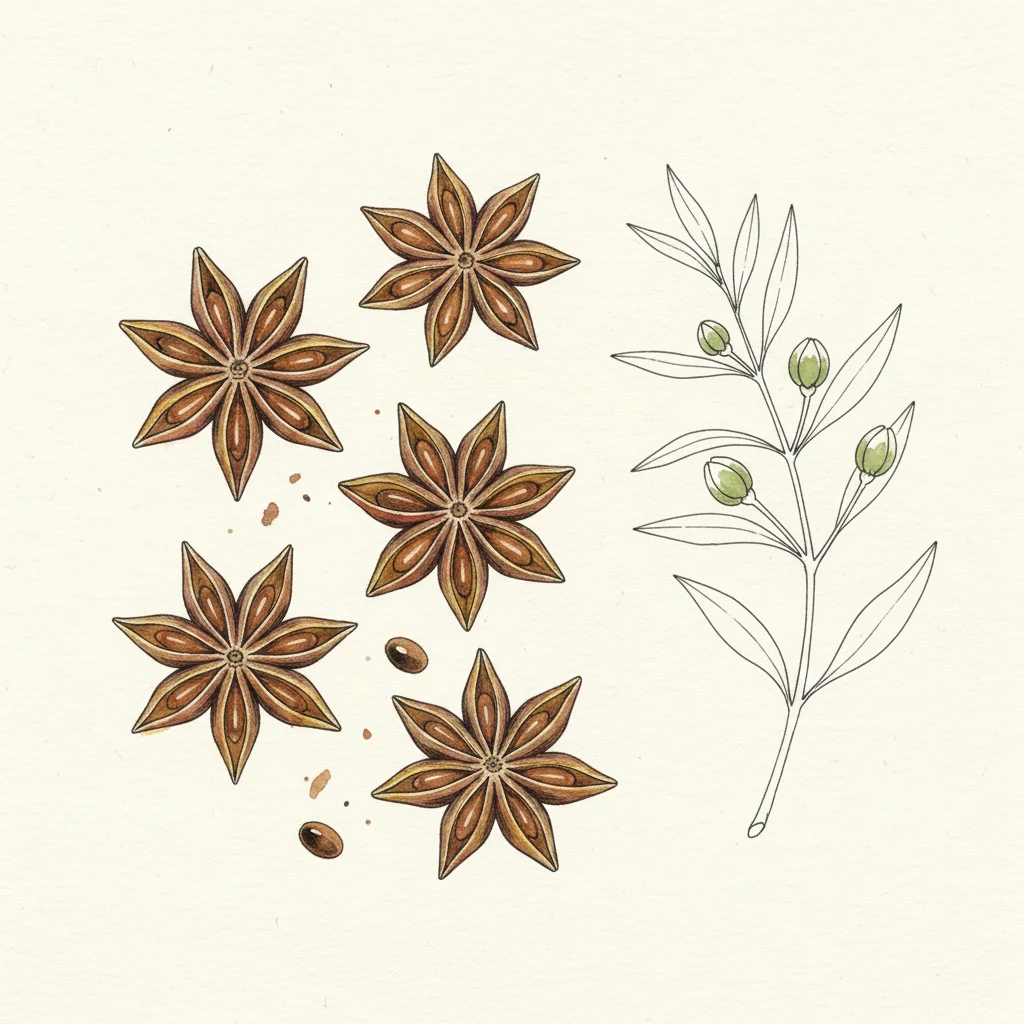
Spice · Whole spice
Star Anise
Lang Son province, on the Chinese border, Vietnam
anise · licorice · fennel
Our verdict
Cardamom for bright lift, star anise for deep savory licorice.
At a glance
| Criterion | Green Cardamom | Star Anise |
|---|---|---|
| Origin | India — Western Ghats, Kerala (Elettaria cardamomum) | Vietnam — Lang Son province (Illicium verum) |
| Form | Whole green pods, or seeds ground to order | Whole eight-pointed dried stars |
| Intensity | 8/10 — bright and penetrating | 8/10 — assertive, soapy if overdosed |
| Main notes | Eucalyptus, lemon zest, fresh resin | Anise, licorice, fennel |
| Best use | Chai, garam masala, biryani, Nordic buns, compotes | Pho, five-spice, red-braised pork, mulled wine, duck stock |
| Median price | ~$9.50 / 2 oz jar | ~$10 / 100 g whole stars |
| Value | Pods stay fresh; 2-4 per dish goes far | One or two stars per pot; a bag lasts months |
When to choose Green Cardamom
Reach for green cardamom when you want a bright, perfumed lift that runs from savory to sweet. Elettaria cardamomum from the Western Ghats is eucalyptus, lemon zest and fresh resin in a single pod, the most versatile aromatic in the spice drawer. On the savory side it's the engine of chai, garam masala, biryani and pilaf; on the sweet side it carries Scandinavian buns and Christmas baking, apple-pear-rhubarb compotes, and a quiet partnership with coffee and dark chocolate. Treat it physically: crush whole pods lightly at the start of cooking so they release slowly, or grind the seeds to order for cold preparations and baking, where pre-ground cardamom is a pale ghost of the real thing within weeks. Two to four pods per four servings in a savory dish, one pod per cup in an infusion, is the working dose — it's penetrating, and too much turns soapy and medicinal. At about $9.50 for a 2 oz jar of whole pods it's good value because whole pods hold their oils far longer than ground, so the jar stays vivid. What cardamom won't give you is the deep, cool, licorice backbone of a pho or a red braise — for that anchoring savory note over a long simmer, you want star anise, not this bright top note.
When to choose Star Anise
Reach for star anise when a dish needs cool, deep, savory licorice that builds slowly. Illicium verum from Lang Son delivers anise, licorice and fennel in one hard star, and it's structural in Vietnamese pho, Chinese five-spice, red-braised pork belly and duck stock — the low note that gives those dishes their backbone. Unlike cardamom's bright top-note lift, star anise works from the bottom: infuse it early in a long simmer so it unfurls over an hour, and never add it at the finish, where it reads raw and sharp. It crosses into sweet territory — poached pears, apple compote, mulled wine — but always in that savory-aromatic register rather than cardamom's fresh, citrusy perfume. The discipline is dosing: one to two whole stars per two liters of broth is enough, and one too many turns the licorice cold and soapy, the classic star-anise error. Buy whole stars, not ground, which fades and is often adulterated; sealed away from light a bag lasts months. At about $10 per 100 g of whole stars it costs little per pot. The two spices actually pair beautifully — both appear in garam masala and five-spice — but if you only need one bright, fresh lift, that's cardamom's job. Star anise is the one you want when the flavor has to anchor a slow-cooked dish.
Where to buy?
Green Cardamom
Links checked on
| Merchant | Price | Action |
|---|---|---|
| Amazon US | — | Amazon US |
| Spicewalla | — | Spicewalla |
| Steenbergs UK | — | Steenbergs UK |
Prices may vary depending on current promotions on the merchant site.
Star Anise
Links checked on
| Merchant | Price | Action |
|---|---|---|
| Amazon US | — | Amazon US |
| Burlap & Barrel | — | Burlap & Barrel |
| Steenbergs | — | Steenbergs |
Prices may vary depending on current promotions on the merchant site.
Frequently asked questions
- Can cardamom replace star anise?
- No. Cardamom is a bright, citrusy top note; star anise is a deep, cool licorice base. They sit at opposite ends of an aromatic dish. Swapping one for the other removes the exact flavor you were reaching for.
- Do they work together?
- Yes. Both appear in garam masala and Chinese five-spice, where cardamom's lift and star anise's licorice depth balance each other. Used together with a light hand on the anise, they build a rounded aromatic base.
- Which is easier to overdo?
- Star anise, by a wide margin — one too many stars turns soapy and cold. Cardamom can also go medicinal if you over-pour, but its forgiving range is wider. Both reward restraint and freshness over volume.
- Pods, seeds or stars — what should I buy?
- Buy cardamom as whole pods and crush or grind to order; pre-ground fades within weeks. Buy star anise as whole stars, never ground, since powdered star anise loses punch fast and is often adulterated.
The best pairings
With Green Cardamom
With Star Anise
Comparison prepared according to our methodology. Sponsored purchase links — see our affiliations.