
Comparison
Green peppercorns vs black pepper — when to use each?
Both are Piper nigrum, picked at different ripeness. Green peppercorns (around $10 for 100 g, often in brine) are juicy and snappy — for steak au poivre, cream sauces and tartare. Kampot black (PGI, about $12.50 for 50 g) is dry, clean and aromatic — the everyday finishing pepper for steak, eggs and fish. Juicy versus dry.
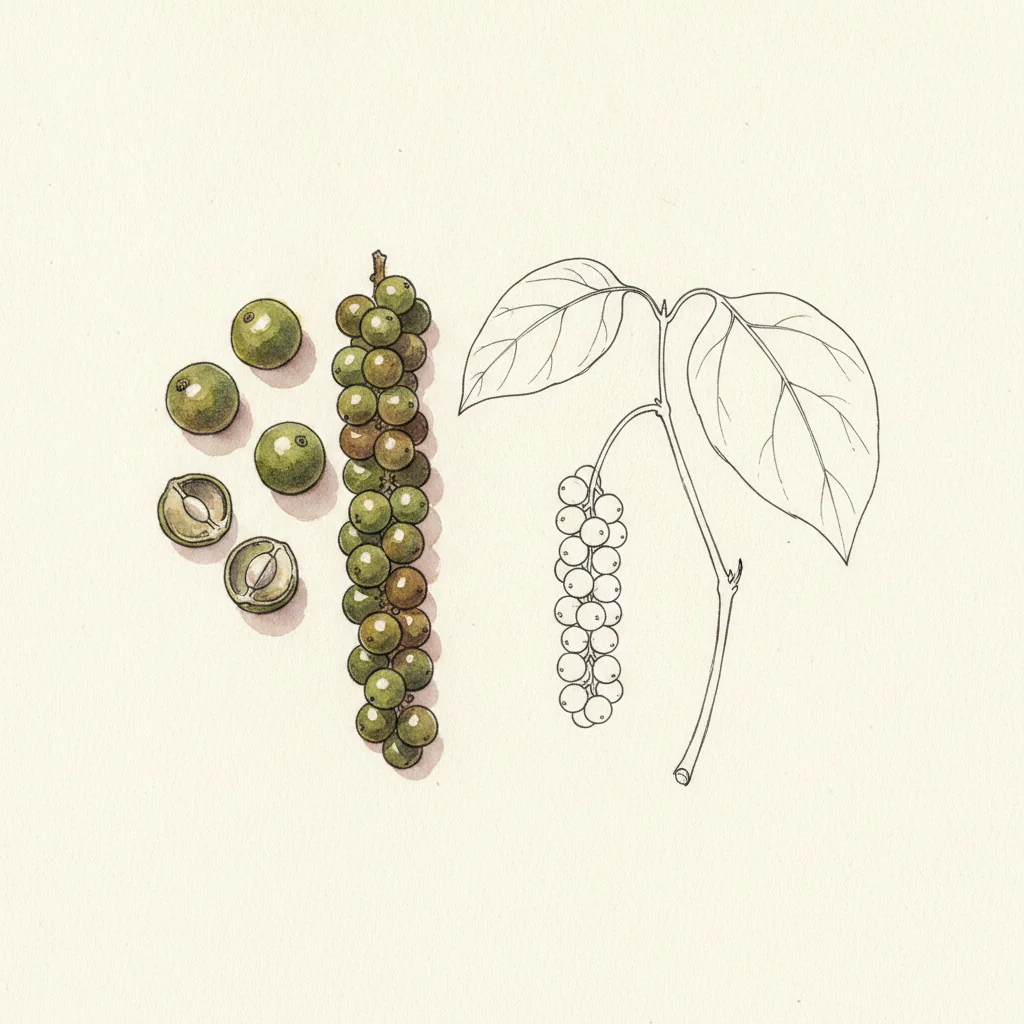
Pepper · Green pepper
Green Peppercorns
East coast, plantations around Antalaha, Madagascar
cut grass · fresh green pepper · briny tang
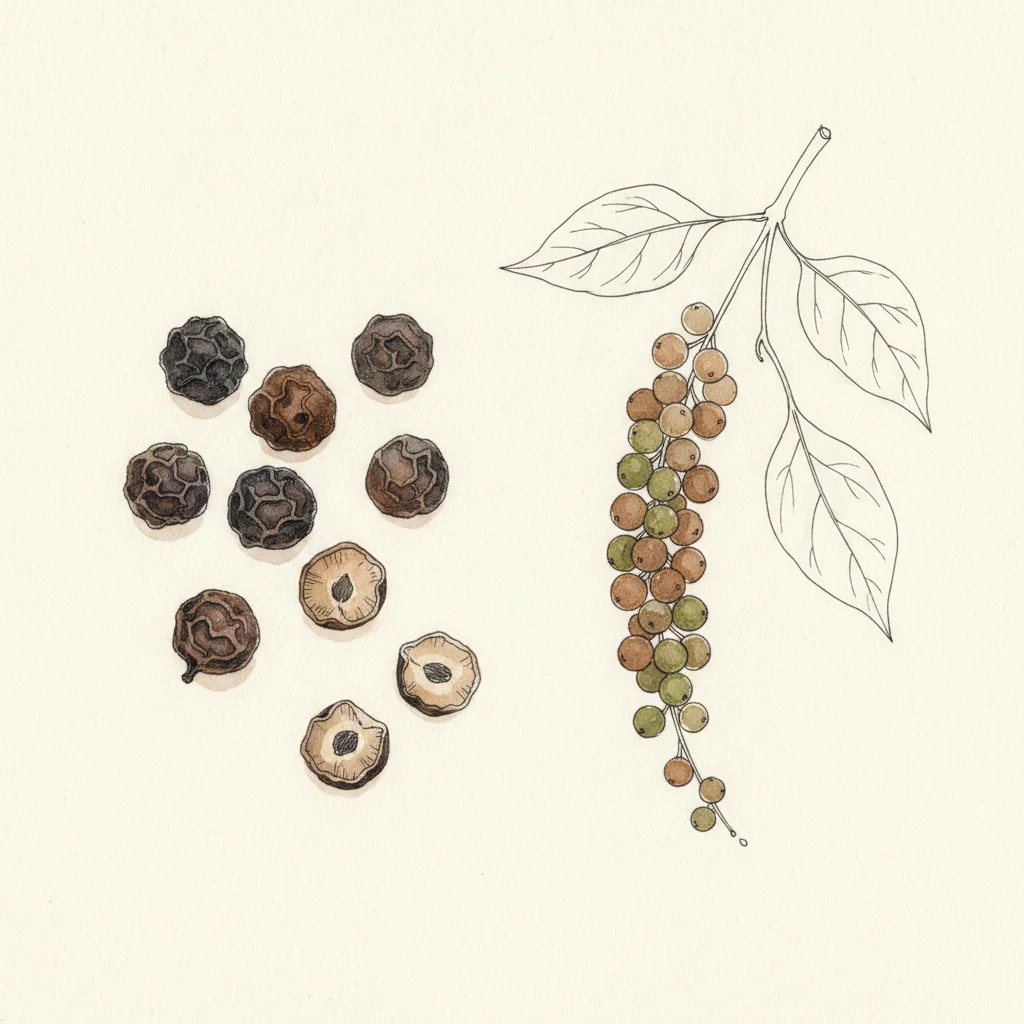
Pepper · Black pepper
Kampot Black Pepper
Kampot and Kep provinces, Cambodia (PGI)
eucalyptus · dried white flowers · green citrus
Our verdict
Green peppercorns for juicy cream sauces and tartare; Kampot black as the clean, dry everyday finisher.
At a glance
| Criterion | Green Peppercorns | Kampot Black Pepper |
|---|---|---|
| Botany | Piper nigrum, picked young (green) | Piper nigrum, ripened and dried (black) |
| Origin / status | Madagascar, east coast near Antalaha | Cambodia, Kampot and Kep, PGI-protected |
| Intensity | 6/10 — juicy, snappy heat | 8/10 — clean, fresh, saliva-waking heat |
| Main notes | Cut grass, fresh green pepper, briny tang | Eucalyptus, dried white flowers, green citrus |
| Best on | Steak au poivre, peppercorn sauce, tartare, pâté | Seared steak, crab, roasted fish, eggs, cheese |
| Form | Soft berries, usually in brine | Dry whole berries, ground fresh |
| Price | ~$10 / 100 g jar | ~$12.50 / 50 g tube |
| Value | Worth it — a teaspoon per sauce for four | Worth it — your everyday upgrade pepper |
When to choose Green Peppercorns
Pick green peppercorns when you want juicy bursts of fresh pepper in or on a dish, not a dry grind. They're Piper nigrum picked young, and the mouthfeel is a juicy, snappy heat that pops between the teeth, with none of the dark cocoa burn of black pepper — cut grass, fresh green pepper and a briny tang. That pop is something dry black pepper can't give. Four scenarios where green wins. First, steak au poivre and cream peppercorn sauce, the classic, where crushed brine-packed berries bloom in cream and butter into the defining French bistro sauce. Second, seared duck breast, where the fresh heat cuts the fat. Third, pâté and terrines, where whole berries stud the meat with bursts. Fourth, beef tartare and potted meats, where their snap lifts cold meat. The move: about a teaspoon per sauce for four, lightly crushed with the flat of a knife to release the juice. Avoid them on very acidic dishes, sweet desserts, and long dry roasting, where the brine berries go mushy. At around $10 for a 100 g jar in brine they're good value. Where Kampot is the better call: anytime you want a clean dry grind over a finished plate — eggs, a steak you've already seared, a roast fish — green's wet, snappy berries are the wrong texture. Green is the pepper for sauces and studding; Kampot is the pepper for the mill. Same vine, different stage, different job.
When to choose Kampot Black Pepper
Pick Kampot black for the everyday mill — the clean, dry, aromatic finish across almost any savory plate. It's a ripened, dried Piper nigrum from Cambodia, PGI-protected, and the mouthfeel is a clean, fresh heat that wakes up the saliva without the rough burn of a supermarket peppercorn — eucalyptus, dried white flowers and green citrus over cedar. That dry aromatic precision is what green peppercorns, wet and grassy, don't offer. Four scenarios where Kampot wins. First, seared steak, where a few turns at the end give clean heat. Second, scrambled eggs, where its freshness lifts a plain plate. Third, roasted fish and sautéed crab, where the green-citrus note flatters seafood. Fourth, aged cheese, where it's bright and clean. The move: two or three turns of the mill, ground at the end of cooking or raw over the plate — Kampot's fresh top notes cook off in a long simmer, so finish with it rather than starting with it. Avoid it on dishes already heavy on eucalyptus or menthol and on acidic marinades. At around $12.50 for a 50 g tube it's your everyday upgrade. Where green peppercorns are the better call: a cream peppercorn sauce, a tartare, a terrine — anything that wants juicy, popping berries rather than a dry grind. Kampot is the dry workhorse for the table mill; green is the wet specialist for sauces. They come from the same vine, but you reach for them at opposite moments.
Where to buy?
Green Peppercorns
Links checked on
| Merchant | Price | Action |
|---|---|---|
| Amazon US | — | Amazon US |
| Sous Chef UK | — | Sous Chef UK |
Prices may vary depending on current promotions on the merchant site.
Kampot Black Pepper
Links checked on
| Merchant | Price | Action |
|---|---|---|
| Amazon US | — | Amazon US |
| Sous Chef UK | — | Sous Chef UK |
| Kampot Pepper USA | — | Kampot Pepper USA |
Prices may vary depending on current promotions on the merchant site.
Frequently asked questions
- Are green and black pepper the same plant?
- Yes. Both are Piper nigrum. Green peppercorns are picked young and kept soft, usually in brine; black peppercorns are left to ripen, then dried until they wrinkle and darken. Same vine, different stage of ripeness and processing, which is why they taste and behave so differently.
- When should I use green over black?
- Use green when you want juicy, popping berries — in a cream peppercorn sauce, steak au poivre, a tartare or a terrine. Use Kampot black when you want a clean, dry grind over a finished plate — eggs, a seared steak, roasted fish. Texture is the deciding factor as much as flavor.
- Can I grind green peppercorns in a mill?
- Not the brine-packed ones — they're soft and wet, so you crush them with a knife instead. Dried green peppercorns exist and can be milled, but they lose the juicy pop that makes the fresh ones worth using. For a mill, Kampot black is the right pepper.
- Is Kampot worth more than regular black pepper?
- For finishing, yes. Its PGI status guarantees origin from Kampot and Kep in Cambodia, and the clean, fresh, aromatic heat is a clear step up from supermarket pepper. At around $12.50 for 50 g it's an everyday luxury — grind it fresh at the end, not into a long braise where the top notes vanish.
The best pairings
With Green Peppercorns
With Kampot Black Pepper
Comparison prepared according to our methodology. Sponsored purchase links — see our affiliations.