
Green Peppercorns in Brine (Antalaha, Madagascar)
In brief — Green peppercorns are unripe Piper nigrum berries, picked early and packed in brine so they keep their snap and their grassy bite. The flavor is unmistakable: juicy heat, cut grass, a hint of celery stalk, with none of the dark cocoa warmth of black pepper. This is the berry behind every proper cream peppercorn sauce. A 100g jar runs about $10. Its aromatic profile develops notes of cut grass, fresh green pepper, briny tang, extended by green citrus and celery stalk, for an intensity of 6/10. In the kitchen, it's best added as a finishing touch and it pairs with steak au poivre and cream peppercorn sauce, seared duck breast, fish baked in parchment. Recommended dosage: about a teaspoon of berries per sauce for four, lightly crushed with the flat of a knife. Expect from $8.00 to $13.00 per 100g jar in brine (median $10.00).
Origin : East coast, plantations around Antalaha, Madagascar
Piper nigrum
« The one berry that owns the cream peppercorn sauce. Juicy, grassy, snappy, with no dark burn. The brine softens fast once opened, and a fresh jar beats anything sold dry. Madagascar's east coast still sets the bar. »
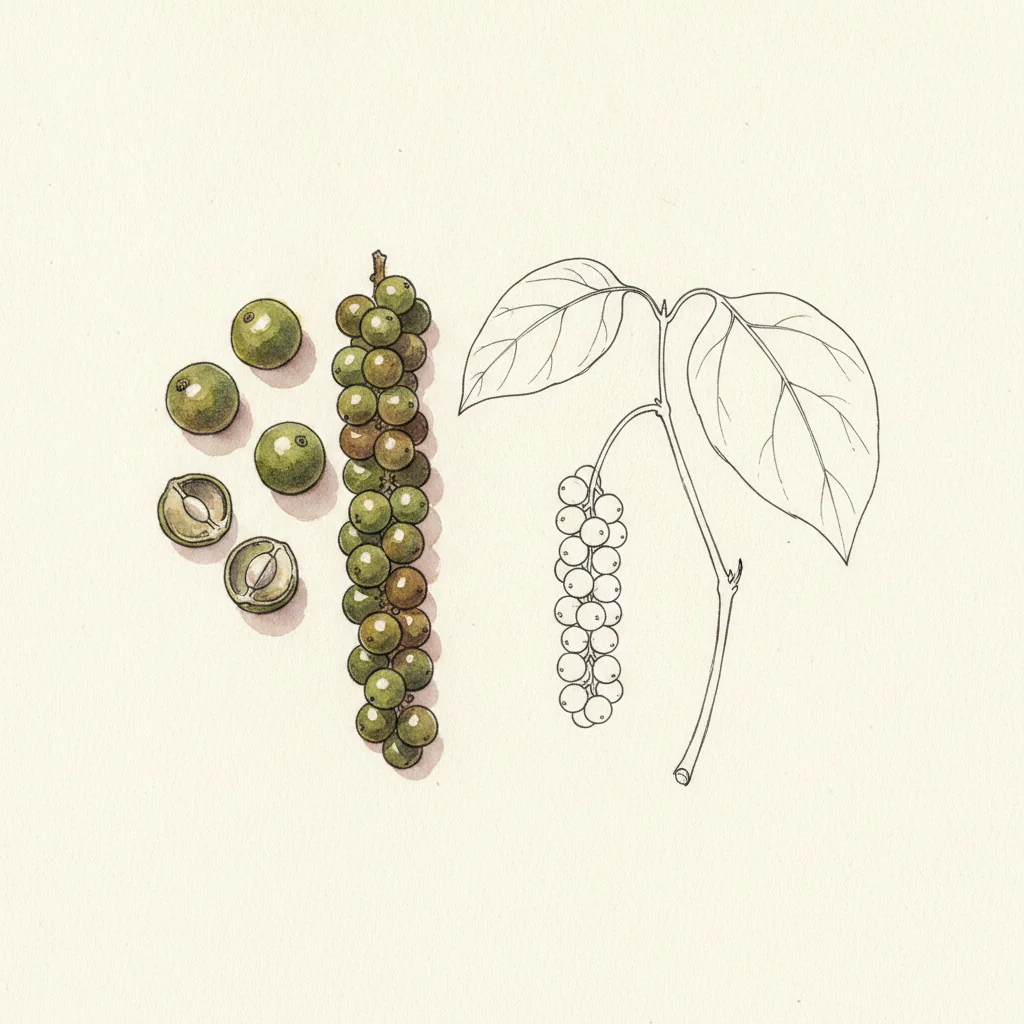
Green peppercorns are unripe Piper nigrum berries, picked early and packed in brine so they keep their snap and their grassy bite. The flavor is unmistakable: juicy heat, cut grass, a hint of celery stalk, with none of the dark cocoa warmth of black pepper. This is the berry behind every proper cream peppercorn sauce. A 100g jar runs about $10.
Pepper · Green pepper
Green Peppercorns
East coast, plantations around Antalaha, Madagascar
cut grass · fresh green pepper · briny tang
Aromatic profile
| Family | Piper nigrum |
|---|---|
| Intensity | ●●●○○ (6/10) |
| Main notes | cut grass · fresh green pepper · briny tang |
| Secondary notes | green citrus · celery stalk |
| Mouthfeel | juicy, snappy heat that pops between the teeth, with none of the dark cocoa burn of black pepper |
| Finish length | medium, a clean herbaceous finish that fades fast |
Culinary use
- When to add : finishing
- Dosage : about a teaspoon of berries per sauce for four, lightly crushed with the flat of a knife
- Ideal pairings : steak au poivre and cream peppercorn sauce, seared duck breast, fish baked in parchment, homemade pâté and terrines, beef tartare, potted meats
- Avoid with : already very acidic dishes, sweet desserts, long, dry roasting (the brine berries go mushy)
The grain in detail
Green peppercorns are the same fruit as black: unripe berries of Piper nigrum, harvested before they turn red. The difference is what happens next. Instead of being sun-dried until they wrinkle and darken, the green berries go straight into a light brine that locks in their moisture and their fresh, vegetal character. Brine is the form chefs reach for, because freeze-dried green pepper loses most of the aromatics that make the berry worth buying. Madagascar's east coast, around Antalaha, is the historic source, alongside Kerala. Open a jar and the smell hits at once: cut grass, green bell pepper, celery stalk, a briny snap of green citrus. Bite one and the heat is juicy and bright, with no dark burn behind it. That grassy, snappy profile is exactly why green peppercorns built the French cream sauce. Steak au poivre and the bistro sauce au poivre vert, which is cream, veal stock, a splash of cognac and a spoonful of crushed berries, have leaned on it since the 1970s. It also lifts duck breast, fish baked in parchment, homemade pâté and game terrines, and beef tartare, where the cold snap of the berry cuts the richness. The catch is the keeping: once the jar is open, the brine berries soften fast, so they live in the fridge and you use them within a month or you freeze them. Watch the label too. Anything sold dry as green pepper is usually industrial freeze-drying that has lost the point. Look for clear liquid brine in a glass jar.
History & origin
Green pepper in brine is a fairly modern preparation, popularized from the 1960s by French kitchens and the sauce au poivre vert that became a signature of nouvelle cuisine. Madagascar, the original source, now competes with Kerala and Vietnam, but Malagasy growers on the east coast around Antalaha still supply much of the European fine-food market with small-batch jars put up in glass. The berry is harvested green, before the red ripening, and brined within hours to hold the snap.
Provenance & authenticity
What sets the real thing apart — appellation, species and verification cues.
- Species
- Piper nigrum
How to verify the real one
- Piper nigrum harvested unripe, brined fresh
- Madagascar / India origin
- sold in brine, not dried
Indicative price
Reference format : 100g jar in brine — from $8.00 to $13.00 (median : $10.00).
Storage
Keep the brine jar in the fridge once opened and use within a month, or drain and freeze the berries.
Where to buy?
Where to buy it
Links checked on
| Merchant | Price | Action |
|---|---|---|
| Amazon US | — | Amazon US |
| Sous Chef UK | — | Sous Chef UK |
Prices may vary depending on current promotions on the merchant site.
Alternatives if unavailable
Tags
- Madagascar
- Antalaha
- Piper nigrum
- brine
- peppercorn sauce
- fresh
Frequently asked questions
- How do you store Green Peppercorns?
- Keep the brine jar in the fridge once opened and use within a month, or drain and freeze the berries.
- What dosage for Green Peppercorns?
- about a teaspoon of berries per sauce for four, lightly crushed with the flat of a knife
- When should you add Green Peppercorns in cooking?
- It's best used finishing.
- What should you avoid pairing Green Peppercorns with?
- Avoid with: already very acidic dishes, sweet desserts, long, dry roasting (the brine berries go mushy).
Go further
The dishes where this green peppercorns shines
Also a recommended alternative for
See every dish where this product is mentioned →
Other peppers to discover
Featured in these gift sets
Page prepared according to our methodology. Purchase links marked sponsored and liable to earn a commission — details on our Affiliations page.