
Comparison
Guajillo vs Hatch green chile: what's the difference?
Both are mild — guajillo 3/10, Hatch 5/10 — but they're not interchangeable. Guajillo is a tart, berry-bright dried red pod you rehydrate for sauce; Hatch is a roasty, grassy green powder you bloom into a stew. Want Mexican red-sauce depth, buy guajillo. Want New Mexican green-chile flavor, buy Hatch.
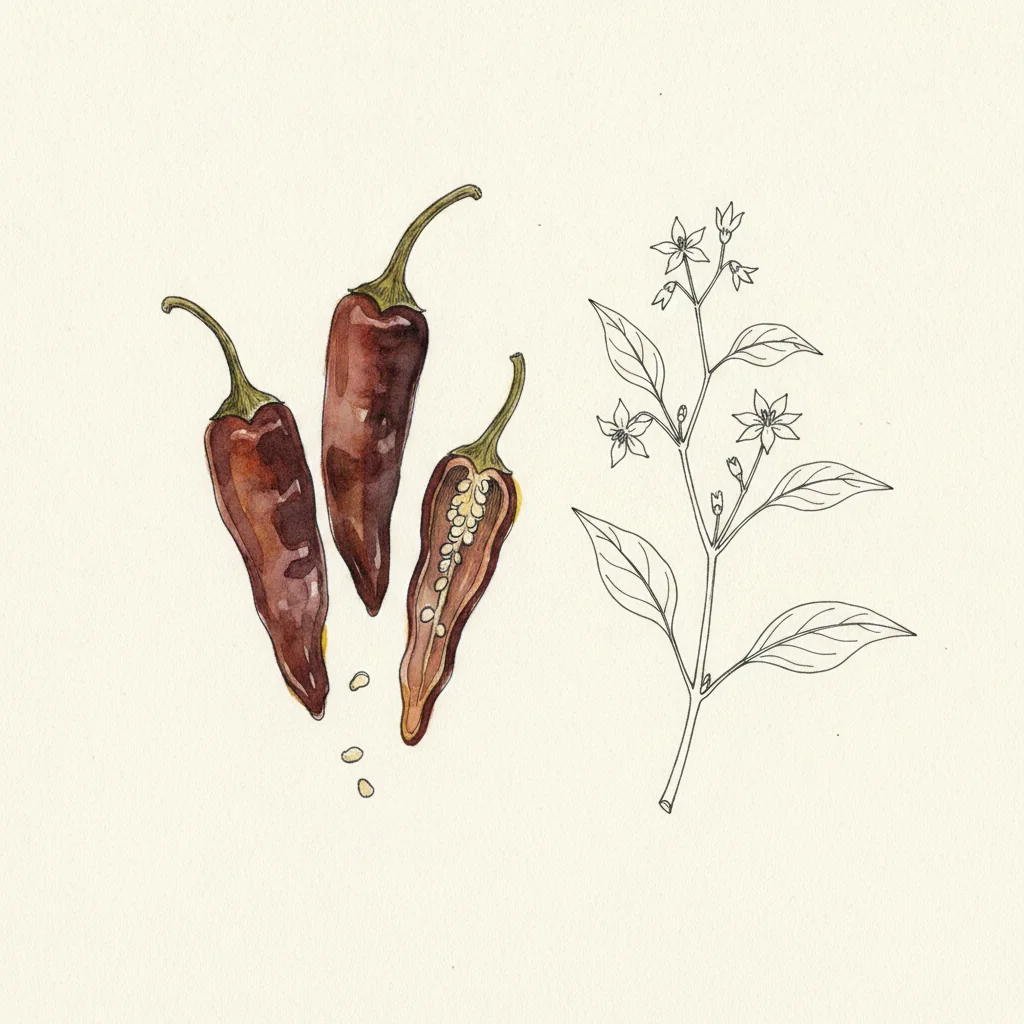
Spice · Chile
Guajillo Chile
Zacatecas and Durango (the dry highland Bajío-to-north belt where mirasol is grown), Mexico
bright berry-tart · dried cranberry · green tea
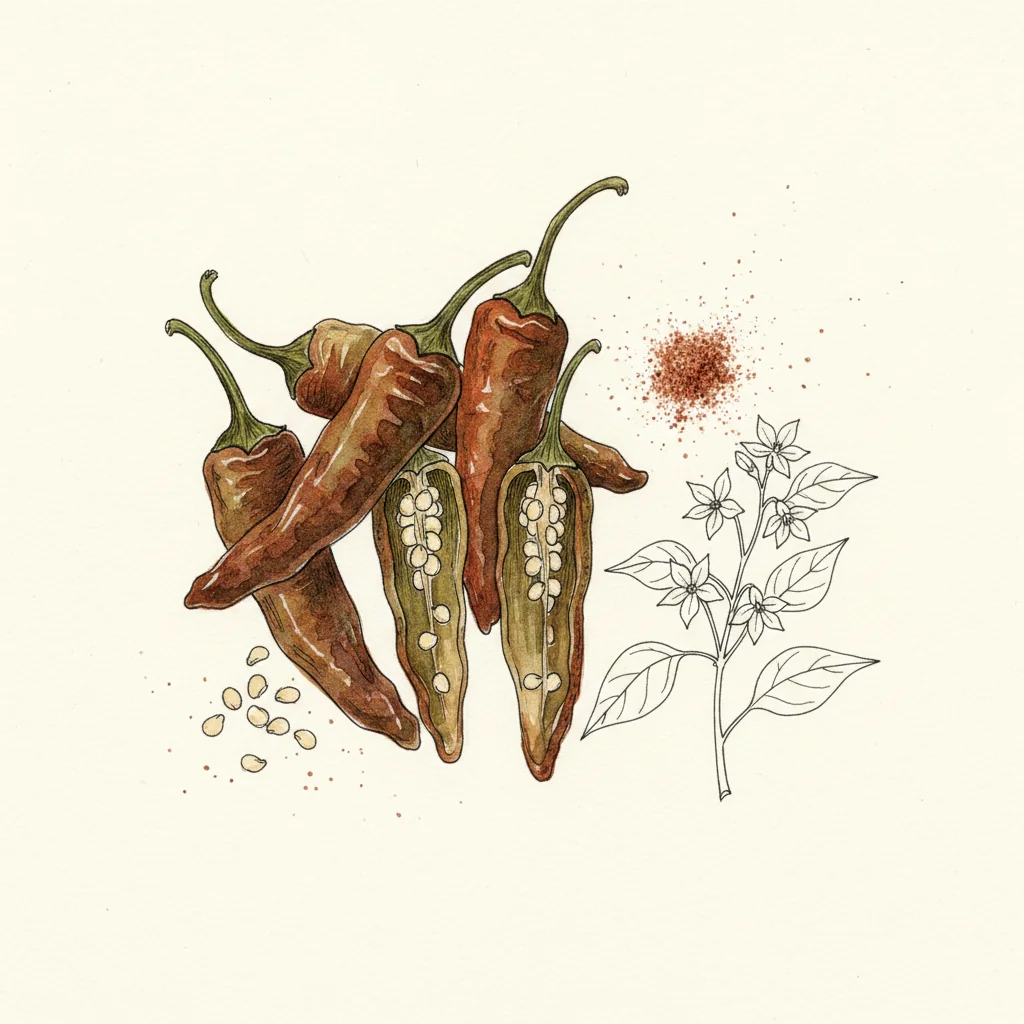
Spice · Chile
Hatch Green Chile Powder
Hatch Valley, a 30-mile stretch of the Rio Grande between Hatch and Rincon, southern New Mexico, United States (Hatch Valley (geographic name, not a federal PDO; protected by the New Mexico Chile Advertising Act, 2012))
roasted green chile · fresh-cut grass · charred pepper skin
Our verdict
Guajillo for red Mexican sauces, Hatch for green New Mexican comfort food.
At a glance
| Criterion | Guajillo Chile | Hatch Green Chile Powder |
|---|---|---|
| Profile | Bright berry-tart: dried cranberry, green tea, tomato leaf | Roasted green chile, fresh-cut grass, charred pepper skin |
| Heat | 3/10 — a clean tangy warmth on the front of the tongue | 5/10 — grassy heat that lands mid-tongue and climbs |
| Price | ~$10 for an 8 oz bag of whole dried pods | ~$10 for a 2 oz jar of roasted powder |
| Best use | Rehydrated and blended into birria, adobo, salsa roja, mole bases | Bloomed into green chile stew, carnitas, eggs, mac and cheese |
When to choose Guajillo Chile
Reach for the guajillo when you want the tart, berry-bright backbone of a Mexican red sauce. It's a sun-dried mirasol pod from the dry highlands of Zacatecas and Durango, and at 3/10 the heat is almost beside the point — what it brings is dried-cranberry tang, a green-tea edge and a faint tomato-leaf savor. Four jobs it owns. First, birria and barbacoa: guajillo is the base note, rehydrated and blended into the adobo that the meat braises in. Second, red enchilada sauce and salsa roja, where its clean acidity cuts the richness without adding burn. Third, pozole rojo, the Sunday hominy stew that lives on guajillo color and tang. Fourth, a marinade for grilled skirt steak, where the tart-fruit edge reads against the char. The move is non-negotiable: never finish raw with this. Rehydrate the pods in hot water for 15 to 20 minutes, or toast them dry for 30 seconds first, then blend into the base of the sauce. Buy whole pods, not powder — about $10 for an 8 oz bag — and grind as needed. Pliability is your freshness test: a guajillo that still bends and feels leathery is alive; one that snaps dry and looks dull has oxidized and lost its aroma. Whole pods keep about a year, airtight and out of the light. Guajillo is the mild, foundational red of the Mexican pantry, often blended with ancho and pasilla for mole — lean on it when you want tang and color, not heat.
When to choose Hatch Green Chile Powder
Reach for Hatch when the dish is green, roasty and New Mexican rather than red and Mexican. At 5/10 it carries more heat than guajillo, but its real signature is the roasted-green-chile, fresh-grass, charred-skin character it gets from being fire-roasted before drying. Four jobs it owns. First, green chile stew and posole — Hatch is the backbone, bloomed in fat at the start of the pot. Second, pulled pork and carnitas, where the roasted note reads like the chile was cooked into the meat. Third, scrambled eggs and breakfast burritos. Fourth, mac and cheese and cornbread, the comfort dishes Hatch quietly owns. The difference from guajillo is direction: guajillo pulls a sauce toward tart red fruit, Hatch pulls it toward roasted green vegetal warmth — you'd never reach for one to stand in for the other. Hatch is grown in a 30-mile stretch of the Rio Grande around Hatch, New Mexico, and protected by name under the state's Chile Advertising Act rather than a federal PDO, so 'Hatch-style' powders exist. Color is the freshness gauge: bright, slightly olive green means alive; dull khaki-brown means oxidized and faded. Buy a 2 oz jar (about $10), keep it airtight and dark, and use within a year — the green note fades faster than a red chile's. Add it early so the raw vegetal edge cooks off; it can finish a dish, but it shines bloomed into the base.
Where to buy?
Guajillo Chile
Links checked on
| Merchant | Price | Action |
|---|---|---|
| Amazon US (whole dried pods) | — | Amazon US (whole dried pods) |
| Sous Chef UK (Cool Chile Co) | — | Sous Chef UK (Cool Chile Co) |
Prices may vary depending on current promotions on the merchant site.
Hatch Green Chile Powder
Links checked on
| Merchant | Price | Action |
|---|---|---|
| Burlap & Barrel (Hatch Green Chili) | — | Burlap & Barrel (Hatch Green Chili) |
| Amazon US (Hatch Green Chile Powder, Mild) | — | Amazon US (Hatch Green Chile Powder, Mild) |
| Hatch Chile Store | — | Hatch Chile Store |
Prices may vary depending on current promotions on the merchant site.
Frequently asked questions
- Are guajillo and Hatch interchangeable?
- No. Guajillo is a tart dried red pod for blended Mexican sauces; Hatch is a roasted green powder for stews and comfort food. They pull a dish in opposite directions — red-fruit tang versus roasted-green grass.
- Which is hotter?
- Hatch, slightly: 5/10 against guajillo's 3/10. Neither is a hot chile — both are about flavor, not firepower.
- Do I rehydrate them the same way?
- No. Guajillo comes as whole dried pods you rehydrate or toast, then blend. Hatch is already roasted and ground to a powder you bloom in fat. Different formats, different jobs.
- Which is the better value?
- Both run about $10, but you get more from guajillo's 8 oz bag of whole pods than from Hatch's 2 oz jar. For everyday Mexican cooking, guajillo stretches further.
The best pairings
With Guajillo Chile
With Hatch Green Chile Powder
Comparison prepared according to our methodology. Sponsored purchase links — see our affiliations.