
Comparison
Saffron vs vanilla: which prized spice?
Both are steep-first luxuries, but they live in different halves of the menu. Iranian Sargol saffron is a savory spice — paella, risotto, tagine — sold by the gram at around $11/g. Madagascar Bourbon vanilla is the dessert backbone, a $3 pod for custard and ganache. Saffron colors and perfumes the savory plate; vanilla bodies the sweet one. They rarely compete.
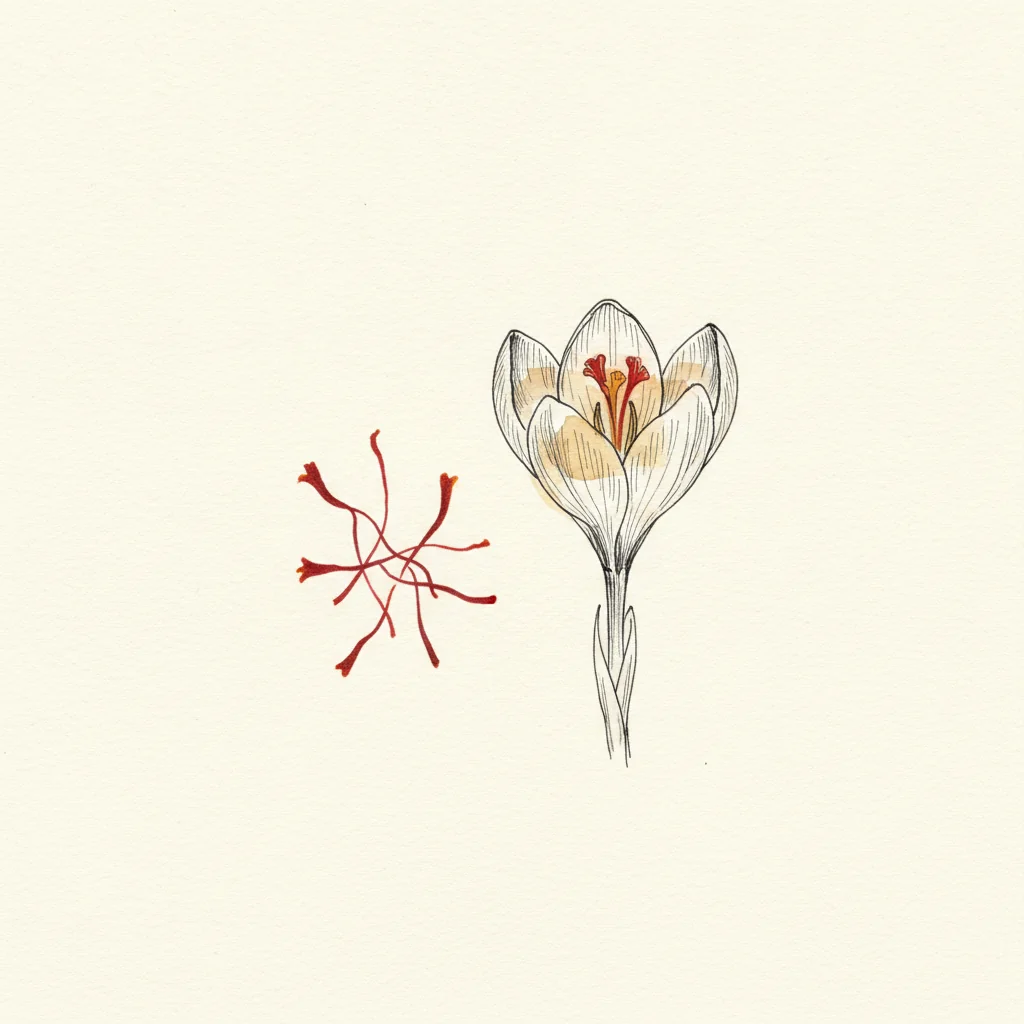
Spice · Saffron
Iranian Saffron (Sargol)
Khorasan, around Torbat-e Heydarieh, Ghaen and Birjand, Iran
dry honey · warm hay · sea iodine
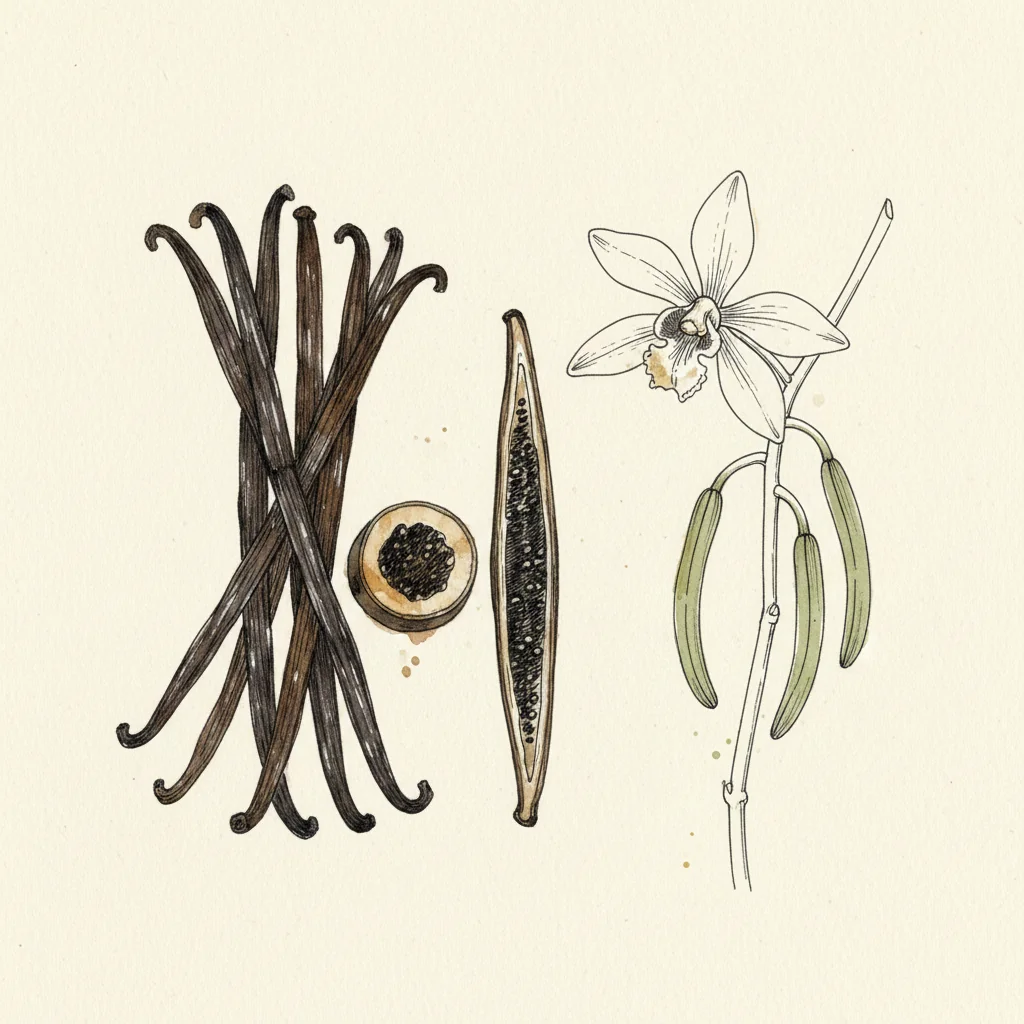
Spice · Vanilla
Madagascar Bourbon Vanilla
Northeast coast, SAVA region (Sambava, Antalaha, Vohemar, Andapa), Madagascar
cocoa · dried fruit · caramel
Our verdict
Saffron for savory gold, vanilla for sweet cream — they barely overlap.
At a glance
| Criterion | Iranian Saffron (Sargol) | Madagascar Bourbon Vanilla |
|---|---|---|
| Origin | Iran, Khorasan (Crocus sativus, Sargol cut) | Madagascar, SAVA region (Vanilla planifolia) |
| Flavor | Dry honey, warm hay, sea iodine, noble bitterness | Cocoa, dried fruit, caramel, creamy custard |
| Intensity | 9/10 — a pinch carries a whole pan | 7/10 — round, fatty, enveloping |
| Menu side | Mostly savory | Mostly sweet |
| How to use | Steep threads in warm liquid 20–30 min first | Steep split pod in hot fatty liquid off the boil |
| Best use | Paella, risotto milanese, tagine, biryani, bouillabaisse | Crème anglaise, ganache, rice pudding, panna cotta |
| Price | ~$11 / gram (real Sargol) | ~$2.85 per Grade A bean |
When to choose Iranian Saffron (Sargol)
Reach for Iranian saffron when you want a savory dish to glow — both in color and in a dry, honeyed, faintly iodine perfume that nothing else gives. Sargol means the red stigma tips only, with none of the yellow style, the purest and most concentrated cut, where the three ISO quality markers — crocin, picrocrocin and safranal — peak. Iran grows close to 90 percent of the world's saffron, mostly in Khorasan, where the dry climate gives an intensity European saffrons rarely touch. The flavor is dry honey, warm hay and sea iodine over a noble bitterness, dry and elegantly bitter with a slow warmth that builds rather than bites, and a very long earthy, iodine-tinged finish. It's a savory spice at heart: paella, risotto alla milanese, tagines and biryani, bouillabaisse, and only occasionally sweet, in a saffron ice cream. The one non-negotiable move is to steep first — bloom the threads in a little warm liquid for 20 to 30 minutes before you cook with them, because dry heat with no soak scorches the threads and wastes them. Keep it out of already heavily spiced dishes that bury it, and away from aggressive raw garlic that fights the perfume. The dose is tiny: 0.1 to 0.2 g, about 15 to 25 threads, for four servings, which is why even at around $10 to $13 a gram a pinch carries a whole pan. Buy the real Sargol — pure red threads, no yellow — and store it in an opaque jar or tin, kept dark, dry and cool, where it holds 2 to 3 years with no real loss, and actually keeps developing for the first six months after drying. Saffron is the savory luxury; reach for it when the dish is a stage, not a dessert.
When to choose Madagascar Bourbon Vanilla
Reach for Madagascar vanilla when you're building the sweet side and you want vanilla to be the body, not a hint. This is the cocoa-and-caramel vanilla that defines what most people even mean by the word: plump black Grade A pods from the SAVA region on Madagascar's northeast coast, where smallholders pollinate each flower by hand, then blanch and sweat the green pods to build the vannillin. The pod comes out supple, black and oily, with cocoa, dried fruit and caramel up front and a licorice-root, dark-rum, prune depth underneath, round and fatty and enveloping, the seeds carried on a film of cream to a very long custard finish. It's the most heat-stable vanilla you can buy, which is exactly why it owns the custard and the ice cream base: crème anglaise, dark-chocolate ganache, rice pudding, panna cotta, and cream sauces for poultry and shellfish. The move is to steep the split pod in a hot fatty liquid — cream, milk, melted butter — off the boil, then scrape the seeds back in, one pod per 500 ml to 1 L. Keep it away from raw, sharply acidic dishes that flatten it and from aggressive aromatics like raw garlic. One crucial storage rule: never refrigerate it, where it crystallizes and risks mold; keep it in an airtight glass tube, dark and at room temperature, where a well-kept pod holds 18 to 24 months. At around $2.50 to $3.50 a Grade A bean it's a genuine luxury that's still affordable per use, since one pod flavors a liter. Against saffron, vanilla is the dessert workhorse: it doesn't compete on the savory plate, it owns the sweet one. If the dish ends the meal, this is the prized spice you reach for.
Where to buy?
Iranian Saffron (Sargol)
Links checked on
| Merchant | Price | Action |
|---|---|---|
| Amazon US | — | Amazon US |
| Slofoodgroup | — | Slofoodgroup |
| Sous Chef UK | — | Sous Chef UK |
Prices may vary depending on current promotions on the merchant site.
Madagascar Bourbon Vanilla
Links checked on
| Merchant | Price | Action |
|---|---|---|
| Amazon US | — | Amazon US |
| Slofoodgroup | — | Slofoodgroup |
| Steenbergs UK | — | Steenbergs UK |
Prices may vary depending on current promotions on the merchant site.
Frequently asked questions
- Is saffron more expensive than vanilla?
- By weight, yes, dramatically — real Sargol runs about $11 a gram, while a Madagascar vanilla bean is under $3. But the dose is tiny for both: a pinch of saffron or a single pod each flavor a whole pan or liter, so per dish the gap narrows.
- Can saffron replace vanilla, or vice versa?
- No. Saffron is a savory, honey-and-iodine spice for paella and risotto; vanilla is a sweet, creamy backbone for custard. They live on opposite sides of the menu and taste nothing alike. Choose by whether the dish is savory or sweet.
- Do both need to be steeped first?
- Yes, that's the one thing they share. Saffron threads bloom in warm liquid 20 to 30 minutes; a split vanilla pod steeps in hot fatty liquid off the boil. Skip the steep and you waste both — saffron scorches, vanilla under-extracts.
- Why shouldn't I refrigerate vanilla?
- Cold makes the pod crystallize and invites mold. Keep Madagascar vanilla in an airtight glass tube at room temperature, dark, and it holds 18 to 24 months. Saffron, by contrast, stores fine cool, dark and dry in a tin.
The best pairings
With Iranian Saffron (Sargol)
With Madagascar Bourbon Vanilla
Comparison prepared according to our methodology. Sponsored purchase links — see our affiliations.