
Comparison
Kampot black vs white pepper: what's the difference?
Same Kampot PGI vines, different processing. Black keeps its skin — clean, eucalyptus-bright heat for steak, fish and eggs. White has the skin removed — gentler, floral lemongrass and jasmine for white fish, cream sauces and clear soups where black specks would show. Buy black first; white is the pale-dish specialist.
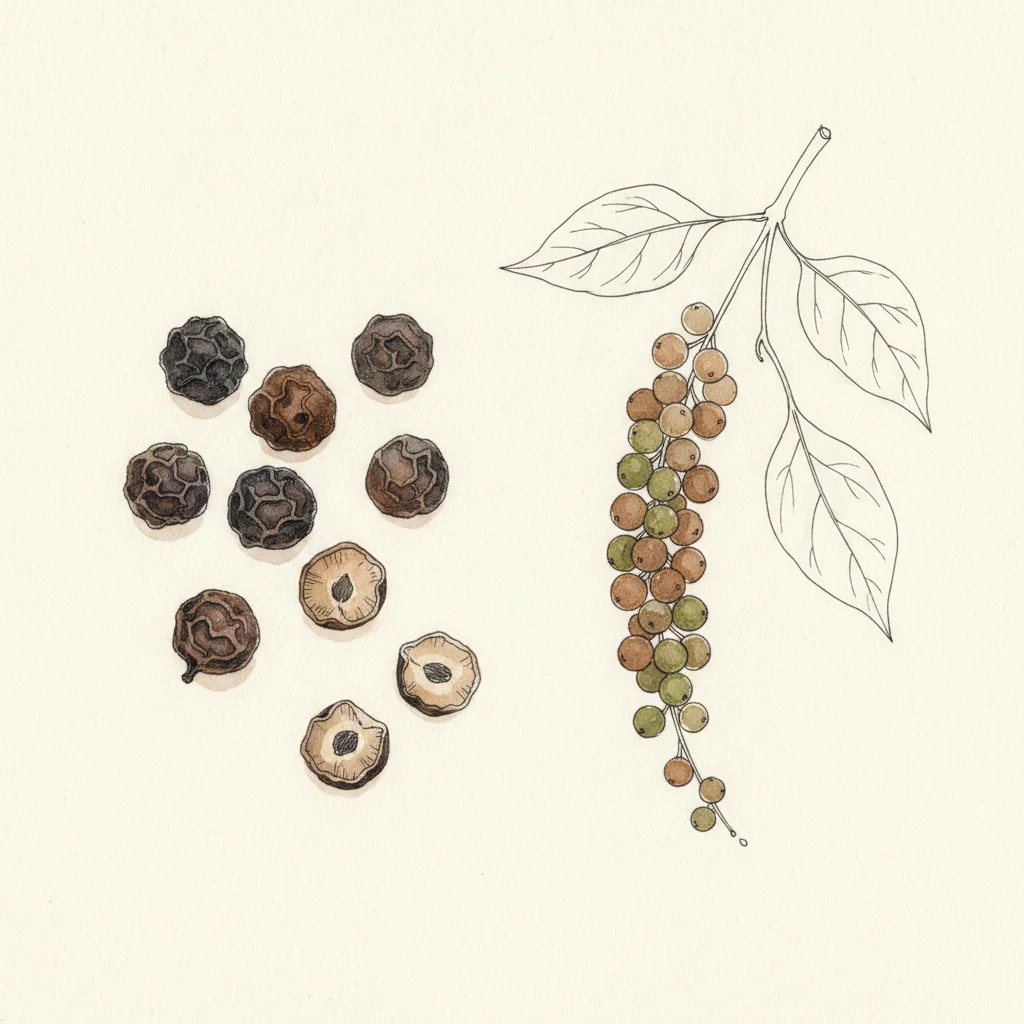
Pepper · Black pepper
Kampot Black Pepper
Kampot and Kep provinces, Cambodia (PGI)
eucalyptus · dried white flowers · green citrus
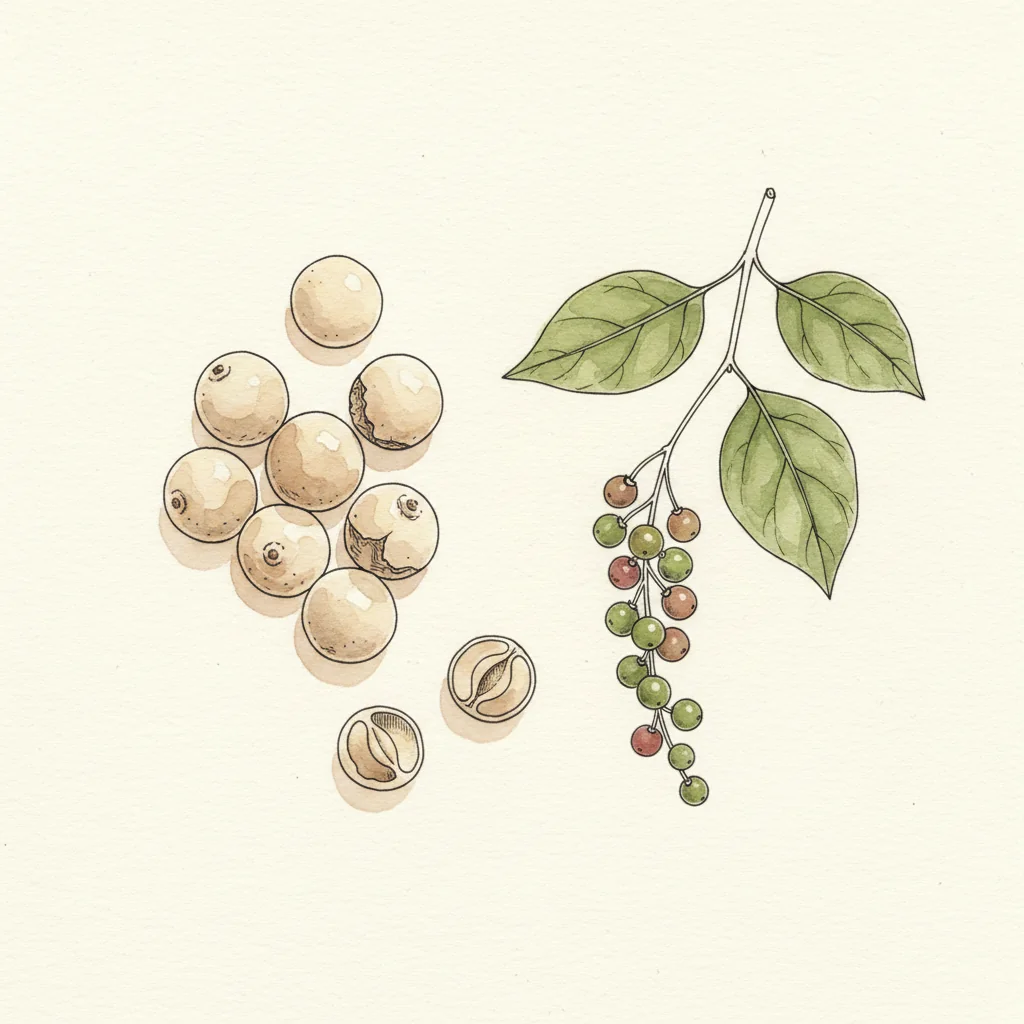
Pepper · White pepper
Kampot White Pepper
Kampot and Kep provinces, Cambodia (IGP/PGI)
lemongrass · jasmine flower · fresh hazelnut
Our verdict
Black Kampot for meat and bright dishes; white Kampot for pale, delicate fish and cream.
At a glance
| Criterion | Kampot Black Pepper | Kampot White Pepper |
|---|---|---|
| Botanical name | Piper nigrum | Piper nigrum |
| Origin | Kampot & Kep, Cambodia | Kampot & Kep, Cambodia |
| Appellation | PGI | PGI |
| Processing | Green berry, dried with skin | Ripe berry soaked, skin rubbed off, core dried |
| Intensity | 8/10 — clean, fresh, waking heat | 6/10 — delicate, slow-building, no rough edge |
| Main notes | Eucalyptus, dried white flowers, green citrus | Lemongrass, jasmine flower, fresh hazelnut |
| Best use | Seared steak, roasted fish, eggs, cheese | White fish, beurre blanc, oysters, clear soups |
| Median price | ~$12 / 50 g | ~$15 / 50 g |
When to choose Kampot Black Pepper
Reach for Kampot black on robust, bright dishes. Picked green and sun-dried with its skin, it smells of eucalyptus and green citrus and gives a clean, fresh heat that wakes meat up — the PGI reference for Asian pepper. Grind it two or three turns at the end of cooking or raw over the plate: seared steak, sautéed crab, roasted fish, scrambled eggs, green mango salad, aged cheese. It's the more versatile and intense of the two Kampots, with an 8/10 punch and visible cracked-pepper character that white deliberately lacks. Add it late — very long simmers cook off the eucalyptus lift — and skip it on dishes already heavy with menthol or on acidic marinades. Where black gives way to white is the pale, delicate plate: on a beurre blanc, a poached chicken breast or a clear chowder, black's specks look wrong and its 8/10 heat is too assertive for the subtlety you're after. So treat black as the everyday Kampot — the one you reach for when color and a fresh, waking bite are welcome rather than a problem. At about $12 for a 50 g tube it's the cheaper of the pair and the one to own first. Grind it fresh, at the end, on anything that can take a bright, visible pepper hit; hand the pale, refined plates to white.
When to choose Kampot White Pepper
Reach for Kampot white on pale, refined plates. It's the rarest of the three IGP Kampot peppers and the most delicate: the ripe red berries are soaked in spring water, the red skin rubbed off, then the ivory cores sun-dried. The nose is pure lemongrass and jasmine with a fresh-hazelnut undertone; the heat is gentle and floral, a 6/10 with no rough edge, clean on the swallow. That makes it the pepper for exactly the dishes black would overwhelm or speck: pan-seared white fish, poached chicken breast, beurre blanc and cream sauces, warm oysters, celery root or parsnip purée, clear soups and chowders. Two or three grinds at the end of cooking, never at the start — the heat is volatile and cooks off, so it's a finishing move only. Used raw, off the heat, it does what no robust pepper can: season a subtle plate without leaving a single dark fleck or burying the flavor. The catch: it's a specialist, not a workhorse. Heavily smoked dishes, rare red meat and loud competing spices all bury its floral top notes, so don't spend Kampot white on anything assertive. And it's a splurge at about $15 for a 50 g jar, pricier than black. Buy it after you own black, specifically for the pale, delicate dishes where black pepper would look and taste wrong — fish, cream, clear soups — and let black handle everything brighter and bolder.
Where to buy?
Kampot Black Pepper
Links checked on
| Merchant | Price | Action |
|---|---|---|
| Amazon US | — | Amazon US |
| Sous Chef UK | — | Sous Chef UK |
| Kampot Pepper USA | — | Kampot Pepper USA |
Prices may vary depending on current promotions on the merchant site.
Kampot White Pepper
Links checked on
| Merchant | Price | Action |
|---|---|---|
| Amazon US | — | Amazon US |
| ChefShop | — | ChefShop |
| Kampot.co.uk | — | Kampot.co.uk |
Prices may vary depending on current promotions on the merchant site.
Frequently asked questions
- What makes Kampot white different from black?
- Processing. Both come from the same PGI vines, but white uses ripe berries with the skin soaked and rubbed off, leaving a milder, floral ivory core. It's softer, leaves no black specks, and suits pale fish and cream sauces.
- Which Kampot pepper is milder?
- White, clearly — a gentle, floral 6/10 versus black's clean, waking 8/10. White is built to season delicate dishes without dominating; black is the brighter, more assertive everyday pepper.
- When should I use Kampot white over black?
- On pale, delicate plates: white fish, beurre blanc, poached chicken, oysters, clear soups. There, black's specks and stronger heat would look and taste wrong. For meat, eggs and bold dishes, use black.
- Is Kampot white pepper worth the price?
- For pale, refined cooking, yes — at about $15 for 50 g it does what no robust pepper can, seasoning subtle dishes invisibly. But it's a specialist; buy black first as your everyday Kampot.
The best pairings
With Kampot Black Pepper
With Kampot White Pepper
Comparison prepared according to our methodology. Sponsored purchase links — see our affiliations.