
Kampot White Pepper IGP (Cambodia)
In brief — Kampot White is the rarest of the three IGP Kampot peppers, and the most refined. The ripe red berries are soaked in spring water, the red skin rubbed off, then the ivory cores sun-dried. The nose is pure lemongrass and jasmine; the heat is gentle and floral. Use it raw, off the heat, on white fish, cream sauces and clear soups. About $15 for a 50g jar — a splurge, but it does what no robust pepper can. Its aromatic profile develops notes of lemongrass, jasmine flower, fresh hazelnut, extended by blond straw and green almond, for an intensity of 6/10. In the kitchen, it's best added as a finishing touch and it pairs with pan-seared white fish, poached chicken breast, beurre blanc and cream sauces. Recommended dosage: two or three grinds at the end of cooking, never at the start — the heat is volatile and cooks off. Expect from $13.00 to $19.00 per 50g jar (median $15.50).
Origin : Kampot and Kep provinces, Cambodia (IGP/PGI)
Piper nigrum
« The most refined of the Kampot trio: lemongrass and jasmine on the nose, a heat so polite it never touches the dish under it. The PGI secures real provenance. Pricey, and wasted on anything loud — but unmatched on white fish and cream sauces. »
Kampot White is the rarest of the three IGP Kampot peppers, and the most refined. The ripe red berries are soaked in spring water, the red skin rubbed off, then the ivory cores sun-dried. The nose is pure lemongrass and jasmine; the heat is gentle and floral. Use it raw, off the heat, on white fish, cream sauces and clear soups. About $15 for a 50g jar — a splurge, but it does what no robust pepper can.
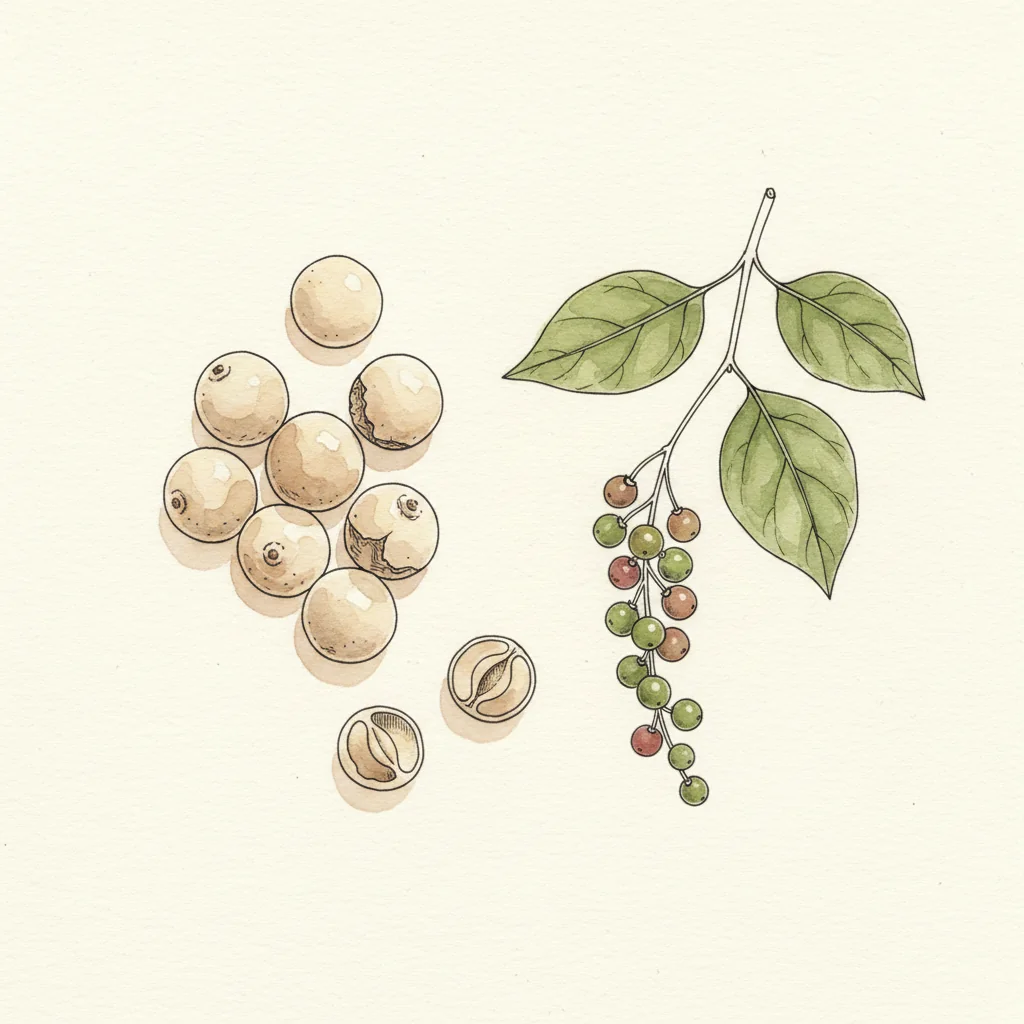
Pepper · White pepper
Kampot White Pepper
Kampot and Kep provinces, Cambodia (IGP/PGI)
lemongrass · jasmine flower · fresh hazelnut
Aromatic profile
| Family | Piper nigrum |
|---|---|
| Intensity | ●●●○○ (6/10) |
| Main notes | lemongrass · jasmine flower · fresh hazelnut |
| Secondary notes | blond straw · green almond |
| Mouthfeel | a delicate, slow-building heat with no rough edge, clean on the swallow |
| Finish length | medium to long, floral, never the barnyard funk of cheap white pepper |
Culinary use
- When to add : finishing
- Dosage : two or three grinds at the end of cooking, never at the start — the heat is volatile and cooks off
- Ideal pairings : pan-seared white fish, poached chicken breast, beurre blanc and cream sauces, warm oysters, celery root or parsnip puree, clear soups and chowders
- Avoid with : heavily smoked dishes, rare red meat, loud competing spices that bury the floral top notes
The grain in detail
Kampot White comes from the same vines as Kampot Black and Red, grown in the Kampot and Kep provinces of southern Cambodia under a PGI/IGP that has protected the name since 2010. The difference is the processing. The berries are picked fully ripe and red, soaked for eight to ten days in clean spring water until the red skin and pulp loosen, then rubbed off by hand to leave the pale ivory core. Those cores are sun-dried on mats for three to five days and hand-sorted. The result is a round, smooth, faintly cream-colored grain, more uniform than most Asian whites. The nose hits you immediately and it is unmistakable: fresh lemongrass, jasmine, lightly toasted hazelnut, with none of the ammonia or wet-sock funk you get from white pepper that was fermented in stagnant water instead of washed in spring water. The heat is delicate and slow, and it never buries what is under it. That restraint is the whole point. This is the pepper for fragile food: roasted sea bass, sole meunière, poached chicken breast, beurre blanc, clear soups, white root-vegetable puree. It is also quietly perfect on warm oysters or a savory sabayon. Rarer than Kampot Black, it is made in small batches by the most exacting farms — La Plantation, Sothy's, Starling Farm — because the ripe-red harvest window is short and de-pulping costs roughly a third of the weight. When you buy, look for an even color and round grains. A grayish or dusty white means incomplete drying or damp storage, and it will taste flat.
History & origin
Kampot pepper was prized in French Indochina and nearly wiped out under the Khmer Rouge; replanting from the 1990s rebuilt the trade, and the EU granted PGI status in 2016, the first Cambodian product so protected. White was long the marginal cuvee — the local market favored black and red — and it was European demand from the 2010s that pushed the IGP farms to develop this more technical grade. The spring-water de-pulping, slow and manual, is what separates real Kampot White from the industrial whites of Indonesia and Vietnam. Only a small share of the roughly 400 farms in the IGP association certify a white.
Provenance & authenticity
What sets the real thing apart — appellation, species and verification cues.
- Protected appellation
- PGI/IGP
- Register : EU eAmbrosia EUGI00000016985 (national GI 2010)
- Year : 2016
- Authority : EU eAmbrosia GI register
- Species
- Piper nigrum
How to verify the real one
- KPPA Kampot Pepper Promotion Association certification mark
- EU PGI logo on label
- origin: Kampot/Kep provinces, Cambodia
- traceability lot number
Indicative price
Reference format : 50g jar — from $13.00 to $19.00 (median : $15.50).
Storage
Airtight opaque jar, away from heat and light. Whole grains hold their aroma 18 to 24 months; grind only what you use.
Where to buy?
Where to buy it
Links checked on
| Merchant | Price | Action |
|---|---|---|
| Amazon US | — | Amazon US |
| ChefShop | — | ChefShop |
| Kampot.co.uk | — | Kampot.co.uk |
Prices may vary depending on current promotions on the merchant site.
Alternatives if unavailable
Tags
- IGP
- PGI
- Cambodia
- white pepper
- Piper nigrum
- rare
Frequently asked questions
- How do you store Kampot White Pepper?
- Airtight opaque jar, away from heat and light. Whole grains hold their aroma 18 to 24 months; grind only what you use.
- What dosage for Kampot White Pepper?
- two or three grinds at the end of cooking, never at the start — the heat is volatile and cooks off
- When should you add Kampot White Pepper in cooking?
- It's best used finishing.
- What should you avoid pairing Kampot White Pepper with?
- Avoid with: heavily smoked dishes, rare red meat, loud competing spices that bury the floral top notes.
Go further
The dishes where this kampot white pepper shines
Also a recommended alternative for
Page prepared according to our methodology. Purchase links marked sponsored and liable to earn a commission — details on our Affiliations page.