
Comparison
PNG vanilla vs Tahitian vanilla: which one for baking?
For baking, reach for Papua New Guinea vanilla. It's the same species as Tahitian, but cured shorter, so it brings milk chocolate, tobacco and dried fig — and steeps into custards, caramels and ganache at about $3 a pod, half the Tahitian price. Save Tahitian's floral anise for cold fruit and cured fish.
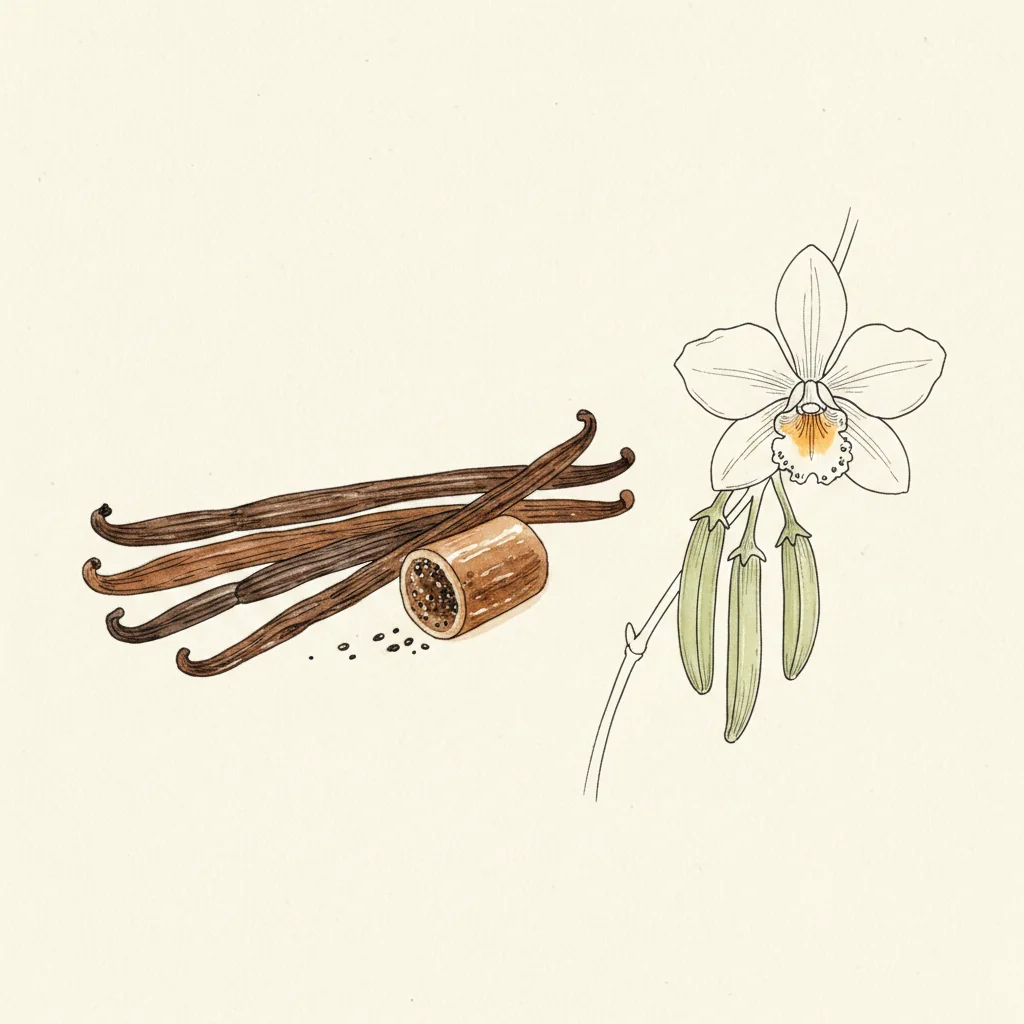
Spice · Vanilla
Papua New Guinea Vanilla
Sepik, Madang and Morobe provinces, Papua New Guinea
milk chocolate · blond tobacco · dried fig
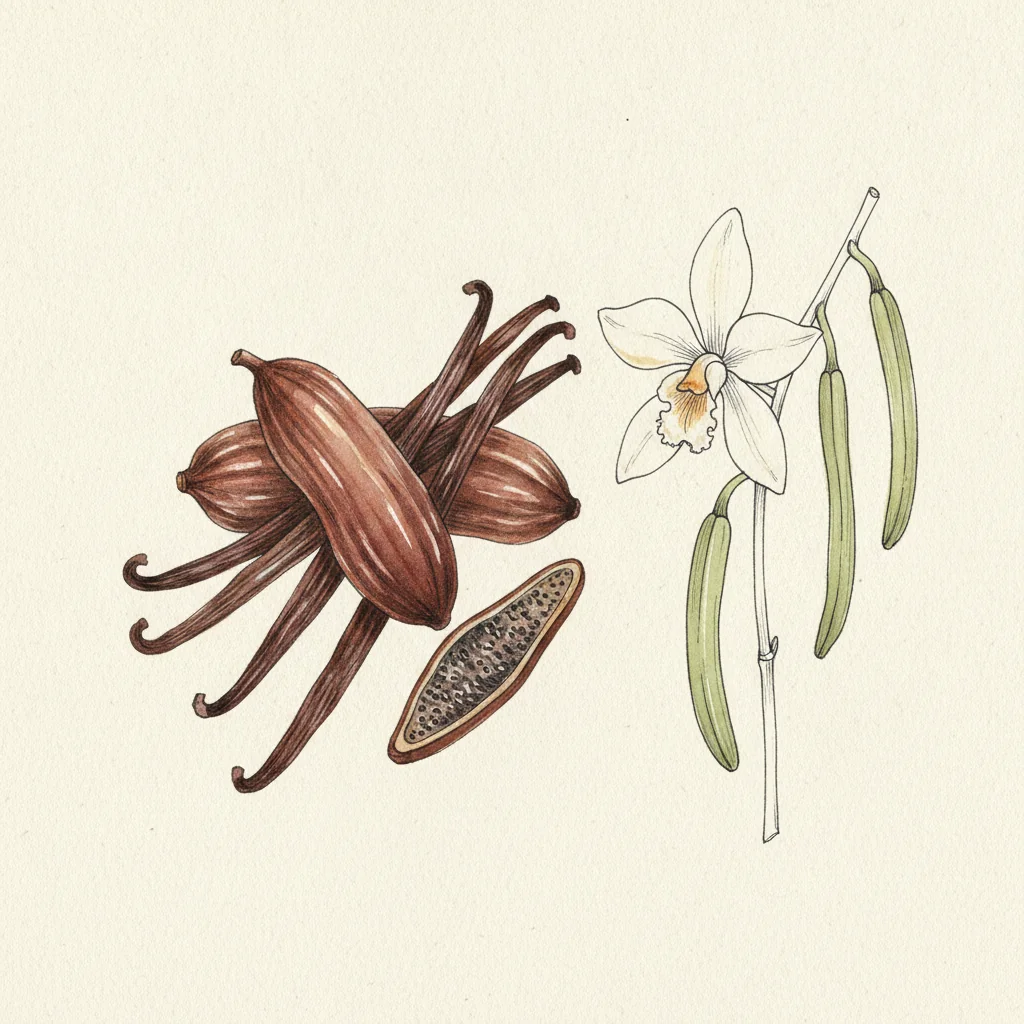
Spice · Vanilla
Tahitian Vanilla
Taha'a and Raiatea, Society Islands, French Polynesia
almond blossom · anise · fresh prune
Our verdict
PNG bakes and steeps for half the money; Tahitian's perfume is wasted under heat.
At a glance
| Criterion | Papua New Guinea Vanilla | Tahitian Vanilla |
|---|---|---|
| Origin | Papua New Guinea — Sepik, Madang, Morobe highlands | French Polynesia — Taha'a and Raiatea |
| Species | Vanilla tahitensis, grown higher, cured shorter | Vanilla tahitensis, the original Polynesian bean |
| Intensity | 7/10 — broad, lightly resinous | 6/10 — perfumed more than sweet |
| Main notes | Milk chocolate, blond tobacco, dried fig | Almond blossom, anise, fresh prune |
| Best use | Steeped into ganache, caramels, ice cream, cream sauces | Cold fruit desserts, panna cotta, cured salmon, beurre blanc |
| Price | ~$3 a pod (10 Grade A run $22–$35) | ~$6.50 a bean ($4–$9 each) |
| Value | The smart-money vanilla — tahitensis depth for half the cost | Worth it for the perfume, but a splurge to bake into a custard |
When to choose Papua New Guinea Vanilla
Choose Papua New Guinea vanilla the moment heat is involved, which is most of baking. It's the same species as Tahitian, but the local cure runs a shorter sun-dry, and that's the lever: less drying keeps more volatile compounds in the pod, so you get the tahitensis signature padded out with milk chocolate, blond tobacco and dried fig. That profile is built to be steeped, not sprinkled. Split a pod, scrape the seeds, and warm the whole thing into milk, cream or melted butter off the heat — its depth survives the infusion where Tahitian's floral lift would simply boil away. Four scenarios where PNG wins outright. First: a milk-chocolate ganache or a batch of soft caramels, where the woody-tobacco edge reads as built-in toffee. Second: a rum-raisin or spiced-rum infusion, where it sits in alongside the alcohol and turns rounder over days. Third: a yellow-fruit compote — peach, apricot, mango — where its resinous sweetness frames the fruit without fighting it. Fourth: a real vanilla ice cream with backbone, the kind you want to taste over the cream. The economics seal it. PNG pours that tahitensis character for roughly half the price of Tahitian: about $3 a pod against $6.50, with ten Grade A pods running $22 to $35 in the US, or a tenner-plus from Sous Chef in the UK. When the 2015–2019 Madagascar price spike sent bourbon vanilla through the roof, PNG is the bean chefs actually reached for. One honest caveat for US bakers raised on 'vanilla equals Madagascar bourbon': PNG is a steeping vanilla with a savory edge, not a one-for-one bourbon swap in a plain custard where you want pure sweet vanillin. Buy on the pod, not the flag — quality is uneven coop to coop. Want pods over 14 cm, glossy and bendy, with no white crystal bloom (that's drying-out here, not a good sign). Store them in an airtight glass tube away from light, and they hold their aroma for a couple of years.
When to choose Tahitian Vanilla
Choose Tahitian vanilla when nothing goes near sustained heat and the job is perfume, not sweetness. It's a separate expression of tahitensis led by anisaldehyde, which is exactly why it reads floral and anise — almond blossom, fresh prune, candied cherry, a faint coconut behind — rather than the deep custard note of a Bourbon bean. Vanillin runs low, around 1.5 to 2 percent, so it's less sweet on the tongue and far more perfumed in the air. That perfume is volatile, and here's the catch: hold it above 175°F / 176°F (80°C) and the floral compounds drive off, so a long bake or a hard simmer wastes exactly what you paid for. Four scenarios where Tahitian is the right grain. First: poached fruit and exotic fruit salads, where its floral side talks straight to mango, strawberry and citrus. Second: a panna cotta or any cold cream set off the heat, where you scrape the seeds in at the finish. Third: cocktails and rum infusions you want bright rather than woody. Fourth — the quiet trick — cured salmon, raw scallops or a beurre blanc on white fish, where a whisper of anise lifts the whole plate. The move is always the same: split, scrape, add at the finish or steep briefly off the heat. The pod is shorter, broader and plumper than a Madagascar bean, with moisture often above 30 percent, so it stays supple and stores well once opened — an airtight glass tube at room temperature, never the fridge, holds it 18 months. When you buy, want plump glossy Grade A beans 6 to 8 inches long with no dry vanillin crust, and check the label says Tahitensis, not 'Tahitian-style.' At about $6.50 a bean it's the pricier pick, and that's the point: it's a finishing vanilla for cold, delicate work, not the bean you cream into cookie dough.
Where to buy?
Papua New Guinea Vanilla
Links checked on
| Merchant | Price | Action |
|---|---|---|
| Amazon US | — | Amazon US |
| Native Vanilla | — | Native Vanilla |
| Sous Chef UK | — | Sous Chef UK |
Prices may vary depending on current promotions on the merchant site.
Tahitian Vanilla
Links checked on
| Merchant | Price | Action |
|---|---|---|
| Amazon US | — | Amazon US |
| Native Vanilla | — | Native Vanilla |
| Sous Chef UK | — | Sous Chef UK |
Prices may vary depending on current promotions on the merchant site.
Frequently asked questions
- Is PNG vanilla really the same species as Tahitian?
- Yes — both are Vanilla tahitensis. PNG is grown higher and cured with a shorter sun-dry, which keeps more volatile compounds and pushes it toward milk chocolate, tobacco and dried fig, while Tahiti stays brighter and more floral. Same genus, different dialect.
- Which is better for baking a custard or ice cream?
- PNG, by a clear margin. It's a steeping vanilla whose woody-caramel depth survives heat and infusion, and it costs about half as much. Tahitian's perfume is volatile and boils off above 175°F / 176°F (80°C), so it's wasted in anything cooked hard.
- Why is PNG so much cheaper?
- Papua New Guinea is the world's number-two vanilla producer by volume, roughly 700 tonnes a year, so supply is deep. Tahitian output is tiny — 50 to 80 tons against PNG's scale — which keeps it at about $6.50 a bean against PNG's $3.
- Can I swap PNG straight into a bourbon-vanilla recipe?
- Not one-for-one in a plain sweet custard, where you want pure vanillin — PNG has a savory, resinous edge. It shines in milk-chocolate ganache, caramels, rum infusions and yellow-fruit compotes, where that extra depth is an asset rather than a clash.
The best pairings
With Papua New Guinea Vanilla
With Tahitian Vanilla
Comparison prepared according to our methodology. Sponsored purchase links — see our affiliations.