
Comparison
Nigella seeds vs cardamom: what's the difference?
People confuse these because both get called 'black' something, but they're nothing alike. Nigella sativa is a savory, onion-and-pepper, toasty seed scattered on bread and salads, about $7. Green cardamom is a bright, citrusy, eucalyptus aromatic for chai and curries, about $9.50. Savory seedy crunch, nigella; perfumed aromatic lift, cardamom.
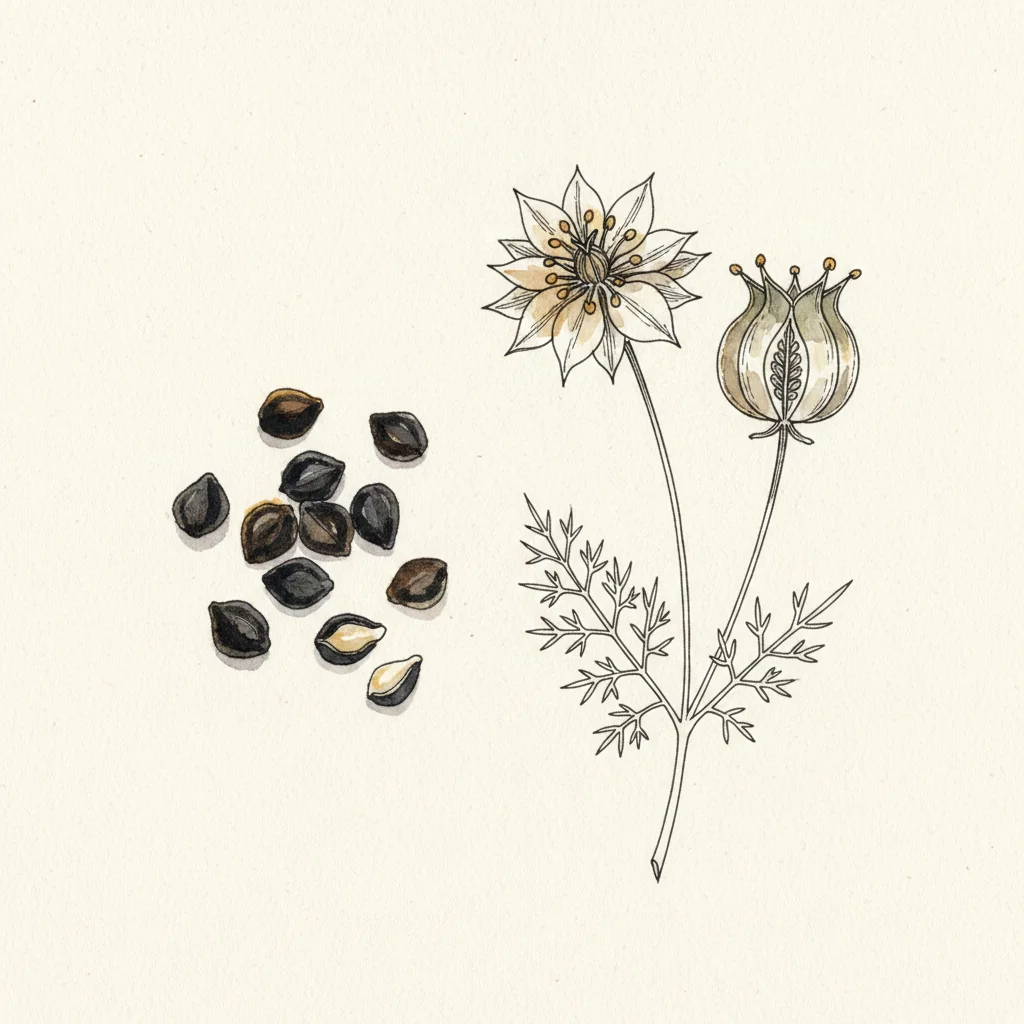
Spice · Spice seed
Nigella Seeds (Black Cumin)
Nile Valley, Upper Egypt, Egypt
toasted onion · hazelnut · mild pepper
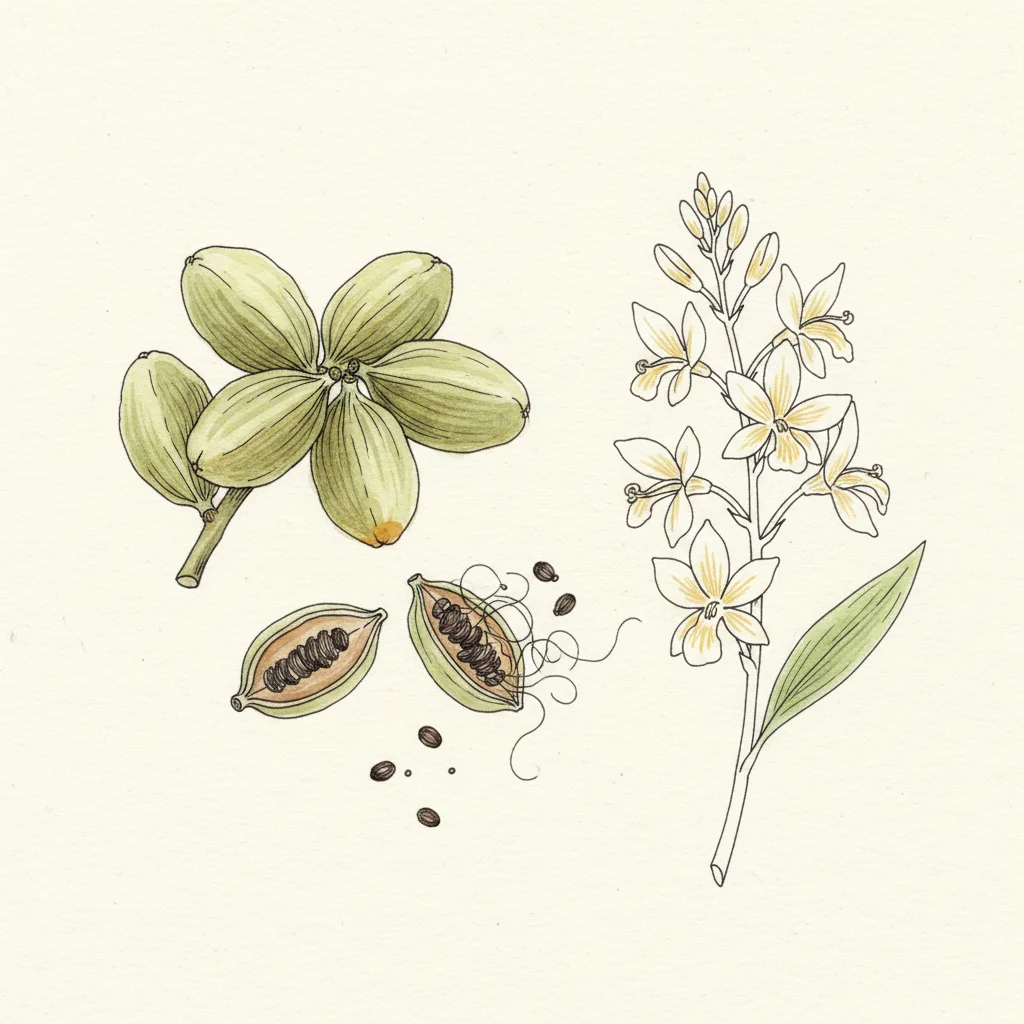
Spice · Spice seed
Green Cardamom
Western Ghats (Kerala, Karnataka, Tamil Nadu), India
eucalyptus · lemon zest · fresh resin
Our verdict
Nigella for savory toasty topping, cardamom for bright aromatic lift.
At a glance
| Criterion | Nigella Seeds (Black Cumin) | Green Cardamom |
|---|---|---|
| Origin | Egypt — Nile Valley, Upper Egypt (Nigella sativa) | India — Western Ghats, Kerala (Elettaria cardamomum) |
| Form | Whole black teardrop seeds | Whole green pods, or seeds ground to order |
| Intensity | 6/10 — savory, gentle, toasty | 8/10 — bright, penetrating, perfumed |
| Main notes | Toasted onion, hazelnut, mild pepper | Eucalyptus, lemon zest, fresh resin |
| Best use | Naan, pita, fresh cheeses, salads, roasted squash, dal | Chai, garam masala, biryani, Nordic buns, compotes |
| Median price | ~$7 / 100 g jar | ~$9.50 / 2 oz jar |
| Value | Cheap; toast briefly and a teaspoon goes far | Pods stay fresh; 2-4 per dish goes far |
When to choose Nigella Seeds (Black Cumin)
Reach for nigella seeds when you want a savory, toasty, oniony crunch scattered on top. Often sold as black cumin, kalonji or black seed, Nigella sativa has nothing to do with cumin or with cardamom despite the shared 'black' nicknames — it tastes of toasted onion, hazelnut and a mild peppery edge. Its home is the surface of bread: scattered raw on naan or pita before baking, where it toasts in the oven heat. Off the bread it's lovely on fresh cheeses like labneh and ricotta, cucumber-tomato salads, roasted squash and sweet potato, and gentle lentil dals and vegetable curries. A quick ten-second toast in a dry pan before it goes on releases the nutty oils and is worth the step. Use a rounded teaspoon over one flatbread or a salad for four; it's a finishing texture, not a base spice, so you scatter rather than cook it into a sauce. At about $7 for a 100 g jar it's one of the cheapest ways to make plain food look and taste deliberate. What it isn't is an aromatic for chai or a curry base — it has no perfume, no citrus, no lift. For that bright, penetrating top note, you need cardamom, and the two are not remotely interchangeable.
When to choose Green Cardamom
Reach for green cardamom when you want bright, perfumed aromatic lift in cooking or baking. Elettaria cardamomum from Kerala is eucalyptus, lemon zest and fresh resin — a penetrating, citrusy aromatic that anchors chai, garam masala, biryani and pilaf on the savory side, and Scandinavian buns, Christmas baking and apple-pear-rhubarb compotes on the sweet side, with a quiet affinity for coffee and dark chocolate. Unlike nigella's flat, toasty, surface crunch, cardamom is all fragrance and depth: crush whole pods lightly at the start of cooking to release them slowly, or grind the seeds to order for cold preparations and baking, where pre-ground cardamom dies within weeks. The working dose is two to four pods per four servings in savory dishes, one pod per cup in an infusion — it's strong, and over-pouring turns it soapy and medicinal. At about $9.50 for a 2 oz jar of whole pods it's good value precisely because the pods protect the oils, so the jar stays vivid far longer than any ground spice. The contrast with nigella couldn't be starker: cardamom is a perfumed aromatic you cook into a dish, nigella a savory seed you scatter on top. Confusing the two — as the shared 'black seed' names invite — sends you to the wrong flavor entirely.
Where to buy?
Nigella Seeds (Black Cumin)
Links checked on
| Merchant | Price | Action |
|---|---|---|
| Amazon US | — | Amazon US |
| Burlap & Barrel | — | Burlap & Barrel |
| Sous Chef UK | — | Sous Chef UK |
Prices may vary depending on current promotions on the merchant site.
Green Cardamom
Links checked on
| Merchant | Price | Action |
|---|---|---|
| Amazon US | — | Amazon US |
| Spicewalla | — | Spicewalla |
| Steenbergs UK | — | Steenbergs UK |
Prices may vary depending on current promotions on the merchant site.
Frequently asked questions
- Are nigella seeds the same as cardamom?
- Not at all. Nigella is a savory, onion-and-pepper seed you scatter on bread and salads; cardamom is a bright, citrusy aromatic you cook into chai and curries. The shared 'black seed' nicknames cause the mix-up, but they share no flavor.
- Is nigella the same as black cumin?
- It's often sold under that name, but it isn't true cumin. Nigella sativa is its own seed — toasty, oniony, hazelnut-like — unrelated botanically to cumin. The label confusion is common, so buy by the botanical name when you can.
- Can I substitute one for the other?
- No. They occupy opposite roles — a savory finishing seed versus a perfumed cooking aromatic. Swapping nigella into a chai or cardamom onto a naan gives you the wrong flavor entirely. Keep both; they cover different ground.
- Should I toast either one?
- Toast nigella ten seconds in a dry pan to wake the nutty oils before scattering. Cardamom you crush and cook in, or grind fresh for baking — no separate toasting needed, since it releases as the pods heat in the dish.
The best pairings
With Nigella Seeds (Black Cumin)
With Green Cardamom
Comparison prepared according to our methodology. Sponsored purchase links — see our affiliations.