
Comparison
Penja white vs Zanzibar pepper: which to use?
Different colors, different jobs. Penja white PGI from Cameroon is musky, menthol-warm and speck-free — built for cream sauces, white fish and scallops. Zanzibar black from Pemba Island is bright, lemony and cracked-visible — for grilled fish, roast chicken and cacio e pepe. Penja for pale and rich; Zanzibar for bright and bold.
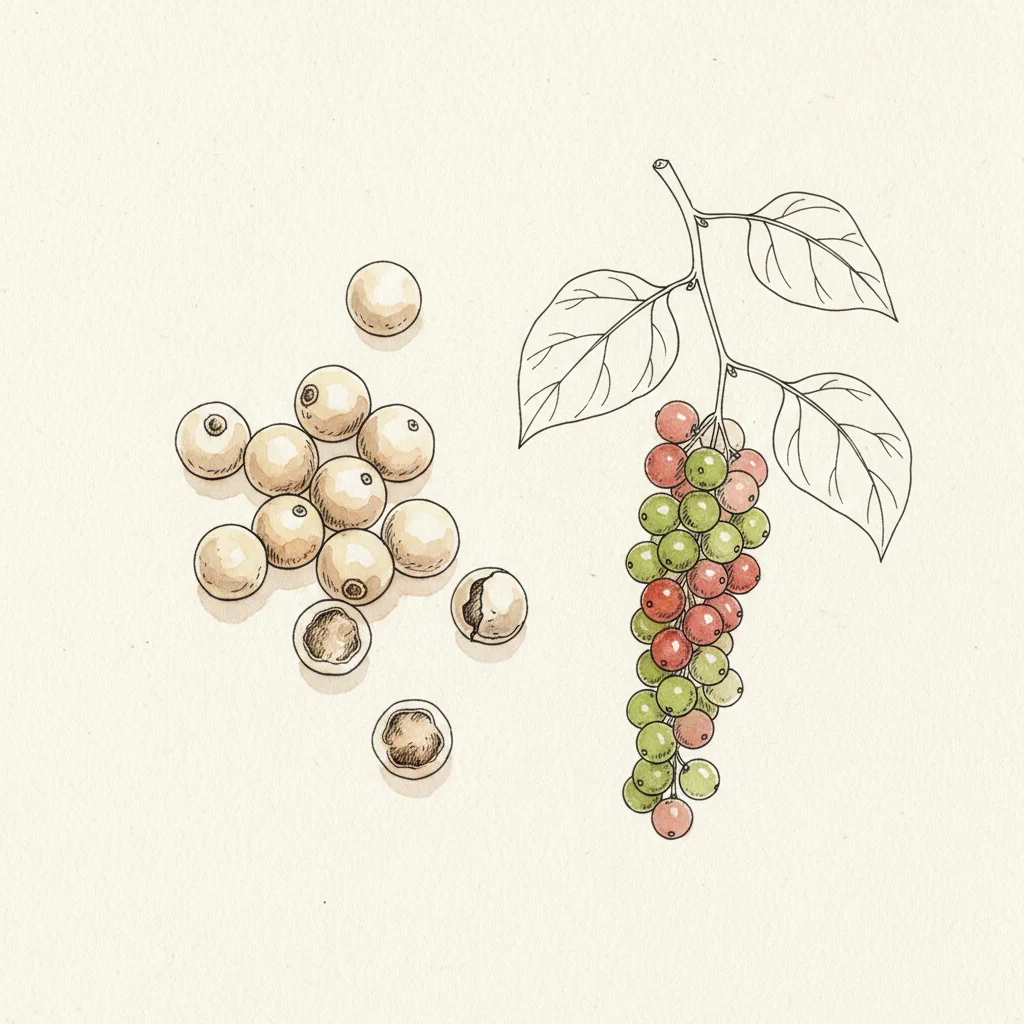
Pepper · White pepper
Penja White Pepper
Penja Valley, Littoral region, Cameroon (PGI)
musky animal warmth · fresh menthol · damp forest floor
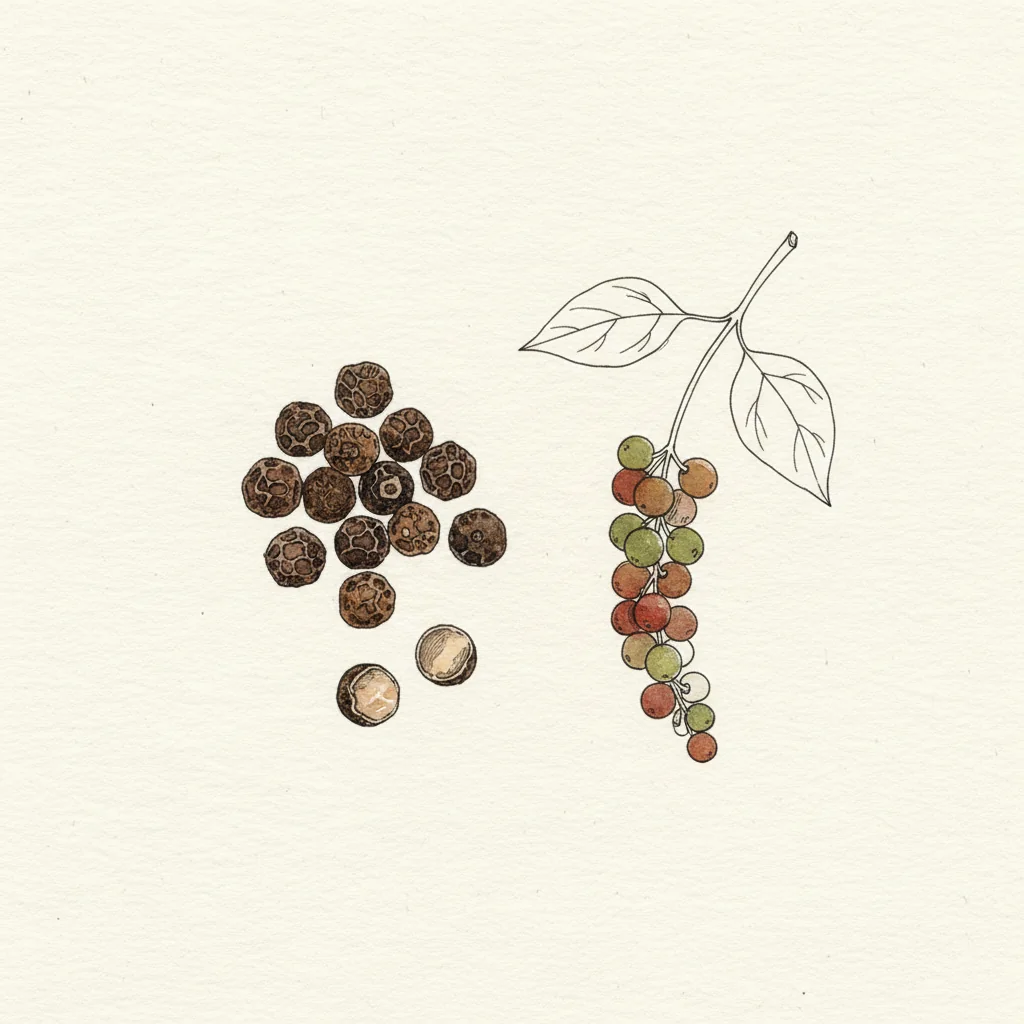
Pepper · Black pepper
Zanzibar Black Pepper
Pemba Island, Zanzibar archipelago, Tanzania
lemon zest · cacao · tropical heat
Our verdict
Penja white for pale, rich dishes; Zanzibar black for bright, lemony plates that want visible pepper.
At a glance
| Criterion | Penja White Pepper | Zanzibar Black Pepper |
|---|---|---|
| Botanical name | Piper nigrum (white) | Piper nigrum (black) |
| Origin | Penja Valley, Cameroon | Pemba Island, Zanzibar, Tanzania |
| Appellation | PGI since 2013 | None |
| Intensity | 7/10 — round, spreading warmth | 7/10 — bright, forward, front-of-tongue |
| Main notes | Musky animal warmth, menthol, forest floor | Lemon zest, cacao, tropical heat |
| Appearance on plate | Ivory, leaves no specks | Black, visibly cracked |
| Best use | Cream sauces, white fish, scallops | Grilled fish, roast chicken, cacio e pepe |
| Median price | ~$16 / 2.5 oz | ~$10 / 2 oz |
When to choose Penja White Pepper
Reach for Penja white when the dish is pale and you want round warmth without a single black speck. Ripe berries soaked in the spring water of Cameroon's volcanic Penja Valley, sun-dried to ivory, PGI since 2013 — the nose is musky, almost animal, with a clean menthol lift, and the heat spreads into warmth rather than biting. That profile is built to vanish into delicate, rich plates: white fish, seared scallops, cream sauces and beurre blanc, poached chicken, fresh cheeses, carpaccio. On every one, Penja seasons invisibly, where Zanzibar's black flecks and bright lemon heat would read wrong against a pale cream sauce. One or two turns per plate, ground fresh just before serving — the menthol fades fast. The contrast with Zanzibar is total: Penja is white, musky and warm and made to disappear; Zanzibar is black, citrusy and forward and made to be seen. So Penja wins wherever the plate is pale and subtle and you want the pepper to be felt, not noticed. The catch is that it's not a workhorse — heavily spiced dishes drown the menthol and long marinades cook off the aromatics — and it's the pricier of the two, about $16 for 2.5 oz versus Zanzibar's ~$10 for 2 oz. Buy it for the refined, cream-based dishes where black pepper of any kind would look and taste out of place, and let the bright Zanzibar handle everything bold and lemony.
When to choose Zanzibar Black Pepper
Reach for Zanzibar when you want bright lemon and don't mind — or actively want — visible cracked pepper. Grown on Pemba Island off Tanzania, these vine-ripened berries crack open with lemon zest, cacao and a forward tropical heat that lands on the front of the tongue. That brightness is the opposite of Penja's musky warmth, and it's exactly what lifts grilled and seared white fish, roast chicken and lemony pan sauces, ripe tomatoes and burrata, buttered pasta and cacio e pepe — even fresh strawberries with dark chocolate, or scrambled eggs. Where Penja disappears into a pale sauce, Zanzibar is meant to be tasted and seen: those black specks and that citrus punch are the point. Crack it coarse just before the plate, never pre-ground. The catch is the volatile citrus: in a long braise the lemon cooks out and you lose what you paid for, so it's a finishing pepper, and it'll get buried by heavy garam masala or sharp vinegar. Compared with Penja, Zanzibar is the bolder, brighter, cheaper choice — about $9.99 for 2 oz versus Penja's ~$16 for 2.5 oz — but it can't do Penja's job: on a beurre blanc or a delicate white fish in cream, its black flecks and forward heat are wrong, and Penja's musky, speck-free warmth wins. Reach for Zanzibar on bright, bold, often acidic plates that welcome visible pepper; reach for Penja on pale, rich, refined ones that don't.
Where to buy?
Penja White Pepper
Links checked on
| Merchant | Price | Action |
|---|---|---|
| Amazon US | — | Amazon US |
| La Boite | — | La Boite |
| Sous Chef UK | — | Sous Chef UK |
Prices may vary depending on current promotions on the merchant site.
Zanzibar Black Pepper
Links checked on
| Merchant | Price | Action |
|---|---|---|
| Burlap & Barrel | — | Burlap & Barrel |
| Amazon US | — | Amazon US |
| Steenbergs UK | — | Steenbergs UK |
Prices may vary depending on current promotions on the merchant site.
Frequently asked questions
- Penja white or Zanzibar — what's the core difference?
- Color and direction. Penja is white, musky and warm, made to disappear into pale cream dishes. Zanzibar is black, lemony and bright, made to be seen and tasted on bold, citrusy plates. They rarely substitute for each other.
- Which pepper for a cream sauce or white fish?
- Penja white. Its round, musky warmth seasons without leaving black specks, and it suits the delicate, rich profile. Zanzibar's flecks and bright lemon heat would look and taste wrong there.
- Which is better value?
- Zanzibar per gram — about $10 for 2 oz versus roughly $16 for 2.5 oz of Penja. But they do different jobs, so value depends on the dish; Penja is the splurge you buy for pale, refined cooking.
- Can Zanzibar replace white pepper?
- Not when appearance matters. On a beurre blanc or pale soup, Zanzibar's black specks give it away and its citrus changes the dish. For those, white pepper like Penja is the right tool.
The best pairings
With Penja White Pepper
With Zanzibar Black Pepper
Comparison prepared according to our methodology. Sponsored purchase links — see our affiliations.