
Penja White Pepper PGI (Penja Valley, Cameroon)
In brief — Penja White Pepper is the rare grain worth grinding fresh: ripe berries soaked in the spring water of Cameroon's volcanic Penja Valley, then sun-dried to an ivory bead. The nose is musky, almost animal, with a clean menthol lift; the heat is round, not biting. Cameroon's PGI since 2013 makes provenance real. A 2.5 oz jar runs about $16. Its aromatic profile develops notes of musky animal warmth, fresh menthol, damp forest floor, extended by candied citrus peel and blond wood, for an intensity of 7/10. In the kitchen, it's best added as a finishing touch and it pairs with delicate white fish, seared scallops, cream sauces and beurre blanc. Recommended dosage: one or two turns of the mill per plate, ground fresh just before serving. Expect from $14.00 to $23.00 per 2.5 oz (70 g) jar (median $16.00).
Origin : Penja Valley, Littoral region, Cameroon (PGI)
Piper nigrum
« A floral, almost animal warmth you won't find elsewhere: nutmeg, citrus peel, a cooling menthol tail. Cameroon's PGI buys real traceability. A notch below the black Penja on raw punch, but more nuanced. Worth grinding fresh. »
Penja White Pepper is the rare grain worth grinding fresh: ripe berries soaked in the spring water of Cameroon's volcanic Penja Valley, then sun-dried to an ivory bead. The nose is musky, almost animal, with a clean menthol lift; the heat is round, not biting. Cameroon's PGI since 2013 makes provenance real. A 2.5 oz jar runs about $16.
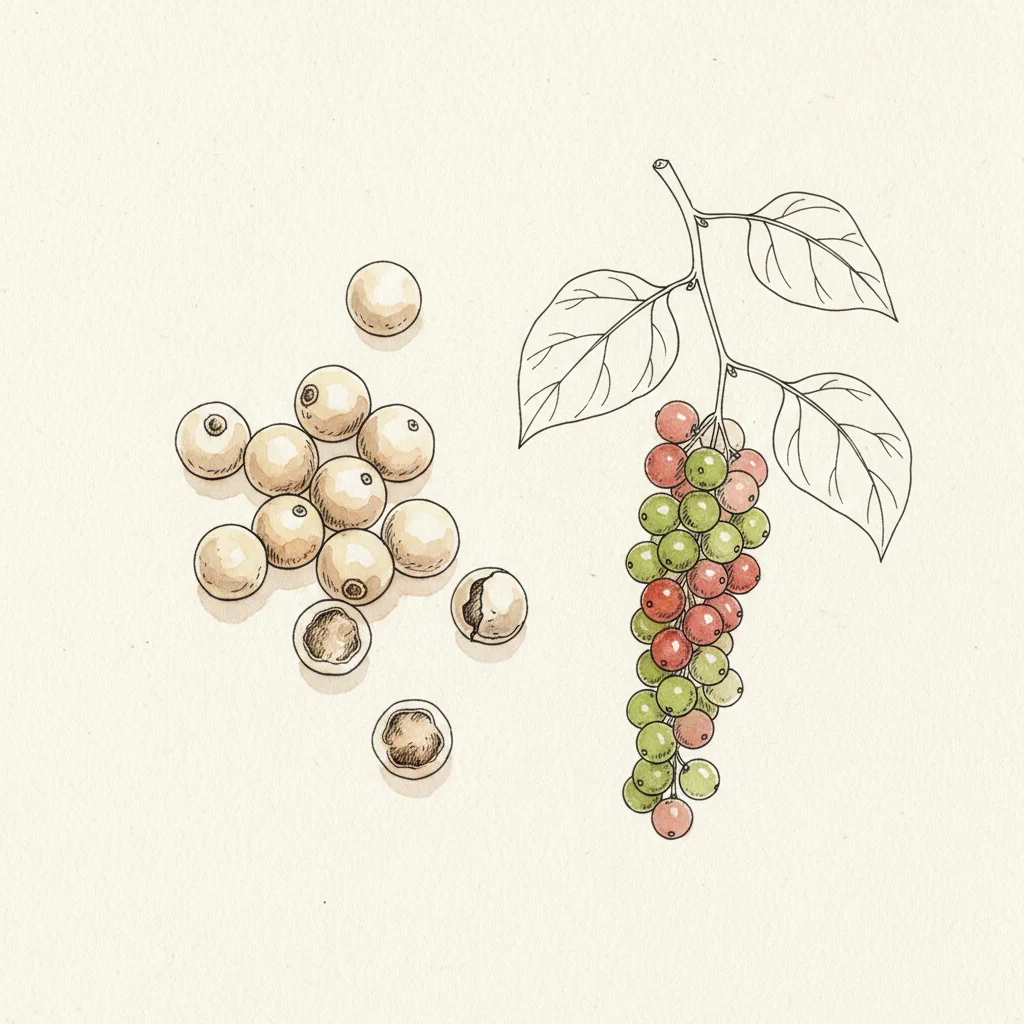
Pepper · White pepper
Penja White Pepper
Penja Valley, Littoral region, Cameroon (PGI)
musky animal warmth · fresh menthol · damp forest floor
Aromatic profile
| Family | Piper nigrum |
|---|---|
| Intensity | ●●●●○ (7/10) |
| Main notes | musky animal warmth · fresh menthol · damp forest floor |
| Secondary notes | candied citrus peel · blond wood |
| Mouthfeel | a round heat that spreads into warmth rather than biting, slow to arrive and slow to leave |
| Finish length | long, with a cooling menthol tail that lingers after the heat fades |
Culinary use
- When to add : finishing
- Dosage : one or two turns of the mill per plate, ground fresh just before serving
- Ideal pairings : delicate white fish, seared scallops, cream sauces and beurre blanc, poached chicken, fresh cheeses, carpaccio
- Avoid with : heavily spiced dishes that drown the menthol, long marinades (the volatile aromatics cook off), rustic tomato sauces
The grain in detail
Penja White Pepper grows at the foot of Mount Kupé, on volcanic soils rich in silica and potash that give the berry an unusual density. The fruit is picked fully ripe, then soaked for about ten days in the valley's running spring water to slip off the red pulp, and finally sun-dried on mats. That live-water soak, specific to Penja, is why the nose stays clean and musky rather than barnyard, and it sets this grain apart from the mechanically decorticated white pepper of Indonesia. On the palate the attack is almost floral, then the menthol and damp-forest notes arrive that mark the terroir. The heat shows up second, round and warming, without the green snap of unripe pepper or the bitterness of over-cured black. Grind it fresh and use it at the finish: white fish, beurre blanc, scallops barely seared, a seared foie gras, a savory sabayon. Heat dulls the menthol, so this is a finishing pepper above all, not one for the long braise. Growers around the IPGP cooperative farm in agroforestry under palm shade, harvesting by hand. The supply chain nearly collapsed in the early 2000s before the 2013 PGI gave it traceability and a price floor. One tell of a good jar: the grain should feel faintly oily, a sign the essential oils are still intact.
History & origin
The Penja Valley, a narrow volcanic basin in Cameroon, has grown pepper since the 1960s, a legacy of a converted French plantation. Long sold in bulk to European traders, the crop nearly disappeared in the early 2000s. Recognition as a PGI in 2013, the first PGI ever granted in sub-Saharan Africa, organized roughly a hundred growers around a strict spec: a delimited zone, hand harvest, and pulping in the valley's own water. Families who learned the craft from the historic planters still work the same gestures today.
Provenance & authenticity
What sets the real thing apart — appellation, species and verification cues.
- Protected appellation
- IGP
- Register : OAPI
- Year : 2013
- Authority : OAPI (African Intellectual Property Organization)
- Species
- Piper nigrum
How to verify the real one
- IGP seal on label
- single-origin: Penja Valley, Cameroon
- volcanic black soil terroir
Indicative price
Reference format : 2.5 oz (70 g) jar — from $14.00 to $23.00 (median : $16.00).
Storage
Whole grains in an airtight, opaque jar away from light and humidity; grind on demand. Keeps its intensity about 18 months.
Where to buy?
Where to buy it
Links checked on
| Merchant | Price | Action |
|---|---|---|
| Amazon US | — | Amazon US |
| La Boite | — | La Boite |
| Sous Chef UK | — | Sous Chef UK |
Prices may vary depending on current promotions on the merchant site.
Alternatives if unavailable
Tags
- PGI
- Cameroon
- white pepper
- rare
- agroforestry
- Piper nigrum
Frequently asked questions
- How do you store Penja White Pepper?
- Whole grains in an airtight, opaque jar away from light and humidity; grind on demand. Keeps its intensity about 18 months.
- What dosage for Penja White Pepper?
- one or two turns of the mill per plate, ground fresh just before serving
- When should you add Penja White Pepper in cooking?
- It's best used finishing.
- What should you avoid pairing Penja White Pepper with?
- Avoid with: heavily spiced dishes that drown the menthol, long marinades (the volatile aromatics cook off), rustic tomato sauces.
Go further
The dishes where this penja white pepper shines
Also a recommended alternative for
As a complementary pairing with
See every dish where this product is mentioned →
Other peppers to discover
Featured in these gift sets
Page prepared according to our methodology. Purchase links marked sponsored and liable to earn a commission — details on our Affiliations page.