
Comparison
Pink vs green peppercorns — what's the difference?
Pink peppercorns (Schinus terebinthifolius, about $7 a jar) aren't pepper — they're a sweet, resinous, heatless berry for gravlax, fruit and fresh cheese. Green peppercorns (Piper nigrum, around $10 for 100 g) are real young pepper, juicy and snappy, for steak au poivre and cream sauces. Garnish berry versus cooking pepper.
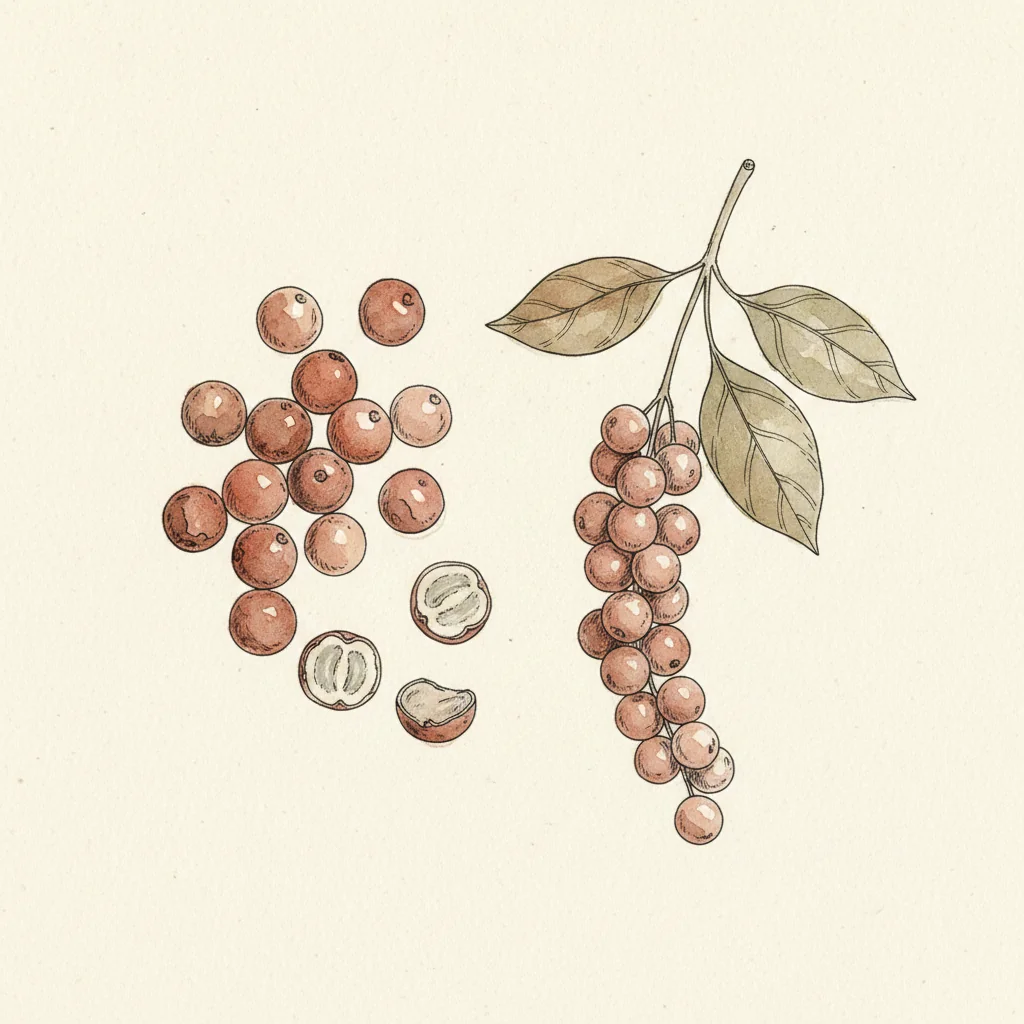
Pepper · Berry
Pink Peppercorns
Réunion Island, western highlands, France
sweet juniper · pine resin · anise
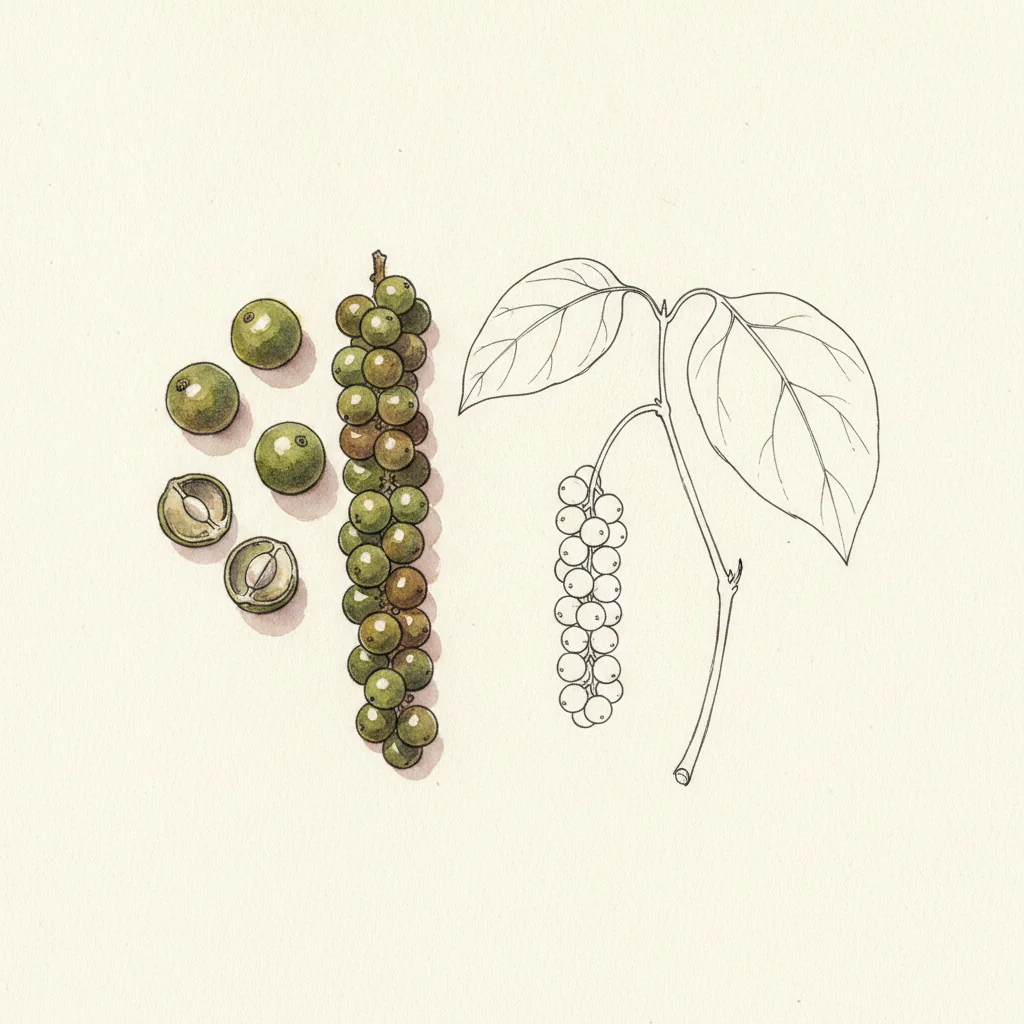
Pepper · Green pepper
Green Peppercorns
East coast, plantations around Antalaha, Madagascar
cut grass · fresh green pepper · briny tang
Our verdict
Pink for sweet, raw, decorative finishing; green for juicy heat in cream sauces and steak au poivre.
At a glance
| Criterion | Pink Peppercorns | Green Peppercorns |
|---|---|---|
| Botany | Schinus terebinthifolius (not a true pepper) | Piper nigrum, picked young |
| Origin | France, Réunion Island highlands | Madagascar, east coast near Antalaha |
| Intensity | 4/10 — sweet, resinous, no heat at all | 6/10 — juicy, snappy heat |
| Main notes | Sweet juniper, pine resin, anise | Cut grass, fresh green pepper, briny tang |
| Best on | Salmon gravlax, carpaccio, fruit, fresh cheese | Steak au poivre, peppercorn sauce, duck, pâté |
| Price | ~$7 / small jar | ~$10 / 100 g jar |
| Value | Worth it — a pinch raw per plate | Worth it — a teaspoon per sauce for four |
When to choose Pink Peppercorns
Pick pink peppercorns when you want color and sweetness, not heat. They aren't pepper at all — they're the dried berry of Schinus terebinthifolius — and the mouthfeel is almost sweet on the attack, a light resinous astringency on the finish, and no heat at all. That makes them a finisher, never a seasoning. Four scenarios where pink wins. First, salmon gravlax, where the sweet juniper-and-anise note is a classic against the cured fish, and the rose-red berries look beautiful crushed over it. Second, fish carpaccio, where they add perfume and color without any burn. Third, fruit salad, where the resinous sweetness plays with the fruit. Fourth, fresh and goat cheeses, where a crushed pinch adds floral lift. The move: crush a pinch between the fingers over the finished plate, raw — they're delicate and decorative, so they go on last. Avoid them on already heavily spiced dishes, on long cooks where the perfume burns off, and on rare red meat, which they're far too gentle to season. At about $7 a small jar they're cheap and a pinch goes far. Where green peppercorns are the better call: anywhere you actually want heat and a savory bite — a steak, a cream sauce, a terrine. Pink can't do that work; it has no burn. These two are not substitutes. Pink is the pretty, sweet garnish; green is the juicy cooking pepper. Choosing between them is really choosing between decoration and seasoning.
When to choose Green Peppercorns
Pick green peppercorns when you want juicy, fresh heat you can actually cook with. They're real pepper — Piper nigrum picked young — and the mouthfeel is a juicy, snappy heat that pops between the teeth, with none of the dark cocoa burn of black pepper. That snap is what pink peppercorns completely lack. Four scenarios where green wins. First, steak au poivre and cream peppercorn sauce, the textbook use, where crushed brine-packed berries bloom in the cream and butter. Second, seared duck breast, where the fresh green heat cuts the fat. Third, homemade pâté and terrines, where they stud the meat with bursts of pepper. Fourth, beef tartare and potted meats, where their snap lifts the cold meat. The move: about a teaspoon of berries per sauce for four, lightly crushed with the flat of a knife to release the juice. Avoid them on already very acidic dishes, on sweet desserts where their savory heat clashes, and on long, dry roasting, where the brine berries go mushy. At around $10 for a 100 g jar in brine they're good value and last in the fridge. Where pink peppercorns are the better call: sweet, raw, decorative finishing — gravlax, fruit, fresh cheese — where you want color and perfume, not heat. Green is the working pepper for sauces and savory meat; pink is the sweet garnish. They share a color-coded shelf but do entirely different jobs.
Where to buy?
Pink Peppercorns
Links checked on
| Merchant | Price | Action |
|---|---|---|
| Spicewalla | — | Spicewalla |
| Amazon US | — | Amazon US |
| Steenbergs UK | — | Steenbergs UK |
Prices may vary depending on current promotions on the merchant site.
Green Peppercorns
Links checked on
| Merchant | Price | Action |
|---|---|---|
| Amazon US | — | Amazon US |
| Sous Chef UK | — | Sous Chef UK |
Prices may vary depending on current promotions on the merchant site.
Frequently asked questions
- Are pink and green peppercorns related?
- No. Green peppercorns are real pepper, Piper nigrum picked young. Pink peppercorns are Schinus terebinthifolius, a berry from a different plant family entirely, with no heat. They look like peppercorns and share the name, but botanically they're unrelated.
- Which one has heat?
- Green, clearly. It gives a juicy, snappy heat that pops between the teeth — milder than black pepper but real. Pink has no heat at all; it's sweet and resinous, almost like a floral berry. If you want a peppery bite, reach for green; pink is for perfume and color.
- Can I use pink peppercorns in a sauce?
- Only as a garnish at the end. They have no heat to build a peppercorn sauce around and their perfume burns off in a cook, so they can't replace green in steak au poivre. Crush a few over the finished plate for color, but build the sauce on green or black pepper.
- Why are green peppercorns sold in brine?
- Picked young, they're soft and would dry hard, so they're often packed in brine or vinegar to keep them juicy and snappy — that texture is the whole point for sauces and tartare. Drain and lightly crush them before use. Dried green peppercorns also exist but lose the pop.
The best pairings
With Pink Peppercorns
With Green Peppercorns
Comparison prepared according to our methodology. Sponsored purchase links — see our affiliations.