
Comparison
Pink peppercorns vs Timut pepper: which fruity pepper?
Both are finishing 'peppers' with no real heat, but the effect splits. Pink peppercorns give sweet juniper, pine and anise plus a rose color that prettifies gravlax and goat cheese. Timut is a grapefruit-and-yuzu bomb with a cool tingle, built for raw fish and citrus desserts. Pink is for the look and soft perfume; Timut for the explosive citrus nose.
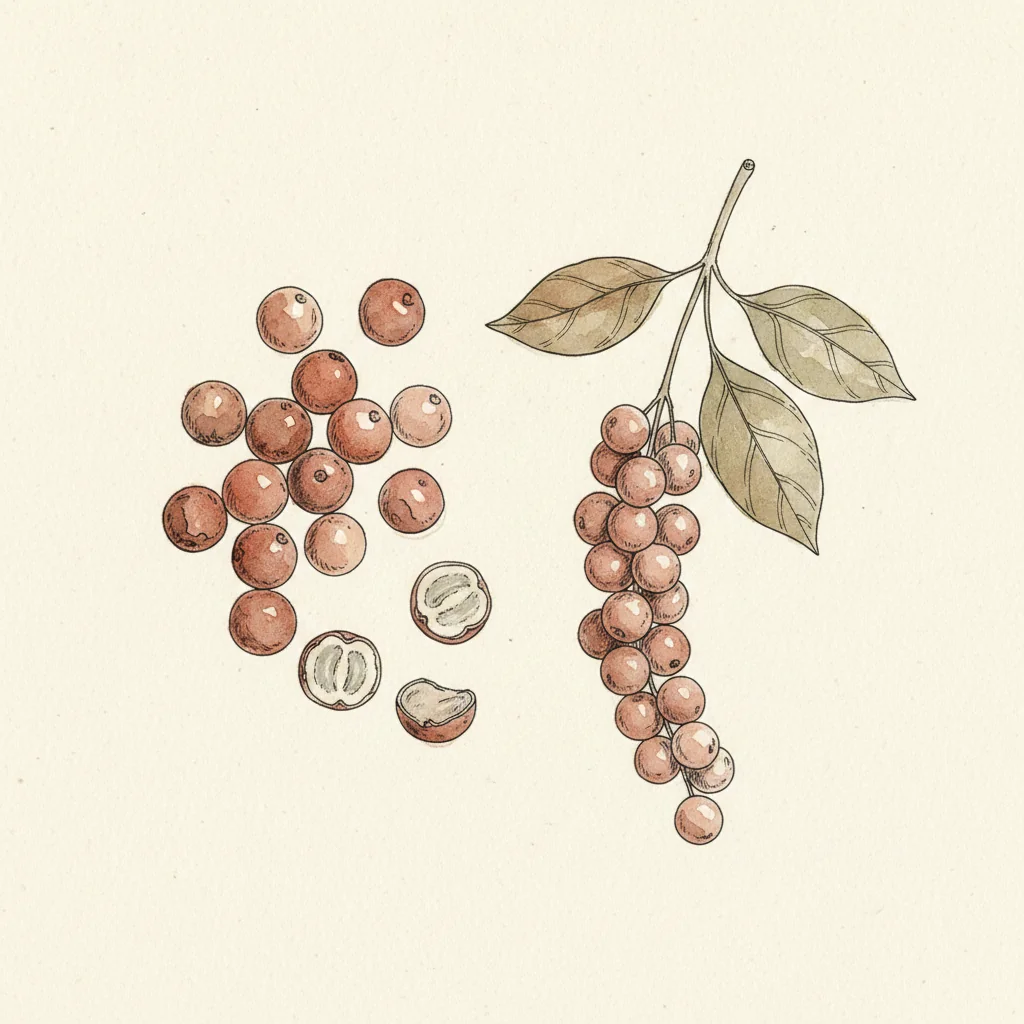
Pepper · Berry
Pink Peppercorns
Réunion Island, western highlands, France
sweet juniper · pine resin · anise
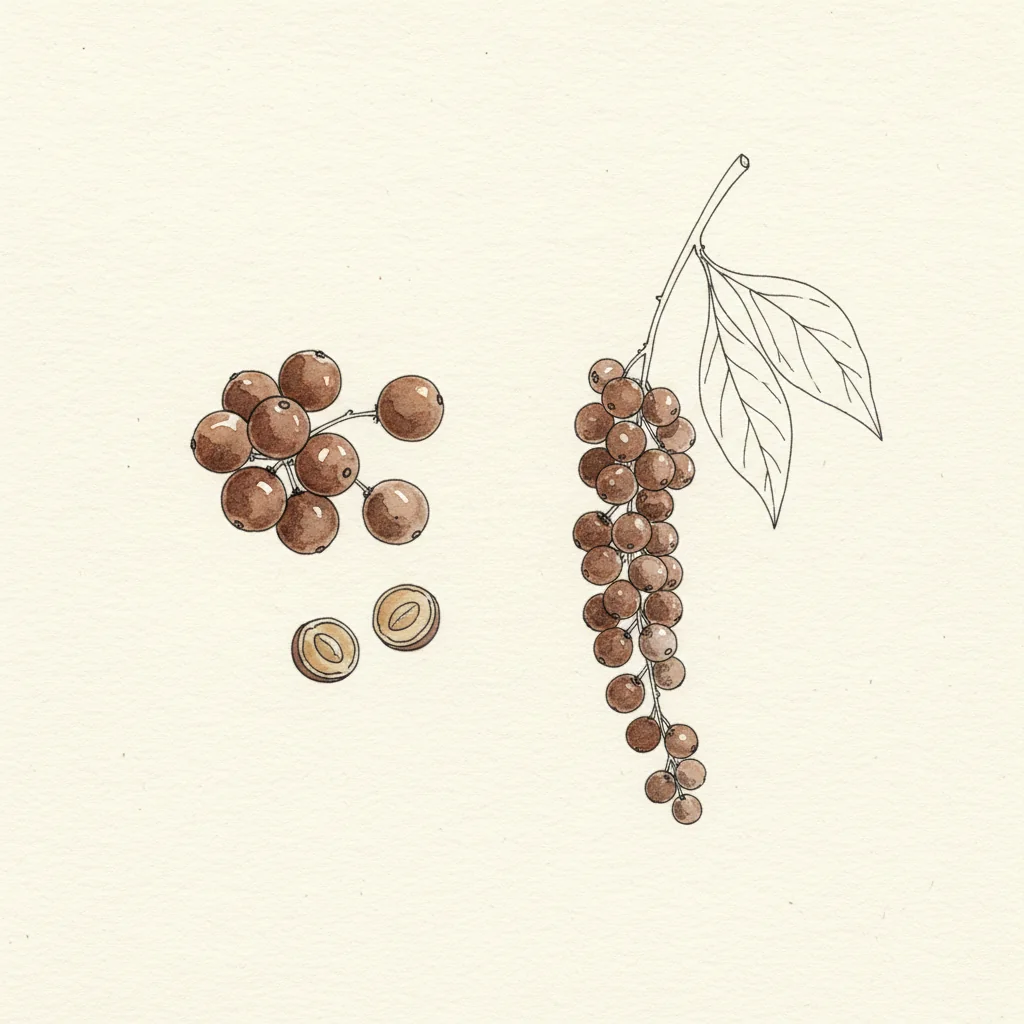
Pepper · Pepper cousin
Timut Pepper
Eastern hill districts of Dolakha and Sindhupalchok, Nepal
pink grapefruit · passion fruit · yuzu
Our verdict
Pink for color and soft perfume, Timut for explosive citrus.
At a glance
| Criterion | Pink Peppercorns | Timut Pepper |
|---|---|---|
| Origin | France, Réunion Island (Schinus terebinthifolius) | Nepal, Dolakha & Sindhupalchok (Zanthoxylum armatum) |
| Family | Brazilian pepper-tree berry, not true pepper | Zanthoxylum citrus cousin, not true pepper |
| Flavor | Sweet juniper, pine resin, anise, dried flower | Pink grapefruit, passion fruit, yuzu |
| Sensation | Almost sweet, light resinous astringency, zero heat | Cool, bright fizz on the lips — far gentler than Sichuan |
| Intensity | 4/10 — soft, short resinous tail | 7/10 — long tropical-citrus finish |
| Best use | Salmon gravlax, fish carpaccio, goat cheese, fruit | Raw scallops, ceviche, oysters, citrus desserts, milk chocolate |
| Price | ~$7.50 / 1.2 oz jar | ~$10 / 1 oz jar |
When to choose Pink Peppercorns
Reach for pink peppercorns when you want a soft, sweet perfume and a pretty rose color more than any flavor punch. Pink peppercorns aren't pepper at all: they're the dried fruit of a Brazilian pepper tree that ran wild on Réunion Island in the 1800s, so there's zero piperine and zero heat. What you get instead is a soft, sweet nose of juniper, pine resin and anise with candied citrus and dried flower, almost sweet on the attack with a light resinous astringency on the finish and no heat whatsoever, around 4 out of 10 over a short-to-medium resinous tail. The bright rose color is half the point: it's what turned gravlax and goat cheese pink for a generation of chefs. Use it raw, as a finish: a pinch crushed between the fingers over the finished plate, on salmon gravlax, fish carpaccio, fruit salad, fresh cheeses, citrus vinaigrettes and goat cheese. Keep it off already heavily spiced dishes, out of long cooks where the perfume burns off, and away from rare red meat, where its delicate sweetness vanishes. Store it in an airtight opaque jar, where it keeps about 12 months with little loss, and crush to order. At about $7.50 a 1.2 oz jar it's an inexpensive finishing berry. Be clear-eyed about what you're buying: pink peppercorns are for the look and the soft perfume, not the bite or any real intensity. If a dish wants prettiness and a whisper of sweet juniper — gravlax on a board, a goat-cheese salad, a fruit plate — this is your berry. If you want flavor that actually carries, read on, because Timut does far more.
When to choose Timut Pepper
Reach for Timut when you want a finishing pepper that smells like someone cut a grapefruit open in the room. Timut is the Nepali berry from the eastern hill districts of Dolakha and Sindhupalchok, not a true pepper but a Zanthoxylum cousin, and it carries an explosive citrus nose — pink grapefruit, passion fruit and yuzu — with only a faint cool tingle, far less than its relative Sichuan, so the citrus carries the bite rather than any numbing buzz, a cool bright fizz on the lips over a long tropical-citrus finish that lingers without heat, around 7 out of 10. That combination makes it a finishing spice, used raw, for raw scallops and crudo, ceviche and fish tartare, oysters, milk chocolate and ganache, lime sorbet and roasted pineapple, and a squeeze of citrus over white fish — one or two berries crushed in a mortar, scattered raw over the finished plate. Keep it out of long braises and stews, where the volatile aroma cooks off, away from anything already sharply acidic, and off fatty red meat that buries the citrus. The aroma is very volatile, so store it in an airtight opaque jar away from light and heat and use it within about 12 months. At about $10 a 1 oz jar, with a single crushed berry going a long way, it's a small splurge that punches far above pink peppercorns on flavor. Between these two, the difference is intensity and intent: pink peppercorns are mostly color and soft perfume, while Timut is a genuine flavor event — that grapefruit explosion is the whole reason to buy it. If you want a raw-fish or citrus-dessert finish that people actually notice and ask about, Timut is the one. If you want a pretty plate with a gentle sweet whisper, pink does that for less.
Where to buy?
Pink Peppercorns
Links checked on
| Merchant | Price | Action |
|---|---|---|
| Spicewalla | — | Spicewalla |
| Amazon US | — | Amazon US |
| Steenbergs UK | — | Steenbergs UK |
Prices may vary depending on current promotions on the merchant site.
Timut Pepper
Links checked on
| Merchant | Price | Action |
|---|---|---|
| Burlap & Barrel | — | Burlap & Barrel |
| Sous Chef UK | — | Sous Chef UK |
Prices may vary depending on current promotions on the merchant site.
Frequently asked questions
- Do either of these have heat?
- Not in the chili sense. Pink peppercorns have zero heat — no piperine at all. Timut has only a faint cool tingle, far gentler than Sichuan, so the citrus carries it rather than any burn. Both are about aroma and effect, not fire.
- Can I use pink peppercorns instead of Timut on ceviche?
- It won't do the same thing. Timut's explosive grapefruit-yuzu nose is what makes raw fish and ceviche sing; pink peppercorns bring soft juniper-pine perfume and color but little citrus punch. For ceviche, reach for Timut.
- Why are pink peppercorns mostly used for looks?
- Their bright rose color prettifies gravlax, goat cheese and salads, while the flavor — sweet juniper, pine, anise — is soft and short. They're a low-intensity finishing berry: buy them for the color and gentle perfume, not for a flavor that carries a dish.
- Which keeps longer?
- Pink peppercorns hold about 12 months with little loss. Timut's aroma is very volatile, so although it also keeps around 12 months, it fades faster in practice — store it airtight, away from light, and crush both to order.
The best pairings
With Pink Peppercorns
With Timut Pepper
Comparison prepared according to our methodology. Sponsored purchase links — see our affiliations.