
Comparison
Sichuan vs Tasmanian pepperberry — which to choose?
Neither is true pepper. Reach for Sichuan (Zanthoxylum simulans, about $11 a bag) when you want the buzzing ma tingle and bright grapefruit over noodles, tofu and chili oil. Reach for Tasmanian pepperberry (Tasmannia lanceolata, around $14 a jar) when you want dark blueberry-and-licorice heat on game, duck and chocolate. Different jobs, no overlap.
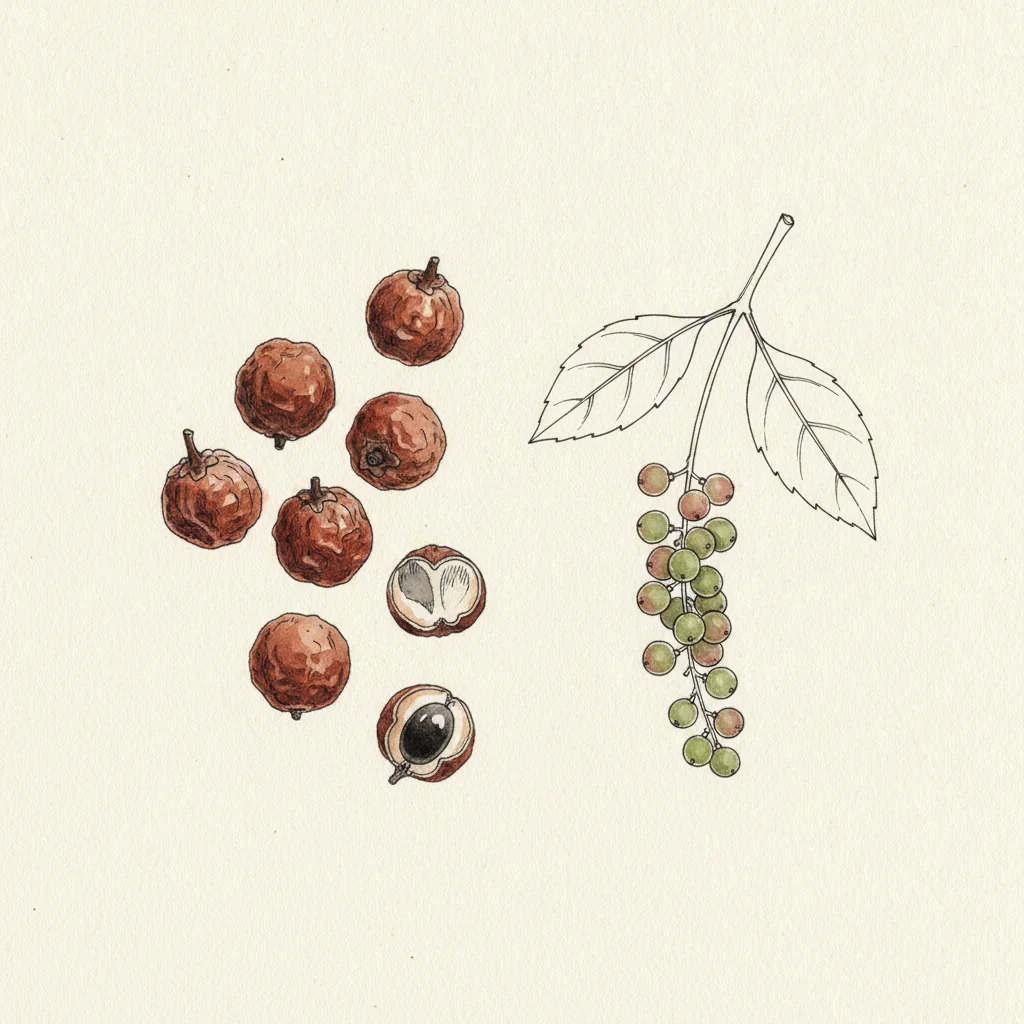
Pepper · Pepper cousin
Sichuan Peppercorns
Sichuan Province, Hanyuan and Maowen counties, China
pink grapefruit · lime zest · fresh coriander
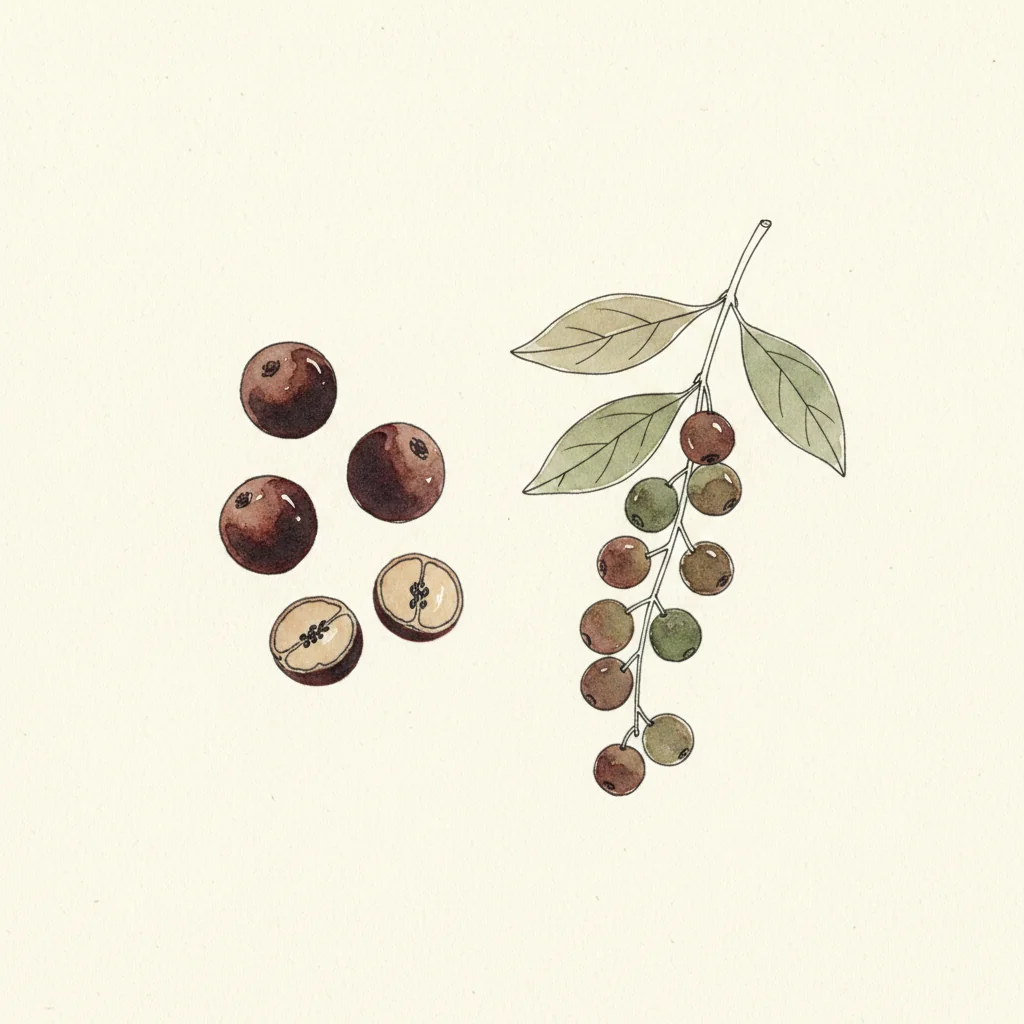
Pepper · Berry
Tasmanian Pepperberry
Tasmania, temperate rainforest understory, Australia
wild blueberry · black licorice · violet ink
Our verdict
Sichuan for the numbing fizz on Asian plates; pepperberry for dark berry heat on game and chocolate.
At a glance
| Criterion | Sichuan Peppercorns | Tasmanian Pepperberry |
|---|---|---|
| Botany | Zanthoxylum simulans, a citrus cousin (not pepper) | Tasmannia lanceolata, a rainforest shrub (not pepper) |
| Origin | China, Hanyuan and Maowen, Sichuan | Australia, Tasmanian rainforest understory |
| Intensity | 8/10 — buzzing ma numbness, not heat | 9/10 — delayed heat that floods and lingers |
| Main notes | Pink grapefruit, lime zest, fresh coriander | Wild blueberry, black licorice, violet ink |
| Best on | Mapo tofu, kung pao, chili oil, dan dan noodles | Venison, seared duck, blue cheese, dark chocolate |
| Price | ~$11 / 4 oz bag | ~$14 / small jar |
| Value | Worth it — toast first or it's flat | Worth it — one or two berries dose a whole dish |
When to choose Sichuan Peppercorns
Pick Sichuan when the dish is Asian and you want sensation, not flavor heat. The defining trait is the ma effect: a buzzing, electric tingle that numbs the lips like a fresh battery on the tongue. Nothing Tasmanian pepperberry does comes close to that vibration. Four scenarios where Sichuan wins outright. First, mapo tofu — the numbness is half the dish, paired with chili heat for the classic mala. Second, home chili oil, where toasted husks bloom in hot oil and carry grapefruit and lime through everything you spoon it over. Third, kung pao chicken or dan dan noodles, where the citrus top notes cut the soy and fat. Fourth, seared scallops, where a light scatter of crushed toasted husks turns a plain plate electric. The non-negotiable move: toast the husks 60 to 90 seconds in a dry pan, then crush in a mortar. Skip the toast and you've wasted them — raw Sichuan is dusty and dull. Dose one to two grams per person. Avoid it on delicate cream sauces and soft cheeses, where the numbness has nothing to grip, and on long braises, where the bright citrus top notes simply cook off. At about $11 for a 4 oz bag it's cheap for the effect. Crucially, never stack it on anything already mouth-numbing — you double the freeze and lose all the flavor underneath. If your dish is a stir-fry, a noodle bowl or a pot of chili oil, this is the grain. If it's game, duck or a chocolate dessert, you want the pepperberry instead — Sichuan would feel out of place and its citrus would clash with the dark fruit you're building.
When to choose Tasmanian Pepperberry
Pick Tasmanian pepperberry when the plate is dark, gamey or sweet and you want heat with body behind it. The intensity is several times that of black pepper, and it arrives strangely: a delayed heat that builds for a few seconds, then floods in and lingers far longer than pepper. The flavor is wild blueberry, black licorice and violet — a berry, not a citrus. Four scenarios where it wins. First, venison and game, where the dark fruit meets the iron of the meat. Second, seared duck breast, where the licorice edge cuts the fat. Third, blue cheese or a fresh goat cheese on toast, where the berry plays against the tang. Fourth, dark chocolate ganache, where a single crushed berry reads almost like cassis. The move: crush just one or two berries, never a pinch — the intensity is several times black pepper's, so a heavy hand turns a sauce bitter and floods the back of the throat. It also bleeds purple, so keep it off pale or clear sauces unless you want a bruised color. Avoid it on delicate white fish, which it bulldozes, and on bright acidic salads, where the dark fruit sulks. At around $14 a jar it looks pricey, but two berries dose a whole dish, so the jar lasts. If your plate is Asian, fizzing and citrus-led, this is the wrong grain — reach for Sichuan, whose numbing buzz and grapefruit belong on noodles and tofu, not on a venison sauce. These two never substitute for each other.
Where to buy?
Sichuan Peppercorns
Links checked on
| Merchant | Price | Action |
|---|---|---|
| Amazon US | — | Amazon US |
| Sous Chef UK | — | Sous Chef UK |
Prices may vary depending on current promotions on the merchant site.
Tasmanian Pepperberry
Links checked on
| Merchant | Price | Action |
|---|---|---|
| Amazon US | — | Amazon US |
| Steenbergs UK | — | Steenbergs UK |
Prices may vary depending on current promotions on the merchant site.
Frequently asked questions
- Is either one actually pepper?
- No. Sichuan is the dried husk of Zanthoxylum simulans, a citrus relative, and Tasmanian pepperberry is the berry of Tasmannia lanceolata, a rainforest shrub. Neither is Piper nigrum. They're called pepper for their bite, not their botany.
- Can I swap one for the other?
- Not really. Sichuan brings a numbing buzz and grapefruit citrus; pepperberry brings dark blueberry-licorice heat. Use Sichuan on Asian dishes, chili oil and noodles. Use pepperberry on game, duck and dark chocolate. Swapping them throws the dish off.
- Why does my Sichuan taste like nothing?
- You skipped the toast. Sichuan needs 60 to 90 seconds in a dry pan to wake up the aromatic oils, then a crush in the mortar. Raw out of the bag it's dusty and flat. That one step is the difference.
- Which is hotter?
- Pepperberry, by a wide margin — its heat is several times black pepper's and lingers. Sichuan barely registers as heat at all; its signature is numbness, the ma tingle, not burn. Different sensations entirely.
The best pairings
With Sichuan Peppercorns
With Tasmanian Pepperberry
Comparison prepared according to our methodology. Sponsored purchase links — see our affiliations.