
Red Sichuan Peppercorns (Hanyuan & Maowen, China)
In brief — Sichuan peppercorns aren't pepper at all. They're the dried husk of a citrus cousin, and they deliver the ma effect: a fizzing, electric tingle that numbs the lips like a fresh battery on the tongue. Bright with grapefruit and lime zest, they carry mapo tofu, kung pao chicken and home chili oil. Toast them first or you've wasted them. A 4 oz bag runs about $11. Its aromatic profile develops notes of pink grapefruit, lime zest, fresh coriander, extended by young wood and mandarin blossom, for an intensity of 8/10. In the kitchen, it's best added as a finishing touch and it pairs with mapo tofu, kung pao chicken, home chili oil. Recommended dosage: 1 to 2 g per person; toast the husks 60 to 90 seconds in a dry pan, then crush in a mortar. Expect from $8.00 to $15.00 per 4 oz / 113 g bag (median $11.00).
Origin : Sichuan Province, Hanyuan and Maowen counties, China
Zanthoxylum simulans
« The ma tingle is a category of its own, and the grapefruit-lime nose earns the hype. Toast it or it's flat. Quality swings hard by batch, so dodge seed-heavy bags. Buy small, replace often. »
Sichuan peppercorns aren't pepper at all. They're the dried husk of a citrus cousin, and they deliver the ma effect: a fizzing, electric tingle that numbs the lips like a fresh battery on the tongue. Bright with grapefruit and lime zest, they carry mapo tofu, kung pao chicken and home chili oil. Toast them first or you've wasted them. A 4 oz bag runs about $11.
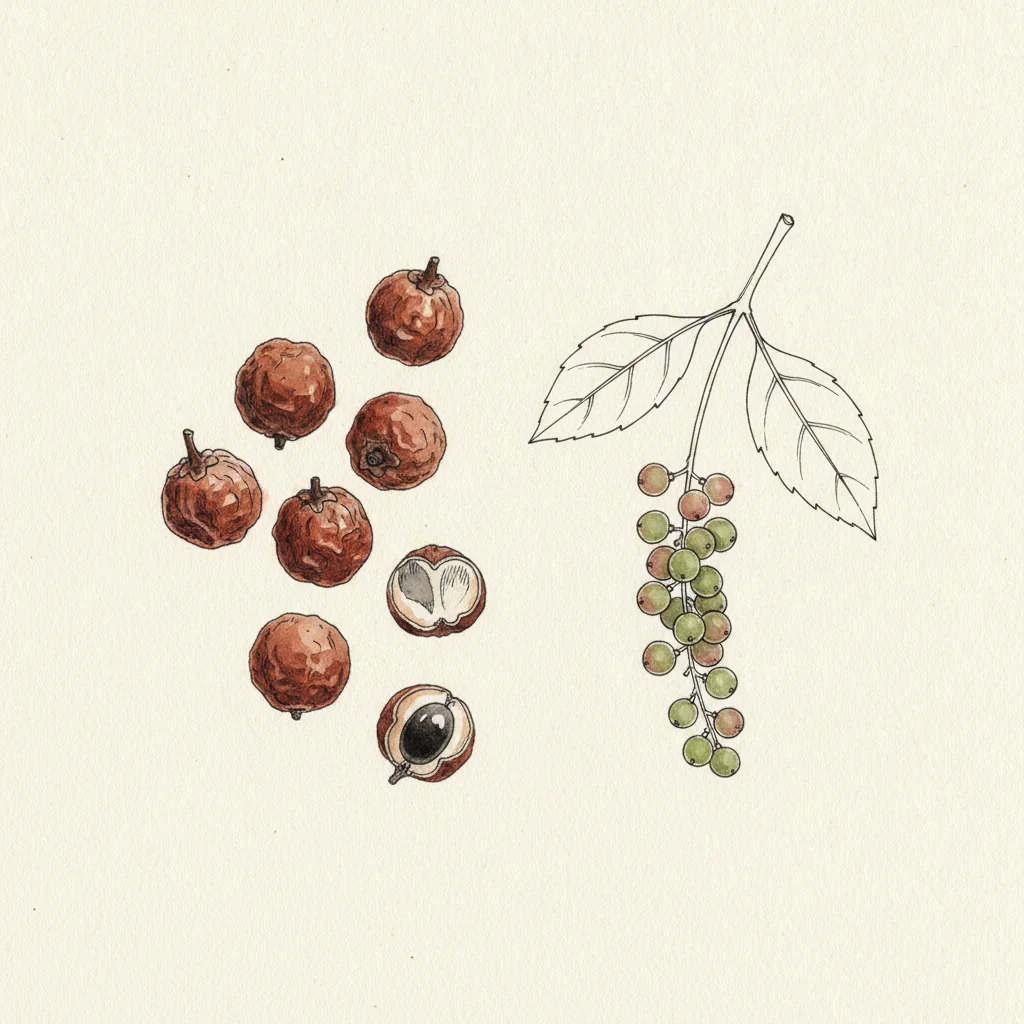
Pepper · Pepper cousin
Sichuan Peppercorns
Sichuan Province, Hanyuan and Maowen counties, China
pink grapefruit · lime zest · fresh coriander
Aromatic profile
| Family | Zanthoxylum |
|---|---|
| Intensity | ●●●●○ (8/10) |
| Main notes | pink grapefruit · lime zest · fresh coriander |
| Secondary notes | young wood · mandarin blossom |
| Mouthfeel | the ma effect: a buzzing, electric tingle that numbs the lips and tongue like a fresh battery |
| Finish length | long, a vibrating fizz that hums on the lips for several minutes |
Culinary use
- When to add : finishing
- Dosage : 1 to 2 g per person; toast the husks 60 to 90 seconds in a dry pan, then crush in a mortar
- Ideal pairings : mapo tofu, kung pao chicken, home chili oil, dan dan noodles, seared scallops, stir-fried greens
- Avoid with : anything already mouth-numbing (you double the freeze and lose the flavor), delicate cream sauces and soft cheeses, long braises, where the citrus top notes cook off
The grain in detail
Sichuan peppercorns, or huājiāo in Mandarin, have no botanical link to Piper nigrum. They're the dried husk of a berry in the Rutaceae family, a cousin of citrus, which is exactly why they smell of orange and lemon rather than of black pepper. The husks are picked ripe, split open, sun-dried, then sorted to remove the bitter black seeds. Here's why that sorting matters: the flavor lives entirely in the red-brown husk, and the gritty inner seed brings only an unpleasant bitterness, so a good batch is open, rust-colored and seed-free. Hanyuan county, at 1,200 meters in Sichuan, has been the reference terroir since the Tang dynasty, when the spice was paid as imperial tribute; Maowen, higher and cooler, gives a more floral, perfumed grain. Crack the husks and you get an immediate nose of pink grapefruit, lime zest and fresh coriander. But the point isn't the smell. It's the mouth. A molecule called hydroxy-alpha-sanshool sets off the ma (麻) effect, a vibrating tingle that progressively numbs the lips and tongue. It sits somewhere between taste and touch, and it's the soul of Sichuan cooking: the famous ma la (麻辣) pairs that buzz with fresh chili heat. To wake the aromatics, toast the husks 60 to 90 seconds in a dry pan until a citrus scent lifts off, then crush them in a mortar, never before. Use them on mapo tofu, kung pao chicken, dan dan noodles and home chili oil, but also off-script on seared scallops or a ceviche, where the grapefruit note shines. In the US the spice was banned from import for decades, from 1968 to 2005, over a citrus-canker quarantine, which is why it reached American kitchens late; today legal heat-treated stock is everywhere.
History & origin
Grown in Sichuan for more than 2,000 years, huājiāo appears in the Shijing, the 10th-century-BCE book of Chinese poetry, as a symbol of fertility. The US banned imports from 1968 to 2005 over fears the husks could carry citrus canker; the ban lifted once a 158°F (70°C) heat-treatment rule was set, which is why every legal bag now sold in America is steam- or heat-sterilized. Hanyuan county, at 1,200 meters, remains the quality epicenter, with family growers who still sun-dry the husks the old way.
Provenance & authenticity
What sets the real thing apart — appellation, species and verification cues.
- Species
- Zanthoxylum simulans
How to verify the real one
- Zanthoxylum genus (not a true Piper pepper)
- Sichuan province origin (Hanyuan/Maowen)
- numbing (mala) sensation = sanshool markers
Indicative price
Reference format : 4 oz / 113 g bag — from $8.00 to $15.00 (median : $11.00).
Storage
Airtight jar away from light. Holds its tingle and citrus lift for about 12 months, then fades fast, so buy small and often.
Where to buy?
Where to buy it
Links checked on
| Merchant | Price | Action |
|---|---|---|
| Amazon US | — | Amazon US |
| Sous Chef UK | — | Sous Chef UK |
Prices may vary depending on current promotions on the merchant site.
Alternatives if unavailable
Tags
- China
- Sichuan
- Zanthoxylum
- mock pepper
- ma effect
- numbing
- huajiao
Frequently asked questions
- How do you store Sichuan Peppercorns?
- Airtight jar away from light. Holds its tingle and citrus lift for about 12 months, then fades fast, so buy small and often.
- What dosage for Sichuan Peppercorns?
- 1 to 2 g per person; toast the husks 60 to 90 seconds in a dry pan, then crush in a mortar
- When should you add Sichuan Peppercorns in cooking?
- It's best used finishing.
- What should you avoid pairing Sichuan Peppercorns with?
- Avoid with: anything already mouth-numbing (you double the freeze and lose the flavor), delicate cream sauces and soft cheeses, long braises, where the citrus top notes cook off.
Go further
The dishes where this sichuan peppercorns shines
Also a recommended alternative for
As a complementary pairing with
See every dish where this product is mentioned →
Other peppers to discover
Featured in these gift sets
Page prepared according to our methodology. Purchase links marked sponsored and liable to earn a commission — details on our Affiliations page.