
Comparison
Sichuan vs Timut pepper: which citrusy pepper?
Both are citrusy Zanthoxylum, but the balance flips. Sichuan leads with the numbing ma buzz, citrus second — built for mapo tofu and chili oil. Timut leads with explosive grapefruit-passion fruit aroma and only a faint tingle — built for raw fish, oysters and citrus desserts. Sichuan for numbing mala; Timut for aromatic finishing.
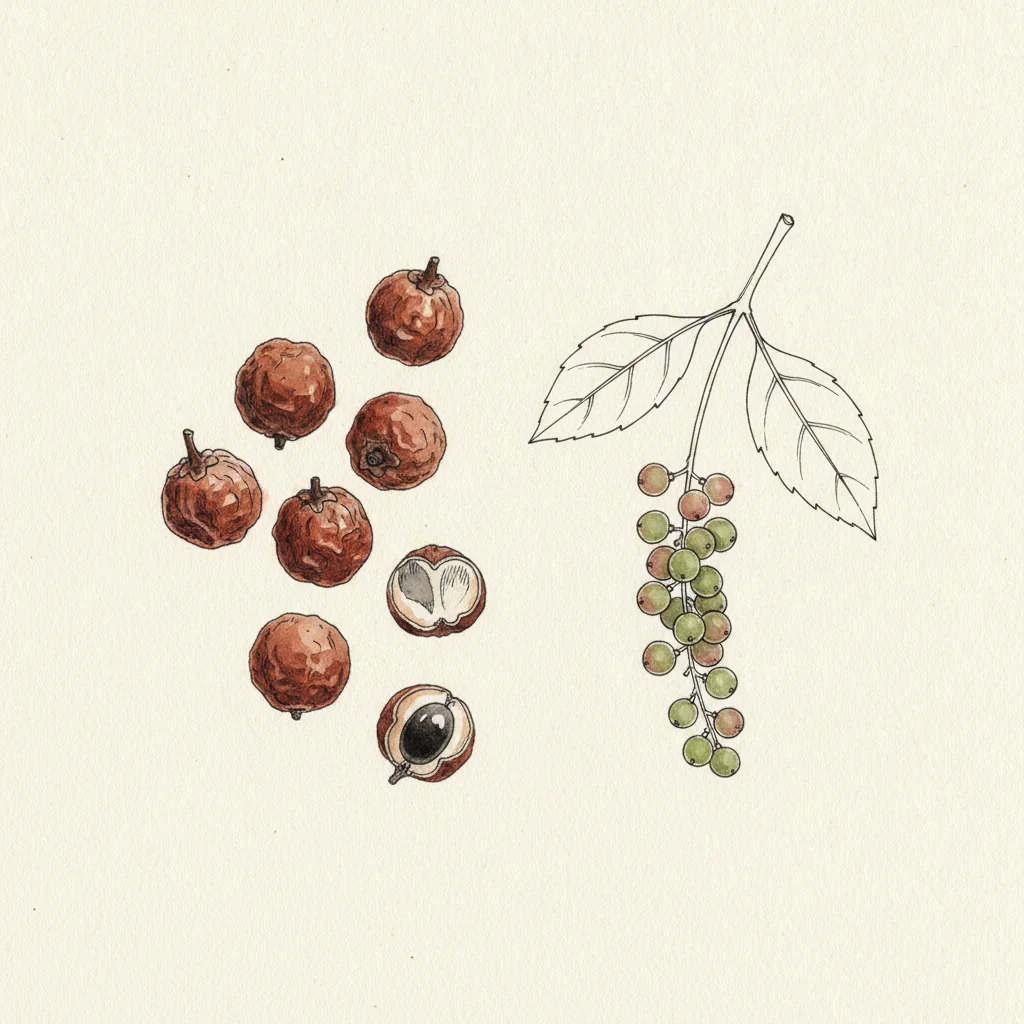
Pepper · Pepper cousin
Sichuan Peppercorns
Sichuan Province, Hanyuan and Maowen counties, China
pink grapefruit · lime zest · fresh coriander
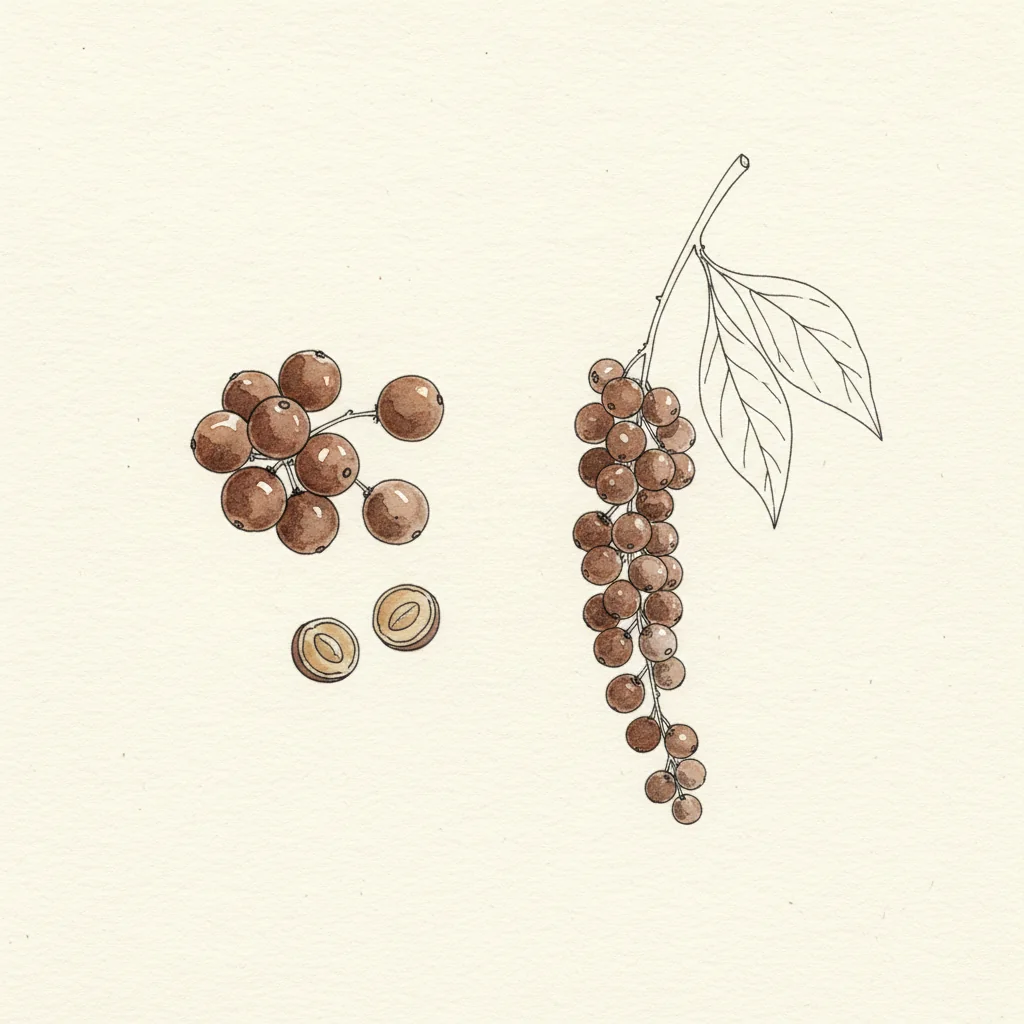
Pepper · Pepper cousin
Timut Pepper
Eastern hill districts of Dolakha and Sindhupalchok, Nepal
pink grapefruit · passion fruit · yuzu
Our verdict
Sichuan when you want the numbing buzz; Timut when you want explosive citrus with a faint tingle.
At a glance
| Criterion | Sichuan Peppercorns | Timut Pepper |
|---|---|---|
| Botanical name | Zanthoxylum simulans | Zanthoxylum armatum |
| Origin | Sichuan Province, China | Dolakha & Sindhupalchok, Nepal |
| Intensity | 8/10 — strong numbing ma buzz | 7/10 — faint cool fizz, citrus-led |
| Main notes | Pink grapefruit, lime zest, fresh coriander | Pink grapefruit, passion fruit, yuzu |
| Balance | Tingle leads, citrus second | Citrus leads, tingle barely there |
| Best use | Mapo tofu, kung pao, home chili oil | Raw scallops, ceviche, oysters, ganache |
| Median price | ~$11 / 4 oz | ~$10 / small jar |
When to choose Sichuan Peppercorns
Reach for Sichuan when the numbing buzz is the goal. Its ma effect — a buzzing, electric tingle that numbs the lips and tongue like a fresh battery — is far stronger than Timut's faint fizz, and it's the engine of Chinese mala cooking. The husks are bright with pink grapefruit, lime zest and fresh coriander, but here the tingle leads and the citrus sits behind it. Use it where that freeze is structural: mapo tofu, kung pao chicken, dan dan noodles and home chili oil, paired with dried chilies for the numbing-hot balance, plus seared scallops and stir-fried greens. Toast the husks 60 to 90 seconds and crush them — raw, they're dusty and dead — and dose 1 to 2 g per person. Against Timut, Sichuan is the one with real numbing power and a more savory, coriander-edged citrus; Timut is almost all aroma. So when a dish needs the mouth to buzz — Sichuanese food, chili oil, anything mala — Sichuan is right and Timut is too gentle to carry it. The catch: skip it on delicate cream sauces and soft cheeses where the freeze fights the fat, never double up on something already numbing, and add it at the finish since long braises cook off the citrus. A 4 oz bag runs about $11. Reach for Sichuan for the buzz and the Chinese kitchen; reach for Timut when you want the grapefruit perfume without the freeze.
When to choose Timut Pepper
Reach for Timut when you want explosive citrus and almost no tingle. Timut is the Nepali berry that smells like someone cut a grapefruit open in the room — passion fruit and yuzu on top — and it carries only a faint cool fizz on the lips, far less than Sichuan's full numbing buzz. That balance is the whole reason to choose it over Sichuan: the citrus leads and the tingle barely registers, so it perfumes rather than freezes. That makes it a finishing spice for raw and delicate plates where Sichuan's numbing punch would be wrong: raw scallops and crudo, ceviche and fish tartare, oysters, milk chocolate and ganache, lime sorbet and roasted pineapple, or a single squeeze of citrus over white fish. Crush one or two berries in a mortar and scatter them raw over the finished plate — a single berry goes a long way. Against Sichuan, Timut is the aromatic, gentle cousin: huge grapefruit nose, almost no freeze, used raw rather than toasted. So it's the wrong tool for mala cooking that needs the buzz — for mapo tofu or chili oil, that's Sichuan's job — and the right one when you want bright citrus aroma on something raw or sweet. The catch: long braises and stews cook off the volatile aroma, anything already sharply acidic clashes, and fatty red meat buries the citrus. A small jar runs about $10. Reach for Timut when the plate is raw, delicate or sweet and you want grapefruit perfume; reach for Sichuan when you want the mouth to go numb.
Where to buy?
Sichuan Peppercorns
Links checked on
| Merchant | Price | Action |
|---|---|---|
| Amazon US | — | Amazon US |
| Sous Chef UK | — | Sous Chef UK |
Prices may vary depending on current promotions on the merchant site.
Timut Pepper
Links checked on
| Merchant | Price | Action |
|---|---|---|
| Burlap & Barrel | — | Burlap & Barrel |
| Sous Chef UK | — | Sous Chef UK |
Prices may vary depending on current promotions on the merchant site.
Frequently asked questions
- What's the difference between Sichuan and Timut pepper?
- Both are citrusy Zanthoxylum, but the balance flips. Sichuan leads with a strong numbing ma buzz and citrus behind it; Timut leads with explosive grapefruit aroma and only a faint tingle. Sichuan is for mala cooking, Timut for aromatic raw finishing.
- Which is more numbing?
- Sichuan, by a wide margin. Its ma buzz numbs the lips like a battery, while Timut barely fizzes — its appeal is the grapefruit-passion-fruit nose, not the tingle.
- Can Timut replace Sichuan in Chinese cooking?
- No. Timut is too gentle to deliver the numbing punch that mapo tofu, chili oil and dan dan noodles need. Use Timut for raw fish, oysters and citrus desserts instead; keep Sichuan for mala.
- Do you toast Timut like Sichuan?
- No. Sichuan must be toasted and crushed to come alive. Timut is crushed raw and scattered over a finished plate to keep its volatile citrus aroma intact — one berry goes a long way.
The best pairings
With Sichuan Peppercorns
With Timut Pepper
Comparison prepared according to our methodology. Sponsored purchase links — see our affiliations.