
Comparison
Tellicherry vs Kampot black pepper: which to choose?
Both excellent, aimed at different palates. Tellicherry is the warm, cocoa-leather-citrus classic, about $10 for half a pound, the all-rounder behind Western spice blends. Kampot is fresher and brighter, eucalyptus and green citrus with a menthol finish, around $12 for 50 g. For everyday and Western cooking, Tellicherry. For a clean, aromatic lift on fish or steak, Kampot.
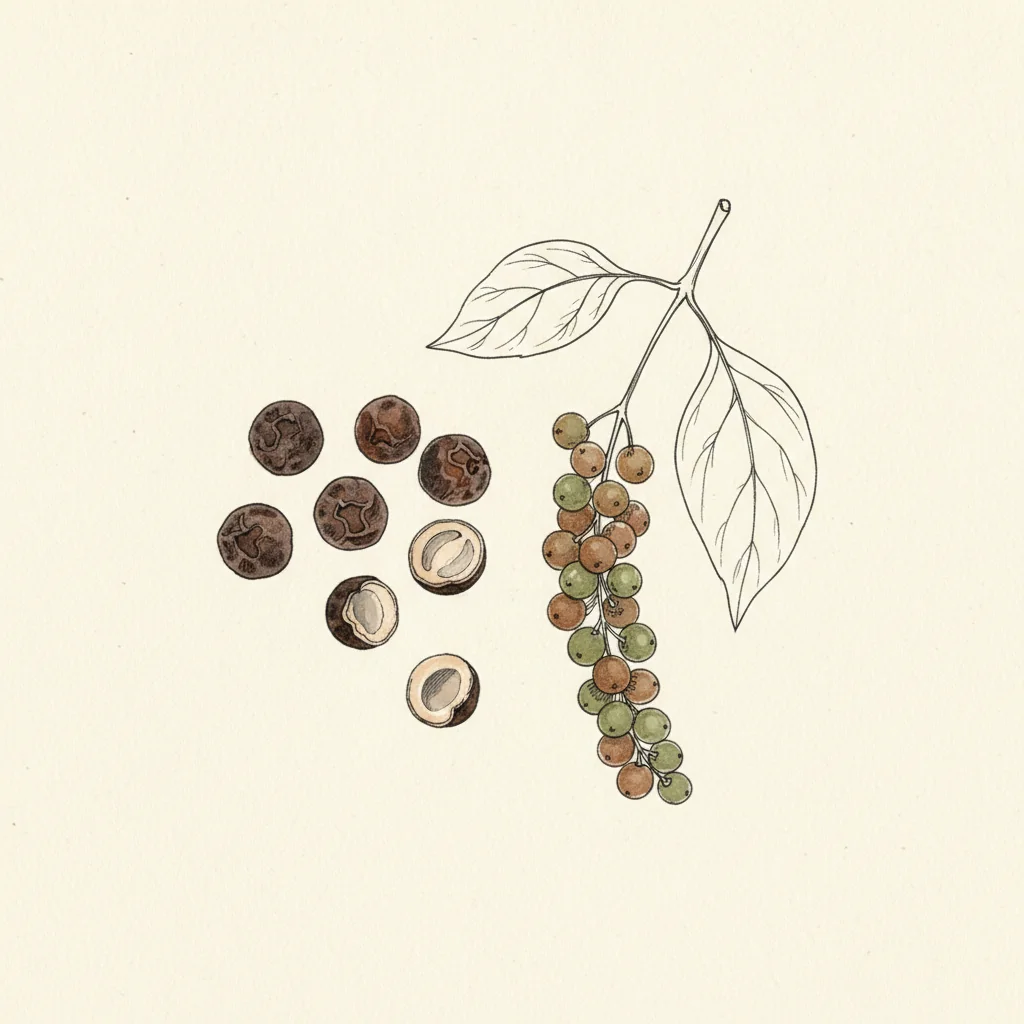
Pepper · Black pepper
Tellicherry Black Pepper
Malabar Coast, Kannur district (Kerala), India
dark cocoa · worn leather · candied citrus
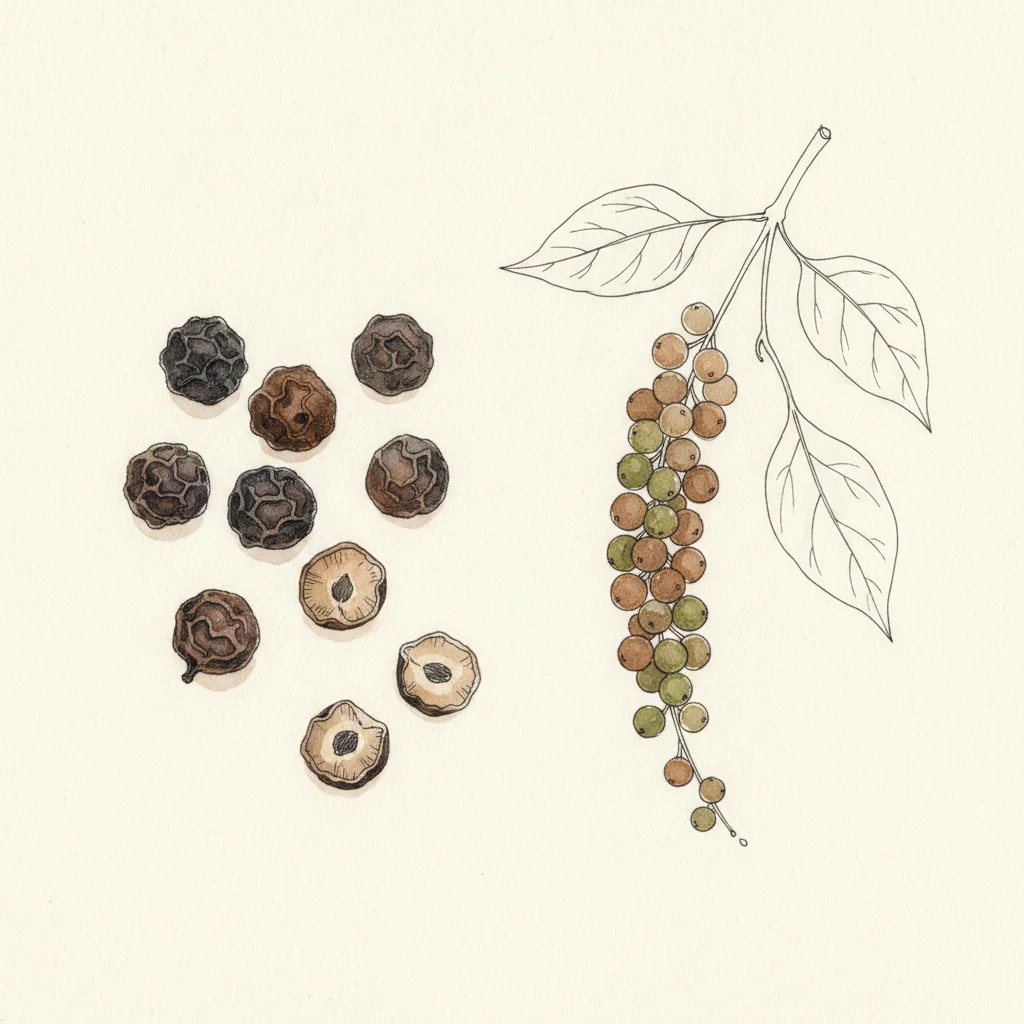
Pepper · Black pepper
Kampot Black Pepper
Kampot and Kep provinces, Cambodia (PGI)
eucalyptus · dried white flowers · green citrus
Our verdict
Tellicherry for warm classic depth and value; Kampot for a fresh, aromatic finish.
At a glance
| Criterion | Tellicherry Black Pepper | Kampot Black Pepper |
|---|---|---|
| Origin | Malabar Coast, Kerala, India (Piper nigrum) | Kampot and Kep provinces, Cambodia (Piper nigrum) |
| Appellation / grade | TGSEB grade: only berries over 4.25 mm, the biggest and ripest | PGI (Protected Geographical Indication) |
| Profile | Dark cocoa, worn leather, candied citrus, warm wood, raisin | Eucalyptus, dried white flowers, green citrus, cedar, light menthol |
| Intensity | 8/10 — a broad slow-building heat that fills the mouth | 8/10 — a clean fresh heat that wakes the palate |
| Heat character | Spreads slow and wide, never scorching, long chocolate-wood finish | Bright and fresh, airy menthol finish, never rough |
| Best use | Steak, BBQ rubs, curries and garam masala, carbonara, dark chocolate | Seared steak, sautéed crab, roasted fish, eggs, green mango salad |
| Price | ~$10 for an 8 oz jar | ~$12 for a 50 g tube |
| Value verdict | Imbattable everyday value, the Western-blend workhorse | A splurge per gram, worth it for the fresh aromatic top notes |
When to choose Tellicherry Black Pepper
Reach for Tellicherry when you want the warm, classic black pepper that anchors most Western cooking. Tellicherry is no longer a place on a map but a grade: TGSEB means only peppercorns over 4.25 mm make the cut, the biggest, ripest berries off India's Malabar Coast, and that ripeness is why they carry dark cocoa, worn leather and candied citrus over warm wood and raisin. The heat is the signature, a broad, slow-building warmth that fills the mouth without ever scorching, closing on a long chocolate-and-wood finish. This is the black pepper every Western spice blend was built on, so it is the all-rounder: cracked over seared ribeye and strip steak, worked into BBQ brisket and pulled-pork rubs, stirred through Indian curries and garam masala, finishing baked eggs and carbonara, grated over aged cheddar, even cracked onto 70% dark chocolate. Because it never turns harsh, it forgives a heavy hand and suits cooking as well as finishing, holding up through moderate heat better than the more volatile Kampot. The value case is the clincher: at about $10 for half a pound it is several times cheaper per gram than Kampot, so this is the jar you reach for daily without thinking about cost. Grind it coarse at the moment of use, two or three turns of the mill, and store it whole in an airtight opaque jar where it keeps about 24 months. If you buy one black pepper to do everything, make it Tellicherry; keep the Kampot for when you want a fresher, more aromatic lift.
When to choose Kampot Black Pepper
Reach for Kampot when you want a black pepper that smells of eucalyptus and green citrus instead of dusty heat. Grown in Cambodia's Kampot and Kep provinces and PGI-protected, it is picked just before it turns red and sun-dried for a few days, which gives a clean, bright bite that wakes meat up without flattening it, plus an airy menthol finish over notes of dried white flowers, cedar and green citrus. That freshness is the whole reason to choose it over Tellicherry: where the Indian pepper brings warm cocoa-and-leather depth, the Kampot brings lift and aromatics, the reference grain for Asian cooking. It shines ground fresh over seared steak, sautéed crab, roasted fish, scrambled eggs, a green mango salad or aged cheese, two or three turns of the mill at the end of cooking or raw over the plate. Treat it as a finishing pepper: very long simmers cook off the fresh top notes that justify the price, and it clashes on dishes already heavy with eucalyptus or menthol, or in acidic marinades. The honest catch is cost: at about $12 for a 50 g tube it is a real splurge per gram, several times Tellicherry's price, so it is not the pepper you grind without a thought over everyday food. What you pay for is the aromatic top end, a clarity and freshness Tellicherry's warm, heavier profile does not have. Keep it whole in an opaque jar away from humidity and grind at the last moment, best within 24 months. Choose Kampot when the dish wants a bright, fragrant finish; choose Tellicherry when it wants warm depth or when value matters.
Where to buy?
Tellicherry Black Pepper
Links checked on
| Merchant | Price | Action |
|---|---|---|
| Amazon US | — | Amazon US |
| Spicewalla | — | Spicewalla |
| Steenbergs UK | — | Steenbergs UK |
Prices may vary depending on current promotions on the merchant site.
Kampot Black Pepper
Links checked on
| Merchant | Price | Action |
|---|---|---|
| Amazon US | — | Amazon US |
| Sous Chef UK | — | Sous Chef UK |
| Kampot Pepper USA | — | Kampot Pepper USA |
Prices may vary depending on current promotions on the merchant site.
Frequently asked questions
- Which black pepper is better, Tellicherry or Kampot?
- Neither is simply better; they are different. Tellicherry is warm and classic, with cocoa, leather and a broad slow heat, and it is the cheaper all-rounder. Kampot is fresher and brighter, with eucalyptus, green citrus and a menthol finish, and it is the aromatic splurge. Choose by the flavor you want.
- Is Kampot pepper worth the higher price?
- If you want its fresh, aromatic top notes, yes. At about $12 for 50 g it costs several times more per gram than Tellicherry, but it brings eucalyptus, green citrus and menthol that the warmer Tellicherry cannot. For a bright finishing pepper on fish or steak, it earns the spend; for everyday grinding, Tellicherry is better value.
- Which holds up better in cooking?
- Tellicherry. Its warm, deep profile and broad heat tolerate moderate cooking and forgive a heavy hand, which is why it anchors curries, rubs and braises. Kampot's fresh top notes cook off over very long simmers, so it is best used as a finishing pepper, ground at the end or raw over the plate.
- What does TGSEB mean on Tellicherry pepper?
- TGSEB is a grade, not a place. It stands for Tellicherry Garbled Special Extra Bold and means only peppercorns over 4.25 mm qualify, the biggest and ripest berries off the Malabar Coast. That size and ripeness are why Tellicherry carries its cocoa, leather and candied-citrus depth.
The best pairings
With Tellicherry Black Pepper
With Kampot Black Pepper
Comparison prepared according to our methodology. Sponsored purchase links — see our affiliations.