
Comparison
Tellicherry vs Sichuan peppercorns: what's the difference?
They aren't rivals, they're different spices. Tellicherry (Piper nigrum) gives a broad cocoa-and-leather heat for steak, curry and braises. Sichuan (Zanthoxylum) isn't pepper at all — it numbs your lips with a citrusy ma tingle, built for mapo tofu and chili oil. Most kitchens want both.
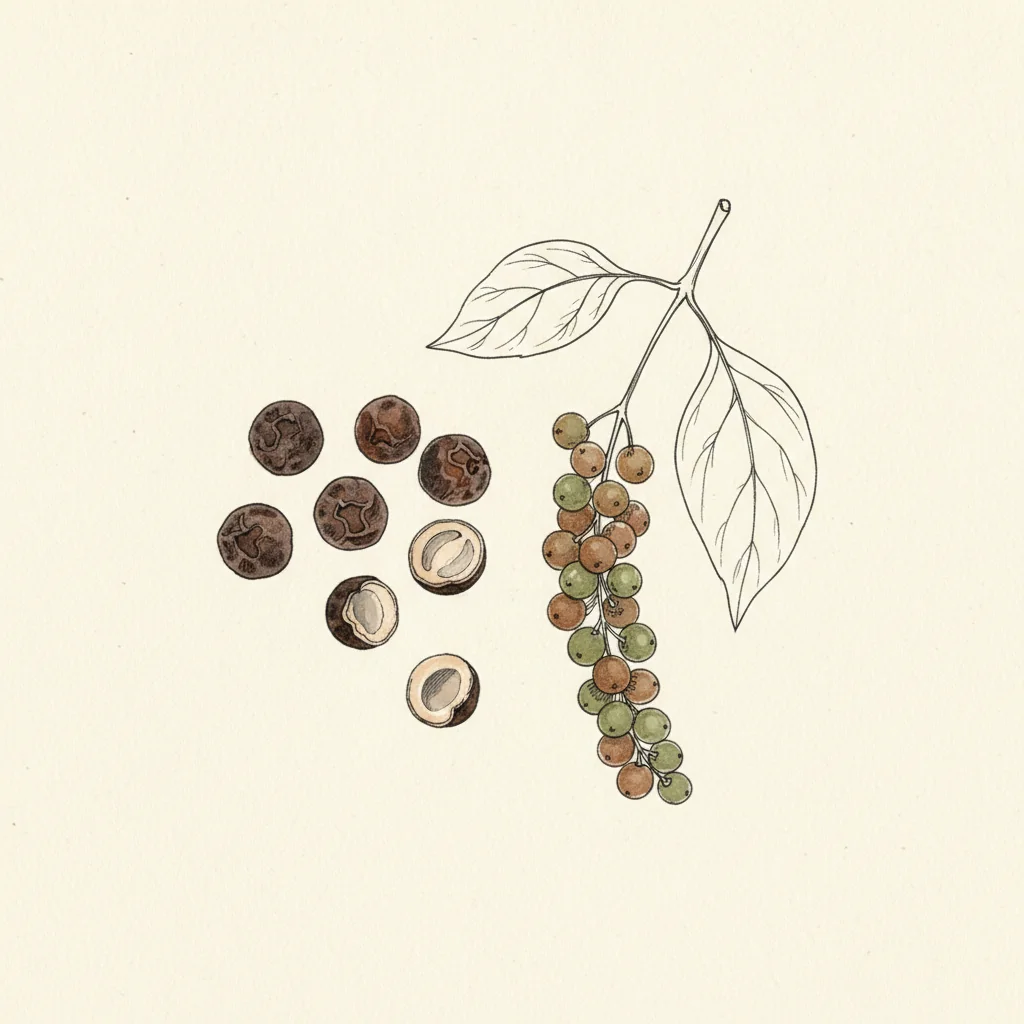
Pepper · Black pepper
Tellicherry Black Pepper
Malabar Coast, Kannur district (Kerala), India
dark cocoa · worn leather · candied citrus
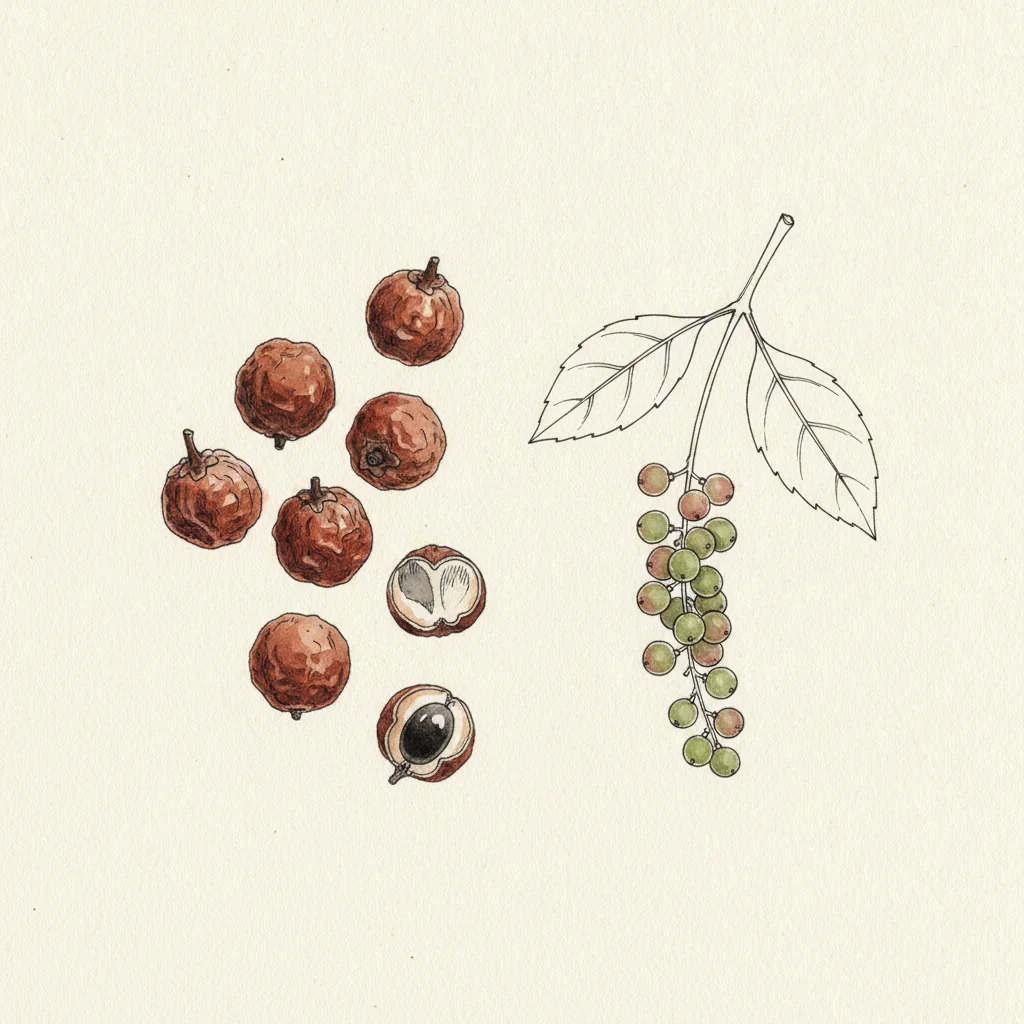
Pepper · Pepper cousin
Sichuan Peppercorns
Sichuan Province, Hanyuan and Maowen counties, China
pink grapefruit · lime zest · fresh coriander
Our verdict
Tellicherry for everyday heat; Sichuan for the numbing buzz no pepper can fake.
At a glance
| Criterion | Tellicherry Black Pepper | Sichuan Peppercorns |
|---|---|---|
| Botanical name | Piper nigrum (true pepper) | Zanthoxylum simulans (not pepper) |
| Origin | Malabar Coast, Kerala, India | Hanyuan & Maowen, Sichuan, China |
| Grade / mark | TGSEB, berries over 4.25 mm | Red husks, hand-sorted |
| Intensity | 8/10 — broad, slow-building heat | 8/10 — electric numbing ma tingle |
| Main notes | Dark cocoa, worn leather, candied citrus | Pink grapefruit, lime zest, fresh coriander |
| Best use | Seared steak, garam masala, braises | Mapo tofu, kung pao, home chili oil |
| Median price | ~$10 / 8 oz | ~$11 / 4 oz |
When to choose Tellicherry Black Pepper
Reach for Tellicherry when you want heat and depth, not a sensation. Its TGSEB berries — only the ripest, over 4.25 mm — carry dark cocoa, worn leather and candied citrus over a heat that spreads slow and wide instead of stabbing. That depth reads against beef fat, which is why it's the pepper a seared ribeye or strip steak needs. Crack it coarse from the mill and apply it late, after the sear, so the oils don't scorch. It's also the workhorse of Indian cooking: its chocolate-and-wood finish dialogues with cardamom, cumin and coriander in a garam masala, and it's one of the few peppers dense enough to survive a long braise without going flat — drop it late, or tie it in a cloth for a fond. Use it on BBQ brisket and pulled-pork rubs, baked eggs, carbonara, aged cheddar, even 70% dark chocolate. Where Tellicherry fails is freshness-led citrus: it has none of the cool lift you'd want on raw fish, and it'll bury a delicate cream sauce. Two or three turns of a coarse mill, cracked just before the plate, and a half-pound jar runs about $10 — the cheapest serious upgrade in the rack. If you want one pepper to do almost everything, this is it.
When to choose Sichuan Peppercorns
Reach for Sichuan when you want a sensation no true pepper can give: the ma effect, a buzzing electric tingle that numbs the lips and tongue like a fresh battery. It isn't pepper — it's the dried husk of a citrus cousin, bright with pink grapefruit, lime zest and fresh coriander. That tingle is the appeal of Chinese mala cooking. Use it in mapo tofu, kung pao chicken, dan dan noodles and home chili oil, where it pairs with dried chilies to build the classic numbing-hot balance. It also lifts seared scallops and stir-fried greens. The non-negotiable move: toast the husks 60 to 90 seconds in a dry pan, then crush them in a mortar — raw, they're dusty and dead, and you've wasted them. Dose 1 to 2 g per person. Where Sichuan fails is the long braise: its citrus top notes cook off, so add it at the finish, not the start. Skip it on delicate cream sauces and soft cheeses, where the freeze fights the fat, and never stack it on something already mouth-numbing — you double the freeze and lose the flavor. A 4 oz bag runs about $11. This isn't a Tellicherry substitute and Tellicherry isn't a substitute for it; a serious kitchen keeps both jars and knows which job each one does.
Where to buy?
Tellicherry Black Pepper
Links checked on
| Merchant | Price | Action |
|---|---|---|
| Amazon US | — | Amazon US |
| Spicewalla | — | Spicewalla |
| Steenbergs UK | — | Steenbergs UK |
Prices may vary depending on current promotions on the merchant site.
Sichuan Peppercorns
Links checked on
| Merchant | Price | Action |
|---|---|---|
| Amazon US | — | Amazon US |
| Sous Chef UK | — | Sous Chef UK |
Prices may vary depending on current promotions on the merchant site.
Frequently asked questions
- Can Sichuan pepper replace black pepper?
- No. Sichuan isn't pepper — it's a Zanthoxylum husk that numbs the mouth with the ma tingle but brings almost no real heat. It can't season a steak the way Tellicherry does, and Tellicherry can't fake the numbing buzz. They're different spices for different jobs.
- Which is hotter, Tellicherry or Sichuan?
- Tellicherry, if you mean actual heat — a broad, slow burn that fills the mouth. Sichuan reads as intense but it's a tingling, numbing sensation, not capsaicin or piperine heat. They register on completely different parts of the palate.
- Do you have to toast Sichuan peppercorns?
- Yes. Toast the husks 60 to 90 seconds in a dry pan, then crush them. Untoasted, they're dusty and flat and you've wasted the spice. Tellicherry needs no toasting — just grind it coarse, fresh, late in cooking.
- Can you mix them in one mill?
- Don't. Their registers clash — Tellicherry's cocoa heat and Sichuan's citrus freeze fight rather than blend, and Sichuan needs toasting first anyway. Keep them in separate jars and reach for the one the dish wants.
The best pairings
With Tellicherry Black Pepper
With Sichuan Peppercorns
Comparison prepared according to our methodology. Sponsored purchase links — see our affiliations.