
Comparison
Tonka beans vs cinnamon: what's the difference?
Both warm a dessert, but they're worlds apart. Tonka beans are a luxury finishing aromatic — vanilla, almond, hay — grated in tiny amounts over custards, never cooked in bulk. Saigon cinnamon is the boldest cassia, ground or simmered into baking. Tonka runs ~$55/100g, Saigon ~$12. Tonka for a refined finishing flourish; Saigon for everyday cinnamon punch.
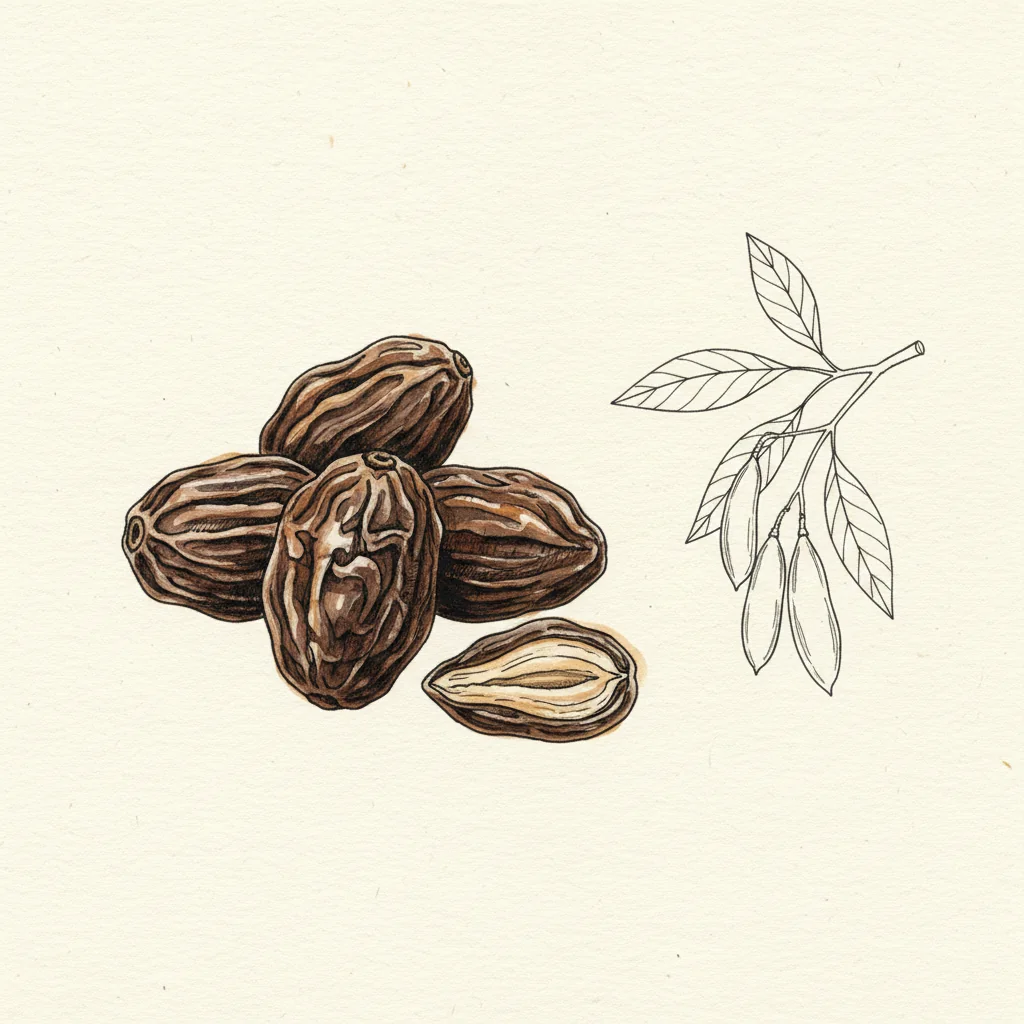
Spice · Spice kernel
Tonka Beans
Brazilian Amazon (Pará, Amazonas), Brazil
vanilla · bitter almond · cut hay
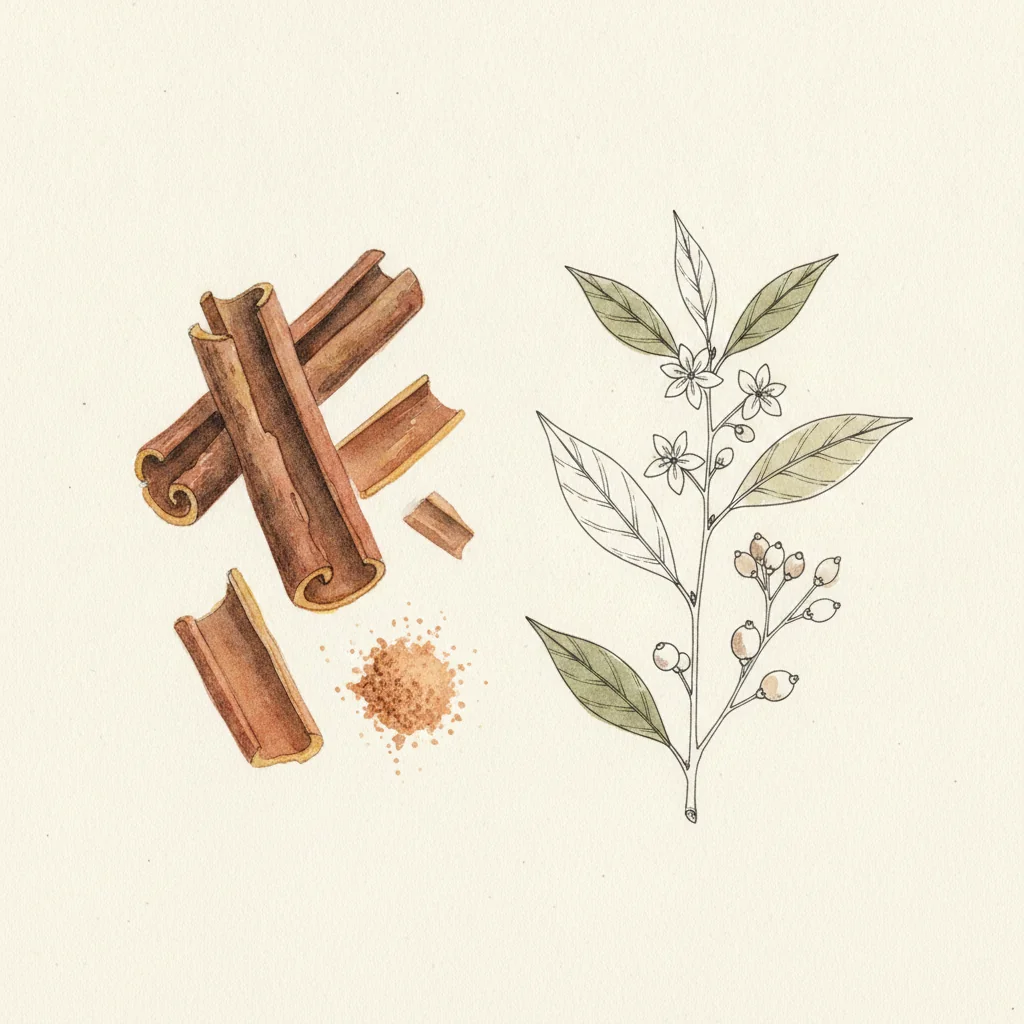
Spice · Whole spice
Saigon Cinnamon
Highland forests around Huế and Quảng Nam, central Vietnam, Vietnam
hot cinnamon candy · sweet bark · clove-like warmth
Our verdict
Tonka beans for a luxury vanilla-almond finishing flourish; Saigon cinnamon for bold everyday cinnamon.
At a glance
| Criterion | Tonka Beans | Saigon Cinnamon |
|---|---|---|
| Botanical name | Dipteryx odorata | Cinnamomum loureiroi (cassia) |
| Origin | Brazil — Amazon | Vietnam — central highlands |
| Form | Whole bean, grated to order | Quills or ground powder |
| Intensity | 9/10 — potent, a pinch is plenty | 9/10 — the boldest cinnamon |
| Main notes | Vanilla, bitter almond, cut hay | Hot cinnamon candy, sweet bark, clove-like warmth |
| How to use | Grated raw as a finish, never cooked in quantity | Ground into baking or simmered whole — survives the oven |
| Best for | Crème brûlée, white chocolate, panna cotta, root-veg purées | Cinnamon rolls, apple/pumpkin pie, oatmeal, chai |
| Caution | Coumarin — use sparingly, never daily in bulk | Cassia coumarin — restraint is prudent, not just flavor |
| Median price | ~$55 / 100g | ~$12 / 100g equivalent |
| Value | A splurge, but a bean lasts years — worth it | Cheap, high-impact — worth it |
When to choose Tonka Beans
Reach for tonka beans when you want a luxurious, surprising finishing aromatic — it's the secret-weapon bean pastry chefs grate over a custard to make people ask what that is. From the Brazilian Amazon (Dipteryx odorata), a single hard, wrinkled bean carries an astonishing density of vanilla, bitter almond, and cut hay, landing at 9/10 where a pinch is genuinely plenty. The technique is the whole story: grate it to order over a microplane as a finish, never cook it in quantity. A few passes over crème brûlée, white chocolate ganache, panna cotta, or rice pudding does the work, and it crosses into the savory side too — grated over celery root and parsnip purées, or over sweetbreads and seared foie gras, where its hay-and-almond note adds intrigue. There are real cautions. Don't double it up with vanilla — the two cancel into a muddy nothing. Keep it away from heavily camphorous spices. And, importantly, tonka contains coumarin, so it's a spice to use sparingly and in pinches, never daily in quantity — the restraint is about your body, not just the flavor. Store the whole beans in an airtight glass jar out of the light, where they last 5 to 10 years and the aroma actually concentrates over time, which is part of what makes the price palatable. At about $55 per 100g it's unquestionably a splurge, but because you grate only a whisper at a time, one bean stretches across many desserts and lasts for years. Against Saigon cinnamon, tonka is the rare finishing flourish, not the everyday warm spice — a few rasps for refinement, used carefully. If you want to add a quiet 'what is that?' note to a custard or a purée, tonka is the bean; for plain cinnamon warmth across regular baking, it's the wrong tool entirely.
When to choose Saigon Cinnamon
Reach for Saigon cinnamon when you want bold, punchy cinnamon flavor for everyday baking and warm drinks — it's the most assertive cinnamon on the shelf and the one that actually survives the oven. A cassia (Cinnamomum loureiroi, from the highland forests of central Vietnam), Saigon hits hard at 9/10: hot cinnamon-candy sweetness, sweet bark, and a clove-like warmth far more intense than mild Ceylon. Use it ground at the mixing stage for baking, or simmered whole as a quill in a braise or syrup — its punch survives the heat where milder cinnamon fades to nothing. Its home is the sweet kitchen and the warm drink: cinnamon rolls, snickerdoodles, and coffee cake; apple and pumpkin pie; oatmeal, French toast, and a dusting on a cappuccino; plus mulled cider and chai. It also brings depth to Mexican mole and chili, used sparingly. The cautions come from its strength. It bulldozes delicate Ceylon-leaning dessert custards, where you want subtlety, so reach for true cinnamon there. And note that this is cassia, not 'true' cinnamon — if a recipe specifically calls for Ceylon, Saigon is a different, hotter animal and will change the dish. Most importantly, cassia is high in coumarin, so heavy-handed dosing isn't just a flavor issue, it's a matter of prudence — a little restraint is wise. Store it airtight away from light and heat: whole sticks hold their oils 18 to 24 months, while ground Saigon stays vivid about a year before it flattens, so grind quills as you need them for the full hit. On value it's a clear winner at roughly $12 for a 100g equivalent — cheap, high-impact, and the cinnamon that delivers the most flavor per spoonful. Against tonka beans, Saigon is the everyday warm spice to tonka's rare finishing flourish. For cinnamon rolls and apple pie, Saigon is the answer; tonka belongs to the refined custard, grated in pinches.
Where to buy?
Tonka Beans
Links checked on
| Merchant | Price | Action |
|---|---|---|
| Amazon US | — | Amazon US |
| Sous Chef UK | — | Sous Chef UK |
| Steenbergs UK | — | Steenbergs UK |
Prices may vary depending on current promotions on the merchant site.
Saigon Cinnamon
Links checked on
| Merchant | Price | Action |
|---|---|---|
| Burlap & Barrel | — | Burlap & Barrel |
| Amazon US | — | Amazon US |
| The Spice House | — | The Spice House |
Prices may vary depending on current promotions on the merchant site.
Frequently asked questions
- Can I use tonka beans like vanilla?
- Sort of, but with limits. Tonka carries a vanilla-almond-hay note that works beautifully in custards and white chocolate, grated fresh as a finish. But don't pair it with vanilla — the two cancel into mud — and don't use it daily in bulk, because tonka contains coumarin. It's a finishing flourish in pinches, not a vanilla replacement by the spoonful.
- Is Saigon cinnamon the same as 'true' cinnamon?
- No — Saigon is cassia (Cinnamomum loureiroi), not true Ceylon cinnamon. It's hotter, sweeter, and far more intense. If a recipe specifically asks for Ceylon or 'true' cinnamon, Saigon will change the dish. For most everyday baking, though, its bold punch is exactly what you want.
- Are tonka beans safe to use?
- In small amounts, yes — the issue is coumarin, which adds up with heavy, frequent use, so tonka is meant to be grated sparingly as a finishing aromatic, never used daily in quantity. Cassia cinnamon like Saigon also contains coumarin, which is another reason to dose it with a little restraint.
- Why is tonka so much more expensive than cinnamon?
- Tonka runs about $55 per 100g versus roughly $12 for Saigon, because the beans are wild-harvested from the Amazon and intensely concentrated. But you grate only a whisper at a time, and a bean keeps 5 to 10 years — the aroma even deepens — so a single bean stretches across many desserts despite the steep per-gram price.
The best pairings
With Tonka Beans
With Saigon Cinnamon
Comparison prepared according to our methodology. Sponsored purchase links — see our affiliations.