
Comparison
Tonka beans vs Tahitian vanilla: what's the difference?
Both perfume desserts, but at different intensities and doses. Tonka is intense — vanilla, bitter almond and cut hay — grated in pinhead amounts over custards, about $55 per 100 g. Tahitian vanilla is floral and anise-tinged, used by the whole bean, about $6.50 a pod. Want a haunting trace note grated to order, tonka; want generous floral vanilla you can build on, Tahitian.
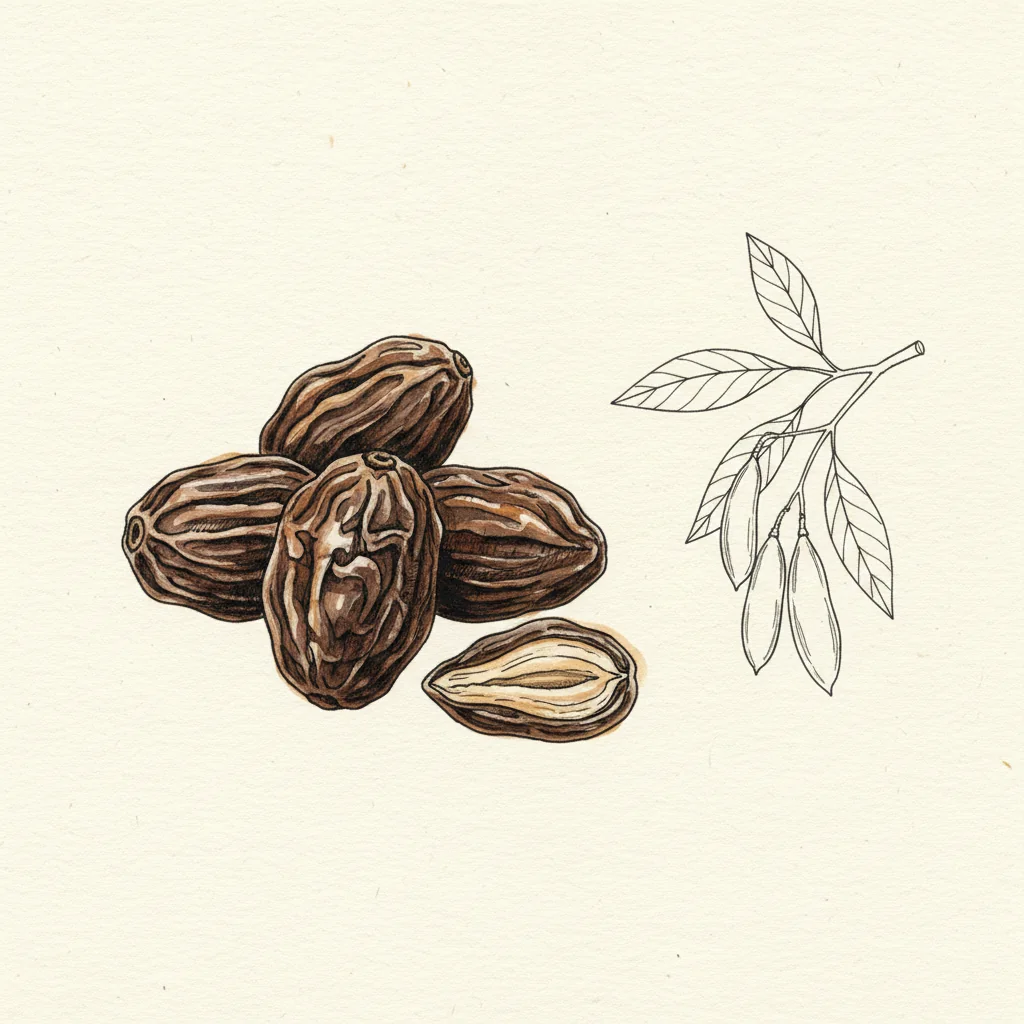
Spice · Spice kernel
Tonka Beans
Brazilian Amazon (Pará, Amazonas), Brazil
vanilla · bitter almond · cut hay
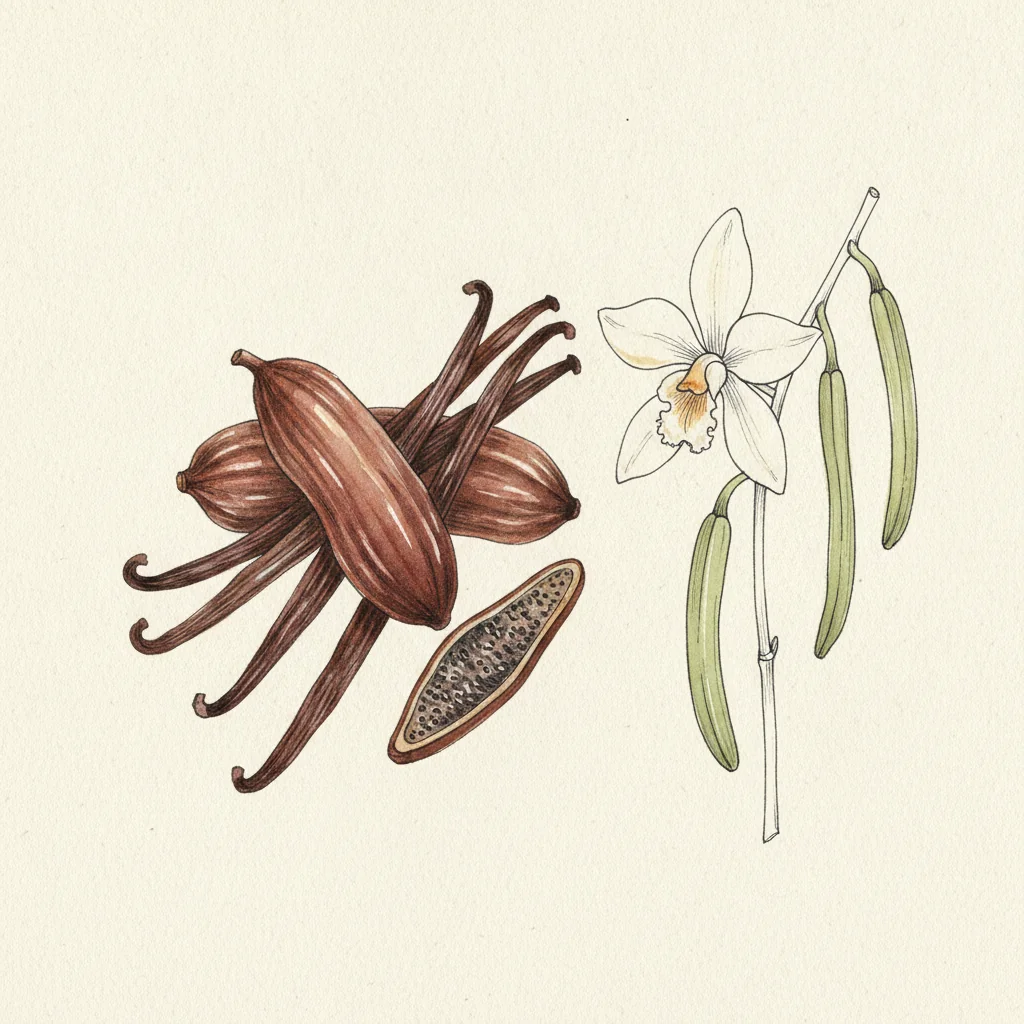
Spice · Vanilla
Tahitian Vanilla
Taha'a and Raiatea, Society Islands, French Polynesia
almond blossom · anise · fresh prune
Our verdict
Tonka for intense almond-vanilla in tiny doses, Tahitian vanilla for floral, generous flavor.
At a glance
| Criterion | Tonka Beans | Tahitian Vanilla |
|---|---|---|
| Origin | Brazil — Amazon, Para and Amazonas (Dipteryx odorata) | French Polynesia — Taha'a and Raiatea (Vanilla tahitensis) |
| Form | Whole dried cured seed, grated to order | Whole plump Grade A pods, scraped |
| Intensity | 9/10 — concentrated, use a fraction of a bean | 6/10 — softer, use a whole bean |
| Main notes | Vanilla, bitter almond, cut hay | Almond blossom, anise, fresh prune |
| Best use | Creme brulee, white-chocolate ganache, savory purees | Poached fruit, panna cotta, cold creams, beurre blanc |
| Median price | ~$55 / 100 g (one bean lasts dozens of dishes) | ~$6.50 / 1 bean |
| Value | Expensive per gram but a bean lasts forever | Pricey per pod but the standard dessert workhorse |
When to choose Tonka Beans
Reach for tonka beans when you want an intense, haunting trace note grated to order. Dipteryx odorata from the Brazilian Amazon is vanilla, bitter almond and cut hay concentrated into one hard, dark seed — and concentration is the whole story. You grate it over a microplane in pinhead quantities, an eighth to a quarter of a bean for four servings and never more, as a finish on creme brulee and custards, white-chocolate ganache, panna cotta and rice pudding, prune and black-cherry compotes. It even crosses into savory — celery-root and parsnip purees, sweetbreads, seared foie gras — where a whisper adds an almond-hay mystery no one can quite place. Grate it raw at the end; don't cook it in quantity, since heat and a heavy hand both push it from intriguing to overwhelming. One practical caveat worth naming: tonka contains coumarin and is restricted or banned in some countries (notably the US), so know your local rules before you buy. At around $55 per 100 g it looks dear, but because you use a fraction of a bean at a time, a single bean lasts dozens of desserts and the per-dish cost is tiny. What tonka can't be is your main vanilla — it's a trace accent, not a body. For generous, build-on-it flavor by the whole bean, reach for Tahitian vanilla.
When to choose Tahitian Vanilla
Reach for Tahitian vanilla when you want a soft, floral, generous vanilla you use by the whole bean. Vanilla tahitensis from Taha'a and Raiatea is a different animal from ordinary vanilla — almond blossom, anise and fresh prune, more perfumed and less sweet-creamy than Madagascar Bourbon. Its delicacy shapes how you use it: it shines in cold and lightly-warmed preparations where the florals survive — poached fruit and tropical fruit salads, strawberry, mango and citrus desserts, panna cotta and cold creams, cocktails and rum infusions — and it crosses gracefully into savory, over cured salmon and raw scallops or in a beurre blanc for white fish. Scrape the seeds in at the finish, or steep briefly off the heat to protect those floral top notes, which long boiling cooks straight off. One bean per two cups of liquid is the working dose; scrape the seeds in and let the spent pod give the rest. Unlike tonka, this is a workhorse you build a dessert around, not a trace accent. At about $6.50 a bean it's a real cost per pod, but it's the dose the recipe actually calls for, and a Grade A Tahitian pod is plump and moist rather than dry and brittle. What it can't do is deliver tonka's concentrated almond-hay intensity from a microplane shaving — for that haunting grated finish, tonka is the one, but mind the coumarin rules first.
Where to buy?
Tonka Beans
Links checked on
| Merchant | Price | Action |
|---|---|---|
| Amazon US | — | Amazon US |
| Sous Chef UK | — | Sous Chef UK |
| Steenbergs UK | — | Steenbergs UK |
Prices may vary depending on current promotions on the merchant site.
Tahitian Vanilla
Links checked on
| Merchant | Price | Action |
|---|---|---|
| Amazon US | — | Amazon US |
| Native Vanilla | — | Native Vanilla |
| Sous Chef UK | — | Sous Chef UK |
Prices may vary depending on current promotions on the merchant site.
Frequently asked questions
- Can tonka replace vanilla?
- Only as an accent, not a swap. Tonka is far more intense and tastes of almond and hay alongside vanilla, so a pinhead grating accents a dessert. Vanilla is the body you build on. Use tonka to deepen, not to replace.
- Is tonka legal to buy?
- It depends where you are. Tonka contains coumarin and is restricted or banned in some countries, notably the US, while widely sold in much of Europe. Check your local rules before buying, and use it in the tiny doses it calls for.
- Which is stronger?
- Tonka, by a wide margin — 9/10 versus vanilla's softer 6/10. You grate a fraction of a tonka bean over four servings, but use a whole Tahitian pod. Treat tonka as a trace note and vanilla as a generous base.
- Which vanilla is Tahitian best for?
- Cold and floral preparations — poached fruit, panna cotta, fruit desserts, cocktails — where its almond-blossom and anise notes survive. Long, hot baking cooks those delicate florals off, so steep it briefly or add it at the finish.
The best pairings
With Tonka Beans
With Tahitian Vanilla
Comparison prepared according to our methodology. Sponsored purchase links — see our affiliations.