
Comparison
Acacia vs sourwood honey — which to choose?
Acacia (~$16) is the mild, neutral everyday honey — sweetness without flavor, never crystallizing, ideal when the honey should disappear. Sourwood (~$16) costs about the same but is a connoisseur's honey: buttery, spiced, gingerbread-like, made in a two-week window. For sweetening, acacia. For a spoon you'll remember, sourwood.
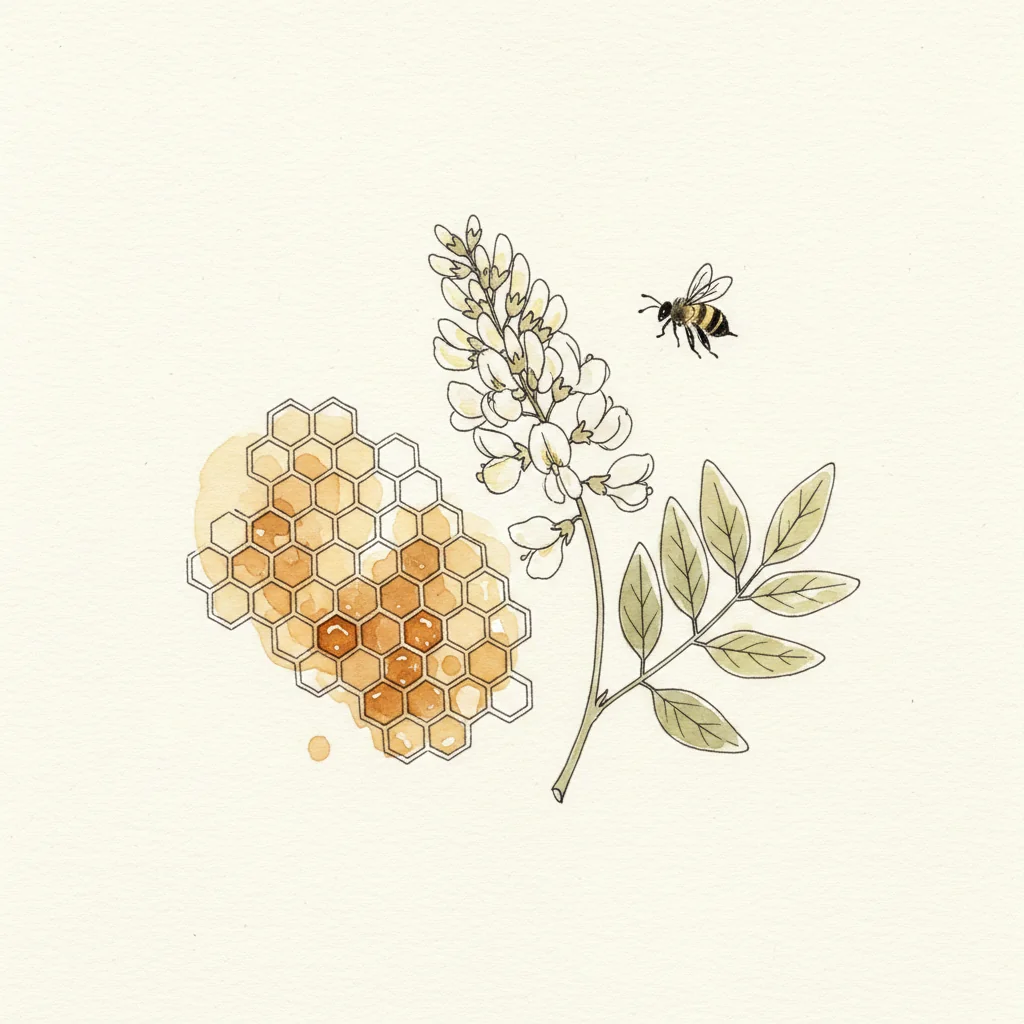
Honey · Monofloral honey
Acacia Honey
Great Hungarian Plain and the wider Carpathian Basin (also Romania, Bulgaria, Serbia), Hungary
soft floral sweetness · vanilla · clean sugar
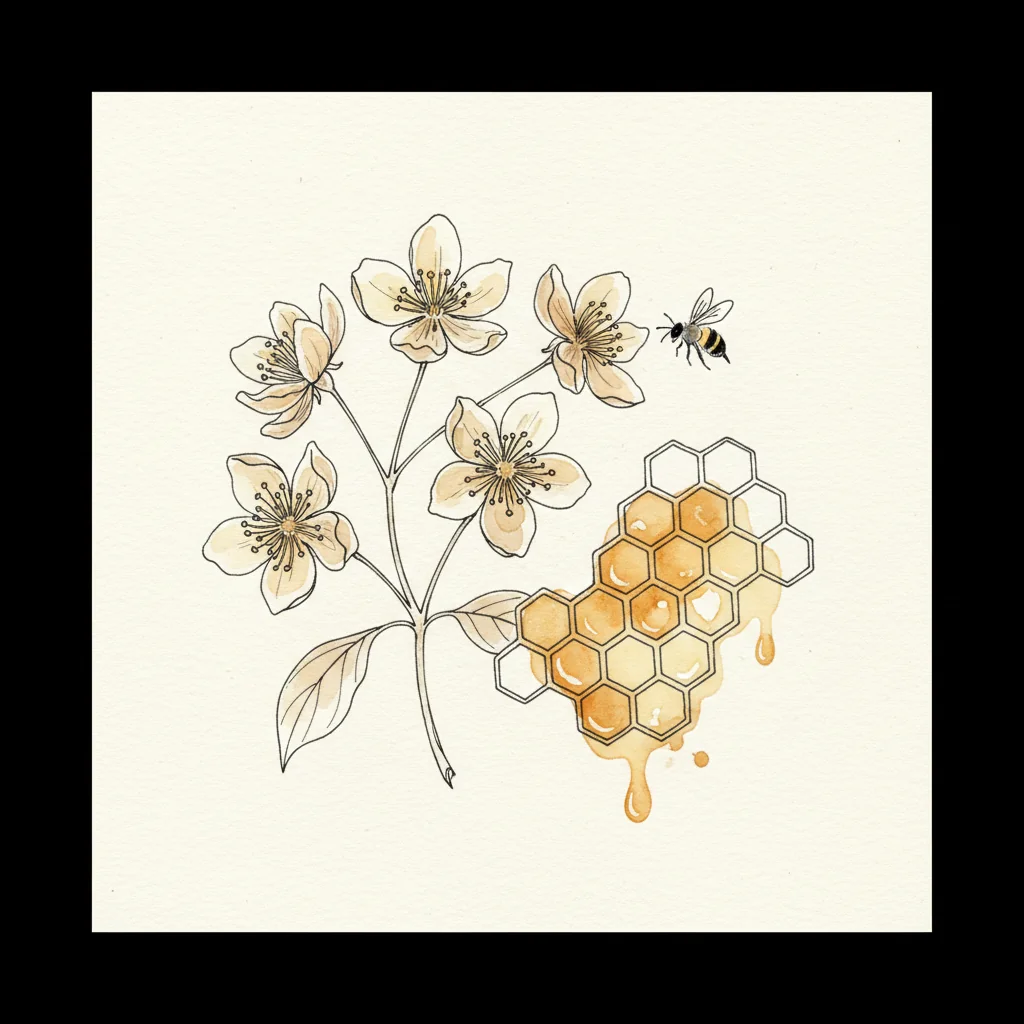
Honey · Monofloral honey
Sourwood Honey
Southern Appalachians (North Carolina, Georgia, Tennessee), United States
buttery caramel · spiced gingerbread · ripe stone fruit
Our verdict
Acacia for neutral everyday sweetening; sourwood when you want a rare, spiced honey worth savoring.
At a glance
| Criterion | Acacia Honey | Sourwood Honey |
|---|---|---|
| Origin | Hungary & the Carpathian Basin | Southern Appalachians (NC, GA, TN) |
| Botanical | Robinia pseudoacacia (black locust) | Oxydendrum arboreum (sourwood) |
| Crystallizes? | Almost never | Slowly |
| Intensity | 3/10 — soft, neutral | 6/10 — buttery caramel, spiced gingerbread |
| Main notes | Vanilla, soft florals, clean sugar | Buttery caramel, gingerbread, ripe stone fruit |
| Best use | Tea, vinaigrettes, neutral sweetener | Biscuits, aged cheddar, oatmeal, a spoon from the jar |
| Median price | ~$16 / 450g jar | ~$16 / 16 oz jar |
| Value verdict | Imbattable neutral everyday honey | Worth it for a rare, characterful honey |
When to choose Acacia Honey
Acacia is the choice when the honey's job is to sweeten and then get out of the way. It's the mildest, palest honey on the shelf, made from black locust nectar across the Carpathian Basin, with a soft vanilla-floral sweetness and zero bitterness. A high fructose content keeps it thin, glass-clear and runny for years — it almost never crystallizes, so it dissolves cleanly into tea, vinaigrettes and cocktails where sourwood's spiced character would announce itself. At about $16 a 450g jar it's an everyday workhorse you can pour without thinking about it. Four jobs it owns over sourwood. First, green and herbal teas — it sweetens the cup without dragging in gingerbread or stone-fruit notes. Second, a neutral sweetener in vinaigrettes and cocktails, where you want the honey invisible. Third, fresh goat cheese and burrata, where the milk should lead. Fourth, anything where you want gloss and sweetness but no statement — pancakes, waffles, plain yogurt. The rule: if you don't want to taste the honey, it's acacia. Add it raw, off the heat, since the delicate aromatics cook off in a long bake. Its limit is its neutrality — against a sharp blue cheese or a spiced dessert it simply disappears, where sourwood would hold its own. But that neutrality is also the draw: acacia is the safe, generous default that does almost no harm to the dish or the budget, and you shouldn't pay a connoisseur honey's attention to a job that just needs clean sweetness.
When to choose Sourwood Honey
Sourwood is the honey serious Southern beekeepers chase and most cooks never taste. It comes from the sourwood tree, which blooms for only two or three weeks in July across the Appalachians, so a bad summer means no crop at all — scarcity is built into it. Where acacia is near-neutral, sourwood is buttery and spiced, like caramel and gingerbread with a ripe stone-fruit edge and a faint warm-anise finish. A 16 oz jar of the real thing runs about $14 to $22 — roughly the same as acacia, which makes it the rare characterful honey that doesn't cost a premium. Four jobs where it earns the spoon. First, warm buttermilk biscuits and cornbread, where its spiced caramel reads almost like a dessert in itself. Second, sharp aged cheddar and creamy goat cheese, where it has the body to stand up. Third, Greek yogurt and oatmeal, where the gingerbread note lifts breakfast out of the ordinary. Fourth — and this is the test — straight off the spoon, where a great sourwood simply doesn't need a vehicle. The rule: if you want a honey worth savoring, it's sourwood; if you just need to sweeten something, acacia does it cheaper and quieter. Keep it raw and cold at the very end — long cooking bakes off the delicate aromatics, and a strong honey-mustard glaze buries the floral notes. What sourwood can't do is disappear — it has too much spiced character to be an invisible sweetener. But as a rare, regional honey with real personality at an everyday price, it's the more rewarding jar to own.
Where to buy?
Acacia Honey
Links checked on
| Merchant | Price | Action |
|---|---|---|
| Amazon US | — | Amazon US |
| Sous Chef UK | — | Sous Chef UK |
Prices may vary depending on current promotions on the merchant site.
Sourwood Honey
Links checked on
| Merchant | Price | Action |
|---|---|---|
| Amazon US | — | Amazon US |
| Asheville Bee Charmer | — | Asheville Bee Charmer |
| Blue Ridge Honey Company | — | Blue Ridge Honey Company |
Prices may vary depending on current promotions on the merchant site.
Frequently asked questions
- Should I buy acacia or sourwood honey?
- Acacia for cheap, neutral sweetening that disappears into tea and dressings. Sourwood if you want a rare, spiced gingerbread honey worth eating off the spoon. They cost about the same, so it comes down to whether you want flavor or invisibility.
- Why is sourwood honey so prized?
- It blooms for only two or three weeks in July across the Appalachians, so supply is tiny and a bad summer can wipe out the crop. The buttery, gingerbread-like flavor is unlike any common honey.
- Do they cost the same?
- Roughly — both run about $14 to $22 a jar. That's unusual: sourwood delivers connoisseur-level character at an everyday price, which is part of why beekeepers chase it.
- Can I cook with either?
- Both are best raw and cold, added at the end. Acacia's and sourwood's delicate aromatics cook off in a long bake, so use a cheaper honey for high heat.
The best pairings
With Acacia Honey
With Sourwood Honey
Comparison prepared according to our methodology. Sponsored purchase links — see our affiliations.