
Acacia (black locust) monofloral honey, Hungary & Central Europe
In brief — Acacia is the mildest, palest honey on the shelf, made from black locust (Robinia pseudoacacia) nectar in Hungary and across the Carpathian Basin. It stays runny and crystal-clear for years thanks to a high fructose content, with a soft vanilla-floral sweetness and zero bitterness. A good Hungarian jar runs about $14 to $20 in the US. Use it raw, where you want sweetness without a strong honey flavor. Its aromatic profile develops notes of soft floral sweetness, vanilla, clean sugar, extended by light beeswax and faint pear, for an intensity of 3/10. In the kitchen, it's best added raw, off the heat, as a finisher or sweetener where you don't want the honey to fight the dish and it pairs with fresh goat cheese and burrata, Greek yogurt and granola, herbal and green teas (won't muddy the flavor). Recommended dosage: 1 teaspoon to 1 tablespoon per portion, added raw. Expect from $12.00 to $22.00 per 16 oz (450 g) jar (median $16.00).
Origin : Great Hungarian Plain and the wider Carpathian Basin (also Romania, Bulgaria, Serbia), Hungary
Robinia pseudoacacia
« The honey for people who say they don't like honey. Whisper-soft, water-clear, never sets. Brilliant in tea and on goat cheese, useless against blue or heat. Buy single-origin Hungarian, not the blend. »
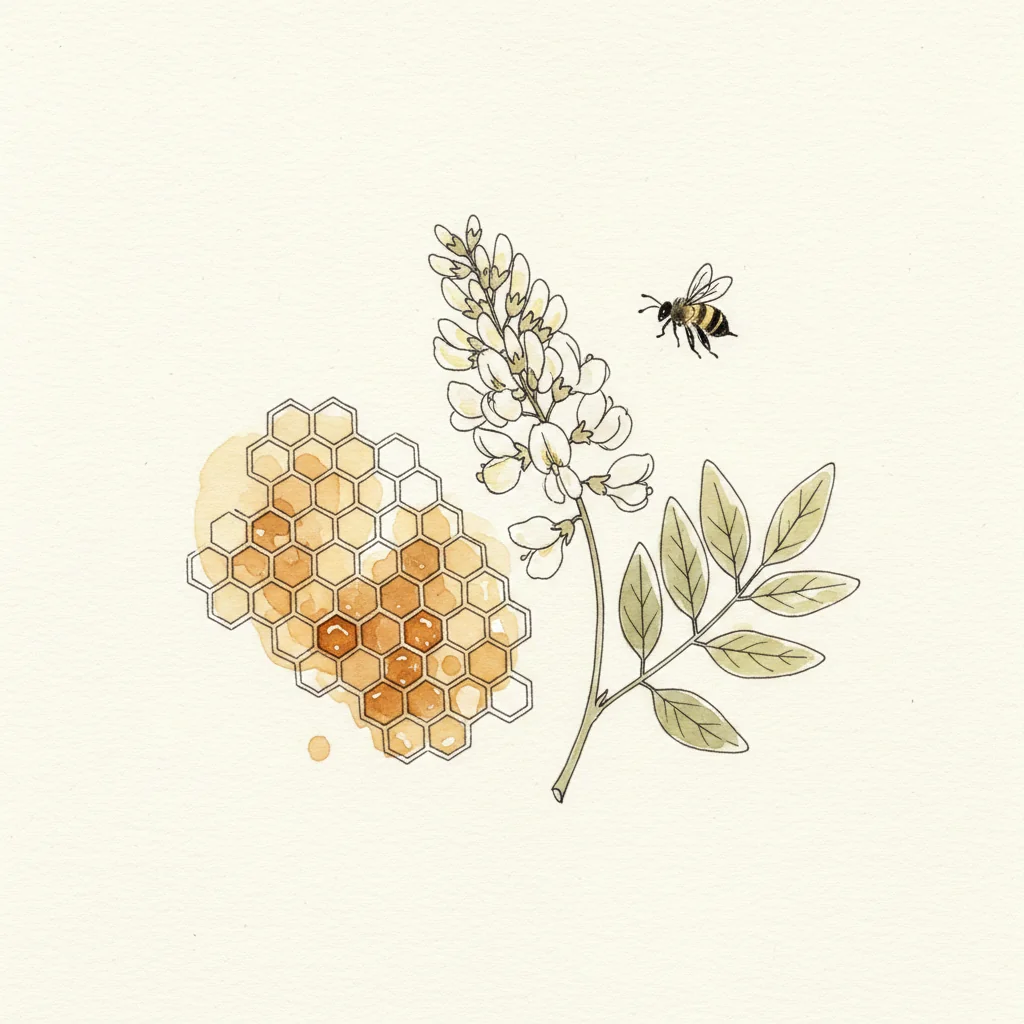
Acacia is the mildest, palest honey on the shelf, made from black locust (Robinia pseudoacacia) nectar in Hungary and across the Carpathian Basin. It stays runny and crystal-clear for years thanks to a high fructose content, with a soft vanilla-floral sweetness and zero bitterness. A good Hungarian jar runs about $14 to $20 in the US. Use it raw, where you want sweetness without a strong honey flavor.
Honey · Monofloral honey
Acacia Honey
Great Hungarian Plain and the wider Carpathian Basin (also Romania, Bulgaria, Serbia), Hungary
soft floral sweetness · vanilla · clean sugar
Aromatic profile
| Family | Robinia pseudoacacia (black locust nectar) |
|---|---|
| Intensity | ●●○○○ (3/10) |
| Main notes | soft floral sweetness · vanilla · clean sugar |
| Secondary notes | light beeswax · faint pear · no bitterness |
| Mouthfeel | thin, runny and glassy-clear; coats the tongue lightly and never crystallizes |
| Finish length | short and clean, a gentle sweetness that fades without aftertaste |
Culinary use
- When to add : raw, off the heat, as a finisher or sweetener where you don't want the honey to fight the dish
- Dosage : 1 teaspoon to 1 tablespoon per portion, added raw
- Ideal pairings : fresh goat cheese and burrata, Greek yogurt and granola, herbal and green teas (won't muddy the flavor), warm biscuits and cornbread, drizzled over pancakes and waffles, a neutral sweetener in vinaigrettes and cocktails
- Avoid with : strong blue cheeses (it gets buried; reach for chestnut or buckwheat honey), long cooking or high heat (the delicate aromatics cook off), anything that needs a honey with backbone
The grain in detail
Acacia honey comes not from true acacia but from the black locust tree, Robinia pseudoacacia, a North American import that took to the Hungarian plain centuries ago and now blankets it in white blossom every May. Hungary is the heart of production, alongside Romania, Bulgaria and Serbia. The trees bloom for only two or three weeks, so a clean monofloral crop depends on a short, weather-dependent window, which is why genuine single-origin acacia carries a premium over blended supermarket honey. The honey itself is the palest you'll find: water-white to faint straw, glassy and runny. That clarity is a chemistry signature. Acacia nectar is unusually high in fructose and low in glucose, so it resists crystallization and stays liquid for years where most honeys set hard. The flavor is deliberately quiet, soft floral sweetness, a whisper of vanilla, clean sugar, and crucially no bitterness or pollen funk. That mildness is the whole point: acacia is the honey you reach for when you want sweetness that doesn't talk back. It dissolves invisibly into tea without clouding the flavor, finishes fresh goat cheese and burrata without overpowering them, and works as a neutral sweetener in vinaigrettes, yogurt and cocktails. The flip side is that it has no backbone, so it's wasted against strong blue cheese or cooked into anything hot, where its delicate aromatics simply evaporate. Note on labels: there is no Hungarian PDO or PGI for acacia honey. Croatia's Zagorski bagremov med and Italy's Lunigiana acacia (DOP) are the EU-protected black-locust honeys, but Hungarian akacmez is sold on producer reputation alone. Buy raw, single-origin jars from a named beekeeper and check that it pours freely and reads water-clear.
History & origin
Black locust (Robinia pseudoacacia) is native to the eastern United States and was brought to Europe in the 17th century. In Hungary it was planted from the 18th century onward to stabilize sandy soils on the Great Plain, and it spread so successfully that it became the country's dominant forestry tree and the source of its signature honey, akacmez. Hungary is today one of the largest exporters of monofloral acacia honey in the world, and the honey is a point of national pride; Hungarian producers have lobbied for the locust to be recognized as a national tree.
Provenance & authenticity
What sets the real thing apart — appellation, species and verification cues.
- Species
- Robinia pseudoacacia
Indicative price
Reference format : 16 oz (450 g) jar — from $12.00 to $22.00 (median : $16.00).
Storage
Glass jar at room temperature, away from light. High fructose keeps it runny and clear for years; it almost never crystallizes. If it ever clouds, a brief warm-water bath clears it. Shelf life is effectively indefinite.
Where to buy?
Where to buy it
Links checked on
| Merchant | Price | Action |
|---|---|---|
| Amazon US | — | Amazon US |
| Sous Chef UK | — | Sous Chef UK |
Prices may vary depending on current promotions on the merchant site.
Alternatives if unavailable
Tags
- honey
- acacia
- black locust
- Robinia pseudoacacia
- Hungary
- monofloral
- akacmez
- raw honey
Frequently asked questions
- How do you store Acacia Honey?
- Glass jar at room temperature, away from light. High fructose keeps it runny and clear for years; it almost never crystallizes. If it ever clouds, a brief warm-water bath clears it. Shelf life is effectively indefinite.
- What dosage for Acacia Honey?
- 1 teaspoon to 1 tablespoon per portion, added raw
- When should you add Acacia Honey in cooking?
- It's best used raw, off the heat, as a finisher or sweetener where you don't want the honey to fight the dish.
- What should you avoid pairing Acacia Honey with?
- Avoid with: strong blue cheeses (it gets buried; reach for chestnut or buckwheat honey), long cooking or high heat (the delicate aromatics cook off), anything that needs a honey with backbone.
Go further
The dishes where this acacia honey shines
Also a recommended alternative for
As a complementary pairing with
See every dish where this product is mentioned →
Other oils, vinegars & honeys to discover
Featured in these gift sets
Page prepared according to our methodology. Purchase links marked sponsored and liable to earn a commission — details on our Affiliations page.