
Sourwood Honey, raw and single-floral, harvested in the Southern Appalachians (North Carolina, Georgia, Tennessee)
In brief — Sourwood is the honey serious Southern beekeepers chase and most cooks never taste. It comes from the sourwood tree, which blooms for only two or three weeks in July across the Appalachians, so a bad summer means no crop at all. The flavor is buttery and spiced, like caramel and gingerbread rather than ordinary sweet. A 16 oz jar of the real thing runs about $14 to $22. Its aromatic profile develops notes of buttery caramel, spiced gingerbread, ripe stone fruit, extended by warm anise and light maple, for an intensity of 6/10. In the kitchen, it's best added raw, as a finish or drizzle, off the heat and it pairs with warm buttermilk biscuits and cornbread, sharp aged cheddar and creamy goat cheese, Greek yogurt and oatmeal. Recommended dosage: a teaspoon to a tablespoon per portion, added cold at the very end. Expect from $14.00 to $22.00 per 16 oz (1 lb) jar (median $16.00).
Origin : Southern Appalachians (North Carolina, Georgia, Tennessee), United States
Oxydendrum arboreum
« The rarest honey worth chasing: buttery caramel and gingerbread, never just sweet. The catch is fraud, since no appellation protects the name, so buy from a named Appalachian apiary, not the cheapest jar. »
Sourwood is the honey serious Southern beekeepers chase and most cooks never taste. It comes from the sourwood tree, which blooms for only two or three weeks in July across the Appalachians, so a bad summer means no crop at all. The flavor is buttery and spiced, like caramel and gingerbread rather than ordinary sweet. A 16 oz jar of the real thing runs about $14 to $22.
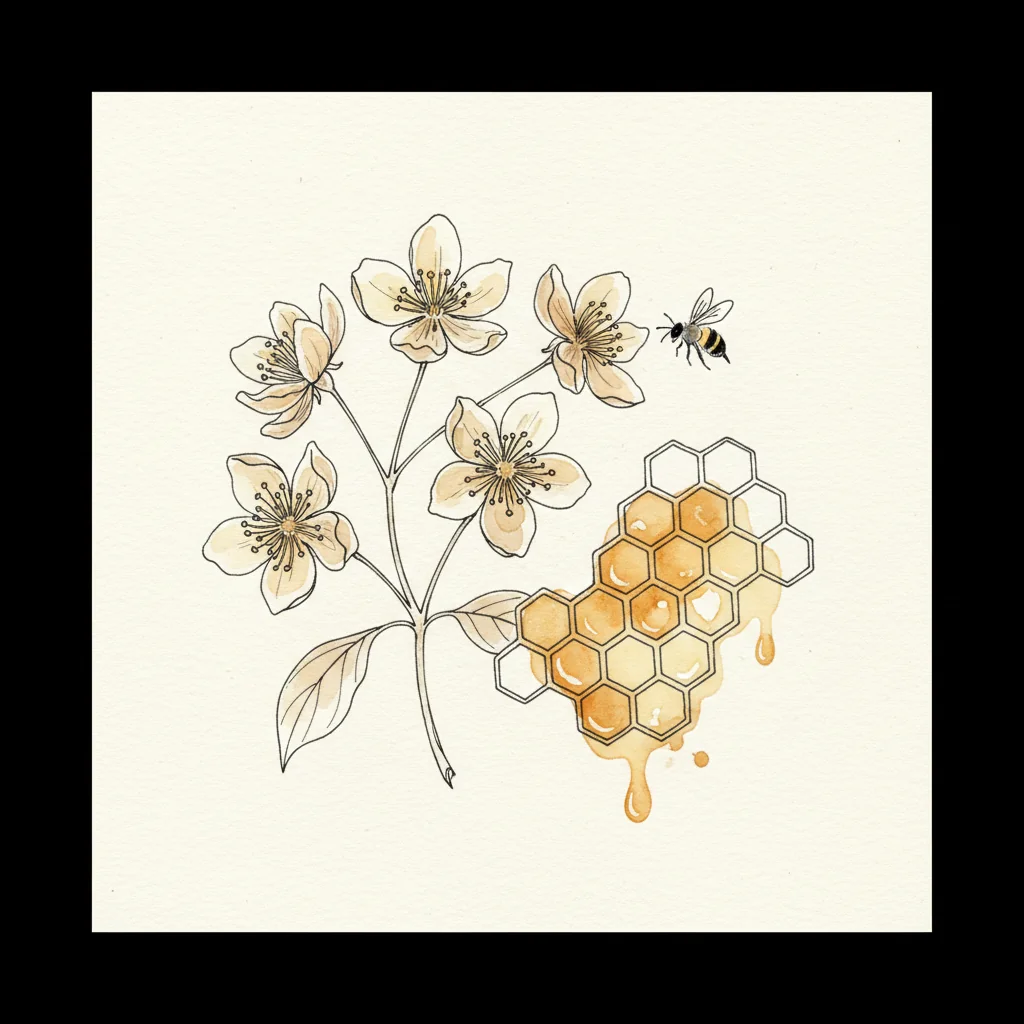
Honey · Monofloral honey
Sourwood Honey
Southern Appalachians (North Carolina, Georgia, Tennessee), United States
buttery caramel · spiced gingerbread · ripe stone fruit
Aromatic profile
| Family | Oxydendrum arboreum |
|---|---|
| Intensity | ●●●○○ (6/10) |
| Main notes | buttery caramel · spiced gingerbread · ripe stone fruit |
| Secondary notes | warm anise · light maple · soft cinnamon |
| Mouthfeel | thin to medium-bodied, slow to crystallize, coats the palate without cloying |
| Finish length | long, with a clean lingering sweetness and a faint spiced finish that never turns sharp |
Culinary use
- When to add : raw, as a finish or drizzle, off the heat
- Dosage : a teaspoon to a tablespoon per portion, added cold at the very end
- Ideal pairings : warm buttermilk biscuits and cornbread, sharp aged cheddar and creamy goat cheese, Greek yogurt and oatmeal, a spoon straight from the jar, drizzled over pan-roasted pork or fried chicken
- Avoid with : long cooking or baking that bakes off the delicate aromatics, strong honey-mustard glazes that bury the floral notes, anything where you just need cheap sweetness (use clover honey)
The grain in detail
Sourwood honey comes from Oxydendrum arboreum, a slender understory tree native to the Southern Appalachians of North Carolina, Georgia, Tennessee and the surrounding ridges. It blooms late, usually from late June into July, and only for two or three weeks, which is the whole story of why this honey is scarce and costs what it does. A wet July washes the nectar out of the flowers; a dry one keeps the bees grounded. Either way the beekeeper may pull an empty crop, so real sourwood is genuinely a vintage product that varies year to year. The flavor is what sets it apart from supermarket honey. Where clover honey is just sweet, sourwood is layered and aromatic: buttery caramel up front, then warm baking-spice notes that taste like gingerbread, cinnamon and a whisper of anise, finishing on ripe stone fruit. It is lighter-bodied than chestnut or buckwheat honey, slow to crystallize thanks to its sugar balance, and never bitter. Use it raw and cold, because the aromatics that make it worth the money cook off fast. It shines on warm buttermilk biscuits and cornbread, drizzled over sharp cheddar or fresh goat cheese, stirred into Greek yogurt or oatmeal, and honestly straight off the spoon. The catch with sourwood is fraud: because it sells at a premium, plenty of jars labeled 'sourwood' are cut with clover or wildflower honey, or aren't sourwood at all. There is no federal appellation protecting the name in the US, so your defense is the source. Buy from a named Appalachian apiary or a reputable local merchant, expect to pay $14 to $22 for a 16 oz jar, and treat anything suspiciously cheap as suspect. Genuine sourwood has won 'best honey in the world' titles at the international Apimondia competition more than once, and beekeepers in places like the North Carolina mountains build their year around it.
History & origin
The sourwood tree is a Southern Appalachian native, long valued by Cherokee communities and early settlers for its sour-tasting leaves, used for tea and folk remedies, which gave the tree its name. Mountain beekeeping families in North Carolina, Georgia and Tennessee have prized the honey for generations, often keeping a hidden batch back for themselves rather than selling it. The annual Sourwood Festival in Black Mountain, North Carolina, dating to the 1970s, celebrates the harvest. Appalachian sourwood has twice taken top honors at Apimondia, the international beekeeping congress, cementing its reputation as one of the finest monofloral honeys produced anywhere.
Provenance & authenticity
What sets the real thing apart — appellation, species and verification cues.
- Species
- Oxydendrum arboreum
Indicative price
Reference format : 16 oz (1 lb) jar — from $14.00 to $22.00 (median : $16.00).
Storage
Glass jar at room temperature, away from light. Crystallizes slowly; if it sets, warm the jar gently in a water bath under 104°F (104°F (40°C)) to keep the aromatics intact. Keeps practically indefinitely.
Where to buy?
Where to buy it
Links checked on
| Merchant | Price | Action |
|---|---|---|
| Amazon US | — | Amazon US |
| Asheville Bee Charmer | — | Asheville Bee Charmer |
| Blue Ridge Honey Company | — | Blue Ridge Honey Company |
Prices may vary depending on current promotions on the merchant site.
Alternatives if unavailable
Tags
- honey
- sourwood
- monofloral
- Appalachian
- North Carolina
- Oxydendrum-arboreum
- raw
Frequently asked questions
- How do you store Sourwood Honey?
- Glass jar at room temperature, away from light. Crystallizes slowly; if it sets, warm the jar gently in a water bath under 104°F (104°F (40°C)) to keep the aromatics intact. Keeps practically indefinitely.
- What dosage for Sourwood Honey?
- a teaspoon to a tablespoon per portion, added cold at the very end
- When should you add Sourwood Honey in cooking?
- It's best used raw, as a finish or drizzle, off the heat.
- What should you avoid pairing Sourwood Honey with?
- Avoid with: long cooking or baking that bakes off the delicate aromatics, strong honey-mustard glazes that bury the floral notes, anything where you just need cheap sweetness (use clover honey).
Go further
The dishes where this sourwood honey shines
Also a recommended alternative for
As a complementary pairing with
See every dish where this product is mentioned →
Other oils, vinegars & honeys to discover
Featured in these gift sets
Page prepared according to our methodology. Purchase links marked sponsored and liable to earn a commission — details on our Affiliations page.