
Comparison
Acacia vs tupelo honey — which mild honey?
Both are mild and stay runny for years. Acacia (~$16) is the cheaper, more neutral one — sweetness with almost no flavor, ideal when you don't want to taste the honey. Tupelo (~$20) costs more but brings a buttery pear-and-caramel note worth tasting. For invisibility, acacia. For a honey you actually notice, tupelo.
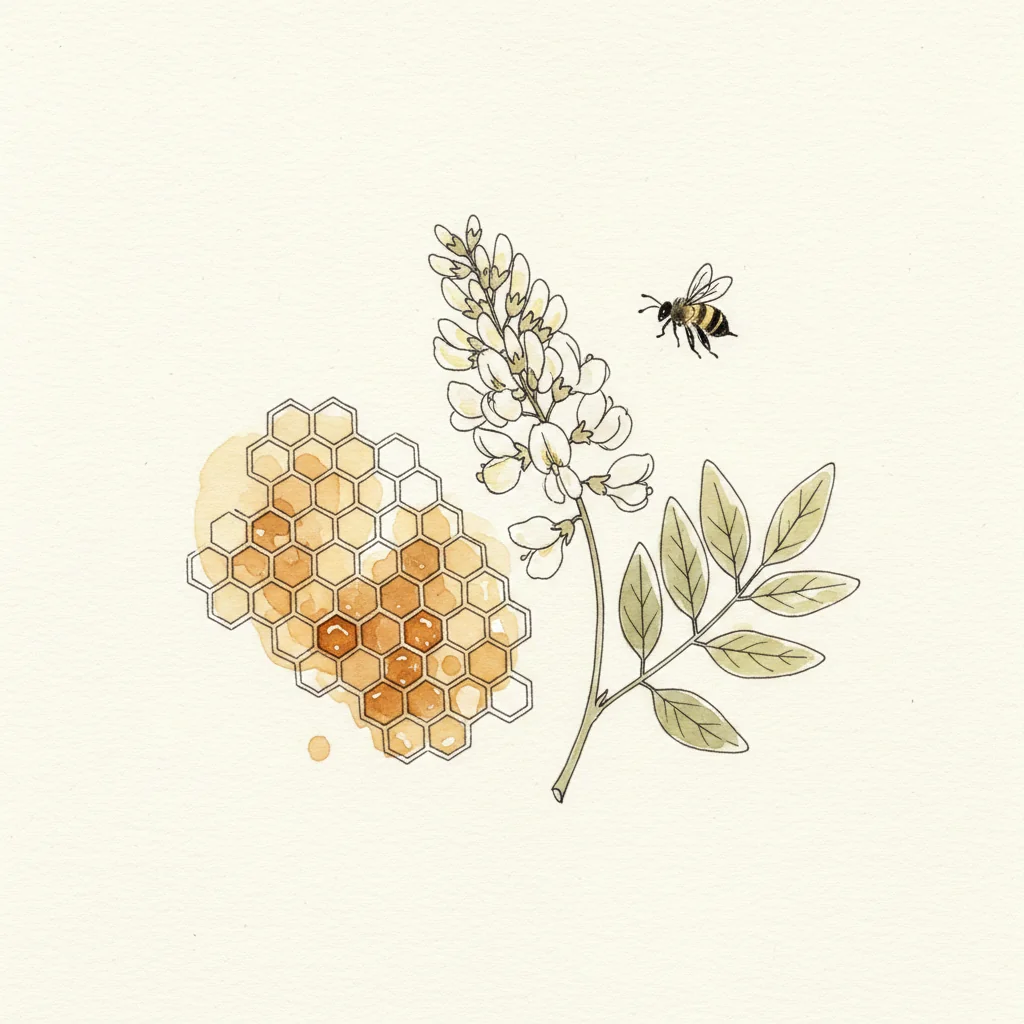
Honey · Monofloral honey
Acacia Honey
Great Hungarian Plain and the wider Carpathian Basin (also Romania, Bulgaria, Serbia), Hungary
soft floral sweetness · vanilla · clean sugar
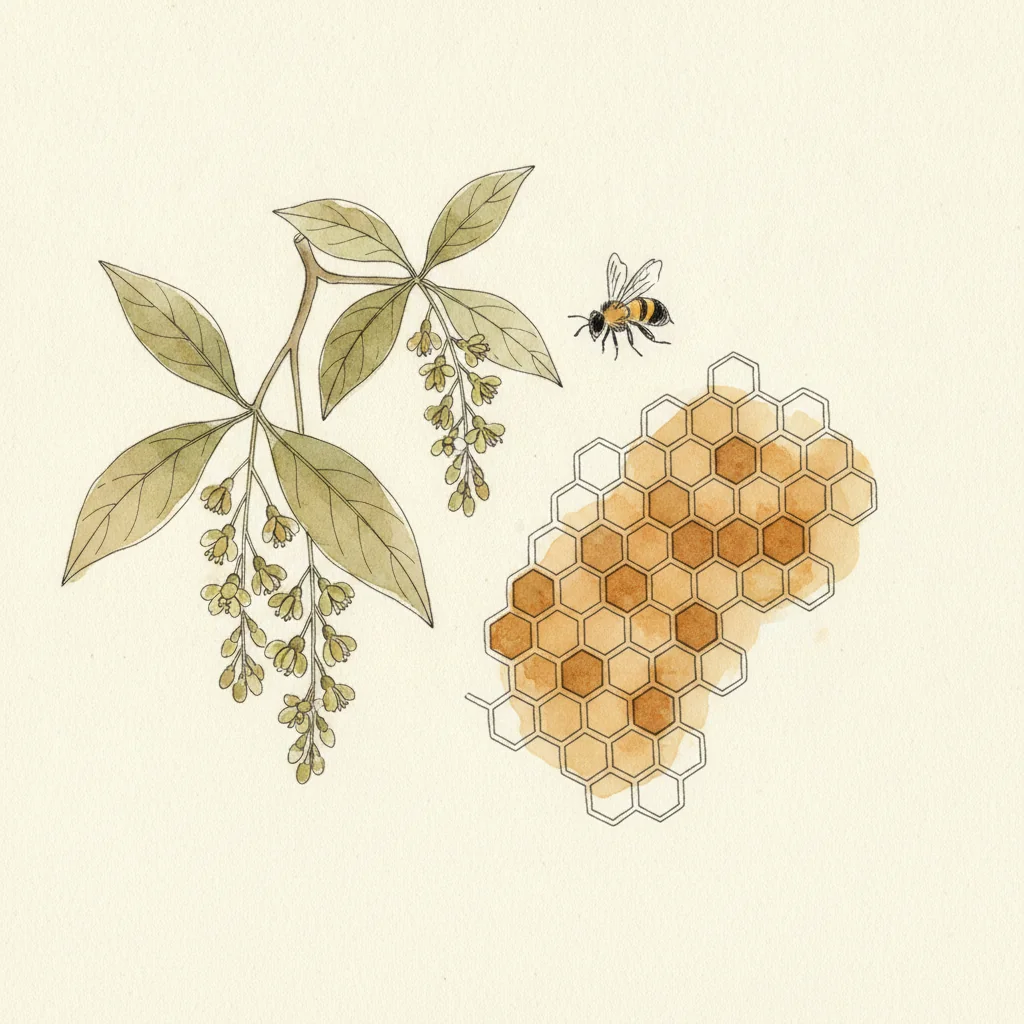
Honey · Varietal honey
Tupelo Honey
Apalachicola River basin, Florida (Wewahitchka, Gulf County), United States
buttery florals · fresh pear · soft caramel
Our verdict
Acacia for cheap, neutral sweetening; tupelo when you want a mild honey with real buttery character.
At a glance
| Criterion | Acacia Honey | Tupelo Honey |
|---|---|---|
| Origin | Hungary & the Carpathian Basin | Apalachicola River basin, Florida |
| Botanical | Robinia pseudoacacia (black locust) | Nyssa ogeche (white tupelo) |
| Crystallizes? | Almost never (high fructose) | Almost never (high fructose) |
| Intensity | 3/10 — soft, neutral, clean | 5/10 — buttery, floral, pear-caramel |
| Main notes | Vanilla, soft florals, clean sugar | Buttery florals, fresh pear, soft caramel |
| Best use | Tea, vinaigrettes, goat cheese, neutral sweetener | Biscuits, sharp cheese, yogurt, finishing drizzle |
| Median price | ~$16 / 450g jar | ~$20 / 12 oz jar |
| Value verdict | Imbattable neutral everyday honey | Worth it for the texture and pear note |
When to choose Acacia Honey
Acacia is the one to reach for when you specifically don't want to taste the honey. It's the mildest, palest honey on the shelf, made from black locust nectar across the Carpathian Basin, and its job is sweetness with almost no signature of its own. It pours thin and glass-clear, and a high fructose content keeps it runny for years — it almost never crystallizes, which is why it dissolves invisibly into a cup of tea or a vinaigrette where even tupelo's gentle character might be one note too many. At about $16 a 450g jar it's the cheaper of the two, so you can pour freely. Four jobs it owns over tupelo. First, green and herbal teas — it sweetens without dragging in any pear or caramel of its own. Second, a neutral sweetener in vinaigrettes and cocktails, where you want the honey to vanish. Third, fresh goat cheese and burrata, where the milk should lead. Fourth, anywhere on a tight budget that calls for a clean, runny honey and nothing more. The rule: if the honey should be felt, not tasted, it's acacia. Add it raw, off the heat — the delicate aromatics cook off in a long bake. Its limit is the same as its strength: against anything assertive — a sharp blue, a bold dessert — it simply disappears, where tupelo at least holds a buttery thread. But for the cheapest, most neutral, never-crystallizing honey on the shelf, acacia is the default, and tupelo's extra few dollars buy character you didn't ask for.
When to choose Tupelo Honey
Tupelo is the mild honey to choose when you still want something to taste. It's harvested for roughly three weeks each spring from white tupelo trees standing in the Apalachicola River swamps of the Florida Panhandle, and like acacia it refuses to crystallize — but where acacia is near-neutral, tupelo pours buttery and pale gold with a real pear-and-caramel sweetness and a silky, no-grain texture. A real single-origin 12 oz jar runs about $20, a few dollars over acacia, and the cheap supermarket 'tupelo blend' is not the same thing. Four jobs where tupelo earns the premium. First, warm buttermilk biscuits and buttered cornbread, where its buttery body and pear top note actually register. Second, drizzled over sharp cheddar or blue cheese — it has just enough character to stand up where acacia would vanish. Third, Greek yogurt and granola, where the silky texture matters as much as the sweetness. Fourth, hot tea, since it stays liquid with no clumps. The rule: if you want a mild honey you'll notice, it's tupelo; if you want one you won't, save the money and buy acacia. Keep it raw and off the heat — long baking cooks off the delicate florals, and strong spice or smoke will mask it, so use cheap clover for those. What tupelo can't do is disappear: it has too much buttery character to be a truly invisible sweetener, which is exactly the point. For a gentle honey with texture and a pear-caramel signature, it's worth the extra few dollars over acacia.
Where to buy?
Acacia Honey
Links checked on
| Merchant | Price | Action |
|---|---|---|
| Amazon US | — | Amazon US |
| Sous Chef UK | — | Sous Chef UK |
Prices may vary depending on current promotions on the merchant site.
Tupelo Honey
Links checked on
| Merchant | Price | Action |
|---|---|---|
| Amazon US | — | Amazon US |
| Smiley Honey | — | Smiley Honey |
| L.L. Lanier & Son | — | L.L. Lanier & Son |
Prices may vary depending on current promotions on the merchant site.
Frequently asked questions
- Which mild honey should I buy, acacia or tupelo?
- Acacia if you want cheap, near-neutral sweetness that disappears into tea and vinaigrettes. Tupelo if you want a mild honey with real buttery pear-and-caramel character worth tasting on biscuits and cheese.
- Do both honeys really never crystallize?
- Both stay liquid for years thanks to high fructose, and crystallization is rare in either. If either firms up, a gentle warm-water bath restores it.
- Why is tupelo more expensive than acacia?
- Tupelo is harvested in a three-week window from trees standing in Florida swamps, so supply is tiny. A real single-origin jar runs about $20 versus roughly $16 for acacia. Avoid cheap 'tupelo blends.'
- Can I use them interchangeably?
- Mostly, with one caveat: acacia disappears into a dish while tupelo adds a buttery pear note. Swap freely in tea; on a cheese board, tupelo holds up better.
The best pairings
With Acacia Honey
With Tupelo Honey
Comparison prepared according to our methodology. Sponsored purchase links — see our affiliations.