
White Tupelo Honey (Apalachicola River Basin, Florida, USA)
In brief — Tupelo is the honey that refuses to crystallize. Harvested for roughly three weeks each spring from white tupelo trees standing in the Apalachicola River swamps of the Florida Panhandle, it pours buttery and pale gold, with a pear-and-caramel sweetness that never turns grainy in the jar. A real single-origin 12 oz jar runs about $20, and the cheap supermarket "tupelo blend" is not the same thing. Its aromatic profile develops notes of buttery florals, fresh pear, soft caramel, extended by rosewater hint and clean green-honey finish, for an intensity of 5/10. In the kitchen, it's best added as a finishing touch / raw and it pairs with warm buttermilk biscuits, drizzled over sharp cheddar and blue cheese, Greek yogurt and granola. Recommended dosage: a slow spoonful raw, off the heat, where its texture and pear-like top note can be tasted. Expect from $13.00 to $29.00 per 12 oz jar (median $20.00).
Origin : Apalachicola River basin, Florida (Wewahitchka, Gulf County), United States
Nyssa ogeche
« The honey that earns its price on texture as much as flavor: buttery, pear-bright, and it never crystallizes. Just watch the label, "tupelo blend" is a different, cheaper animal. Buy a named Florida jar. »
Tupelo is the honey that refuses to crystallize. Harvested for roughly three weeks each spring from white tupelo trees standing in the Apalachicola River swamps of the Florida Panhandle, it pours buttery and pale gold, with a pear-and-caramel sweetness that never turns grainy in the jar. A real single-origin 12 oz jar runs about $20, and the cheap supermarket "tupelo blend" is not the same thing.
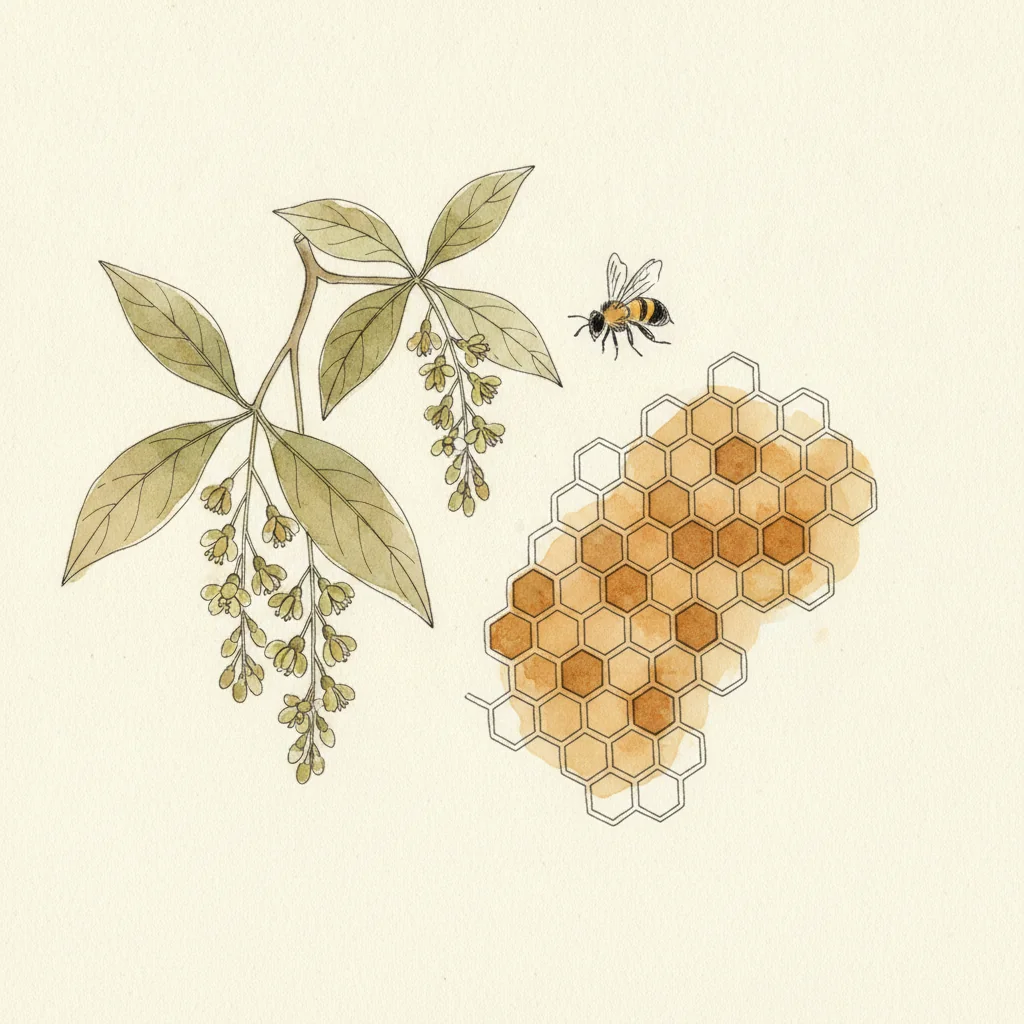
Honey · Varietal honey
Tupelo Honey
Apalachicola River basin, Florida (Wewahitchka, Gulf County), United States
buttery florals · fresh pear · soft caramel
Aromatic profile
| Family | Monofloral honey (white tupelo nectar) |
|---|---|
| Intensity | ●●●○○ (5/10) |
| Main notes | buttery florals · fresh pear · soft caramel |
| Secondary notes | rosewater hint · clean green-honey finish |
| Mouthfeel | thick and slow off the spoon, silky rather than sticky, with no grain or crystals |
| Finish length | long and clean, a buttery floral sweetness that fades without the cloying back-of-throat heaviness of clover honey |
Culinary use
- When to add : finishing / raw
- Dosage : a slow spoonful raw, off the heat, where its texture and pear-like top note can be tasted
- Ideal pairings : warm buttermilk biscuits, drizzled over sharp cheddar and blue cheese, Greek yogurt and granola, hot tea (it stays liquid, no clumps), buttered cornbread, a glaze whisked into a vinaigrette
- Avoid with : long baking where the delicate florals cook off (use cheap clover for that), anything that will mask it under strong spice or smoke, boiling-hot cooking liquids that flatten the aroma
The grain in detail
True tupelo honey comes from one tree in one swamp: the white tupelo, Nyssa ogeche, which grows in the flooded bottomlands of the Apalachicola River basin in Florida's Panhandle, around the town of Wewahitchka in Gulf County. The bloom lasts barely three weeks, mid-April into early May, so beekeepers float their hives out on barges and platforms to keep the bees on the tupelo and off competing nectar. That narrow window is why it costs what it does. The honey is pale gold with a faint green cast, and its signature is chemical, not marketing: tupelo carries more fructose than glucose, so it stays liquid for years instead of setting hard the way clover and wildflower honeys do. The flavor is buttery and floral, with a clear note of fresh pear and a soft caramel finish, far less cloying than a standard table honey. Taste it raw, off the heat: on a warm biscuit, over sharp cheddar or a wedge of blue, stirred into yogurt, or melted into hot tea where it never clumps. Heavy baking is a waste of it, the delicate florals cook off and you have paid single-origin money for sweetness you could have bought in a squeeze bear. The catch with tupelo is fraud: because real tupelo resists crystallization, plenty of cheaper honey gets labeled "tupelo" or sold as a blend. Buy from a named Florida producer, the Lanier, Smiley and Savannah Bee names are the trusted ones, and look for the word "white tupelo" rather than just "tupelo blend." The L.L. Lanier family has worked this honey near Wewahitchka since 1898, the operation Peter Fonda's beekeeper character was based on in the 1997 film.
History & origin
Tupelo honey has been worked commercially in the Apalachicola basin since the late 1800s, with L.L. Lanier & Son harvesting near Wewahitchka since 1898. The barge-and-platform method of moving hives into the swamp during the short bloom dates to that era and has barely changed. There is no PDO or PGI protection in the US, which is exactly why labeling fraud is the standing problem and a named regional producer is the only real guarantee. Genuine output is tiny and weather-dependent, with a poor flood year wiping out a harvest entirely.
Provenance & authenticity
What sets the real thing apart — appellation, species and verification cues.
- Species
- Nyssa ogeche
Indicative price
Reference format : 12 oz jar — from $13.00 to $29.00 (median : $20.00).
Storage
Keep sealed at room temperature, away from heat. It naturally stays liquid for years; if it ever firms up, warm the jar gently in a bowl of hot water, never the microwave.
Where to buy?
Where to buy it
Links checked on
| Merchant | Price | Action |
|---|---|---|
| Amazon US | — | Amazon US |
| Smiley Honey | — | Smiley Honey |
| L.L. Lanier & Son | — | L.L. Lanier & Son |
Prices may vary depending on current promotions on the merchant site.
Alternatives if unavailable
Tags
- United States
- Florida
- Apalachicola
- Wewahitchka
- monofloral honey
- white tupelo
- does not crystallize
Frequently asked questions
- How do you store Tupelo Honey?
- Keep sealed at room temperature, away from heat. It naturally stays liquid for years; if it ever firms up, warm the jar gently in a bowl of hot water, never the microwave.
- What dosage for Tupelo Honey?
- a slow spoonful raw, off the heat, where its texture and pear-like top note can be tasted
- When should you add Tupelo Honey in cooking?
- It's best used finishing / raw.
- What should you avoid pairing Tupelo Honey with?
- Avoid with: long baking where the delicate florals cook off (use cheap clover for that), anything that will mask it under strong spice or smoke, boiling-hot cooking liquids that flatten the aroma.
Go further
The dishes where this tupelo honey shines
Also a recommended alternative for
As a complementary pairing with
See every dish where this product is mentioned →
Other oils, vinegars & honeys to discover
Featured in these gift sets
Page prepared according to our methodology. Purchase links marked sponsored and liable to earn a commission — details on our Affiliations page.