
Comparison
Ancho Chile vs Chimayó Chile
Both are sweet, low-heat red chiles, but they aren't interchangeable. Ancho is the dried Mexican poblano, dirt-cheap and prune-dark, the base of mole. Chimayó is a true single-origin New Mexico landrace, cherry-bright and three times the price. Cook mole with ancho. Spend on Chimayó only for an honest red chile sauce where its terroir actually shows.
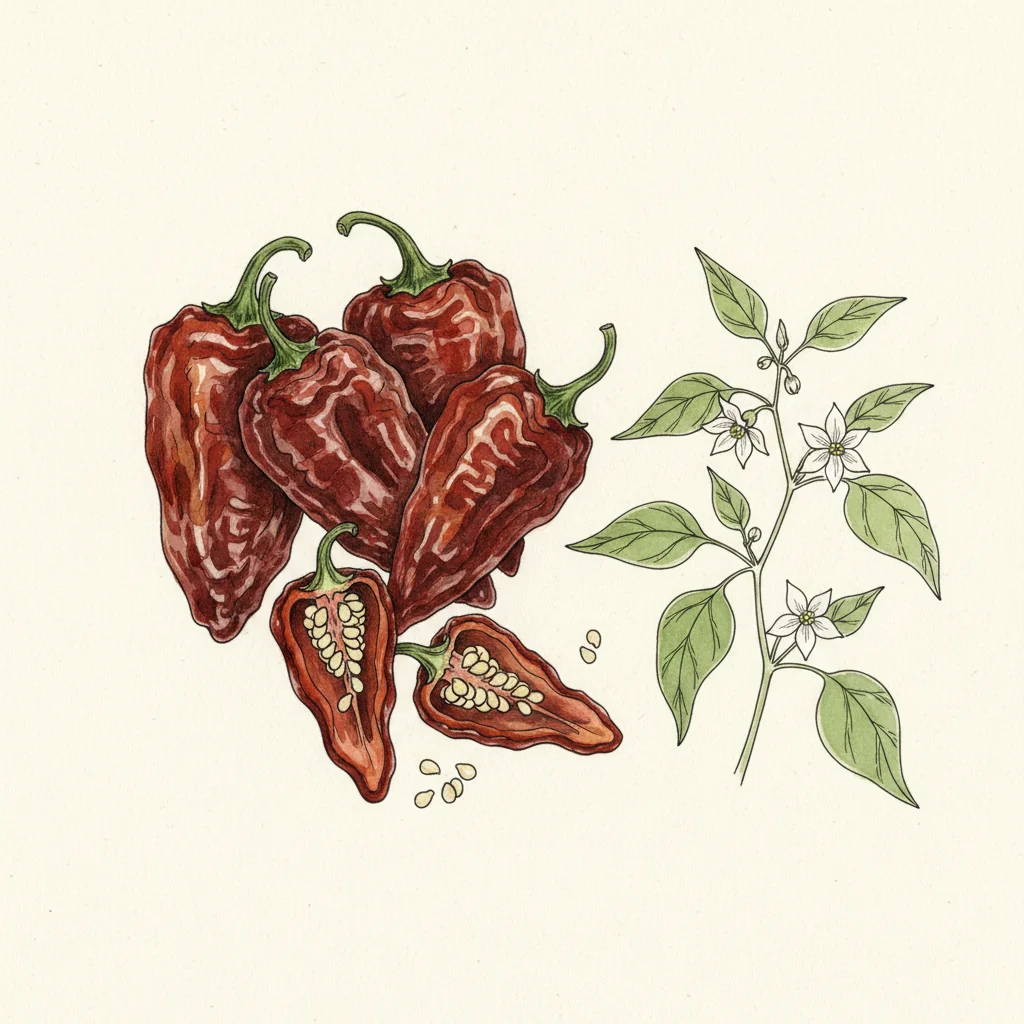
Spice · Chile
Ancho Chile
Puebla and Zacatecas, plus the central highlands of Guanajuato and Durango, Mexico
dried plum and raisin · cocoa · tobacco leaf
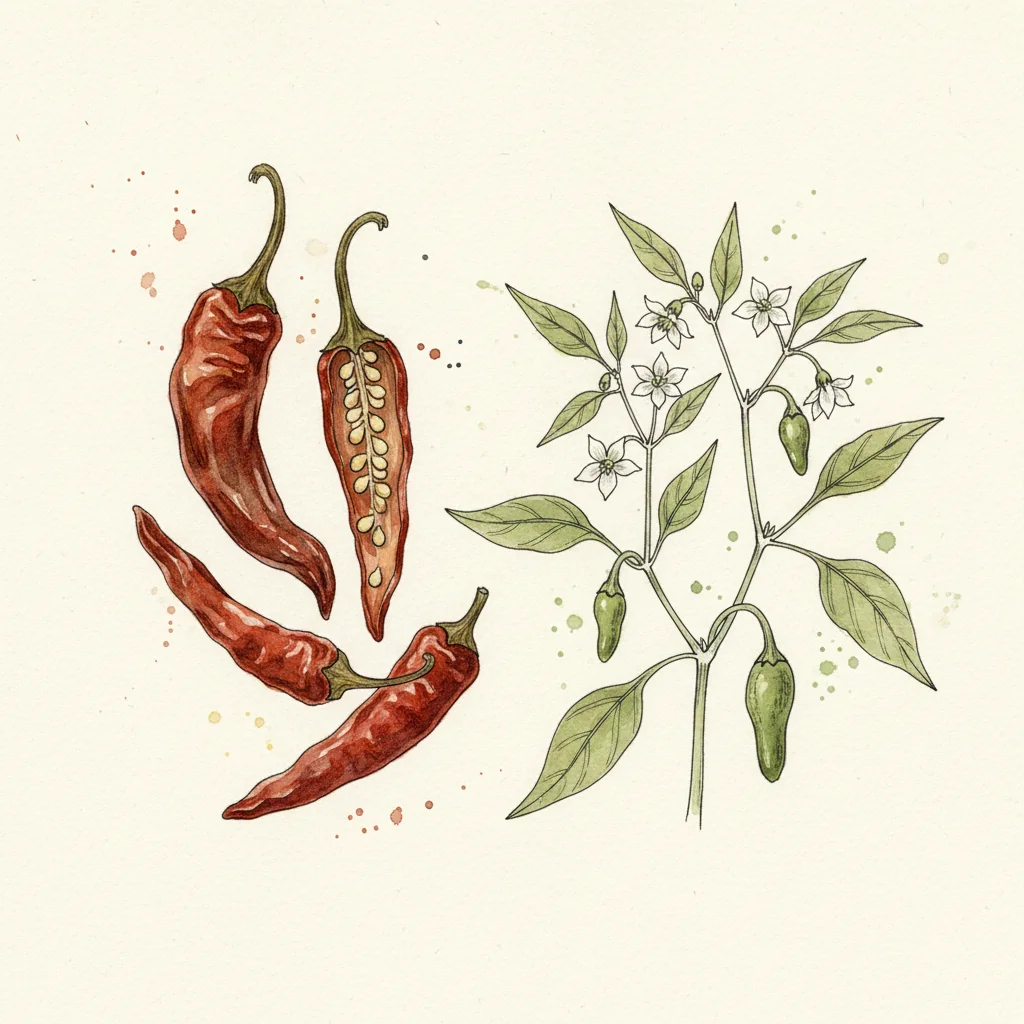
Spice · Chile
Chimayó Chile
Chimayó, Española Valley, Río Arriba County, New Mexico, USA
sun-dried cherry · earthy red soil · toasted raisin
Our verdict
At a glance
| Criterion | Ancho Chile | Chimayó Chile |
|---|---|---|
| Mexico, Puebla and the central highlands | Chimayó, Río Arriba County, New Mexico (single valley, under 500 acres) | |
| Dried plum, cocoa, tobacco leaf | Sun-dried cherry, red earth, toasted raisin | |
| 3/10 — soft, late, fruity heat | 4/10 — low even warmth that builds, never bites | |
| Mole, red enchilada sauce, adobo, chili, dark chocolate | New Mexico red chile sauce, carne adovada, posole, tamale masa | |
| ~$10 for an 8 oz bag of whole pods | ~$19 for a real 8 oz bag from the valley | |
| Unbeatable workhorse, buy by the bag | Worth the premium only for true single-origin powder, not the supermarket blend |
When to choose Ancho Chile
Reach for ancho in roughly nine cooking jobs out of ten. It's the backbone of mole, the base of red enchilada sauce, the chile you toast and rehydrate into adobo for pork or chicken. Buy whole, supple pods over powder when you can — the flavor lives in the flesh, and a pod that snaps clean has dried out and lost its aroma. Bloom two or three pods into a stew for four, or a teaspoon of powder in hot fat. The heat barely registers, around 3 out of 10; you're cooking for the prune-and-cocoa depth, not the burn. At about $10 an 8 oz bag, it never bruises the budget, so use it generously. It also crosses into sweet territory the way few chiles can: a pinch in a dark-chocolate dessert or a brisket rub reads as warmth and dried fruit, not fire. The rule of thumb: if the dish is Mexican and wants a deep, sweet red base, ancho is the default and you rarely need anything fancier.
When to choose Chimayó Chile
Spend on Chimayó when New Mexico red chile is the actual subject of the plate — a true red chile sauce for enchiladas, carne adovada, posole. Here's the catch that justifies the price: fewer than 500 acres grow the native landrace in one northern New Mexico valley, so most powder labeled "Chimayó" on Amazon is New-Mexico-grown blend, not the real thing. The genuine article is cherry-bright with a red-earth depth and a gentle 4-out-of-10 heat that builds instead of stinging — a flavor an ancho's prune-and-cocoa profile can't fake. It's sold ground, not whole, so treat it as a base spice: bloom it in warm fat or simmer it from the start, 3 to 4 tablespoons of pure powder per quart of red chile sauce. Don't waste it on a generic chili where its terroir disappears under cumin and tomato. And buy from a valley source — at $18 to $20 for a real 8-to-12 oz bag, the cheap supermarket "Chimayó" is a blander, different animal you'd be overpaying for.
Where to buy?
Ancho Chile
Links checked on
| Merchant | Price | Action |
|---|---|---|
| Burlap & Barrel (Ancho Chili) | — | Burlap & Barrel (Ancho Chili) |
| Spicewalla (Ancho Chili Powder) | — | Spicewalla (Ancho Chili Powder) |
| Amazon US (whole pods) | — | Amazon US (whole pods) |
| Sous Chef UK (Cool Chile Co whole anchos) | — | Sous Chef UK (Cool Chile Co whole anchos) |
Prices may vary depending on current promotions on the merchant site.
Chimayó Chile
Links checked on
| Merchant | Price | Action |
|---|---|---|
| Amazon US | — | Amazon US |
| Made in New Mexico | — | Made in New Mexico |
| Chimayo Chile Shop | — | Chimayo Chile Shop |
Prices may vary depending on current promotions on the merchant site.
Frequently asked questions
- Can I swap ancho for Chimayó in a recipe?
- For everyday Mexican cooking, yes — ancho stands in fine and costs a third as much. The other direction is riskier: ancho's prune-and-cocoa weight changes the flavor of a New Mexico red chile sauce, which wants Chimayó's brighter cherry-and-earth note. Match the chile to the cuisine.
- Why is Chimayó so much more expensive?
- Scarcity. The true native landrace grows on under 500 acres in a single New Mexico valley, so real single-origin powder runs about $19 for 8 oz, versus around $10 for a bag of whole ancho pods. Most cheap "Chimayó" on the shelf is a New-Mexico-grown blend, not the landrace.
- Which has more heat?
- Chimayó, but only just — about 4 out of 10 against ancho's 3. Neither is a hot chile. Both build a soft, fruity warmth rather than a sharp bite, so you cook them for flavor and color, not for fire.
- Should I buy whole or ground?
- Ancho: buy whole pods and grind as needed, since the flavor fades fast once ground. Chimayó is sold ground by design and used as a base powder — just buy it small and use it within a year, before the cherry note dulls to brown.
The best pairings
With Ancho Chile
With Chimayó Chile
Comparison prepared according to our methodology. Sponsored purchase links — see our affiliations.