
Ancho Chile — the dried, ripe poblano, Capsicum annuum
In brief — The ancho is simply a poblano left to ripen red on the plant, then dried until it goes a wrinkled, deep oxblood. It is the backbone chile of Mexican cooking, the base of mole and red sauce, and it barely registers as heat: think dried plum, cocoa and tobacco instead. Buy whole, supple pods over pre-ground powder when you can. The flavor lives in the flesh, and powder fades fast. In the kitchen, it's best added early, toasted and rehydrated into the base of a sauce, or bloomed as powder in hot fat and it pairs with mole and red enchilada sauce, chili con carne and beef stews, adobo marinades for pork and chicken. Recommended dosage: two to three whole pods for a pot of stew serving four, or 1 to 2 teaspoons of powder bloomed in oil. Expect from $7.00 to $12.00 per 2 oz (57 g) jar of powder, or roughly an 8 oz (227 g) bag of whole pods (median $10.00).
Origin : Puebla and Zacatecas, plus the central highlands of Guanajuato and Durango, Mexico
Capsicum annuum
« The most useful dried chile to keep on hand: prune, cocoa and tobacco at a heat low enough for daily cooking, and the spine of any real mole. It only misses the top mark because supermarket pods are too often dried hard and brittle, which kills the fruit. »
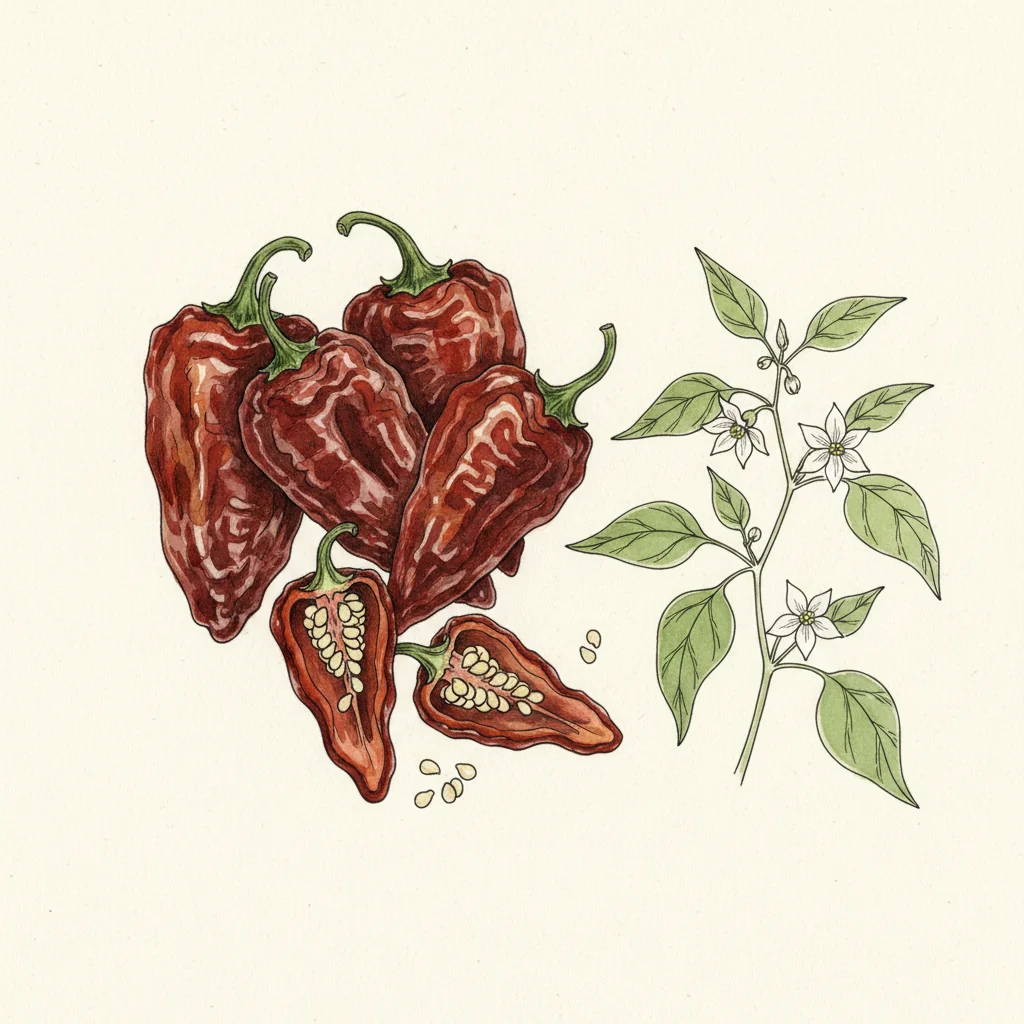
The ancho is simply a poblano left to ripen red on the plant, then dried until it goes a wrinkled, deep oxblood. It is the backbone chile of Mexican cooking, the base of mole and red sauce, and it barely registers as heat: think dried plum, cocoa and tobacco instead. Buy whole, supple pods over pre-ground powder when you can. The flavor lives in the flesh, and powder fades fast.
Spice · Chile
Ancho Chile
Puebla and Zacatecas, plus the central highlands of Guanajuato and Durango, Mexico
dried plum and raisin · cocoa · tobacco leaf
Aromatic profile
| Family | Capsicum annuum |
|---|---|
| Intensity | ●●○○○ (3/10) |
| Main notes | dried plum and raisin · cocoa · tobacco leaf |
| Secondary notes | dried fig · coffee · a faint sweet smokiness from the sun-dry |
| Mouthfeel | a soft, round, low heat that arrives late and never grips; closer to dried fruit than to fire |
| Finish length | long and sweet, finishing on prune and bitter cocoa |
Culinary use
- When to add : early, toasted and rehydrated into the base of a sauce, or bloomed as powder in hot fat
- Dosage : two to three whole pods for a pot of stew serving four, or 1 to 2 teaspoons of powder bloomed in oil
- Ideal pairings : mole and red enchilada sauce, chili con carne and beef stews, adobo marinades for pork and chicken, black beans, barbecue rubs for brisket, dark chocolate desserts
- Avoid with : raw finishing, where the leathery skin stays bitter, delicate white fish that the prune note buries, dishes that need a sharp front-of-mouth heat
The grain in detail
Ancho means wide in Spanish, and the name describes the pod: a broad, flat, heart-shaped chile that is nothing more than a fully ripened poblano dried in the sun. Picked green, the poblano is the mild stuffing chile of chiles rellenos; left to turn red on the plant and then dried, it becomes the ancho, the single most important dried chile in Mexican cooking. Good ancho is pliable, not brittle. It bends like soft leather, reads a translucent burgundy-black against the light, and smells of raisins and coffee. A snapping, dusty-brown pod is old and will taste flat and bitter. The heart of the crop sits in the central Mexican highlands around 1,800 meters, with Puebla and Zacatecas the historic names, alongside Guanajuato and Durango, where the dry post-harvest season lets the pods cure slowly in open fields. Heat is almost beside the point here: anchos run roughly 1,000 to 1,500 Scoville, a 2 to 3 out of 10, which is why the flavor reads as fruit rather than burn. What you taste is dried plum, fig and raisin over a base of cocoa and tobacco, with a coffee-like bitterness in the skin that toasting and soaking tame. The classic move is to stem and seed the pods, toast them in a dry pan for a few seconds a side until they smell nutty (not until they smoke and scorch, which turns them acridly bitter), then soak in hot water for twenty minutes and blend the soft flesh into a paste. That paste is the foundation of mole poblano, red enchilada sauce, adobos and countless stews. Ancho is also one third of the holy trinity of Mexican dried chiles, alongside the smoky-hot mulato (a darker-dried poblano) and the bright, tart guajillo. Don't confuse ancho with mulato: same plant, different drying, and the mulato runs sweeter and more chocolatey. Powder is convenient and fine for a quick bloom in a rub, but whole pods keep their aromatic oils far longer, so buy the leather, not the dust, when the recipe matters.
History & origin
The poblano and its dried form trace back to pre-Columbian central Mexico, where Capsicum annuum was domesticated thousands of years ago and chiles were dried for year-round keeping long before the Spanish arrived. The ancho is woven into the foundational dishes of colonial and modern Mexican cuisine, above all mole poblano from Puebla, the convent dish that layers anchos, mulatos and pasillas with chocolate and spice. There is no protected designation of origin for ancho, but the central highlands of Puebla, Zacatecas, Guanajuato and Durango remain the recognized growing heartland, and the pod is sold across the United States as the workhorse of any serious Mexican pantry.
Provenance & authenticity
What sets the real thing apart — appellation, species and verification cues.
- Species
- Capsicum annuum
Indicative price
Reference format : 2 oz (57 g) jar of powder, or roughly an 8 oz (227 g) bag of whole pods — from $7.00 to $12.00 (median : $10.00).
Storage
Whole pods in an airtight bag, away from light and heat; they should stay supple and bendable. If a pod snaps cleanly, it has dried out and lost most of its aroma. Whole keeps about 12 to 18 months; ground powder fades faster, so buy it small and use it within six months.
Where to buy?
Where to buy it
Links checked on
| Merchant | Price | Action |
|---|---|---|
| Burlap & Barrel (Ancho Chili) | — | Burlap & Barrel (Ancho Chili) |
| Spicewalla (Ancho Chili Powder) | — | Spicewalla (Ancho Chili Powder) |
| Amazon US (whole pods) | — | Amazon US (whole pods) |
| Sous Chef UK (Cool Chile Co whole anchos) | — | Sous Chef UK (Cool Chile Co whole anchos) |
Prices may vary depending on current promotions on the merchant site.
Alternatives if unavailable
Tags
- Mexico
- Puebla
- Zacatecas
- poblano
- ancho
- mole
- Capsicum annuum
- dried chile
Frequently asked questions
- How do you store Ancho Chile?
- Whole pods in an airtight bag, away from light and heat; they should stay supple and bendable. If a pod snaps cleanly, it has dried out and lost most of its aroma. Whole keeps about 12 to 18 months; ground powder fades faster, so buy it small and use it within six months.
- What dosage for Ancho Chile?
- two to three whole pods for a pot of stew serving four, or 1 to 2 teaspoons of powder bloomed in oil
- When should you add Ancho Chile in cooking?
- It's best used early, toasted and rehydrated into the base of a sauce, or bloomed as powder in hot fat.
- What should you avoid pairing Ancho Chile with?
- Avoid with: raw finishing, where the leathery skin stays bitter, delicate white fish that the prune note buries, dishes that need a sharp front-of-mouth heat.
Go further
The dishes where this ancho chile shines
Also a recommended alternative for
As a complementary pairing with
See every dish where this product is mentioned →
Other spices to discover
Featured in these gift sets
Page prepared according to our methodology. Purchase links marked sponsored and liable to earn a commission — details on our Affiliations page.