
Comparison
Hawaiian black lava vs Persian blue salt — which colored salt?
Both are finishing salts you buy for contrast, and heat ruins both. Black lava (Hiwa Kai) gets its gloss from charcoal and pops jet-black on pale fish or panna cotta. Persian Blue gets its indigo from sylvinite and suits foie gras or scallops. Want black drama, buy lava; want indigo on a precious plate, buy blue.
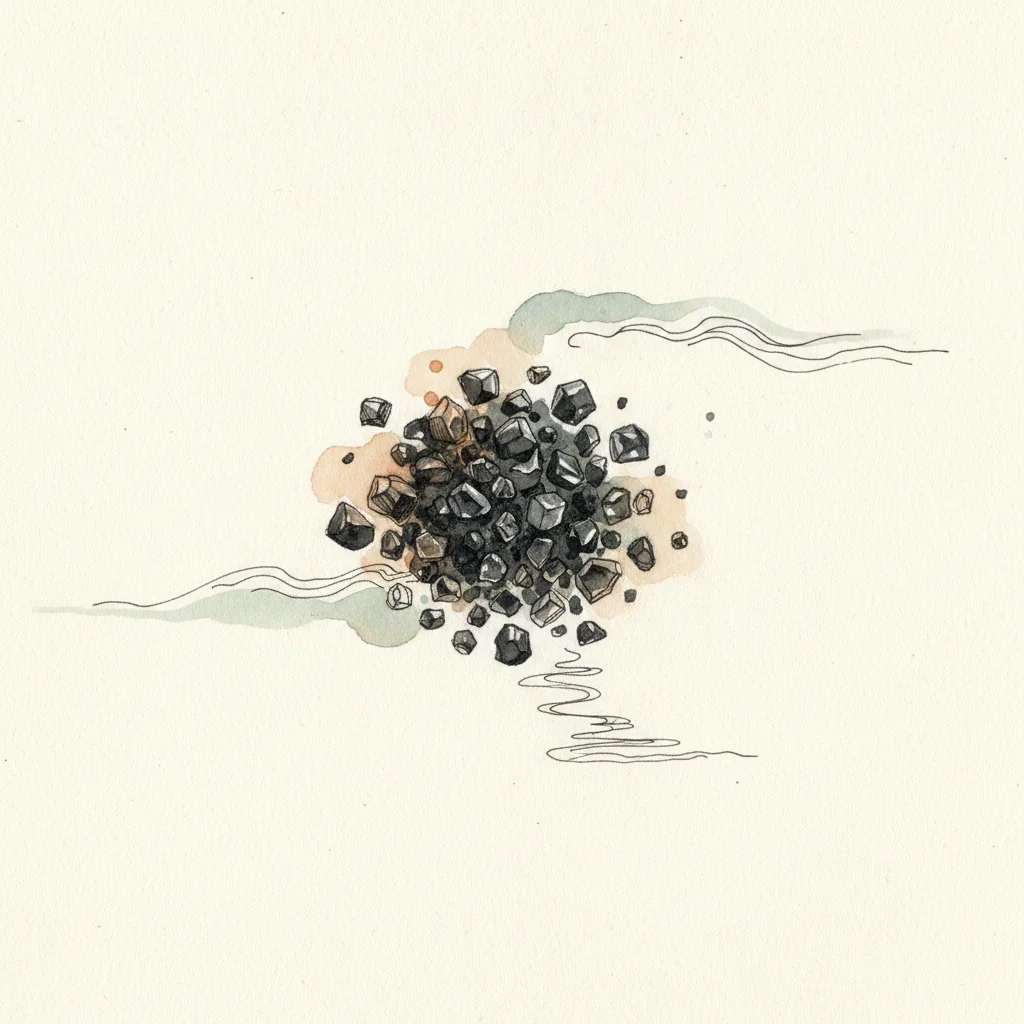
Salt · Seasoned salt
Hawaiian Black Lava Salt (Hiwa Kai)
Molokai, Hawaiian archipelago (Pacific solar-evaporated sea salt), United States
round clean salinity · faint smoke · marine mineral
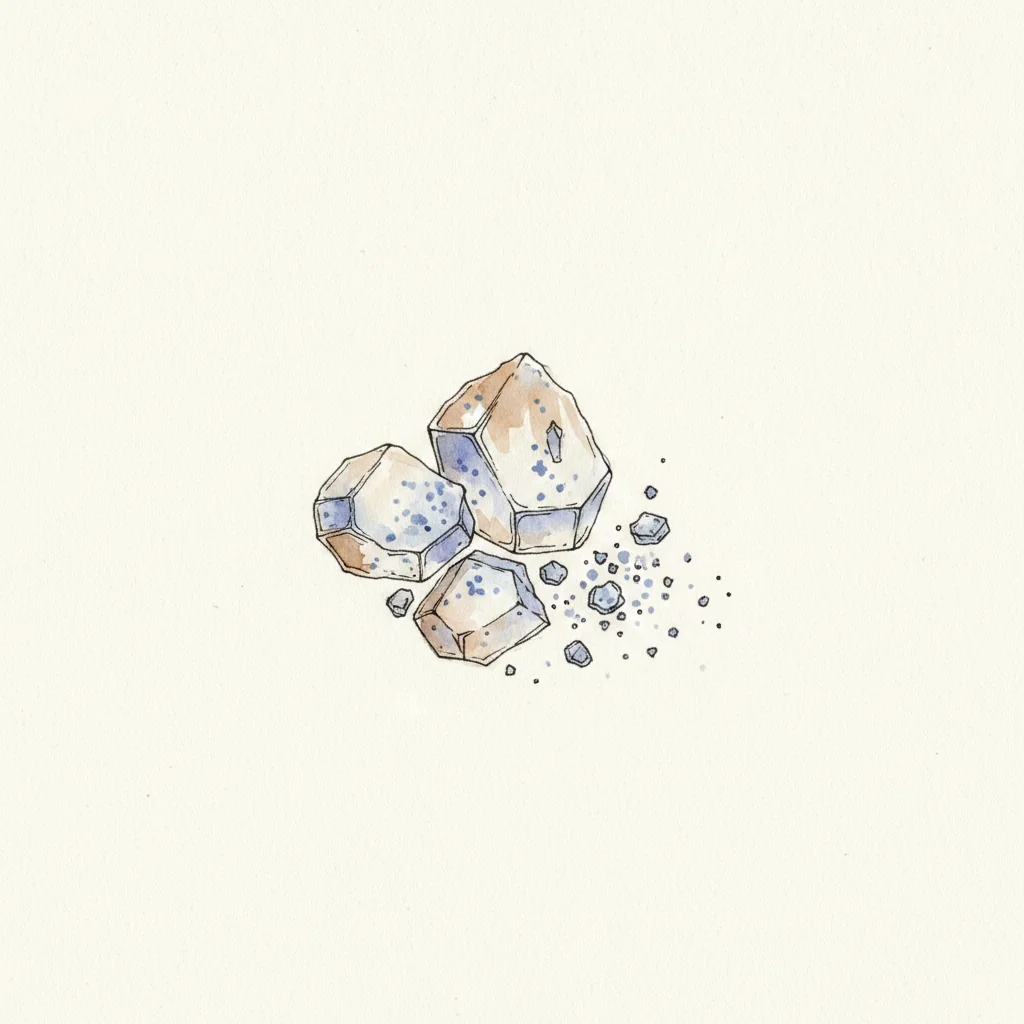
Salt · Rock salt
Persian Blue Salt
Semnan province, central desert mines, Iran
round salinity · clean mineral · cold stone
Our verdict
Black lava for stark contrast; Persian Blue for the precious raw plate.
At a glance
| Criterion | Hawaiian Black Lava Salt (Hiwa Kai) | Persian Blue Salt |
|---|---|---|
| Origin | United States, Molokai, Hawaiian archipelago | Iran, Semnan province desert mines |
| Color source | Activated coconut-shell charcoal (not volcanic mineral) | Natural sylvinite (potassium mineral) |
| Profile | Round, clean salinity, faint smoke, velvety trace | Round salinity, faint metallic edge, quiet umami |
| Heat behavior | Heat bleeds the color out — finishing salt, full stop | Finishing salt — color and price wasted if cooked |
| Best use | Jet-black on pale tuna, scallops, panna cotta | Foie gras, raw scallops, white truffle |
| Median price | About $8 to $14 / small jar | About $13 to $15 / 100g jar |
| Value | Worth it for the visual contrast | Splurge, justified on a precious raw plate |
When to choose Hawaiian Black Lava Salt (Hiwa Kai)
Choose Hawaiian black lava salt — Hiwa Kai — when you want stark visual contrast on a pale plate. It's Pacific sea salt blended with activated coconut-shell charcoal, which is what makes it glossy black; the name says lava but the color is charcoal, not a volcanic mineral. The salinity is round and clean with a faint smoke, and the charcoal adds a soft, velvety trace, so the flavor is gentle and the real reason you buy it is the look: jet-black crystals scattered over pale tuna, raw scallops, white fish, or a panna cotta where the black-on-cream contrast is the whole effect. Add it at the very end, because the catch is that heat bleeds the color out — this is a finishing salt, full stop, and cooking with it leaves you with grey, washed-out crystals and none of the drama. A small jar runs about $8 to $14, fair for a salt you use sparingly and mostly for presentation. The move is to scatter it late and unevenly so the black flecks read across the plate. The catch is expecting big flavor — the charcoal is subtle, so if you want a salt that changes the taste rather than the look, this isn't it. And if the plate is foie gras or scallops at a special dinner where you want a jewel-like indigo rather than stark black, this is the wrong salt — that refined job belongs to Persian Blue.
When to choose Persian Blue Salt
Reach for Persian Blue salt when the plate is precious and you want an indigo jewel rather than stark black. It's one of the rarest salts on earth, mined in the Iranian desert province of Semnan, and its pale-blue-to-indigo color isn't dye — it's natural sylvinite, a potassium mineral that bends light inside the crystal. The salinity is round with a faint metallic edge and a quiet umami close, which suits the delicate, expensive end of the plate: a slice of foie gras, raw scallops, a shaving of white truffle, a fine tartare. The indigo flash is more refined and less stark than black lava's charcoal gloss, so it reads as luxury rather than drama, and that's the call between the two — black for bold contrast, blue for jewel-like restraint on something costly. Crush a few crystals over the finished plate just before serving; like the lava salt this is a finishing salt, and heat wastes both the color and the price. Expect around $13 to $15 for a small 100g jar, which is splurge territory, but you use it crystal by crystal. The catch is everyday use — it's too costly and too quiet to be a workhorse, and its value is the combination of indigo and a soft mineral close on a special plate. If the effect you want is jet-black contrast on pale fish or a dessert, this is the wrong salt — that's the lava salt's job.
Where to buy?
Hawaiian Black Lava Salt (Hiwa Kai)
Links checked on
| Merchant | Price | Action |
|---|---|---|
| Amazon US | — | Amazon US |
| SaltWorks (seasalt.com) | — | SaltWorks (seasalt.com) |
Prices may vary depending on current promotions on the merchant site.
Persian Blue Salt
Links checked on
| Merchant | Price | Action |
|---|---|---|
| Amazon US | — | Amazon US |
| Persian Basket | — | Persian Basket |
| Sous Chef UK | — | Sous Chef UK |
Prices may vary depending on current promotions on the merchant site.
Frequently asked questions
- Is Hawaiian black lava salt made from volcanic rock?
- No, despite the name. The glossy black comes from activated coconut-shell charcoal blended into Pacific sea salt, not from a volcanic mineral. The charcoal adds a faint smoke and a soft velvety trace, but you really buy it for the jet-black contrast on a pale plate.
- Why do both salts lose their color when cooked?
- Both are finishing salts. Heat bleeds the charcoal black out of the lava salt and wastes Persian Blue's color and price. Their whole point is visual drama on the finished plate, so add either one at the very end, off the heat, never in the pot.
- Which one for a dessert like panna cotta?
- Black lava. The jet-black flecks on pale cream are the classic contrast, and its clean salinity with a faint smoke flatters a sweet plate. Persian Blue's indigo is subtler and better suited to savory precious plates like foie gras and raw scallops.
- Are these salts worth the price?
- Both are splurges bought for looks more than flavor. Black lava at $8 to $14 is the cheaper drama; Persian Blue at $13 to $15 a small jar is the refined jewel for precious raw plates. Each is worth it for presentation, but neither is an everyday salt.
The best pairings
With Hawaiian Black Lava Salt (Hiwa Kai)
With Persian Blue Salt
Comparison prepared according to our methodology. Sponsored purchase links — see our affiliations.