
Comparison
Buckwheat vs tupelo honey — which to buy?
These are American honey's two extremes. Buckwheat (~$15) is the darkest, boldest jar there is — molasses, malt, barnyard funk, for cheddar and barbecue. Tupelo (~$20) is pale, silky, buttery and never crystallizes — delicate, for biscuits and tea. For bold dishes, buckwheat. For gentle ones, tupelo.
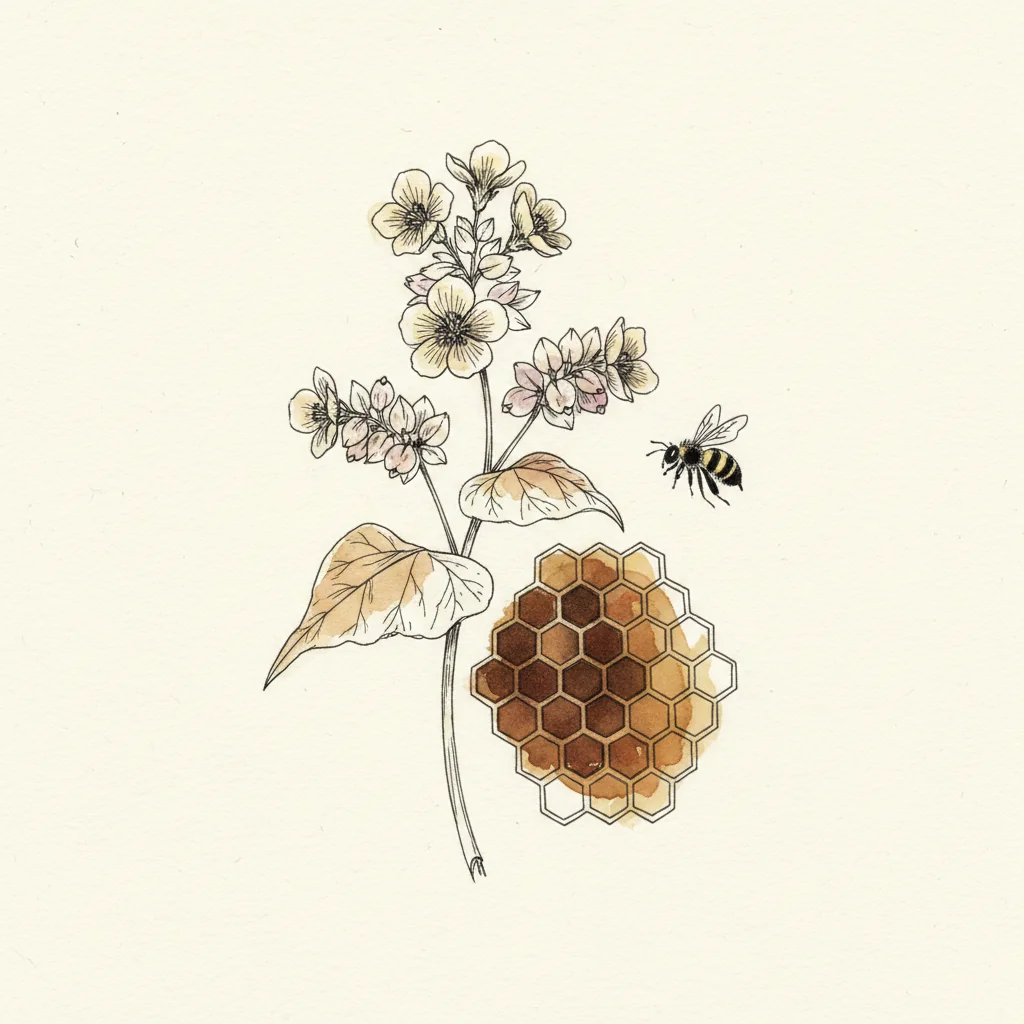
Honey · Monofloral honey
Buckwheat Honey
Upstate New York & Minnesota (also the Dakotas), United States
dark molasses · malt · barnyard funk
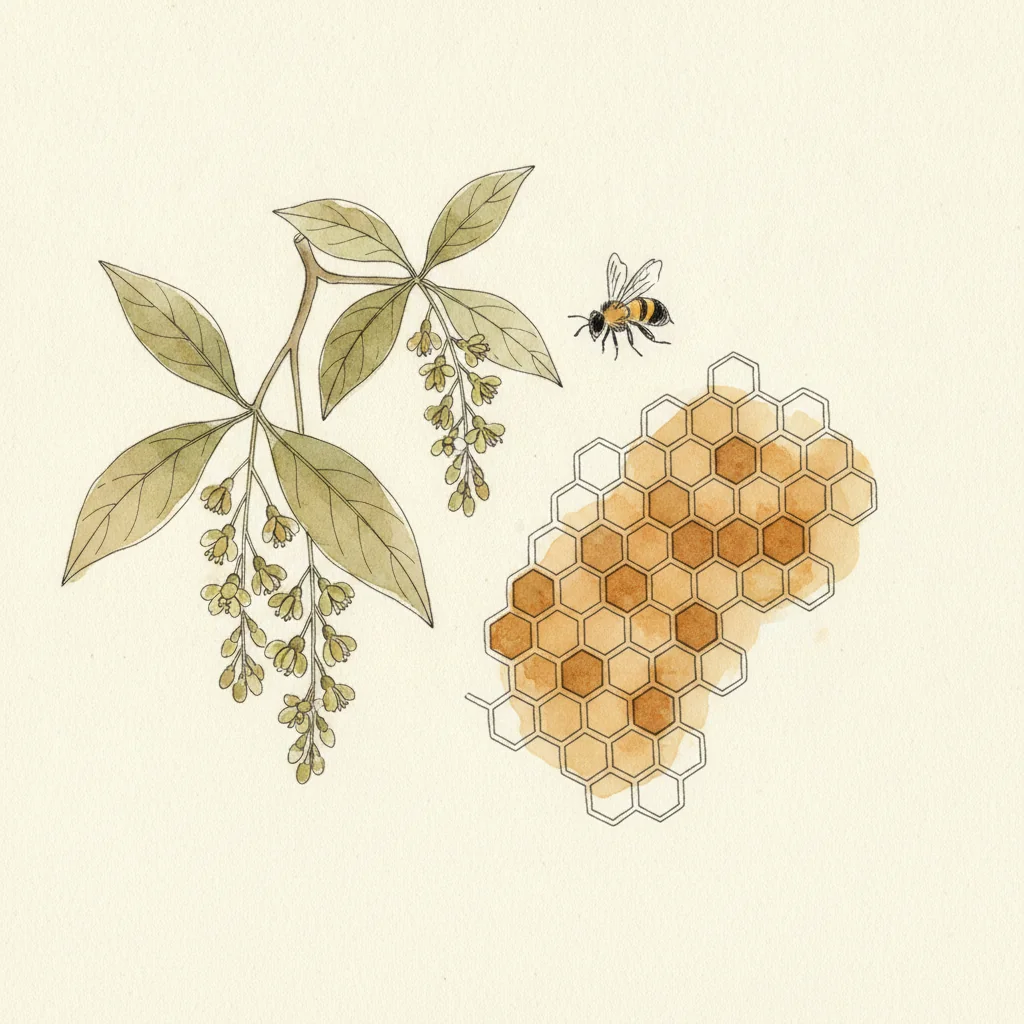
Honey · Varietal honey
Tupelo Honey
Apalachicola River basin, Florida (Wewahitchka, Gulf County), United States
buttery florals · fresh pear · soft caramel
Our verdict
Buckwheat for bold molasses-and-funk; tupelo for silky, delicate, never-crystallizing finesse.
At a glance
| Criterion | Buckwheat Honey | Tupelo Honey |
|---|---|---|
| Origin | Upstate New York & Minnesota | Apalachicola River basin, Florida |
| Botanical | Fagopyrum esculentum (buckwheat) | Nyssa ogeche (white tupelo) |
| Color & body | Near-black, motor-oil thick | Pale gold, silky, slow-pouring |
| Intensity | 9/10 — molasses, malt, funk | 5/10 — buttery, delicate, pear |
| Main notes | Dark molasses, malt, barnyard funk | Buttery florals, fresh pear, soft caramel |
| Best use | Cheddar, barbecue glaze, biscuits, stout | Biscuits, tea, sharp cheese, yogurt |
| Median price | ~$15 / 12 oz jar | ~$20 / 12 oz jar |
| Value verdict | Bold, antioxidant-rich, cheap | Worth it for texture & the pear note |
When to choose Buckwheat Honey
Buckwheat is the one to grab when the dish can take — or needs — a loud honey. It's the darkest honey on the American shelf, pours like motor oil, and tastes of molasses, malt and a savory, almost meaty barnyard funk. Upstate New York and Minnesota are the heartland, and a 12 oz jar of the real raw stuff runs about $15, a few dollars under tupelo. Being the darkest honey, it also carries the heaviest antioxidant load of the two. Four jobs where it leaves tupelo behind. First, barbecue — a quick glaze off the heat on ribs or pulled pork, where its molasses depth is the appeal and tupelo's delicacy would simply vanish. Second, sharp aged cheddar and blue cheese, where it goes toe to toe with the cheese instead of being buried. Third, buttermilk biscuits and cornbread, where it reads like a dark-beer reduction. Fourth, a spoon stirred into black coffee or a stout. The rule: if the dish is bold — strong cheese, smoke, dark bread, barbecue — it's buckwheat; if it's delicate, tupelo. Start small, because it dominates fast, and keep it raw or off the heat, since high-heat baking turns the funk flat and bitter. Its hard limit is subtlety: it bulldozes light teas and floral desserts, the exact territory where tupelo is at home. But for a bold, cheap, antioxidant-rich honey that can stand up to anything you throw at it, buckwheat is the one — and it does a job tupelo was never built to attempt.
When to choose Tupelo Honey
Tupelo is the one to choose when the dish is delicate and a loud honey would wreck it. Harvested for roughly three weeks each spring from white tupelo trees standing in the Apalachicola River swamps of the Florida Panhandle, it pours buttery and pale gold with a pear-and-caramel sweetness, a silky no-grain body, and the famous refusal to crystallize. A real single-origin 12 oz jar runs about $20, a few dollars over buckwheat, and the cheap supermarket 'tupelo blend' is not the same thing. Four jobs where it leaves buckwheat behind. First, hot tea — it stays liquid and sweetens cleanly, where buckwheat's molasses funk would muddy the cup completely. Second, warm buttermilk biscuits, where the buttery body and clean pear note read as elegant. Third, Greek yogurt and granola, where the silky texture is half the pleasure and buckwheat would dominate. Fourth, a drizzle over a mild fresh cheese or into a delicate vinaigrette, where finesse matters. The rule: if the dish is gentle — tea, breakfast, mild cheese, light desserts — it's tupelo; if it's bold, buckwheat. Keep it raw and off the heat — long baking cooks off the delicate florals, and strong spice or smoke masks it, so use cheap clover there. Its limit is the mirror image of buckwheat's: it disappears under anything assertive, so don't waste it on barbecue or a sharp blue. But for a silky, refined, never-crystallizing honey that flatters delicate food, tupelo is worth its small premium, and buckwheat can't follow it into the gentle end of the menu.
Where to buy?
Buckwheat Honey
Links checked on
Prices may vary depending on current promotions on the merchant site.
Tupelo Honey
Links checked on
| Merchant | Price | Action |
|---|---|---|
| Amazon US | — | Amazon US |
| Smiley Honey | — | Smiley Honey |
| L.L. Lanier & Son | — | L.L. Lanier & Son |
Prices may vary depending on current promotions on the merchant site.
Frequently asked questions
- Buckwheat or tupelo — which should I buy?
- Buckwheat for bold dishes: cheddar, barbecue, dark bread, strong coffee. Tupelo for delicate ones: tea, biscuits, yogurt, mild cheese. They're the two extremes of American honey, so the dish decides.
- Why are they so different when both are American honeys?
- Different plants. Buckwheat blossom gives a near-black, molasses-and-malt honey; white tupelo gives a pale, silky, buttery one. They share a country, not a flavor.
- Which is better value?
- Buckwheat is cheaper — about $15 versus $20 for a real tupelo jar — and richer in antioxidants. Tupelo's premium buys its silky texture and pear note. Both are fairly priced for what they do.
- Can I use them interchangeably?
- No — that's the point. Buckwheat overpowers anything delicate; tupelo vanishes in anything bold. Match the honey's weight to the dish.
The best pairings
With Buckwheat Honey
With Tupelo Honey
Comparison prepared according to our methodology. Sponsored purchase links — see our affiliations.