
Dish × condiment pairing
Which dark honey for blue cheese?
Season : all-year · Occasion : cheese board, entertaining, dessert
Buckwheat. The darkest, boldest American honey, all molasses, malt and a savory funk that meets a sharp, salty blue head-on where a mild honey just disappears. Drizzle it raw over the wedge, off the heat. A 12 oz jar of the real raw stuff runs about $12 to $20.
In detail
The best honey for blue cheese is buckwheat honey, the darkest and boldest honey on the American shelf, made from Fagopyrum esculentum blossom in Upstate New York and Minnesota. Blue cheese is sharp, salty and pungent, so a mild floral honey simply disappears under it; buckwheat pours like motor oil and tastes of dark molasses, malt and a savory barnyard funk with enough weight to meet a Roquefort or Gorgonzola head-on. Drizzle it raw over the wedge, off the heat, and start with a teaspoon because it dominates fast. A 12 oz jar of the real raw honey runs about $12 to $20. The classic alternative is chestnut honey, which answers blue cheese with bitterness and tannin rather than sweet molasses for around $12 to $22 a jar; pick buckwheat for sweetness, chestnut for savor.
Our recommendation
Honey · Monofloral honey
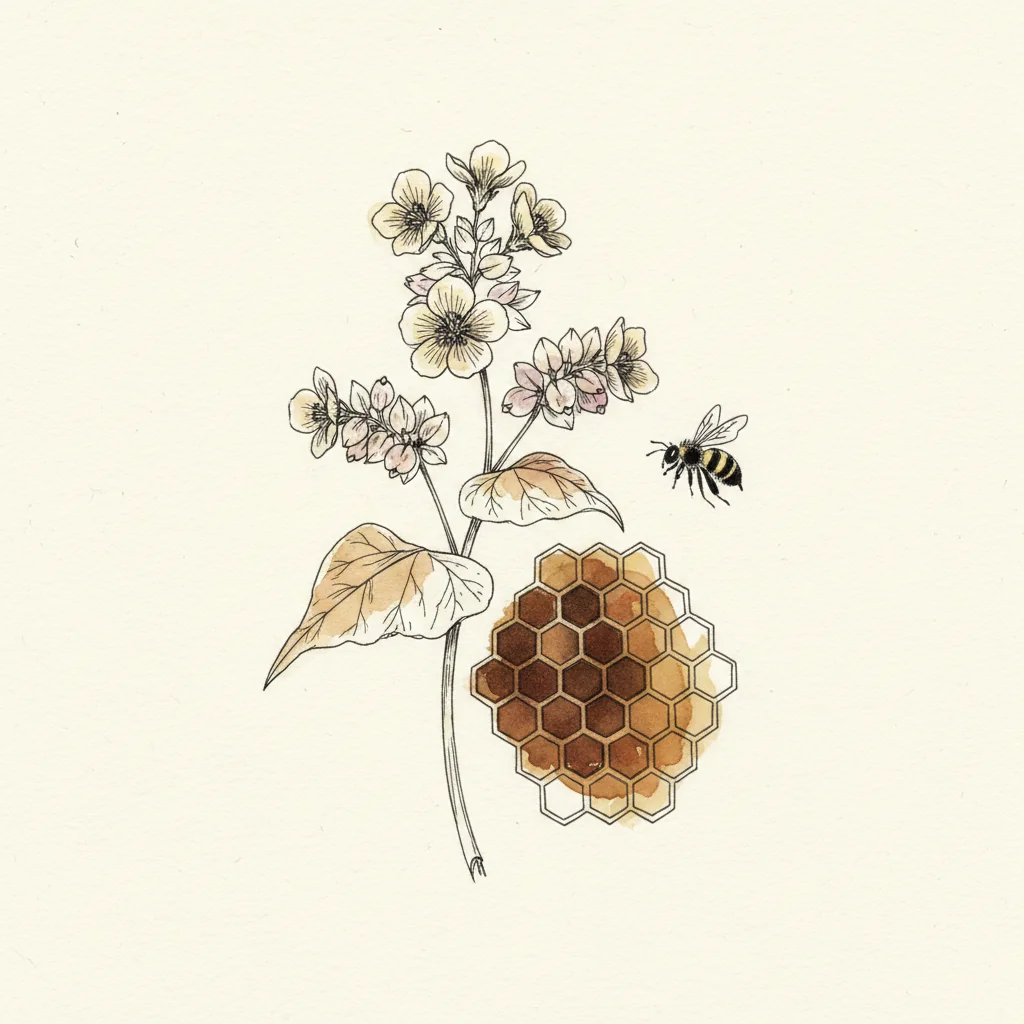
Buckwheat Honey
Upstate New York & Minnesota (also the Dakotas), United States
dark molasses · malt · barnyard funk
Blue cheese is sharp, salty and pungent, so it needs a honey that can answer it. Buckwheat, from Upstate New York and Minnesota, pours like motor oil and tastes of dark molasses, malt and a barnyard funk with a savory, almost meaty edge. That weight stands up to a Roquefort or Gorgonzola where a light floral honey would simply vanish. A 12 oz jar runs about $12 to $20.
Intensity 9/10
The catch
A delicate floral honey on blue cheese vanishes; the sharp salt and funk of a Roquefort eat it alive. Buckwheat is the answer because it is loud back. It pours like motor oil and tastes of molasses, malt and a savory barnyard funk with enough weight to stand next to the blue, so you taste both. Bring a mild honey to this fight and you taste only the cheese.
Chef's note
Drizzle buckwheat raw over the wedge, off the heat, and start with just a teaspoon: it dominates fast, and you are accenting the blue, not burying it. A few crushed toasted walnuts and a slice of dark rye underneath round it into a proper cheese-board bite. Taste, then add more only if the cheese still leads the honey.
Tasting note
dark molasses · malt · barnyard funk · cocoa nib · about $12 to $20 for a 12 oz jar of the real raw stuff. Worth it, and one jar lasts forever since you use so little per wedge.
These three sections appear on every one of our pairing pages — our methodology.
Alternatives to explore
-
Honey · Monofloral honey
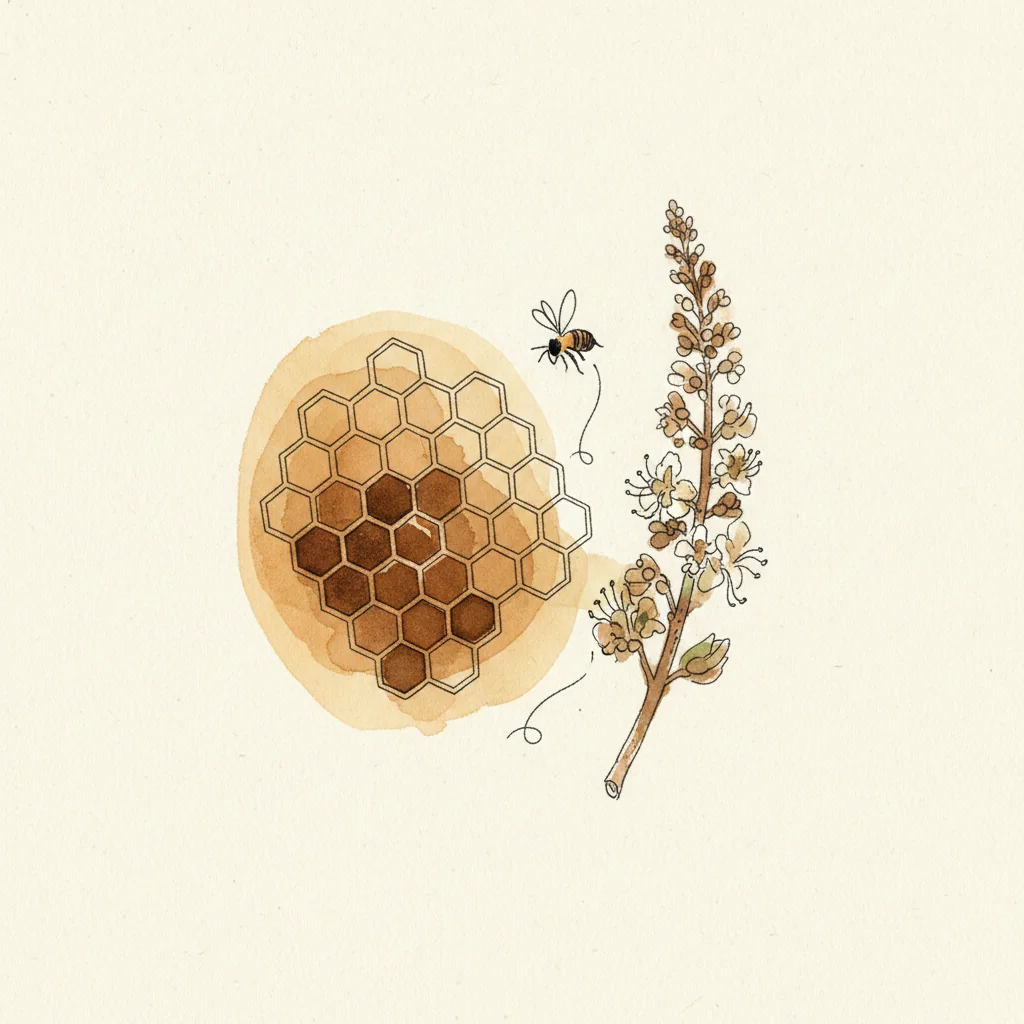
Chestnut Honey
Italian chestnut belt (Tuscany, Piedmont) and southern France (Cévennes, Corsica), Italy / France (PDO (Mele di Corsica — Miel de Corse, for the Corsican lots))
Intensity 8/10
Chestnut answers blue cheese with bitterness and tannin rather than buckwheat's sweet molasses. The more savory, less sweet option, also a classic Roquefort match at about $12 to $22.
-
Honey · Varietal honey
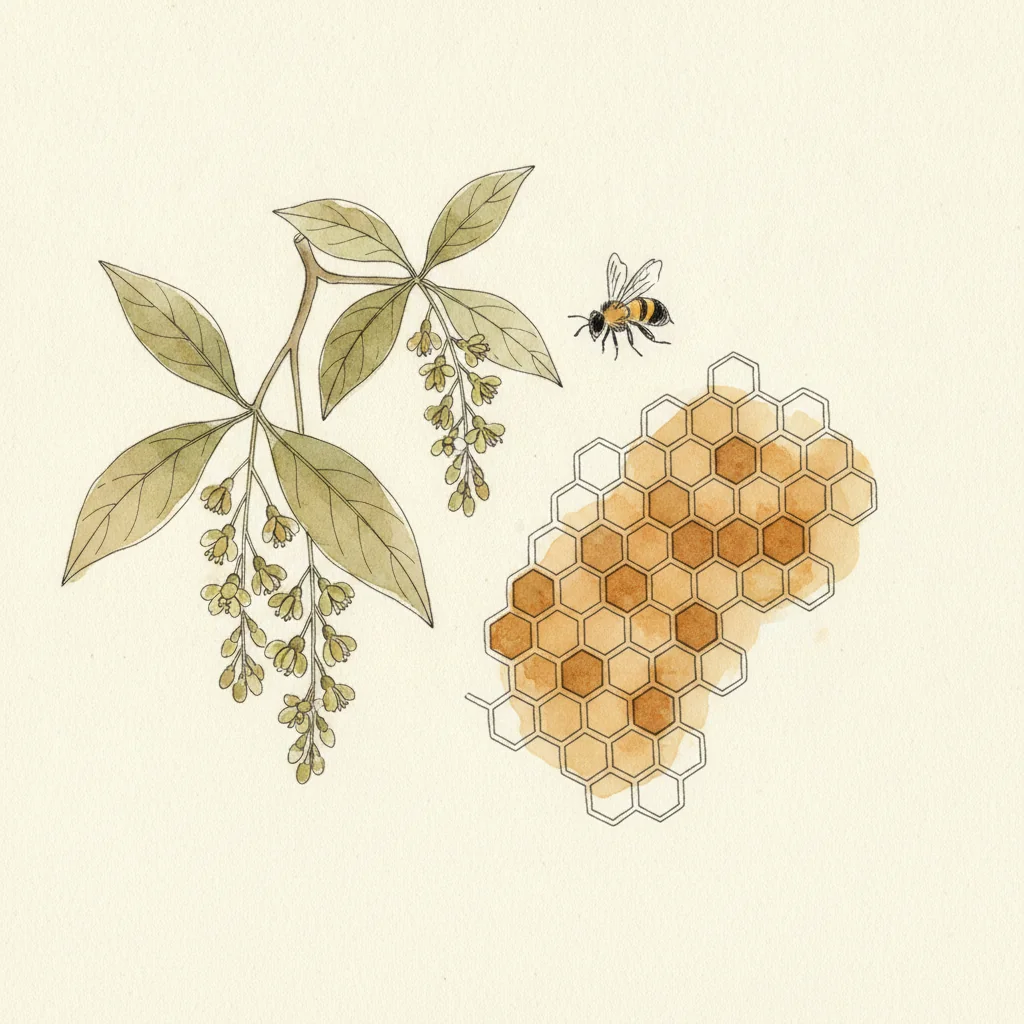
Tupelo Honey
Apalachicola River basin, Florida (Wewahitchka, Gulf County), United States
Intensity 5/10
Tupelo plays the contrast card: a clean, buttery sweetness against the salt, lighter than the dark honeys. Good if you want the cheese to dominate, about $20 a jar.
Complementary ingredients
- Chestnut Honey — The bitter, tannic swap when you want savory depth instead of sweet molasses
Frequently asked questions
- Why does dark honey work better on blue cheese?
- Blue cheese is sharp, salty and pungent, so a mild floral honey gets buried under it. A dark honey like buckwheat brings molasses, malt and a savory funk with enough weight to meet the cheese, so you taste both rather than just the blue.
- Buckwheat or chestnut honey for blue cheese?
- Buckwheat for sweet, dark molasses-and-malt depth; chestnut for bitter, tannic savor. Buckwheat leans richer and sweeter, chestnut leans drier and more bitter. Both stand up to a Roquefort, so it comes down to whether you want sweetness or bitterness against the salt.
- How much buckwheat honey goes on blue cheese?
- A small drizzle, raw and off the heat. Buckwheat dominates fast, so start with a teaspoon over the wedge and add more if the blue still leads. You are accenting the cheese, not drowning it.
This pairing was validated according to our methodology. Purchase links are marked sponsored and may earn a commission — details on our Affiliations page.